Best Things to Do in Dubai
Ten Dubai experiences, from wooden abras and wind-tower lanes to the Burj Khalifa, the Palm and a protected desert reserve.
Dubai rewards travellers who mix its two sides. One is the trading town that grew up along Dubai Creek, with wind towers, souks and wooden boats. The other is the engineered city of record towers, artificial islands and climate-controlled malls. Many visitors see just the second side and leave thinking Dubai is a giant shopping centre. The list below balances both, and each entry explains what makes it special and how it fits into a day. Before you book anything, read the security note in our Dubai travel guide, because flight disruption in 2026 can change plans at short notice.
Old Dubai, the Creek and the city's landmarks
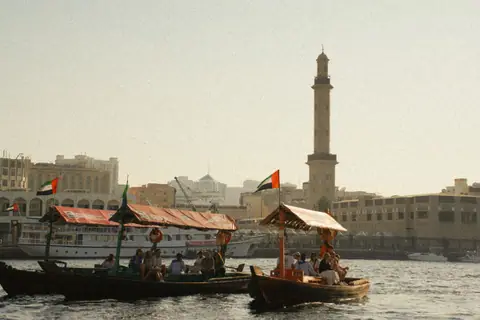
- Cross Dubai Creek on a traditional abra. The transport authority runs motorised wooden abras between Bur Dubai Abra Station and Deira Old Souq Abra Station, plus a second route between Dubai Old Souq and Al Sabkha. The fare is paid in cash on board, so carry small coins. The crossing takes a few minutes, yet it is the clearest way to understand why the city began on this inlet. Our Old Dubai guide turns it into a half-day walk.
- Walk the lanes of Al Fahidi Historical Neighbourhood. Dubai Culture describes houses built with stone, gypsum, teak, sandalwood and palm, topped with tall wind towers called barajeel (ba-RAA-jeel). The district preserves the way people lived here from the mid-nineteenth century to the 1970s, and today its buildings hold galleries, small museums and cafés. Come early in the morning, when the lanes are quiet and shaded.
- Join a cultural meal or heritage tour with the SMCCU. The Sheikh Mohammed Centre for Cultural Understanding works from House 26 in Al Fahidi under the motto "Open Doors. Open Minds." Its programmes include cultural meals, a heritage tour of the neighbourhood that ends at the Diwan Mosque, and mosque visits. This is the easiest place to ask Emirati hosts the questions you might hesitate to ask elsewhere.
- See the city from the Burj Khalifa. Emaar gives the tower's height as 828 metres and its floor count as 163, and it was unveiled on 4 January 2010. The standard At the Top ticket covers Levels 124 and 125, and At the Top SKY adds Level 148, which sits 555 metres above ground. You enter from the lower ground floor of Dubai Mall. Details are in our Downtown Dubai guide.
- Watch the Dubai Fountain from the water's edge. The fountain, designed by the California firm WET, plays on the 23.81-acre Burj Lake below the tower. Watching from the promenade is free. For a closer view, the paid Boardwalk brings you within 9 metres of the show, and lake rides run during performances.
- Step inside the Museum of the Future. The building is 77 metres tall, designed by Killa Design, and wrapped in 1,024 stainless steel panels. The calligraphy on its facade, by the Emirati artist Mattar bin Lahej, renders quotes by Sheikh Mohammed bin Rashid Al Maktoum. Timed tickets are sold online, and we recommend booking well before your trip.
- Look across old and new Dubai from the Dubai Frame. The frame stands 150 metres high and 95 metres wide in Zabeel Park. A lift carries visitors 48 floors in 75 seconds to a glass-floored bridge, where the low roofs of the old city lie on one side and the towers of the new city on the other.
The coast, the Palm and beyond the city
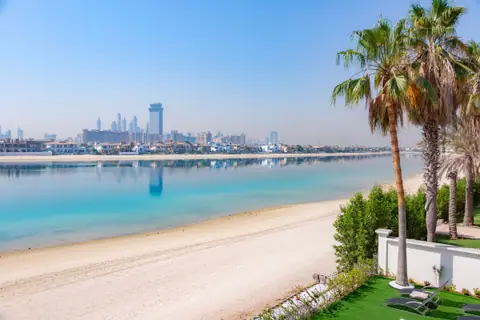
- See the shape of Palm Jumeirah from above. Nakheel's figures give the island an area of 560 hectares, a reach of five kilometres into the Gulf and a population of about 25,000. At street level you cannot see its trunk, fronds and crescent. The View at The Palm, on Level 52 of The Palm Tower at 240 metres, shows the whole design from an open-air 360-degree deck. Our Marina, Palm and desert guide explains how to reach it.
- Visit Global Village in the cooler months. This open-air park of country pavilions, food stalls and stage shows is seasonal. Season 31 opens on 14 October 2026 and runs until May 2027, so it suits a winter trip. Go after sunset, when the pavilions are lit and the air has cooled.
- Spend an afternoon in the Dubai Desert Conservation Reserve. Emirates, which manages the reserve, describes it as covering 225 square kilometres, about 5% of Dubai's land area, and as the first conservation area officially protected in the UAE. It shelters endangered species such as the Arabian oryx. Choose an operator licensed to work inside the reserve rather than a mass-market dune camp.
Two practical points tie these together. The heat shapes everything from May to September, so outdoor sights on this list work far better between November and March; our best time to visit guide has the monthly figures. Most of these sights also cluster by district. Al Fahidi, the abras and the Dubai Frame suit one day, Downtown and the Museum of the Future suit another, and the Palm and the desert make a third. Booking the Burj Khalifa, the Museum of the Future and the desert reserve ahead lets you build each day around a fixed slot, then fill the rest with the free walks and views that make Dubai more than a list of records.
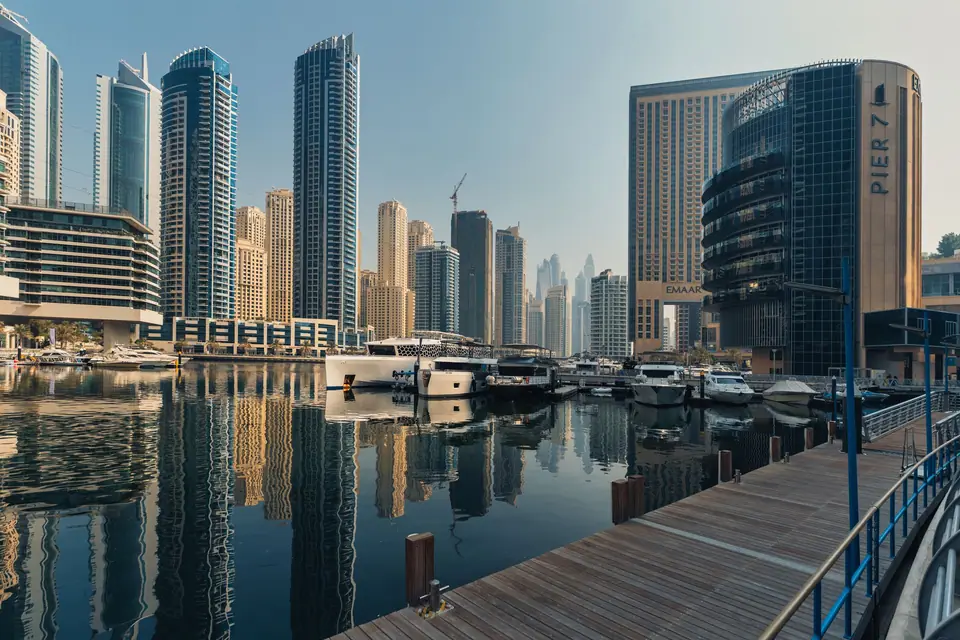
If you have more time, look beyond the headline sights. Evening walks along the Marina promenade, a long lunch in a Bur Dubai café, or simply riding the elevated Red Line at dusk to watch the towers light up cost little and show the city as residents see it. Our where to stay guide helps you pick a base close to the sights you care about most, which matters more here than in compact cities.
Finally, keep a little flexibility in your plans. Haze can soften the view from the observation decks, and strong winds sometimes close outdoor terraces or affect boat trips. Checking the forecast the evening before, and keeping one free half-day, lets you move a tower visit or a desert trip to better conditions without losing anything.
Where it is
- 1Dubai
- Dubai International Airport (DXB) · about 11 km from Dubai in a straight line
- Directions in Google Maps
Stations and taxi ranks: OpenStreetMap. Airports: OurAirports. Distances are in a straight line.
Traveller tips
Real advice from people who have been to Dubai. Every tip is read by our team before it goes live.
No tips yet. Been here? Yours could be the first.
Thank you! Your tip will appear here after a quick review.
More in Dubai
Continue exploring Dubai with related neighbourhood, food, and planning guides