Dubai
The Burj Khalifa and the Museum of the Future, wind-tower lanes and wooden abras on Dubai Creek, island resorts on the Palm and a protected desert reserve inland.
Quick decisions
How many days?
3 days: one for Old Dubai and the creek, one for Downtown and the Burj Khalifa, one for the Palm, the Marina and the desert reserve. Follow our three-day route.
Where should I stay?
Downtown: central, on the Red Line. Bur Dubai and Deira: heritage and value near the airport. Dubai Marina or JBR: beach and promenade. Compare areas in where to stay in Dubai.
Do I need a car?
No. The Red and Green Metro lines, the Dubai Tram, abras and metered taxis cover the main districts. Buy a Silver nol card, since cash is not accepted on the fare system.
Best for
Winter sun from November to March, architecture from the Burj Khalifa to the Museum of the Future, and contrast between the creek's souks and the new city's towers.
Before you go
Check the 2026 security situation and your flight: regional conflict has disrupted flights at Dubai International. Learn the local laws on alcohol, dress and photography in our travel guide.
Getting around
From DXB: the Red Line serves Terminals 1 and 3, with a limit of two pieces of luggage per passenger. Details in arrival and transport.
Continue your trip
Abu Dhabi is reachable by the RTA's E101 bus from Ibn Battuta Bus Station to the capital's Central Bus Station, for the Sheikh Zayed Grand Mosque and Louvre Abu Dhabi.
Overview
Dubai is two cities along one coast. In the north lies Old Dubai around Dubai Creek, a saltwater inlet that divides Deira from Bur Dubai. Here the lanes of Al Fahidi keep their tall wind towers, wooden abras cross the water, and the Spice and Gold Souks fill the streets of Deira.
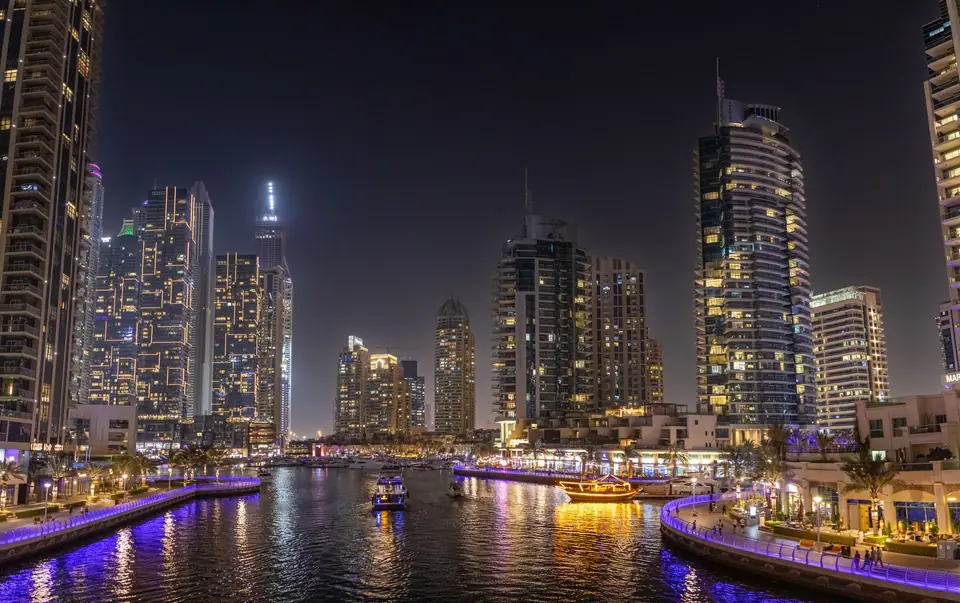
South along Sheikh Zayed Road, the scale changes. Downtown Dubai centres on the Burj Khalifa, 828 metres tall, and the Museum of the Future stands nearby. Further south-west come Palm Jumeirah and Dubai Marina, while the Dubai Desert Conservation Reserve lies inland. Start with our practical briefing, which includes the 2026 security update.
Getting there
Dubai International Airport (DXB) is the main gateway, with Metro Red Line stations at Terminals 1 and 3. A second airport, Al Maktoum International (DWC), lies in Dubai South and connects with the Metro by bus. Flights have been disrupted by the 2026 regional conflict, so confirm your schedule with your airline. Airport links, nol cards, the tram and abras are covered in how to get to Dubai.
Where to stay
Dubai is spread along the coast, so your base shapes every day. Choose Downtown for sightseeing and Metro access, the creek for heritage and value, or the Marina, JBR, the Jumeirah coast or the Palm for the beach. We compare the areas in where to stay in Dubai.
Things to do
Cross Dubai Creek by abra and walk Al Fahidi, go up the Burj Khalifa and visit the Museum of the Future, look down on the Palm from The View at The Palm, and spend an evening in the desert reserve. See the full list in things to do in Dubai.
Food and drink
Dubai's food reflects the many communities who have traded and settled here. Try Emirati machboos, spiced rice with meat or fish, and luqaimat, small dumplings with date syrup, around Al Fahidi, then Persian, Indian and Pakistani kitchens along the creek. A cultural meal with the Sheikh Mohammed Centre for Cultural Understanding is the easiest introduction. More in our Old Dubai and food guide.
Culture
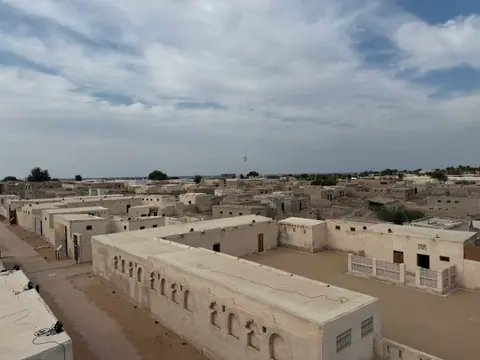
Dubai Creek shaped the town long before the towers. Al Fahidi preserves the way of life here from the mid-nineteenth century to the 1970s, in houses of stone, gypsum, teak and palm with wind towers called barajeel. Hospitality still starts with gahwa, Arabic coffee spiced with cardamom and served with dates. The Sheikh Mohammed Centre for Cultural Understanding welcomes visitors under the motto "Open Doors. Open Minds."
Weather by month
Dubai is warmest in July, with average highs around 42°C, and coldest in January, when nights drop to about 16°C. February is the wettest month by rainfall (18 mm), with rain on about 2 days.
| Month | Low | Range | High | Rain | Rainy days |
|---|---|---|---|---|---|
| Jan | 16°C | 24°C | 16 mm | 2 d | |
| Feb | 17°C | 26°C | 18 mm | 2 d | |
| Mar | 20°C | 30°C | 14 mm | 2 d | |
| Apr | 23°C | 34°C | 6 mm | 1 d | |
| May | 27°C | 39°C | 1 mm | 0 d | |
| Jun | 30°C | 41°C | 0 mm | 0 d | |
| Jul | 32°C | 42°C | 1 mm | 0 d | |
| Aug | 32°C | 42°C | 1 mm | 0 d | |
| Sep | 29°C | 39°C | 0 mm | 0 d | |
| Oct | 25°C | 36°C | 2 mm | 0 d | |
| Nov | 21°C | 31°C | 8 mm | 1 d | |
| Dec | 18°C | 26°C | 14 mm | 2 d |
Averages of daily values from 2015 to 2024. Rainy days are days with at least 1 mm of rain. Source: Open-Meteo · Compare destinations by month.
Dubai on the map
Every place we cover in Dubai. Tap a category or pin to explore.
In-depth Dubai guides
Browse the guides grouped by topic: sights, neighbourhoods, food, transport, day trips and trip planning.
Sights, Landmarks & Parks
Key monuments, viewpoints, museums and nature trails.
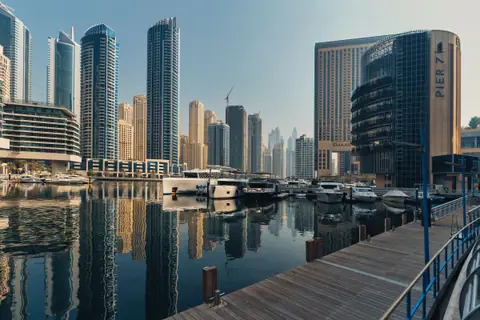 Best Things to Do in DubaiTen Dubai experiences, from wooden abras and wind-tower lanes to the Burj Khalifa, the Palm and a protected desert reserve.
 Downtown Dubai: Burj Khalifa, Dubai Fountain and Museum of the FutureHow to visit the Burj Khalifa, where to watch the Dubai Fountain, and how the Museum of the Future and Dubai Frame fit in.
Neighbourhoods & Where to Stay
Districts, historic quarters and the best bases for your stay.
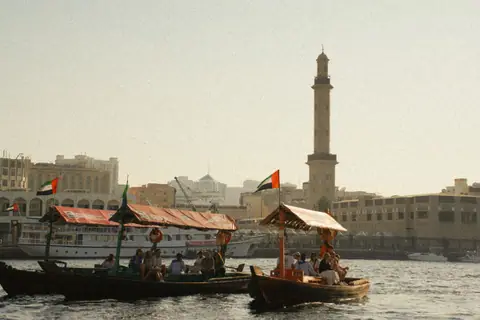 Old Dubai: Al Fahidi, Dubai Creek Abras, Souks and Emirati FoodA walking and abra route through Al Fahidi's wind-tower lanes, along Dubai Creek and into the souks of Deira.
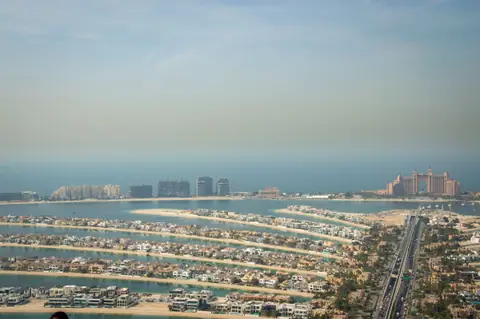 Dubai Marina, Palm Jumeirah, the Coast and the DesertHow to see Palm Jumeirah from above, walk the Marina and JBR, view the Burj Al Arab and choose a responsible desert trip.
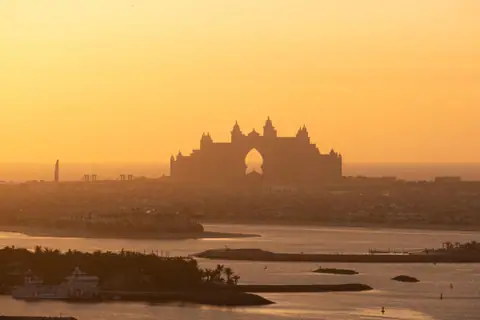 Where to Stay in Dubai: Downtown, Marina, Palm and Old Dubai ComparedFive Dubai bases compared, from Downtown and the creek for sightseeing to the Marina, Jumeirah and the Palm for the beach.
Getting Around & Arrival
Airport transfers, public transit, passes and driving rules.
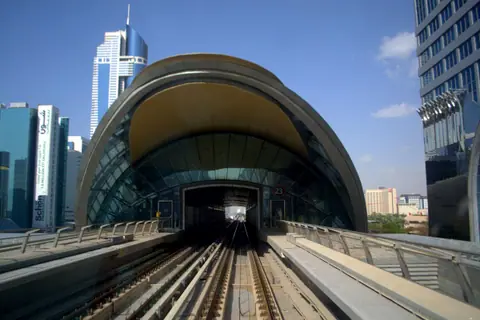
Trip Planning & Itineraries
When to visit, what to pack and day-by-day routes.
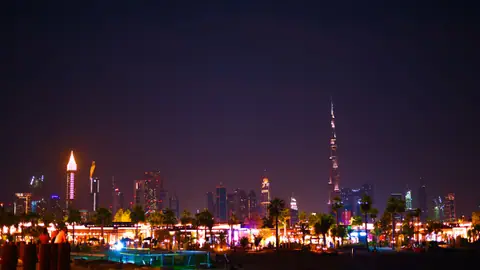 Dubai: What to Know Before You GoA practical briefing on Dubai's layout, current flight disruption, Metro rules, nol cards and the local laws visitors most often get wrong.
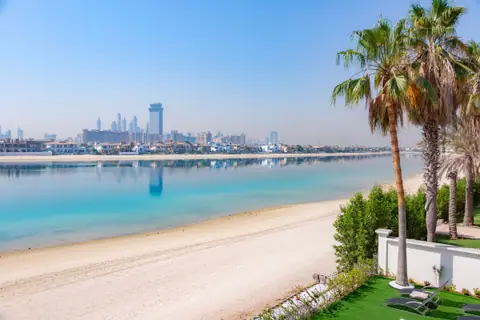 Best Time to Visit DubaiDubai's climate month by month, the case for a winter visit, how to handle summer heat, and planning around Ramadan.
 What to Wear in DubaiHow to dress for Dubai's malls, souks, beaches, mosques and desert evenings without breaking local norms or overheating.
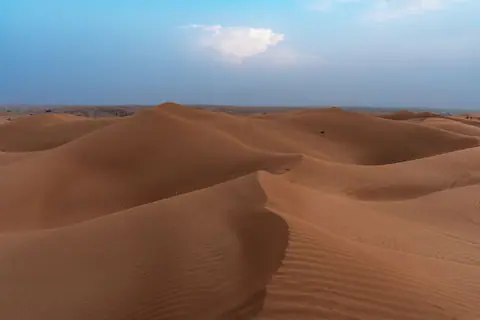 3 Days in Dubai: Old Creek, Skyscrapers and the DesertThree days planned by district, from Old Dubai and the creek to Downtown's towers, then the Palm, the Marina and the desert.
Upcoming events in and near Dubai
Concerts, festivals and tours with their own guide on JourneyCities. Check dates with the organiser before you book.
Need your embassy or consulate in United Arab Emirates? See embassies and consulates in United Arab Emirates.
Reviews
Log in to write a review.
No reviews yet.