Photo: Ele-chudinovsk · CC BY-SA 4.0
Old Tatar Quarter and Märcani Mosque Walking Guide
We explore the preserved timber mansions and stone minarets of the historic Tatar quarter along the quiet shores of Lake Kaban.
Historic Streetscapes and Neighbourhood Origins
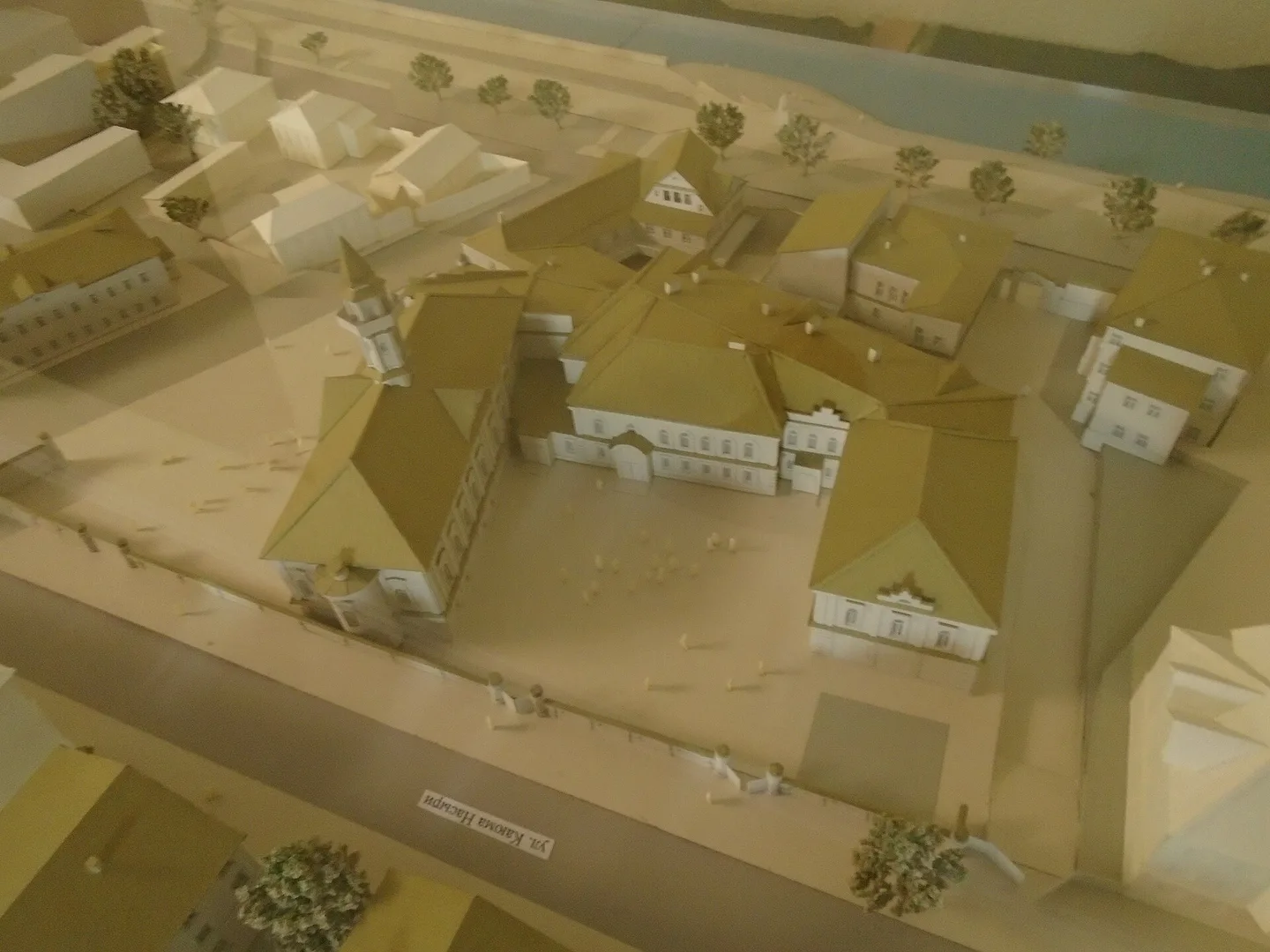
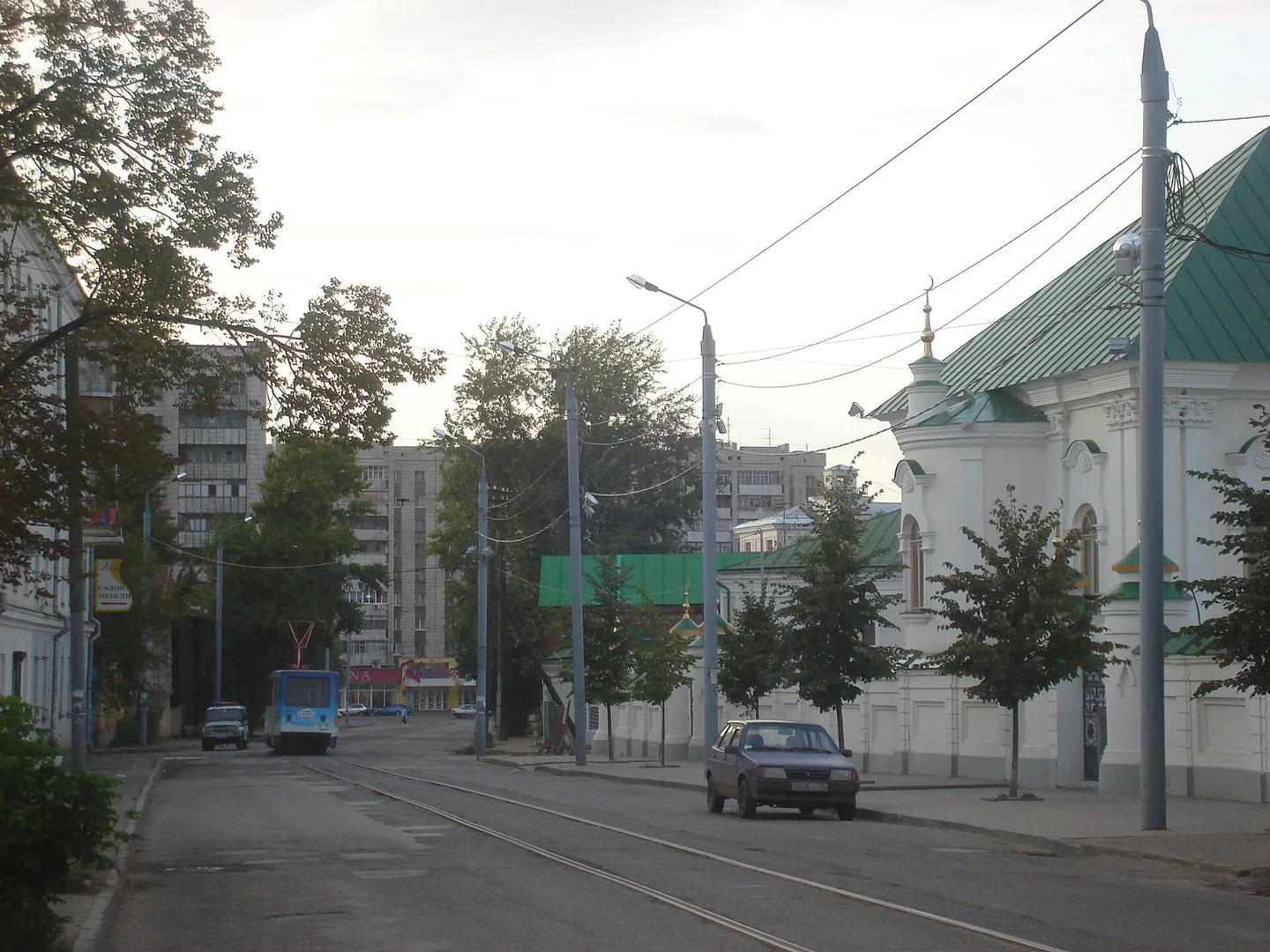
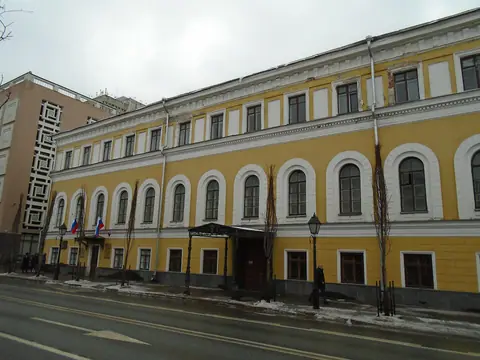
South of the central commercial avenues, the Old Tatar Quarter preserves a distinct urban fabric. It is defined by painted wooden houses, carved window pediments, and tall brick boundary walls. Established after the Russian conquest altered community settlements around the fortress, this quarter developed into an enduring cultural sanctuary. Wealthy merchants, scholars, and craftsmen built residences that fused indigenous decorative motifs with classical Russian proportions. Strolling down Kayum Nasyri Street reveals an array of restored facades finished in contrasting shades of turquoise, ochre, and crisp white.
Unlike the monumental stone ensembles within the northern fortress walls, this neighbourhood displays a residential, human scale. Gates open into interior courtyards where domestic life once unfolded away from public lanes. This layout creates an intimate streetscape that rewards patient on-foot exploration. Many historic timber estates now house community workshops, modest heritage rooms, and teahouses serving hot black tea with honey sweets. The district pairs naturally with the citadel monuments highlighted across sightseeing options in Kazan.
Architecture and Significance of Märcani Mosque
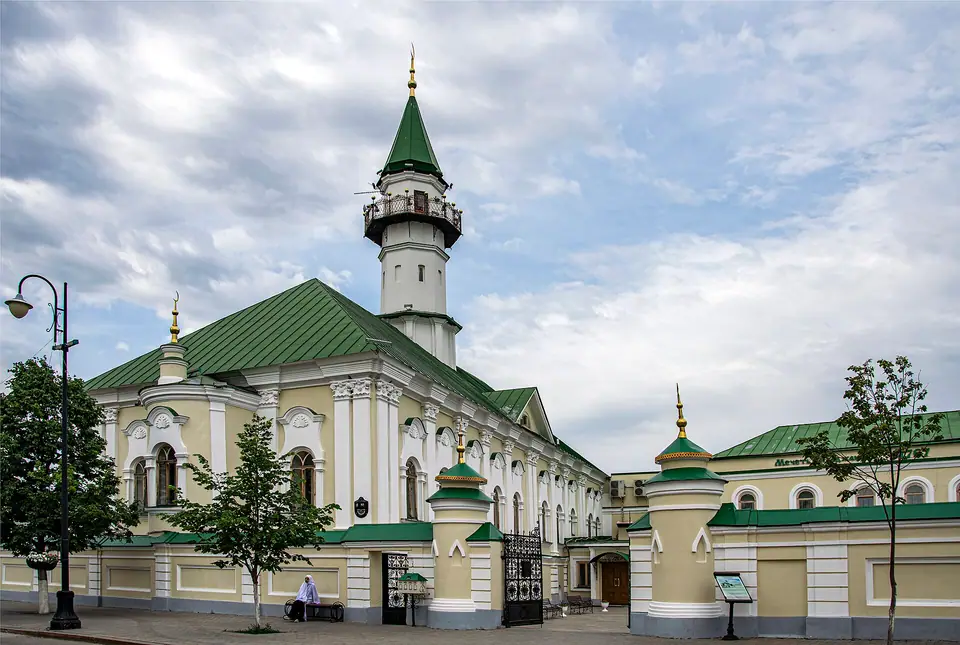
At the spiritual centre of the settlement stands Märcani Mosque, a landmark of early religious tolerance and classical architectural craft. Permitted during the reign of Catherine the Great, this community monument broke generations of prohibitions against stone Islamic construction across the wider territory. Its whitewashed limestone walls incorporate restrained baroque curves. The structure is crowned by a green pitched roof from which a multi-tiered octagonal minaret rises directly. The integration of local roof-minaret forms with northern European decorative styling established a template that influenced rural parish architecture for decades.
Stepping inside the entrance pavilion, worshippers and respectful visitors encounter vaulted prayer halls decorated with refined plaster mouldings and gilded floral friezes. Deep carpets cover the central floor, while high, arched windows admit soft daylight reflecting across cool stone piers. Unlike modern complexes elsewhere in the republic, the interior keeps an unbroken atmosphere of continuous community prayer. Shoes must be removed at the timber entrance racks. Attendants ask that guests dress modestly before approaching the prayer boundaries.
Walking Routes and Key Architectural Highlights
To experience the district methodically, we recommend following a gentle walking loop that connects major religious landmarks with secluded merchant estates. Begin on the pedestrianised stretch of Kayum Nasyri Street, pausing outside the merchant residences before continuing towards secondary prayer halls. Several neighbouring lanes feature understated brick ensembles that illustrate the prosperity of Tatar manufacturing families. Visitors can compare this historic parish sanctuary directly with the elevated blue domes of the Kul Sharif Mosque situated high upon the citadel plateau.
- Kayum Nasyri Street: A restored promenade lined with colourful merchant residences and historic residential courtyards.
- Märcani Mosque: The historic religious focal point featuring traditional stone vaults, an octagonal minaret, and peaceful prayer halls.
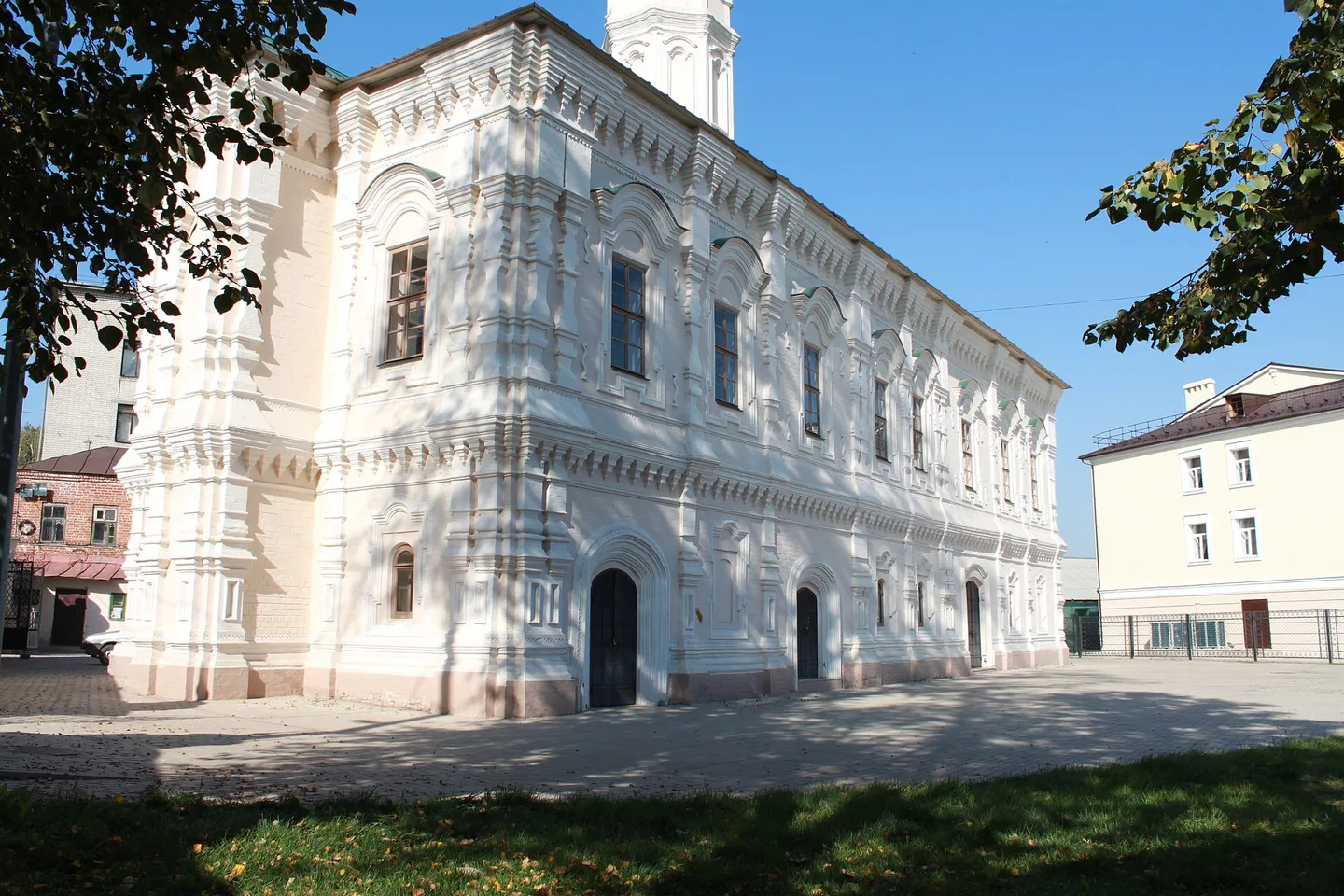
- Apanaev Mosque: A neighbouring landmark showcasing intricate brickwork and decorative cornices from the late merchant era.
- Kunchi Street: A quiet side lane displaying weathered timber homes, carved window frames, and tranquil residential corners.
Continuing past the primary mosque, the surrounding grid presents quieter avenues where local families go about their daily routines. Here, the restored houses give way to lived-in timber cottages showing decades of layered paint and hand-sawn fretwork. Apanaev Mosque stands a short distance away, its elegant facade providing a companion study in provincial Islamic masonry. Walking this route takes roughly two hours at an easy pace, offering ample time to view facade carvings and courtyard gates.
Lakeside Promenades and Local Navigation Advice
The eastern boundary of the quarter meets the wide embankment of Lower Lake Kaban, where broad promenades offer open water views. Willow trees shade the paved waterside path, making it a natural cooling point during warm summer afternoons when inland streets hold heat. In winter, the frozen lake forms a stark, windswept mirror that reflects the colourful timber rooftops across snowy shorelines. Benches line the path, allowing visitors to rest between heritage walks while watching rowers and lake waterfowl glide past.
Reaching the district is simple on foot or by local public transit from central metro hubs. Ploshchad Tukaya station lies a short walk to the northeast, leading travellers directly past regional retail arcades down to the lakeshore. Wear flat shoes with good grip, as timber pavements and heritage cobblestones can become slick after rainfall or winter freezes. Connecting your route from the lake towards central districts takes you back into commercial neighbourhoods, rounding out an enriching encounter with regional heritage.
Official prices and opening hours
- Kazan Kremlin Grounds & Kul Sharif MosqueOfficial site ↗
Where it is
- 1Old Tatar Quarter and Märcani Mosque Walking
- Kazan International Airport (KZN) · about 22 km from here in a straight line
- Directions in Google Maps
Stations and taxi ranks: OpenStreetMap. Airports: OurAirports. Distances are in a straight line.
Traveller tips
Real advice from people who have been to Kazan. Every tip is read by our team before it goes live.
No tips yet. Been here? Yours could be the first.
Thank you! Your tip will appear here after a quick review.
More in Kazan
Continue exploring Kazan with related neighbourhood, food, and planning guides
Where to Stay in Kazan: Best Districts, Historic Streets and River Views
Kazan, Russia
When to Visit Kazan: Seasonal Climate, Sabantuy and Travel Cycles
Kazan, Russia
Kazan in Three Days: Kremlin Heritage, Tatar Quarters, and Volga Promenades
Kazan, Russia
Kazan Planning Guide: Layout, Districts and Local Transit
Kazan, Russia
