Photo: Alexxx1979 · CC BY-SA 4.0
Things to Do in Kazan: Cultural Sights and Historic Quarters
Discover medieval limestone fortresses, blue mosque domes, wooden residential lanes, and sweeping river embankments across central Kazan.
Kazan rewards travellers who explore its elevated stone citadels and low-lying riverfront neighbourhoods on foot. The regional capital combines centuries of Russian and Tatar civic traditions along the confluence of the Volga and Kazanka rivers. Beginning at the highest ridge allows visitors to understand how early settlements defended these trade waters before expanding south into residential districts. Walking through these historic cores reveals contrasting masonry techniques, distinct wooden carvings, and quiet courtyards tucked behind main traffic arteries.
The urban topography slopes naturally from the elevated fortress bluffs down towards freshwater lakes and marshy river flats. This geographic transition shaped the historic division between aristocratic administrative seats and merchant settlements. Today, well-maintained pedestrian pavements and public parks connect these distinct districts into coherent daytime walks. Taking time to cross these boundary lines on foot offers direct insight into the shared cultural heritage of the city.
Navigating the Kremlin Citadel and Historic Hilltop
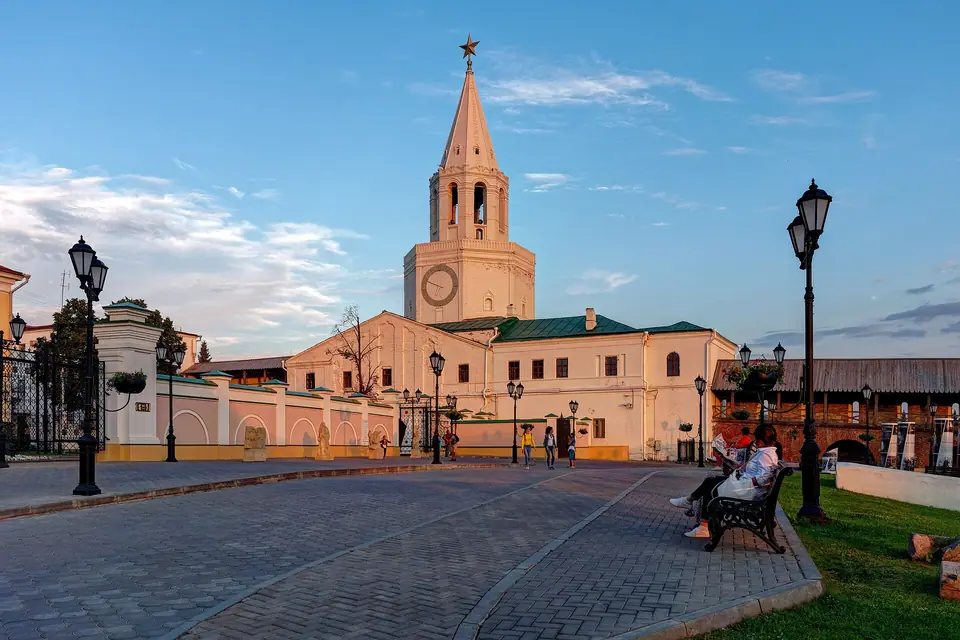
A sensible itinerary begins at the whitewashed Spasskaya Tower, which marks the southern entry into the citadel complex. Stepping past the thick gates brings visitors onto broad stone paths sloping gently towards northern river bluffs. The limestone enclosure protects administrative halls, regional museums, and ancient church foundations. Walk along these historic walls alongside broader city orientation from the Kazan travel guide.
Standing centrally within the upper fortress, the gleaming minarets of the Kul Sharif Mosque rise beside classic Orthodox domes. The mosque interior features detailed tilework, turquoise domes, and elevated galleries overlooking polished stone prayer halls. Steps away along the northern perimeter, the striking tiered brickwork of the leaning tower overlooks the river bend. Travellers can see these adjoining monuments in detail by visiting the Kazan Kremlin and Soyembika Tower complex on a morning walk.
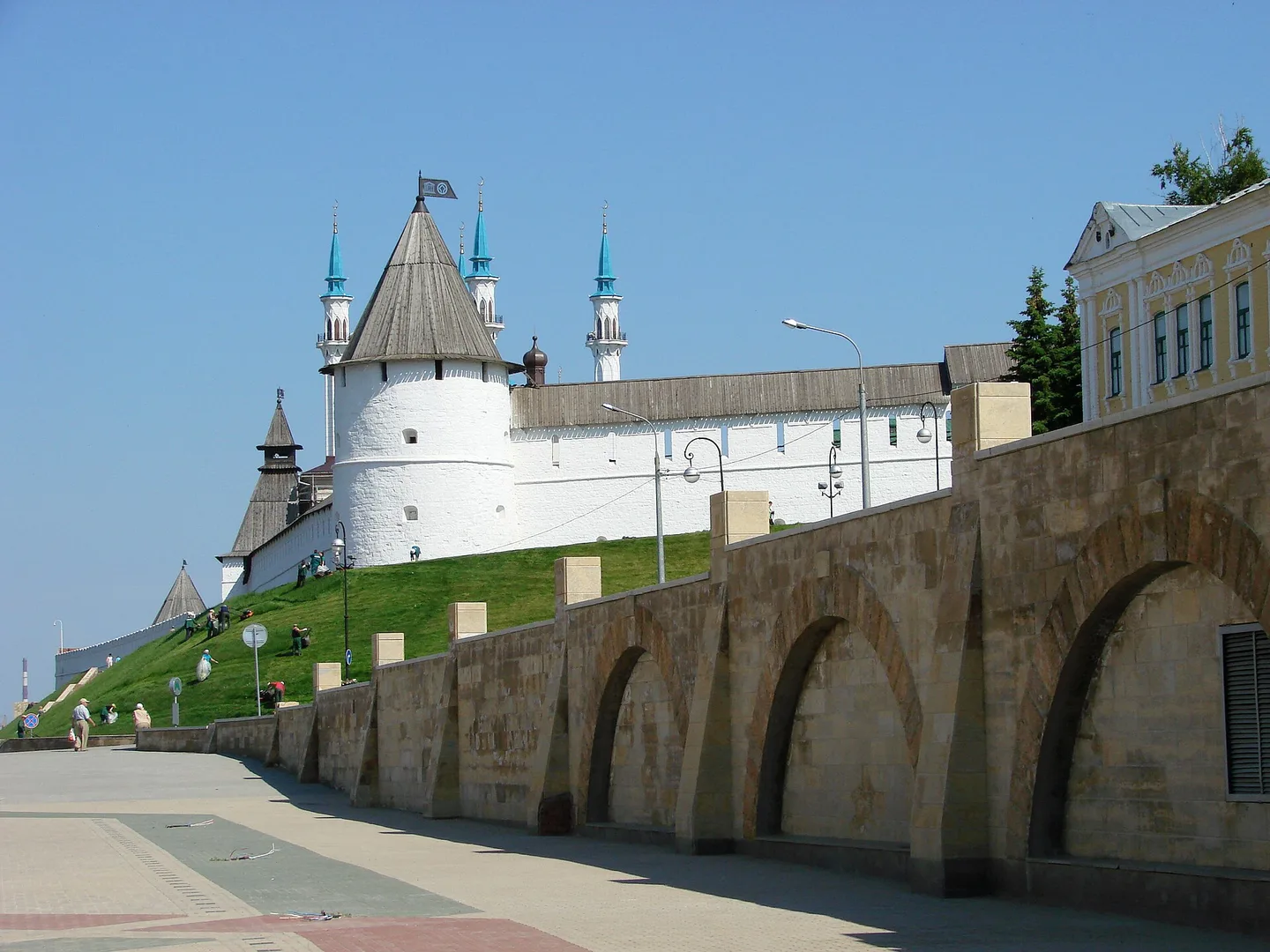
Leaving the northern ramparts, quiet paved lookouts open broad vistas across the river mouth and distant residential districts. Cool river breezes make this ridge a welcome pause before descending south towards commercial streets. Interpretive panels outline layered archaeological finds uncovered beneath modern flagstones, tracing early medieval timber defences beneath stone bastions.
Descending the fortress slope passes manicured terrace lawns and thick limestone outer bastions. These sloped walls once supported heavy defensive artillery along the southern approach. Shaded benches give walkers resting spots beneath mature birch and lime trees, overlooking the grid of the lower historic town.
Promenading Bauman Street and Historic Market Thoroughfares
Stepping south from the fortress square leads straight onto the stone-paved pedestrian spine of central Kazan. Pre-revolutionary merchant facades, traditional teahouses, street sculptures, and quiet arcades line both sides of this busy promenade. Local bakeries along the street serve hot savoury pastries filled with minced meat and potatoes.
Halfway down the pedestrian promenade, towering red-brick masonry announces the imposing Epiphany Church bell tower. Energetic walkers can climb its narrow interior steps to reach an open observation deck with sweeping views across central rooftops. Just a short detour up adjacent side lanes brings visitors to the ornate baroque styling of Bauman Street and Saints Peter and Paul Cathedral. The cathedral stands out for its painted floral exterior friezes and peaceful elevated courtyard.
To help organise your time across these central thoroughfares, consider this comparative summary of central walking areas:
| District | Primary Focus | Walking Conditions |
|---|---|---|
| Kremlin Plateau | Fortress ramparts and historic mosques | Paved stone with mild uphill gradients |
| Bauman Corridor | Merchant architecture and pedestrian dining | Flat pedestrian flags and lively side lanes |
| Old Tatar Settlement | Carved timber houses and heritage mosques | Quiet asphalt streets and waterside paths |
| Kazanka Embankment | River views and modern civic open spaces | Broad concrete promenades with open exposure |
Exploring these commercial streets reveals modest artisan workshops, bookshops, and quiet tea rooms that supply welcome shelter during chilly afternoons. Taking time to step into quiet passageways reveals residential courtyards that escaped modern commercial redevelopment. Wrought-iron balconies and arched carriage gateways survive along several secondary alleys, illustrating the wealth generated by nineteenth-century trade guilds.
Further along the avenue, small public squares host bronze monuments honouring regional folklore, historical figures, and literary heritage. Paved side lanes connect Bauman Street to nearby university campuses, where neoclassical faculty halls and historic library collections stand among leafy courtyards. This mix of student foot traffic and heritage retail gives the district a steady, pleasant rhythm throughout the afternoon.
Exploring the Old Tatar Settlement and Lake Kaban
Continuing south past central metro stations brings travellers into the Old Tatar Quarter, known locally as Staraya Tatarskaya Sloboda. This protected conservation zone preserves painted timber houses decorated with bright shutters, carved wooden gables, and enclosed courtyard gates. Walking these streets feels remarkably different from the grand stone avenues near the citadel, offering a tangible sense of nineteenth-century neighbourhood life.
At the cultural heart of the quarter stands the historic Marjani Mosque, built from solid stone following early imperial decrees. Its modest proportions, whitewashed walls, and green roof integrate traditional Tatar architectural forms with classical details. Surrounding lanes contain small cultural workshops where local craftspeople produce embroidered leather footwear, traditional velvet hats, and painted ceramics. The neighbourhood maintains a relaxed, reflective tempo throughout the week.
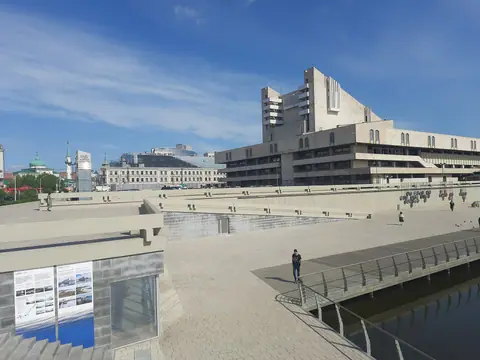
The eastern edge of the timber settlement opens onto the broad promenade of Lake Kaban. Modern wooden boardwalks, public benches, and seasonal fountain displays run along the freshwater shoreline. Walking beside the water provides an uninterrupted view of the opposite bank while connecting smoothly with paths returning towards central districts. Willow trees and reed beds line parts of the inner shore, creating natural bird habitats within the urban boundary.
Informational markers along the lake shore recount legends about treasures hidden beneath deep waters during sixteenth-century sieges. Rowboats and paddleboats drift across the calm surface during warm summer months. Families walk along the waterfront plazas and stop at small wooden kiosks selling hot herbal tea and honey pastries.
Riverfront Promenades and Outer Waterfront Districts
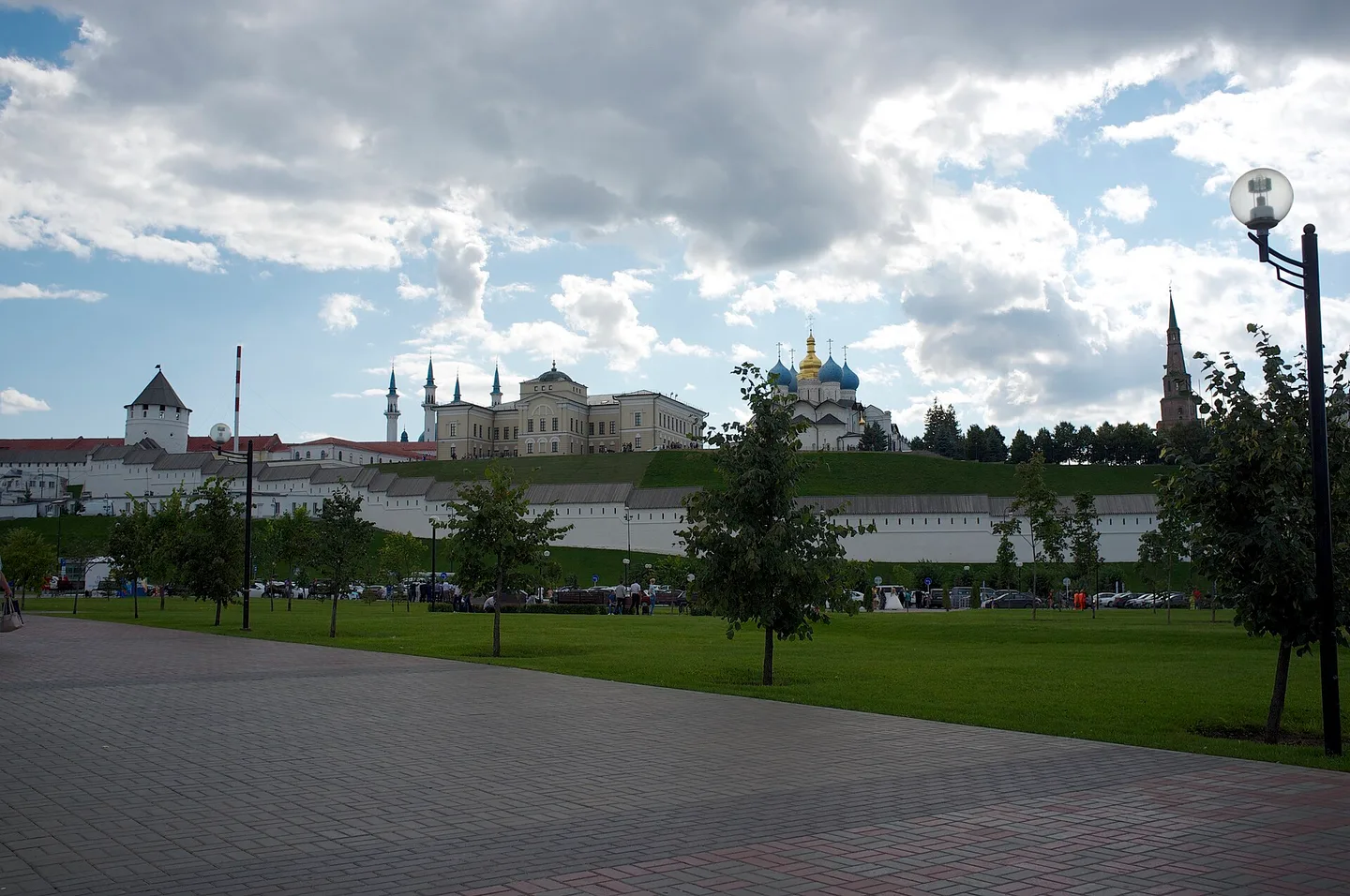
For wide open spaces, walk north towards the landscaped promenade along the Kazanka River. Below the citadel walls, pedestrian lanes and cycling paths trace the shoreline for several kilometres. Walkers and cyclists gather here for water views, open pavilions, and the modern skyline across the northern riverbank.
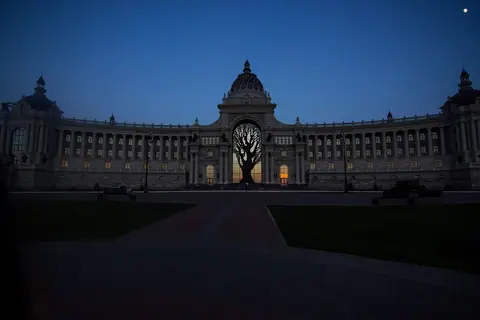
One architectural landmark along this waterfront walk is the Ministry of Agriculture building, framed by a monumental bronze tree sculpture inside its classical archway. Its dramatic scale and warm evening lighting attract steady crowds walking between Kremlin bluffs and river paths.
Travellers with extra time can head west towards older dockland districts and residential avenues. Streets such as Clara Zetkin Street reflect the industrial and maritime heritage that sustained Volga shipping through the twentieth century. Returning to the city centre at dusk reveals floodlit stone towers and calm river waters across Kazan.
Official prices and opening hours
- Kazan Kremlin Grounds & Kul Sharif MosqueOfficial site ↗
Where it is
- 1Kazan
- Kazan International Airport (KZN) · about 24 km from Kazan in a straight line
- Directions in Google Maps
Stations and taxi ranks: OpenStreetMap. Airports: OurAirports. Distances are in a straight line.
Traveller tips
Real advice from people who have been to Kazan. Every tip is read by our team before it goes live.
No tips yet. Been here? Yours could be the first.
Thank you! Your tip will appear here after a quick review.
More in Kazan
Continue exploring Kazan with related neighbourhood, food, and planning guides
Lake Kaban, Kamal Tatar Theatre, and Ekiyat Puppet Theatre Guide
Kazan, Russia
Palace of Farmers, Kazanka Embankment and Kazan Family Center
Kazan, Russia
Temple of All Religions and Kazan Cultural Landmarks
Kazan, Russia
Day Trips from Kazan: Sviyazhsk Island, Ancient Bolgar and Raifa Forest Sanctuary
Kazan, Russia
