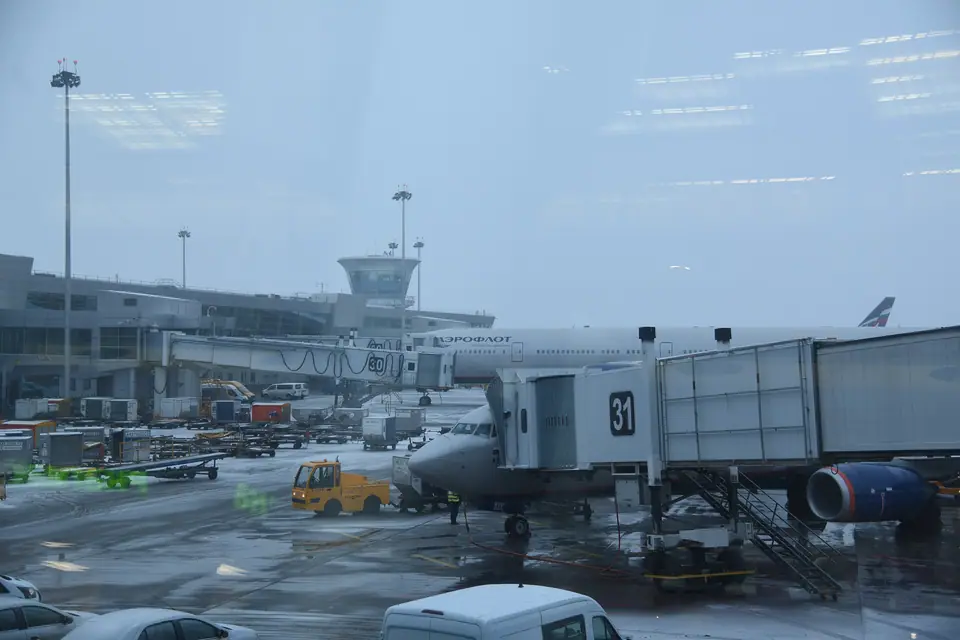
Photo: Rakoon · CC BY-SA 4.0
Arriving in Moscow: Airports, Express Rail Links and Main Terminals
Navigating passenger airports, express rail links and mainline railway stations offers straightforward transit into central Moscow neighbourhoods.
International Air Gateways and Dedicated Express Rail
Moscow welcomes international and domestic flights across three primary commercial airports situated outside the central ring roads. Sheremetyevo sits to the northwest, Domodedovo lies to the south, and Vnukovo operates to the southwest. Each gateway runs a direct rail link known as Aeroexpress. These modern trains carry passengers straight from arrivals halls to inner-city railway terminals. Express rail avoids highway congestion during peak morning rush hours. Visitors disembark on dedicated platforms and walk indoors directly toward adjacent underground concourses.
Boarding the airport rail simplifies ground transfers when landing after long overnight flights. Self-service ticketing kiosks inside arrival halls display clear multilingual menus. Machines accept standard bank cards alongside local contactless travel passes. Inside the double-deck carriages, passengers find wide overhead racks and ground-floor bays reserved for bulky suitcases. Pairing terminal departures with boulevard layouts and local neighbourhood advice aligns ground transfers with afternoon hotel arrivals. Dedicated tracks carry commuters smoothly into central districts without encountering ring-road delays.
Navigating Mainline Rail Terminals and Metro Interchanges
Long-distance domestic trains and express airport shuttles converge at several railway terminals located along the circular metro line. Belorussky station receives arrivals from Sheremetyevo, while Paveletsky terminal connects travellers coming from Domodedovo. Kiyevsky station serves western regional trains alongside southwest airport trains. Each rail terminal interfaces with matching metro stations, creating immediate links across the capital. Deep escalators carry passengers down into grand subterranean halls built with marble and bronze. Overnight sleeper services from western and northern Russian cities also terminate at Leningradsky, Kazansky, and Yaroslavsky halls clustered around Komsomolskaya Square.
Navigating these vast concourses requires following directional overhead signboards printed in Cyrillic and Latin lettering. Transfer corridors between mainline platforms and subway turnstiles remain clearly marked. During busy commuter periods, staying to the right on stairways keeps foot traffic moving steadily. Travellers heading straight toward historic landmarks like the Moscow Kremlin and Armoury Chamber take the brown circular line to connect cleanly onto central red or green lines. High-frequency underground departures keep cross-town journeys predictable throughout every season.
Luggage Logistics and Walking Through Transit Hubs
Handling bulky luggage through sprawling Moscow rail terminals demands practical preparation. Wide turnstiles at every metro barrier allow passengers with heavy wheeled cases to pass through comfortably. Station staff supervise these access gates, offering manual help if magnetic passes fail to register. Stepping onto long underground escalators requires standing on the right side so walking commuters can pass on the left.
Lifts and ramps operate across many renovated transport hubs, yet certain older passageways still rely on modest stone stairs. When walking between mainline platforms and street exits, choosing light wheeled luggage prevents unnecessary physical strain. Visitors picking central sightseeing loops can connect arrival hubs directly with riverfront parks and historic central squares that minimise awkward stair climbs. Porter booths and luggage lockers sit beside principal mainline concourses for travellers pausing between regional rail legs.
Comparing Arrival Corridors into Central Districts
Selecting the optimal route from arrival points depends on your accommodation quarter and final metro station. Licensed airport taxi desks operate inside every terminal arrivals hall, offering metered road transfers that prove useful late at night or for travellers carrying multiple heavy cases. Road journey times lengthen significantly during winter snowstorms and weekday rush hours, making rail departures the most consistent daytime choice. The table below outlines how each air gateway links directly into central railway terminals and subway lines.
| Gateway | Central Rail Terminal | Metro Line Connection | Primary Transfer Advantage |
|---|---|---|---|
| Sheremetyevo | Belorussky Station | Circle Line and Radial Green Line | Direct access to northwestern commercial and hotel quarters. |
| Domodedovo | Paveletsky Station | Circle Line and Radial Green Line | Convenient link to southern districts and riverside avenues. |
| Vnukovo | Kiyevsky Station | Circle Line and Dark Blue Line | Straightforward approach to western river bends and Arbat. |
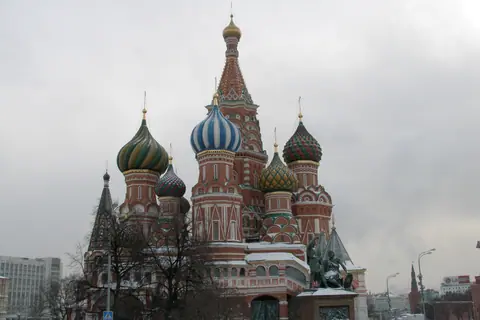
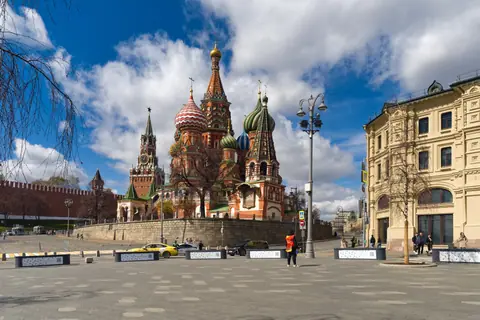
After reaching your terminus, continuing on the metro requires buying a refillable Troika card or single contactless pass at automated ticket machines. The urban system runs with uniform fixed fares across inner zones. Visitors heading straight toward Red Square and Saint Basil's Cathedral can switch easily onto radial lines behind the ticket barriers. Matching airport rail lines carefully to central hotel quarters keeps arrivals in Moscow organised and smooth throughout the year.
Official prices and opening hours
- Moscow Kremlin Territory & Armoury ChamberOfficial site ↗
- State Tretyakov Gallery (Lavrushinsky Lane)Official site ↗
Where it is
- 1Moscow
- Sheremetyevo International Airport (SVO) · about 29 km from Moscow in a straight line
- Directions in Google Maps
Stations and taxi ranks: OpenStreetMap. Airports: OurAirports. Distances are in a straight line.
Traveller tips
Real advice from people who have been to Moscow. Every tip is read by our team before it goes live.
No tips yet. Been here? Yours could be the first.
Thank you! Your tip will appear here after a quick review.
More in Moscow
Continue exploring Moscow with related neighbourhood, food, and planning guides