Reykjavik Waterfront and Hilltop Landmarks: Architecture Guide
Reykjavik presents a striking architectural dialogue between volcanic geology and northern light, connecting hilltop basalt spires with crystalline waterfront halls.
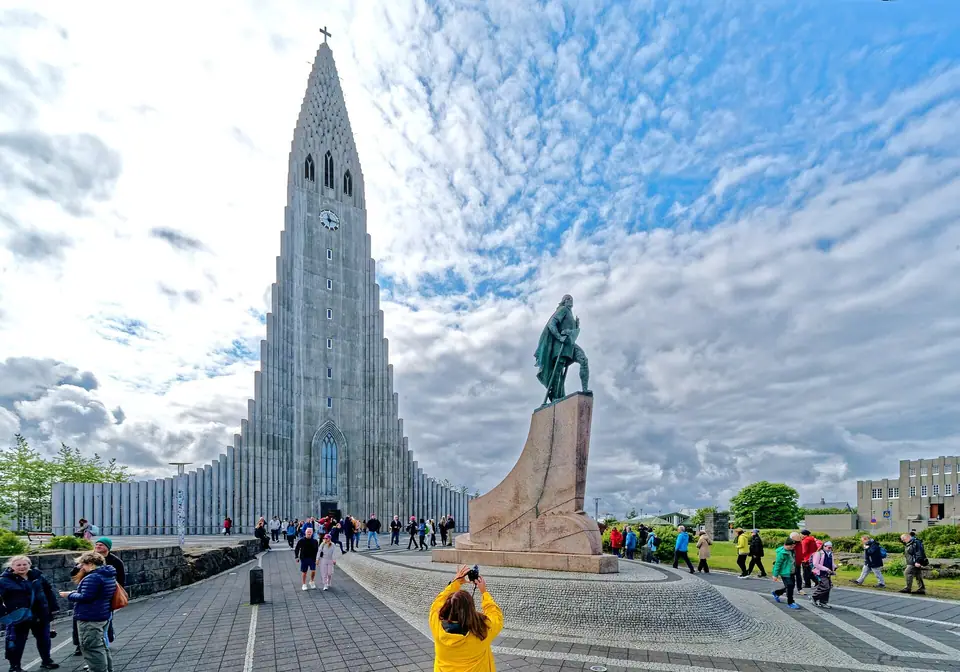
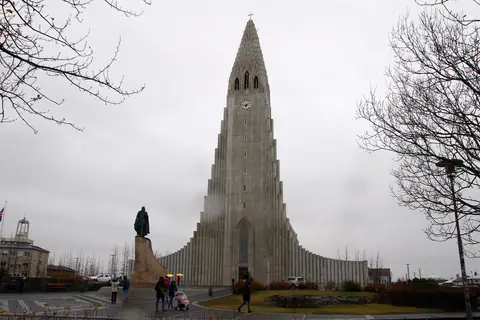
Standing atop the crest of Skolavorduholt hill, Hallgrimskirkja anchors the skyline of the Icelandic capital with an assertive profile visible from approach roads across the peninsula. State architect Gudjon Samuelsson drew up the plans in 1937, intending the exterior to mirror the country volcanic landscape. The stepped concrete wings evoke the hexagonal basalt columns found at natural sites like Svartifoss waterfall in southeast Iceland. Construction began shortly after the Second World War and proceeded over decades, culminating in its formal consecration in 1986. At 74.5 metres tall, the bell tower stands as one of the tallest architectural structures in the country, crowned by an observation platform. In front of the sanctuary entrance, the bronze statue of Leif Eriksson keeps watch over the city square, a gift presented by the United States Congress in 1930. The massive plinth forms an integral part of the ceremonial approach, framing the towering central spire against passing Atlantic cloud cover.
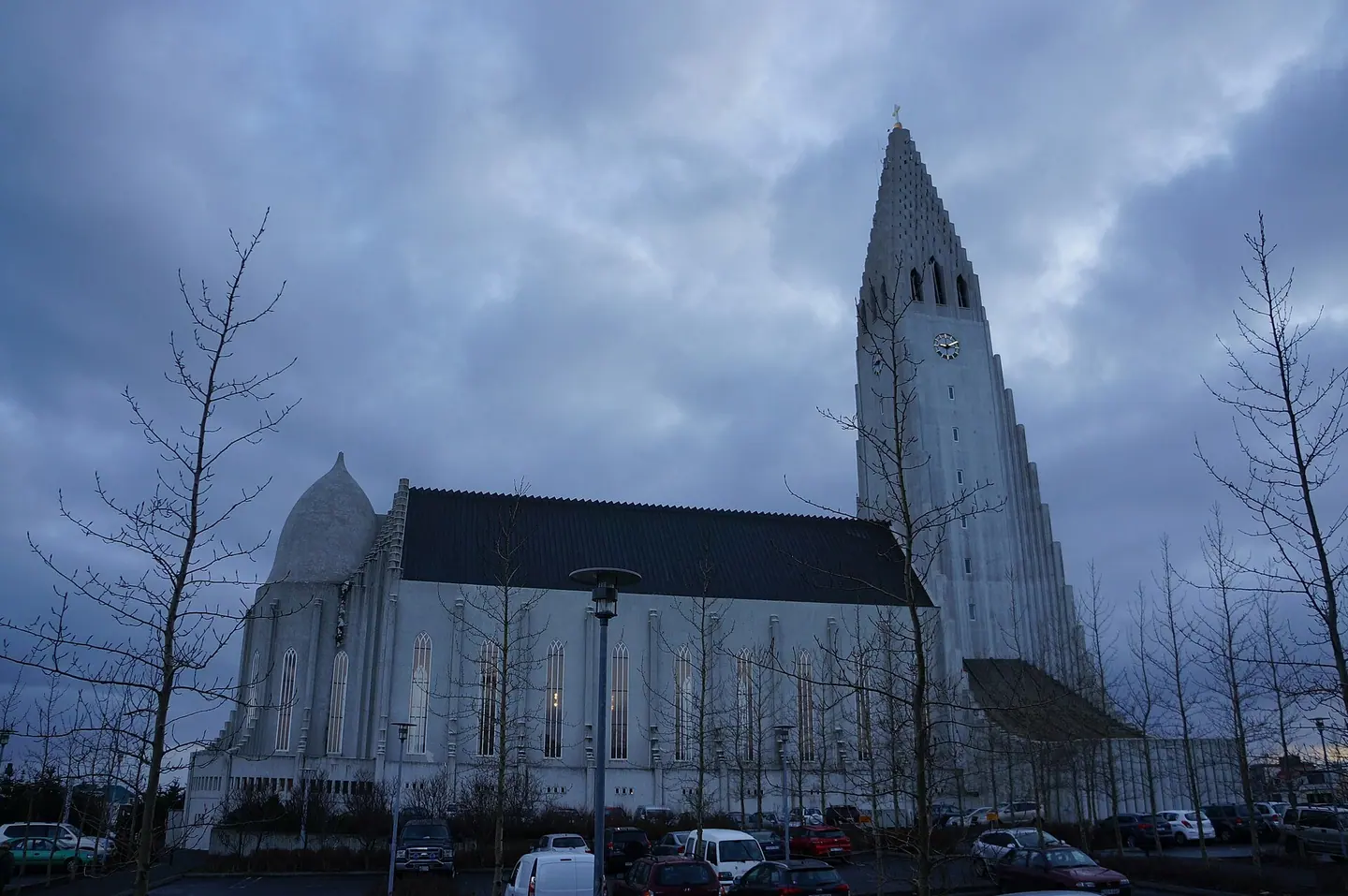
Visitors approaching the landmark along Skolavordustigur can observe how the concrete pylons rise rhythmically towards the belfry, tapering upward with strict mathematical symmetry. The textured pale aggregate on the facade responds to changing weather, shifting in tone from cold grey during rain to warm cream under low winter sunshine. Rather than adopting decorative historical revivals, Samuelsson embraced national romanticism merged with Nordic functionalism, seeking a vernacular language born purely from local geology. The church remains an active Lutheran parish serving the downtown congregation alongside national commemorations. To review ticket details and lift access schedules for the high belfry viewing platform, refer to the visitor information box below. The outdoor plaza around the statue offers clear sightlines down towards the sea, providing a practical starting point before descending into the commercial core.
Acoustics and Light Within the Great Concrete Nave
Stepping through the main portals reveals an interior characterized by restrained elegance, where Gothic ribbing is stripped down into pure white concrete geometry. Tall lancet windows run along the north and south flanks, allowing untamed Nordic daylight to flood across rows of plain wooden pews. The vaulted ceiling arches smoothly overhead, guiding attention directly towards the minimalist altar at the eastern end. High above the entrance foyer sits the primary musical centrepiece of the church, an extraordinary four-manual concert organ built by Johannes Klais Orgelbau of Bonn. Completed in 1992, this immense mechanical instrument weighs 25 tonnes, reaches a height of 15 metres, and houses 5,275 individual pipes. The instrument produces exceptional dynamic range, filling the cavernous concrete hall with rich reverberation during recitals.
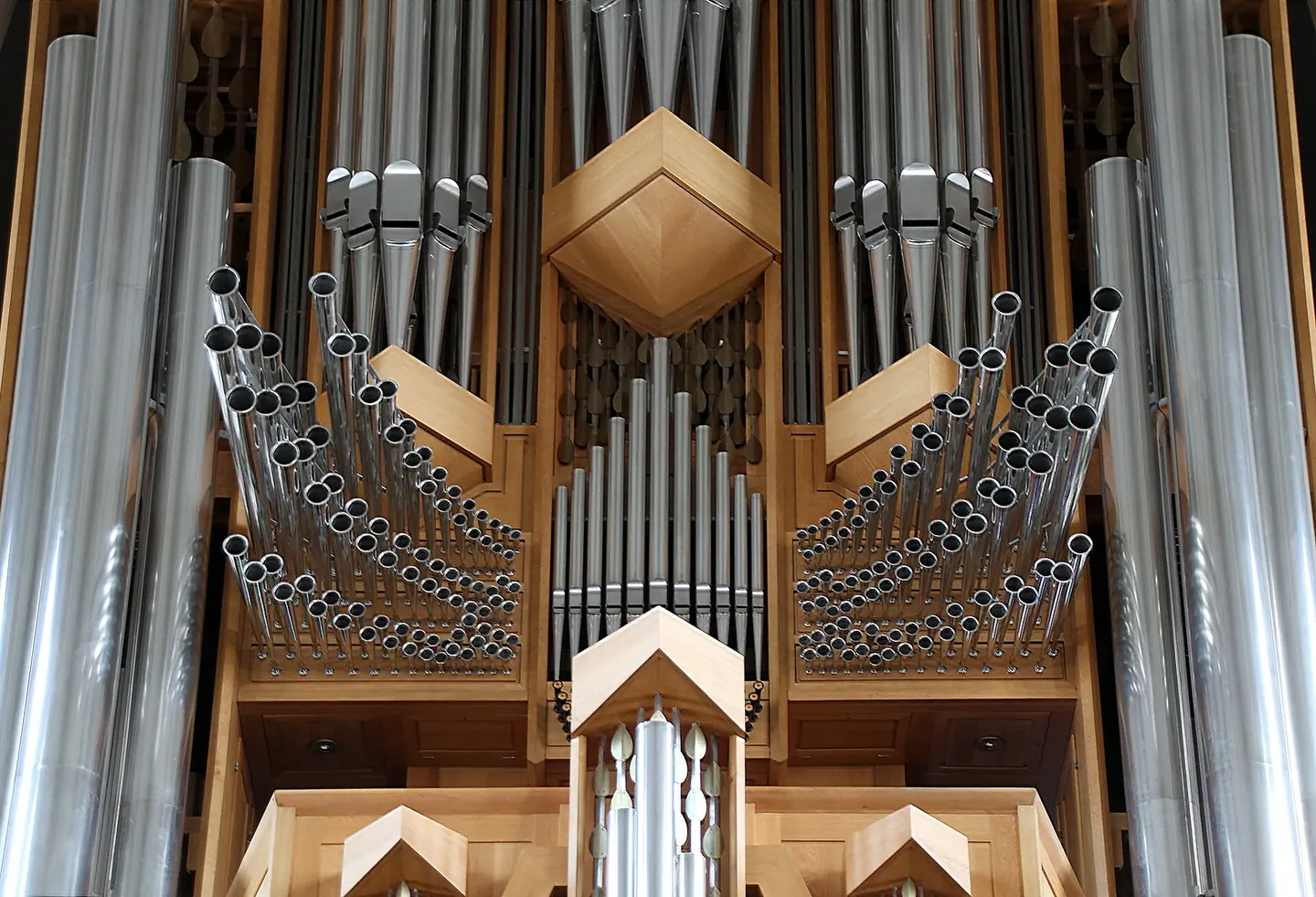
The interior atmosphere changes throughout the afternoon as shadows lengthen across the pale limestone flooring and fair-faced concrete pilasters. Because Samuelsson omitted applied gilding and heavy statuary, the volume relies entirely on proportion, clean surfaces, and tonal gradation to create quiet reverie. Travellers exploring cultural highlights across Reykjavik cultural sights will find this sanctuary offers a remarkably calm counterpoint to windy streets outside. The organ facade remains a technical marvel, with polished tin display pipes arranged vertically to complement the ascending lines of the building itself. Organists from around the world travel here to perform repertoire ranging from early Baroque chorales to avant-garde contemporary compositions. Quiet seating areas along the side aisles allow guests to study the junction between modern engineering and liturgical purpose without distraction.
Harpa Concert Hall and Waterfront Crystalline Geometry
Down at the edge of the Old Harbour, Harpa Concert Hall presents a dazzling contrast to the solid masonry of the hilltop church. Designed through a partnership between Henning Larsen Architects, Icelandic firm Batteriid, and artist Olafur Eliasson, the cultural centre opened to the public in May 2011. Its most celebrated element is the south facade, built from twelve-sided geometric glass blocks termed quasi-bricks. These hollow steel-framed units capture reflections from water, cloud cover, and street traffic, transforming the exterior envelope into a shifting kaleidoscope of northern light. In 2013, the building received the European Union Prize for Contemporary Architecture, also known as the Mies van der Rohe Award, honouring its civic and technical achievements. The complex houses the Iceland Symphony Orchestra and the Icelandic Opera, anchoring the city performing arts community.
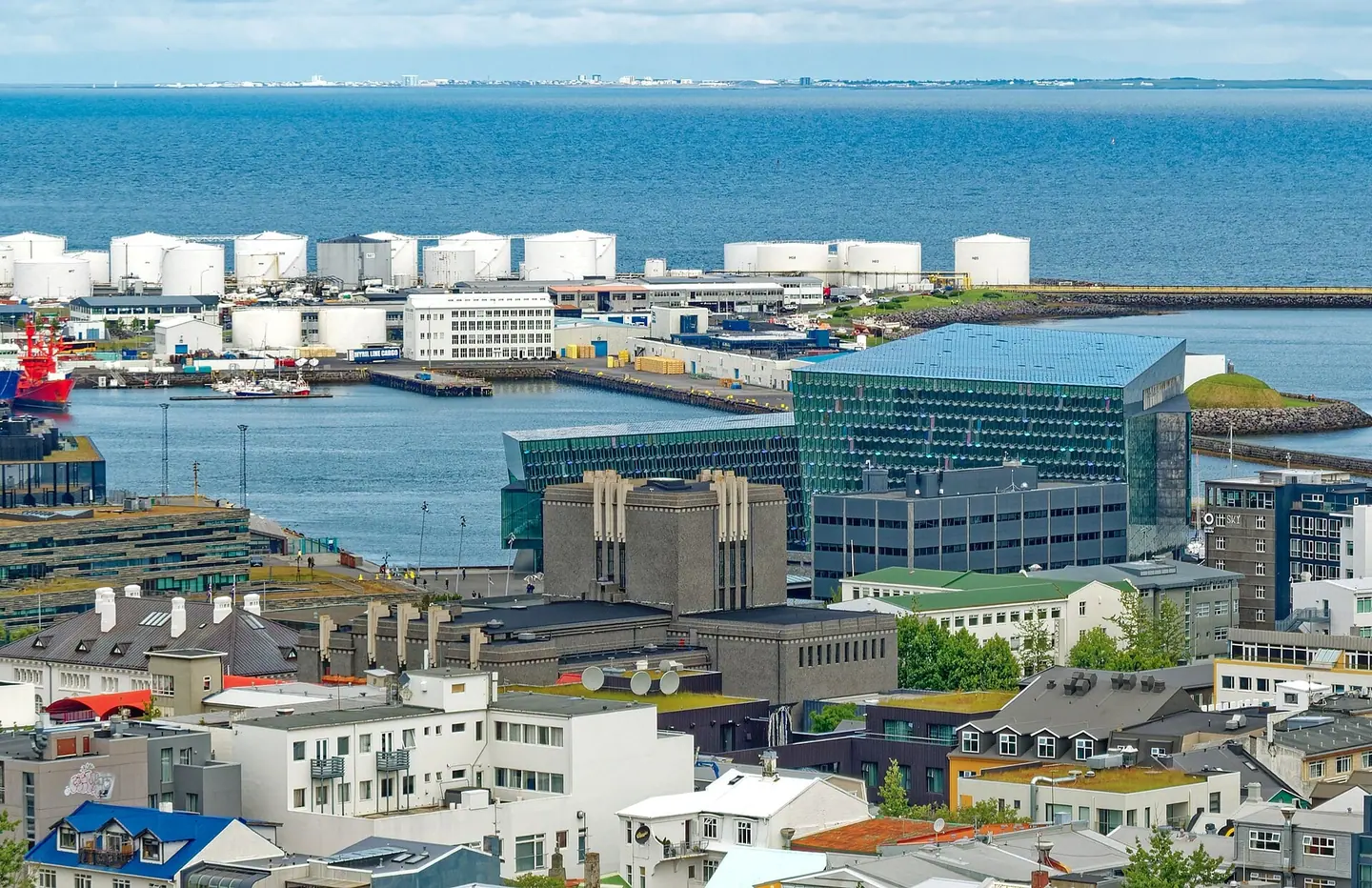
The interior public concourses step upwards over multiple split levels, connected by broad staircases and cantilevered bridges that echo coastal basalt cliffs. Polished dark terrazzo floors reflect internal LED lighting schemes developed by Eliasson, which illuminate the geometric perimeter after sunset. Guests can freely enter the ground-floor foyers to study how the glass modules frame views across the bay towards Mount Esja. For evening performance timetables, box office hours, and guided building access, refer to the visitor information box below. Harpa stands as a symbol of contemporary renewal, successfully turning a post-industrial wharf into an active public gathering zone. The main concert hall, named Eldborg, features deep red timber paneling and variable acoustic baffles calibrated for acoustic clarity.
The Sun Voyager and the Coastal Sculpture Path
Walking east along the Saebraut shoreline promenade brings travellers to one of the most photographed public monuments in Iceland, the Sun Voyager, or Solfarid. Crafted by Icelandic sculptor Jon Gunnar Arnason, this stainless-steel construction was unveiled in 1990 to celebrate the bicentennial of the Reykjavik municipality. The artwork rests on a circular granite platform that projects slightly into Faxafloi bay. Although visitors often perceive the design as a Viking longship, Arnason created it as an ode to the sun, representing an imaginary vessel carrying hopes of undiscovered territory and freedom. The slender, polished steel ribs sweep skyward, framing open water and snow-dusted mountains across the fjord.
| Monuments and Sculptures | Key Designers | Primary Materials | Architectural Inspiration |
|---|---|---|---|
| Hallgrimskirkja | Gudjon Samuelsson | Reinforced concrete and pale aggregate | Hexagonal basalt columns and volcanic crags |
| Harpa Concert Hall | Henning Larsen, Batteriid, Olafur Eliasson | Steel frame and geometric quasi-brick glass | Crystalline basalt minerals and Arctic light |
| The Sun Voyager | Jon Gunnar Arnason | Fabricated stainless steel and granite base | Dream boats, solar journeys, and maritime horizon |
The paved path running alongside the sculpture provides an ideal pedestrian connection between the civic centre and maritime districts. You can follow this scenic coastal route into the Midborg and Old Harbour route, passing working dry docks and renovated timber warehouses. During sunrise and twilight, the stainless-steel beams reflect intense pink and golden tones from the horizon, drawing landscape photographers throughout every season. The surrounding shore remains exposed to maritime winds, making warm layers necessary when stopping to absorb the wide coastal panorama. The continuity between Arnason sculpture, Eliasson glass walls, and Samuelsson volcanic church illustrates how strongly geological forms continue to guide modern public design across Reykjavik.
Official prices and opening hours
- Hallgrimskirkja TowerOfficial site ↗
- Harpa Concert HallOfficial site ↗
Where it is
- 1Reykjavik Waterfront and Hilltop Landmarks
- Keflavik International Airport (KEF) · about 37 km from here in a straight line
- Directions in Google Maps
Stations and taxi ranks: OpenStreetMap. Airports: OurAirports. Distances are in a straight line.
Traveller tips
Real advice from people who have been to Reykjavik. Every tip is read by our team before it goes live.
No tips yet. Been here? Yours could be the first.
Thank you! Your tip will appear here after a quick review.
More in Reykjavik
Continue exploring Reykjavik with related neighbourhood, food, and planning guides
12 Essential Landmarks and Geothermal Experiences in Reykjavik
Reykjavik, Iceland

Getting to Reykjavik: Keflavik Transfers, Local Flights and City Transit
Reykjavik, Iceland
Reykjavik Seasonal Guide: Midnight Sun, Puffins, Auroras and Road Openings
Reykjavik, Iceland

What to Wear in Reykjavik: The Three-Layer System, Footwear and Pool Etiquette
Reykjavik, Iceland
