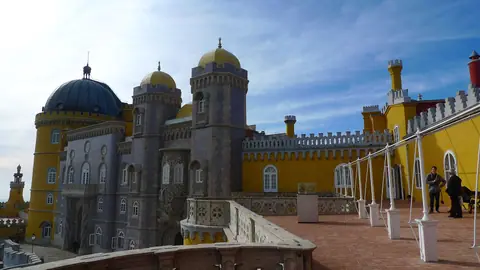
Photo: Pedro Ribeiro Simões from Lisboa, Portugal · CC BY 2.0
Best Time to Visit Sintra: Fog, Months, Crowds & Weekdays
Month-by-month weather in Sintra, how to dodge dense Atlantic ridge fog at Pena Palace, best weekdays to avoid crowds and seasonal garden blooms for 2026.
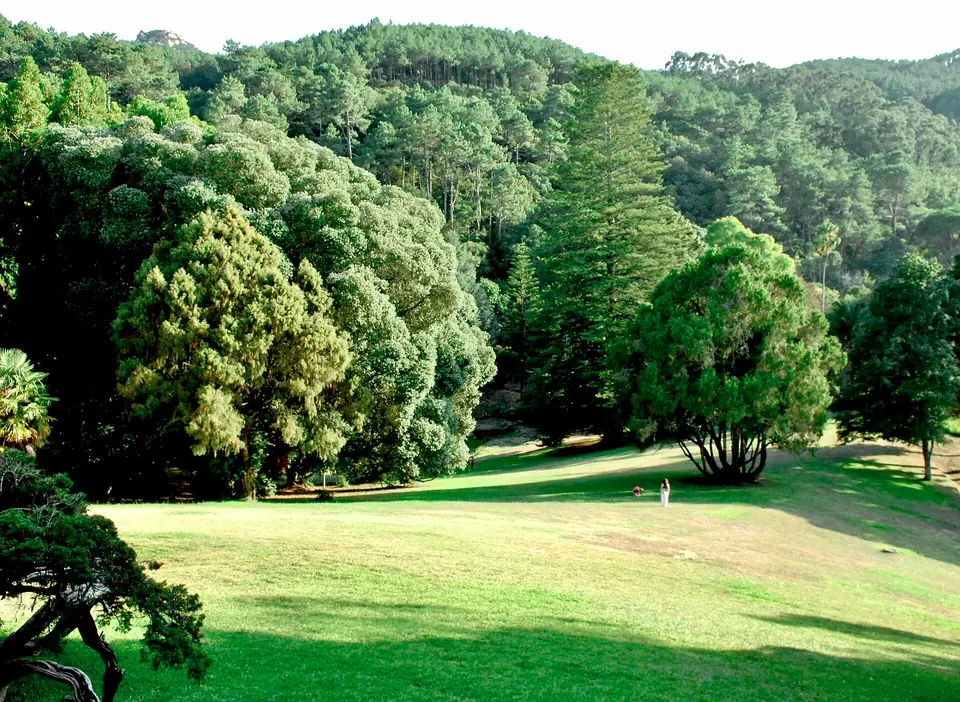
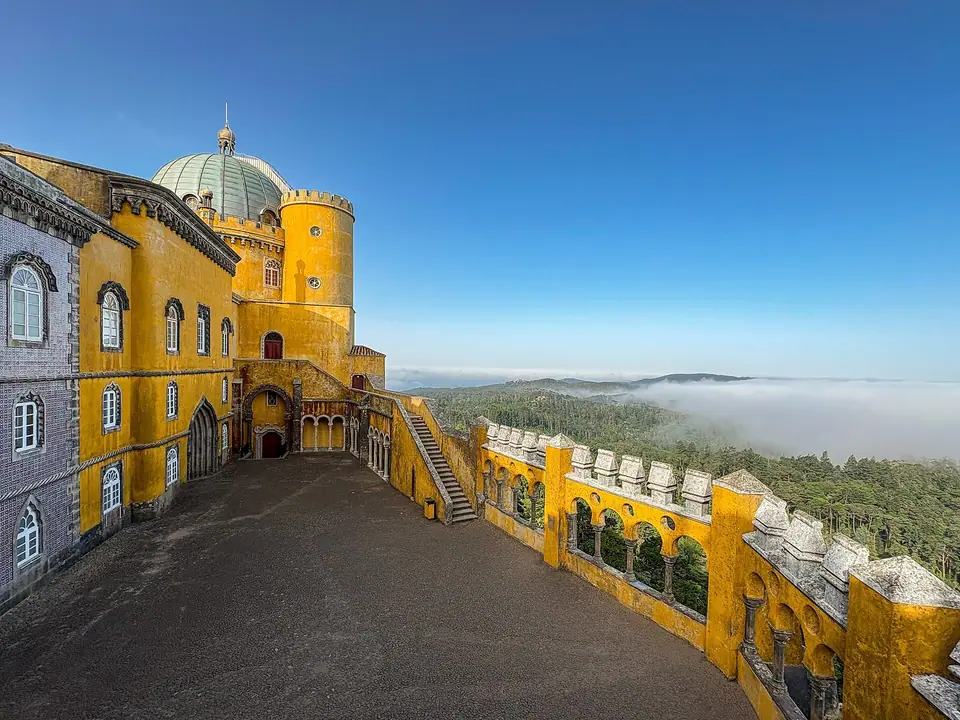
Picking the best time to visit Sintra requires understanding its extraordinary Atlantic mountain microclimate. The Serra de Sintra rises sharply inland from the Atlantic Ocean. The granite ridge of the Serra de Sintra traps moisture-laden sea breezes, generating sudden horizontal fog (nevoeiro), brisk winds, and temperatures cooler than central Lisbon on the exact same afternoon. This constant mist nurtures Sintra\'s mossy primeval forests and giant tree ferns. However, low morning cloud can hide the towers of Pena Palace from view. Checking the mountain ridge from town before boarding the uphill bus helps you choose the clearest morning for hilltop viewpoints. For a smooth trip, May to June and September to October deliver the finest balance of clear afternoon visibility, blooming botanical gardens, and manageable queues.
| Season / Months | Sintra Ridge Weather | Fog & Rain Risk | Crowd Level | Best Suited For |
|---|---|---|---|---|
| Spring (Apr to Jun). | Mild days and cool evenings. | Moderate morning mist; clears by midday. | Moderate (May to Jun busy on weekends). | Rhododendron & azalea blooms, forest hikes & photography. |
| Peak Summer (Jul to Aug). | Warm days and fresh mountain breezes. | Low rain; windy afternoon ridge fog. | Very High (book Pena well ahead). | Cool escape from Lisbon heat & Sintra Festival concerts. |
| Early Autumn (Sep to Oct). | Pleasant daytime warmth and clear skies. | Warmest, clearest afternoons of the year. | Moderate (drops after mid-Oct). | Clear Cabo da Roca sunsets, Colares wine harvest & castle walls. |
| Winter (Nov to Mar). | Cool mountain air and damp days. | High rain & mystical thick fog. | Low (walk-up entry at most sites). | Winter camellia blooms (Jan to Mar), atmospheric mist & low hotel rates. |
The Sweet Spots: Late Spring & Early Autumn
May and June show the UNESCO Cultural Landscape at its most lush and fragrant. Inside Pena Park and the Botanical Gardens of Monserrate, numerous species of rhododendrons, azaleas, magnolias, and wisteria burst into flower along rushing spring-fed streams. Daytime temperatures on the mountain remain pleasant, ideal for hiking the forest trails up to the Moorish Castle without breaking a heavy sweat.
September and October are arguably even better for panoramic photography. During midsummer, the sharp temperature gap between hot inland Portugal and the cold Atlantic Ocean triggers the fierce Nortada wind. This pushes a thick blanket of white marine stratus cloud over the peak of Pena Palace. By September, inland temperatures moderate, the Nortada calms down, and Sintra enjoys its calmest, clearest visibility, letting you see from the Viewpoint of the Palace of Pena to the Tagus estuary. On sunny afternoons, views reach the Atlantic horizon at Cabo da Roca.
Summer: Refreshing Mountain Air vs Peak Queues
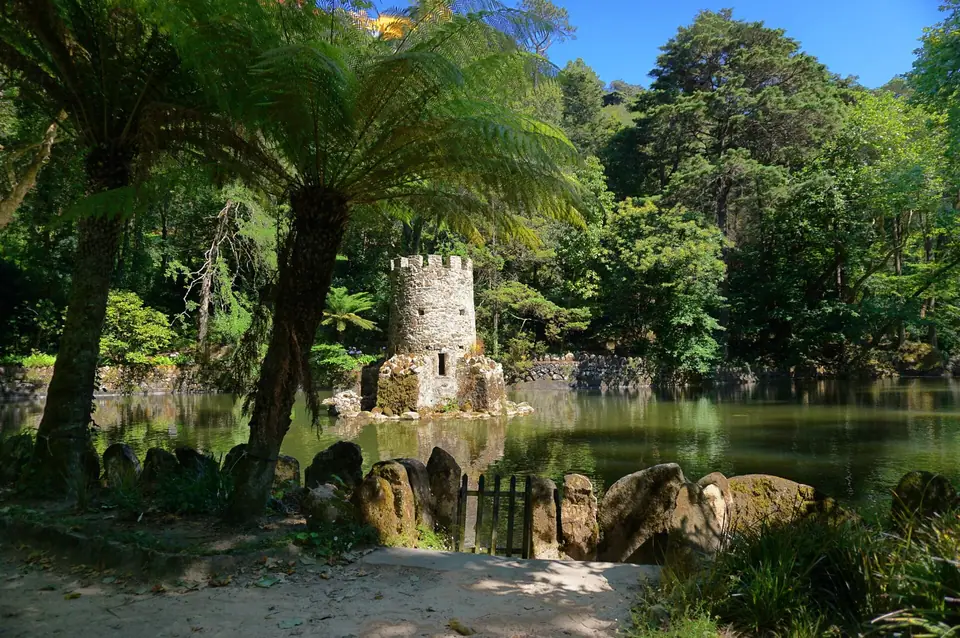
Historically, Portuguese royalty moved their entire court to Sintra in July and August for a simple reason. While Lisbon swelters in summer heat, the shaded ravines around Quinta da Regaleira and Monserrate stay noticeably cooler. However, summer brings two operational challenges you must plan around:
- Sold-Out Timed Slots & Bus Queues. In July and August, morning interior slots at Pena Palace and Quinta da Regaleira sell out well in advance. The queue for the bus outside Sintra Station in the morning can wrap around the block. Beat the rush by catching an early train from Lisbon Rossio, or better yet, staying overnight in Sintra-Vila.
- Seasonal Wildfire Risk: There is a high risk of wildfires during the summer season from April to October. Under national civil protection procedures, forested mountain monuments, including Pena Park, Pena Palace, the Moorish Castle, Monserrate, and the Capuchos Convent, may be temporarily closed to the public during severe alerts. Meanwhile, urban sites like the Sintra National Palace and Palace of Queluz often remain accessible. Always check the official website before visiting.
Best Days of the Week & How to Read the Sintra Fog
In any month you visit, Tuesday, Wednesday, and Thursday are noticeably quieter than weekends and Mondays. Why avoid Mondays if you have a choice? Major national monuments in Lisbon, such as Jerónimos Monastery and Belém Tower, historically close or restrict access on Mondays. Thousands of tourists in Lisbon divert to Sintra on Monday mornings, making Monday a remarkably busy weekday on the train line from Rossio. Similarly, on Sundays and Portuguese public holidays, domestic families head up into the Serra de Sintra for forest walks and pastry stops.
If you see grey cloud clinging to the mountain when you arrive at Sintra Station, do not panic. In spring and autumn, morning mist regularly lifts from the valley upward before midday. In contrast, in summer, coastal fog is often clearest in the early afternoon before returning later. If you hold a Park-only ticket or flexible pass on a foggy morning, start inside the sheltered valley tunnels of Quinta da Regaleira. The tiled halls of Sintra National Palace provide shelter before you head up to the Moorish Castle in clearer weather.
Winter: Camellia Blooms & Gothic Atmosphere
Visiting Sintra between November and March feels like stepping into an atmospheric period novel. Mist curls around the spiral staircases of Quinta da Regaleira, moss glows bright emerald across every granite boulder. You can stand near the Viewpoint of the Palace of Pena, or inside the Church of the Convent at the Convent of the Capuchos without waiting in long queues. In addition, during winter months, Pena Park's historic collection of blooming camellia trees blankets the forest floor in colourful petals.
Month-by-Month Calendar & Major Sintra Cultural Events
Planning around Sintra's cultural calendar adds memorable music and pageantry to your visit. In January, February, and March, cool days provide quiet paths while camellias bloom across Pena Park and Monserrate. In April and May, spring wildflowers carpet coastal cliffs and climbing plants drape stone walls across Sintra-Vila.
In June, musical events stage classical recitals and chamber music performances inside historic venues like the Music Room of Monserrate Palace. During early summer, traditional festivities also fill local squares with food, folk dancing, and artisan stalls. In July and August, cool mountain breezes offer relief from Lisbon's heat. Meanwhile, September and October bring coastal harvests and some of the clearest sunset skies of the year.
Seasonal conditions across the Serra de Sintra guide which municipal routes and garden estates shine brightest during your trip. On clear days, the elevated Viewpoint of the Palace of Pena and the battlements of The Moorish Castle offer sweeping vistas. Clear weather is ideal for visiting the Cabo da Roca Lighthouse and the Sanctuary of Peninha along the Atlantic coast. When Atlantic mist wraps the upper ridge, shelter inside the Swan Room of the National Palace of Sintra. Rainy mornings are equally suited to the Music Room of the Park and Palace of Monserrate or the Gardens and National Palace of Queluz. In town, you can walk the sheltered stone lanes of the Roteiro do Centro Histórico de Sintra and the Roteiro das Fontes de Sintra.
Keep in mind that UK FCDO travel guidance highlights a high risk of wildfires during the summer season from April to October. During hot, windy spells, Parques de Sintra may temporarily close forested trails around the Convent of the Capuchos and Villa Sassetti. Checking official park announcements and IPMA weather forecasts each morning ensures a smooth visit in every season.
Matching your daily route to the morning mountain forecast ensures you enjoy both sunny coastal lookouts and sheltered palace interiors.
Weather by month
Sintra is warmest in July, with average highs around 25°C, and coldest in January, when nights drop to about 8°C. January is the wettest month by rainfall (77 mm), with rain on about 11 days. For mild weather with fewer rainy days, aim for March, May, June, July, August and September.
| Month | Low | Range | High | Rain | Rainy days |
|---|---|---|---|---|---|
| Jan | 8°C | 14°C | 77 mm | 11 d | |
| Feb | 9°C | 15°C | 63 mm | 9 d | |
| Mar | 10°C | 17°C | 56 mm | 8 d | |
| Apr | 11°C | 18°C | 63 mm | 9 d | |
| May | 13°C | 20°C | 42 mm | 6 d | |
| Jun | 15°C | 23°C | 21 mm | 3 d | |
| Jul | 17°C | 25°C | 7 mm | 1 d | |
| Aug | 17°C | 25°C | 14 mm | 2 d | |
| Sep | 16°C | 24°C | 35 mm | 5 d | |
| Oct | 14°C | 21°C | 63 mm | 9 d | |
| Nov | 11°C | 17°C | 77 mm | 11 d | |
| Dec | 9°C | 15°C | 77 mm | 11 d |
Averages of daily values from 2015 to 2024. Rainy days are days with at least 1 mm of rain. Source: Open-Meteo · Compare destinations by month.
Where it is
- 1Sintra
- Lisbon Humberto Delgado Airport (LIS) · about 22 km from Sintra in a straight line
- Directions in Google Maps
Stations and taxi ranks: OpenStreetMap. Airports: OurAirports. Distances are in a straight line.
Traveller tips
Real advice from people who have been to Sintra. Every tip is read by our team before it goes live.
No tips yet. Been here? Yours could be the first.
Thank you! Your tip will appear here after a quick review.
More in Sintra
Continue exploring Sintra with related neighbourhood, food, and planning guides
Where to Stay in Sintra: Sintra-Vila, Estefânia, Seteais & Coast
Sintra, Portugal

Sintra 3-Day Itinerary: Pena, Regaleira, Monserrate & Coast
Sintra, Portugal
Pena Palace & Park Guide: Timed Tickets, Terraces & Bus 434
Sintra, Portugal
Quinta da Regaleira Guide: Initiation Well, Tunnels & Tickets
Sintra, Portugal
