Photo: FlyingCrimsonPig · CC BY 2.0
Castle of the Moors (Castelo dos Mouros): Walls, Hike & Views
A visitor guide to Sintra's Castle of the Moors covering castle walls, trail access via Villa Sassetti, and panoramic views across the hills.
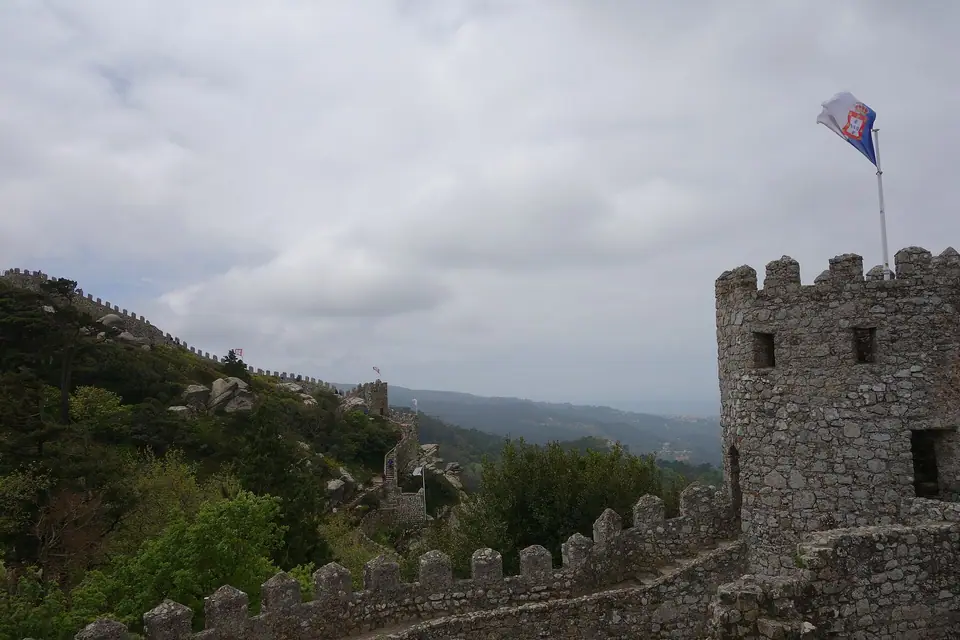
Draped across jagged granite peaks directly above the roofs of Sintra-Vila, the Castle of the Moors (Castelo dos Mouros) commands dramatic panoramas across the region. North African Muslim forces built this cliffside fortress centuries ago to guard the surrounding territory. From the ridge, the garrison observed the plains and the distant Atlantic coast. Unlike the ornate staterooms of Pena Palace situated uphill, the Moorish Castle is an open-air mountain fortress managed by Parques de Sintra. Here visitors walk directly along crenellated granite castle walls suspended between mossy boulders and the open sky.
| Castelo dos Mouros Detail / Route | Route Focus | Experience | Access Notes |
|---|---|---|---|
| Castle Admission. | Rampart perimeter and stone towers. | Historic fortification exploration. | Tickets required; check official site. |
| Walk from Pena Park Gate. | Forest trail connecting the estates. | Gentle descent along woodlands. | Public route through natural areas. |
| Villa Sassetti Hiking Trail (from Town). | Path connecting town to the ridge. | Steady uphill climb through gardens. | Scenic walking route; check official site. |
| Royal Tower (Torre Real) Climb. | Stone steps along the eastern ramparts. | Elevated viewpoint over the landscape. | Accessed along the castle ramparts. |
From Medieval Reconquest to Romantic Restoration
For centuries, the garrison defended the ridge across shifting periods of regional conflict. Following historical sieges and political changes across the territory, Christian forces under Dom Afonso Henriques took control of the mountain fortress. The settlers established community structures and erected the Romanesque Church of São Pedro de Canaferrim inside the outer perimeter of the fortifications.
As settlement patterns shifted downward into the valley, the high mountain fortress fell into gradual disuse. Severe storms and seismic shocks took their toll over time until King Consort Ferdinand II intervened to preserve the historic complex. Rather than building modern halls, preservation efforts consolidated the double ring of granite curtain walls as an evocative landscape feature visible from surrounding estates, leaving native greenery to thrive around the rugged stones.
Walking the Curtain Walls: Highlights and Watchtowers
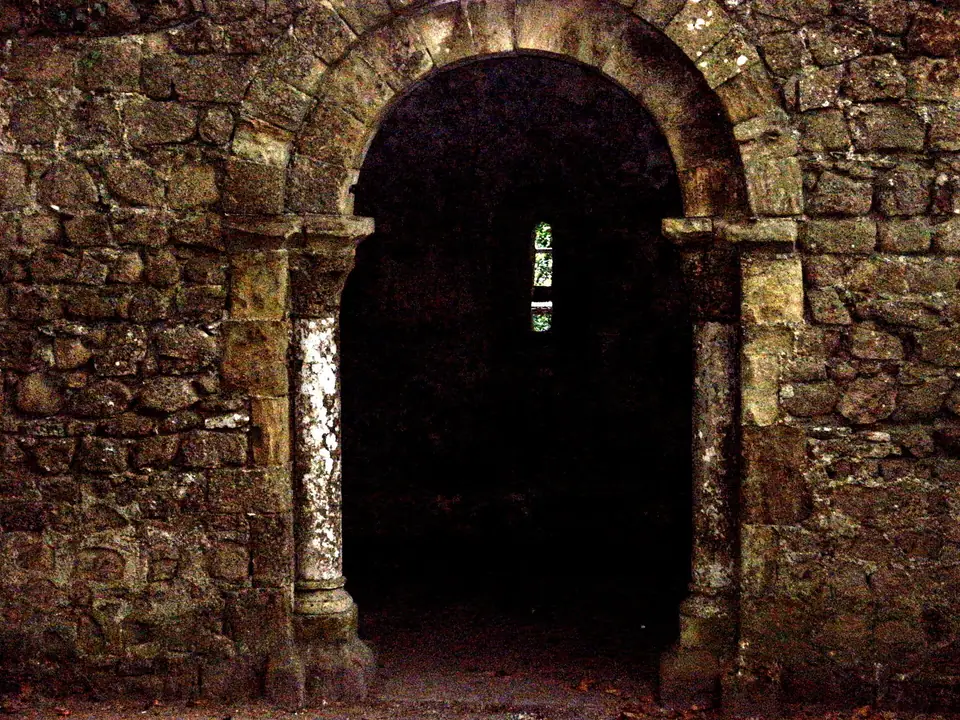
From the outer approach, a shaded woodland path passes archaeological sites across the grounds. Historic storage pits carved into the granite rock reflect early settlement life on the mountain slopes. Excavations also revealed burial areas near the Church of São Pedro de Canaferrim, which now preserves artefacts found across the site. Further along stands the arched entryway leading into the inner citadel.
Once inside the inner fortress, the rampart walk offers distinct panoramic perspectives:
- The Northwestern Wall (Overlooking Sintra-Vila). Stone steps lead out to watchtowers directly above the sheer drop. Looking down onto the prominent chimneys of the Sintra National Palace. From here you can also spot the grounds of Quinta da Regaleira and agricultural plains stretching toward the Atlantic Ocean.
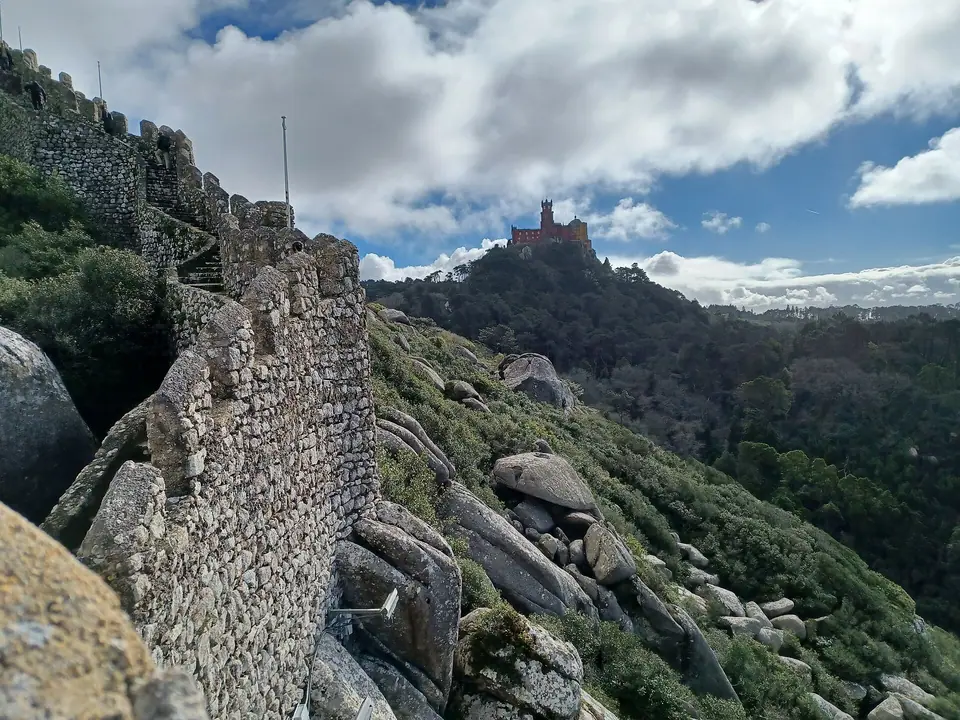
- The Southeastern Climb to the Royal Tower (Torre Real). Ascending stone steps up the ridge brings you to the elevated watchtower known as the Torre Real. From this high platform, you gain celebrated vistas of Pena Palace standing above the tree canopy on the neighbouring crest.
Before leaving the central grounds, inspect the vaulted underground reservoir. A deep stone cistern designed to gather water from mountain springs to supply inhabitants stationed high above the valley.
Hiking the Scenic Villa Sassetti Trail
To experience the mountain on foot, hikers frequently choose the walking route via Villa Sassetti, an estate integrated into the Parques de Sintra network. Starting south of the historic centre along the road ascending the hills, you pass into the garden grounds of the estate. The property features distinct Lombard-brick architectural details, decorative terracotta accents, and water channels routed along the terraced hillside.
Above the Villa Sassetti estate grounds, the stone path continues upward through native vegetation and granite boulders. The trail climbs steadily, linking with broader walking itineraries that connect Sintra's monuments from East to West across the forested slopes.
Archaeological Discoveries Across the Castle Grounds
Targeted archaeological investigations directed by Parques de Sintra have uncovered extensive material evidence of daily routines spanning many centuries on the mountain. Along the outer slopes near the Church of São Pedro de Canaferrim. Archaeologists identified carved underground grain silos cut into the bedrock, designed to protect agricultural provisions from seasonal mountain moisture.
Around the historic church structure, investigations charted community burial grounds that served early local residents. Inside the preserved building, visitors can view ceramic items, domestic utensils, and historic coins, illustrating trade networks and household craftsmanship that sustained life along the ridge.
Safety on the Walls, Mountain Winds and Footwear Advice
Walking the battlements of the Castle of the Moors provides an open-air historical experience, but it requires sensible mountain awareness. While the outer face features stone merlons, inner sections drop down onto uneven rock terraces. Take care along exposed segments where steps are irregular, use handrails where provided, and wear supportive shoes with good grip. Restrooms and visitor facilities are situated near the lower reception areas, so plan your walk before climbing up into the higher ramparts. Carry valid photo identification, which police officers may legally request in Portugal, and dial 112 in any emergency.
Connecting the Moorish Castle with Villa Sassetti and Parques de Sintra Estates
Managed by Parques de Sintra, The Moorish Castle sits at the heart of the mountain's pedestrian trail network. Under the official The Parks and Monuments of Sintra by foot initiative, hikers can leave Sintra-Vila on foot. The trail climbs through the terraced gardens of Villa Sassetti directly to the outer castle walls. This scenic ascent passes granite boulders, highland streams, and shaded forest glades away from the road loop.
From the high battlements of the castle, panoramic views take in the town rooftops below. You can clearly spot the unmistakable Chimneys of the National Palace of Sintra rising above the central square. Looking uphill, the colourful towers of the Park and National Palace of Pena crown the neighbouring summit. Nearby stands the Viewpoint of the Palace of Pena and the woodland paths leading to the Chalet and Garden of the Countess of Edla. On clear days, the western horizon stretches past the Park and Palace of Monserrate toward the Cabo da Roca Lighthouse and Sanctuary of Peninha.
Visitors walking the castle grounds can combine their morning hike with Equestrian Activities in the Park of Pena. These riding programs celebrate the Portuguese equestrian tradition recognized by UNESCO as intangible cultural heritage. Dog owners will appreciate that Sintra and Queluz's historic gardens welcome dogs again after more than a century. Back in the town centre, walkers can follow the municipal Roteiro Medieval, the Roteiro do Centro Histórico de Sintra, and the Roteiro das Fontes de Sintra. During the summer season from April to October, remember that Portugal faces a high risk of wildfires, so check Parques de Sintra notices before hiking.
Walking the outer defensive walls at an unhurried pace shows how medieval builders anchored each granite tower into the natural cliff boulders. Rest benches tucked into the sheltered courtyard inside the walls offer a calm place to pause out of the wind. Afterwards, you can climb the upper stone battlements for wider views across the valley. You might arrive up the forest footpath from town or cross over from the neighbouring palace park. Either way, the castle ridge delivers a dramatic contrast between wild woodland, granite peaks, and open Atlantic sky.
Bringing a windproof layer and water makes walking the high stone ramparts comfortable in every season.
Where it is
- 1Castle of the Moors (Castelo dos Mouros)
- Lisbon Humberto Delgado Airport (LIS) · about 22 km from here in a straight line
- Directions in Google Maps
Stations and taxi ranks: OpenStreetMap. Airports: OurAirports. Distances are in a straight line.
Traveller tips
Real advice from people who have been to Sintra. Every tip is read by our team before it goes live.
No tips yet. Been here? Yours could be the first.
Thank you! Your tip will appear here after a quick review.
More in Sintra
Continue exploring Sintra with related neighbourhood, food, and planning guides