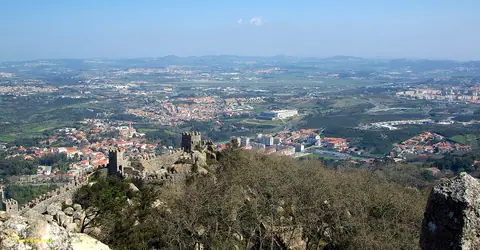
Photo: Miguel Ángel García. from Ólvega., España · CC BY 2.0
Sintra National Palace (Town Palace): Swan Room & Azulejos
A guide to Sintra National Palace, covering its royal rooms, conical kitchen chimneys, and historic tilework in the town centre.
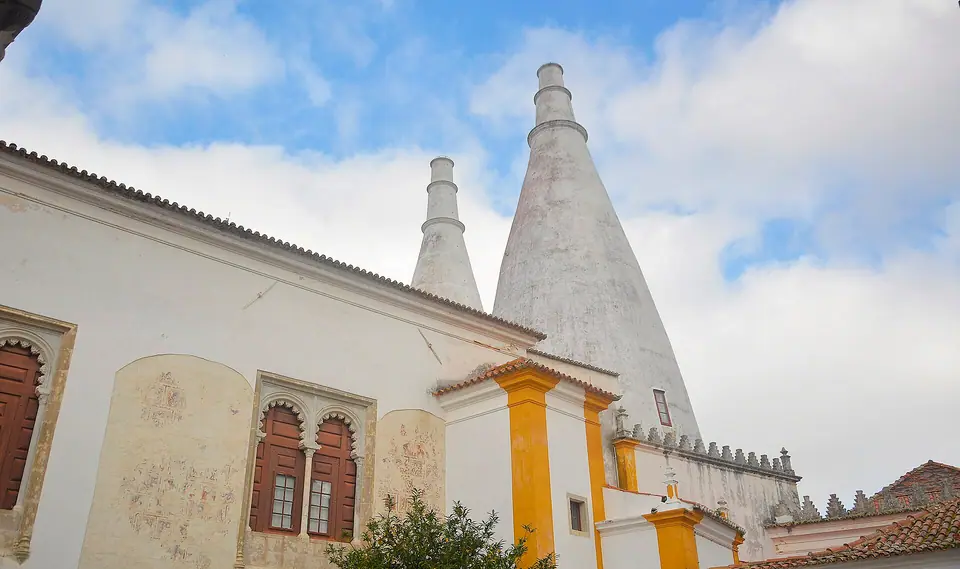
Standing at Largo Rainha D. Amélia in the historic centre, the National Palace of Sintra (Palácio Nacional de Sintra / Palácio da Vila) is the oldest palace in Portugal. Marked by its silhouette of two conical chimneys crowning the royal kitchen. The first building was likely constructed around the 10th or 11th century when Sintra was under Moorish rule. It stands as the only palace that spans the entire history of Portugal, easily reached while exploring options in our Sintra travel guide.
Monarchs frequently stayed here across the centuries to enjoy regional hunting, summer freshness, and refuge from capital plagues. The garden entrance is free, and you can check the official site for palace admission details. Automatic ticket vending machines remain available when the ticket office closes between midday and one in the afternoon. Walking from Sintra train station to the palace takes 10 to 15 minutes, or you can board Scotturb buses 434 and 435.
The Swan Room and Magpie Room
A tour of the palace interior introduces several historic halls, including two celebrated reception areas named after their painted ceilings:
- Swan Room. This space functioned as an important hall of the residence. Its decorative ceiling panels display white swans wearing golden collars, forming one of the most memorable chambers in the complex. Royal gatherings took place here through various dynasties.
- Magpie Room. In this audience chamber, the ceiling shows numerous painted birds. Each bird holds a scroll with the motto repeating the phrase to address court chatter. The design remains a distinctive decorative feature of the palace.
Both chambers showcase how Portuguese monarchs transformed early medieval halls into ceremonial spaces for state receptions, royal audiences, and banquet celebrations.
The Room of the Coats of Arms
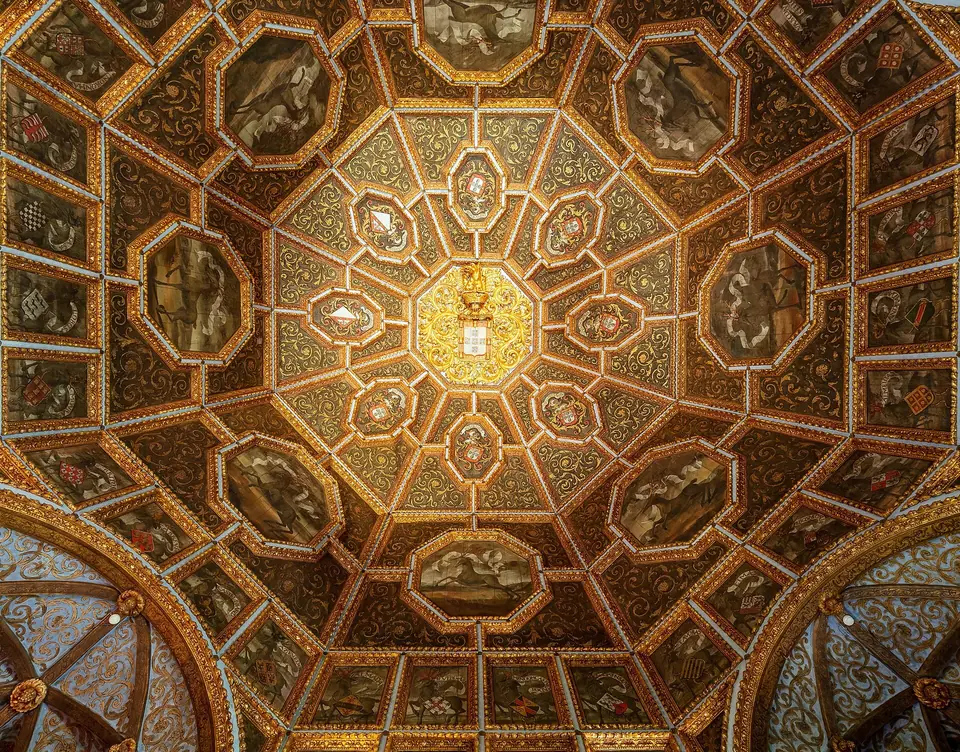
Another major highlight is the Room of the Coats of Arms, reached via the Corridor of the Coats of Arms. This grand hall displays historic heraldic symbols under an intricate wooden dome:
- Royal Heraldry. The central summit of the dome presents royal heraldic insignia, surrounded by the emblems of royal children.
- Noble Coats of Arms. Around the lower frieze, stags support shields representing principal noble families of the realm. A Latin inscription reminds onlookers of service to the crown.
- Ceramic Wall Panels. Decorative blue and white tile panels line the walls beneath the gilded ceiling, portraying hunting parties and festive court scenes.
Walking through the hall gives visitors an appreciation of Portugal's aristocratic traditions. The heraldic layout preserved on the ceiling reflects the social and political hierarchy established during the monarchical period.
Historic Azulejos, Central Patio and Royal Kitchen
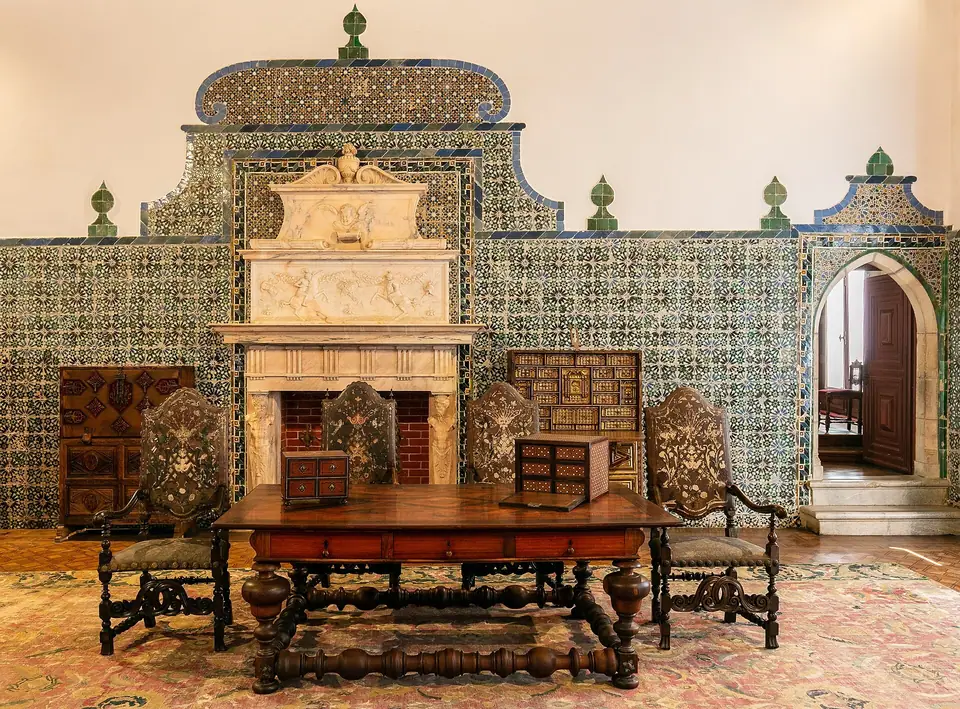
The residence holds an extensive collection of historic glazed tiles that illustrate changes across centuries. Visitors can pass through the Central Patio and the Water Grotto, along with the Chapel and its patterned surfaces. Other notable spaces along the route include the Golden Chamber, Wardrobe, Camarim, and The Galley Room.
Each room highlights distinct architectural treatments, with courtyards designed to offer ventilation and natural daylight during warm seasons. The Water Grotto provides a cool respite, reflecting historic palace design choices aimed at climate comfort.
Your walk continues toward the royal kitchen, which features large cooking hearths and prep tables. Above the chamber, two conical chimneys rise into the sky, creating the famous profile of the palace exterior. These chimneys remain the defining landmark of the town square.
Royal History Inside the Palace
The palace tells stories from many eras of Portuguese rule. At the end of the Middle Ages, the building sat at the heart of a large territory under the care of the Queens of Portugal. Key chambers illustrate these connections, including the Queens' Room and the Room of the Canopy Bed.
Another evocative spot is the Chamber of Afonso VI. This brick-floored room served as the long confinement quarters for the deposed monarch before his death, located beside the royal chapel. The setting offers a direct glimpse into political tensions that shaped the crown.
Because the palace served sovereign rulers from early medieval reigns up to modern times, it incorporates diverse architectural styles that reflect shifting tastes and administrative needs.
Practical Visitor Information
The palace sits directly in the historic centre where private vehicle circulation is restricted to residents. You can arrive by train from Lisbon using Oriente, Rossio, or Entrecampos stations before walking up from Sintra station. If you travel by road, drivers connect via the IC19 from Lisbon, IC30 from Mafra, or EN9 from Cascais via the A5.
See our things to do in Sintra overview. The surrounding square at Largo Rainha D. Amélia gives an unobstructed view of the conical chimneys framing the town hillside.
Walking Routes from the National Palace of Sintra through the Historic Centre
Standing at the heart of Sintra-Vila, the National Palace of Sintra is conserved and managed by Parques de Sintra. The monument serves as the centrepiece for the official Discover the Historic Centre of Sintra itinerary. Its twin conical kitchen chimneys, known as the Chimneys of the National Palace of Sintra, define the town skyline. Inside the royal apartments, visitors step into the historic Swan Room with its painted ceiling panels and tiled walls.
Stepping out onto the palace forecourt places you directly on the cultural routes maintained by Sintra Municipality. You can follow the Roteiro do Centro Histórico de Sintra and the Roteiro Medieval through the historic cobbled alleys of the royal burgh. Walkers can also trace the Roteiro das Fontes de Sintra past carved stone water fountains along the mountain road. Another municipal itinerary is the Roteiro da Rainha D. Amélia, recalling the final royal summers spent inside the palace walls.
From the town square, hikers can join The Parks and Monuments of Sintra by foot trail through Villa Sassetti. That shaded garden route climbs toward The Moorish Castle, the Park and National Palace of Pena, and the Viewpoint of the Palace of Pena. Further into the upper park sit the Chalet and Garden of the Countess of Edla and Equestrian Activities in the Park of Pena. To the west, Parques de Sintra also manages the Park and Palace of Monserrate with its Music Room and the Convent of the Capuchos. Out along the Atlantic cliffs stand the Sanctuary of Peninha and the Cabo da Roca Lighthouse. Meanwhile, the Gardens and National Palace of Queluz lie toward Lisbon. Across these estates, Sintra and Queluz's historic gardens welcome dogs again after more than a century in designated outdoor zones.
The town palace stands on the flat central square of Sintra-Vila. It works well as the opening stop of your morning or as a relaxed afternoon visit after descending from the ridge. Inside the courtyards and tiled state rooms, interpretive panels explain how successive generations of Portuguese royalty adapted the medieval complex. Moving from the cool stone patios to the high timber-framed ceilings gives visitors a clear architectural timeline of the residence. After stepping back out onto the cobbled plaza, surrounding pastry cafés and artisan tile shops invite you to linger in town. Having the railway station and local bus stops within a short walk makes ending your sightseeing day here effortless.
Visiting early in the morning or later in the afternoon lets you admire the painted ceilings and tiled courtyards at an unhurried pace.
Where it is
- 1Sintra National Palace (Town Palace)
- Lisbon Humberto Delgado Airport (LIS) · about 22 km from here in a straight line
- Directions in Google Maps
Stations and taxi ranks: OpenStreetMap. Airports: OurAirports. Distances are in a straight line.
Traveller tips
Real advice from people who have been to Sintra. Every tip is read by our team before it goes live.
No tips yet. Been here? Yours could be the first.
Thank you! Your tip will appear here after a quick review.
More in Sintra
Continue exploring Sintra with related neighbourhood, food, and planning guides
Palace of Queluz & Chalet of the Countess of Edla: Complete Guide
Sintra, Portugal

Cabo da Roca, Praia da Ursa & Azenhas do Mar: Sintra Coast Guide
Sintra, Portugal

What to Eat in Sintra: Travesseiros, Queijadas & Colares Wine
Sintra, Portugal
Sintra: avoiding the Day-Trip Trap, Palace Zones & Car Ban
Sintra, Portugal
