Photo: Bene Riobó · CC BY-SA 4.0
How to Get to Visby: Destination Gotland Ferries, Flights and Island Buses
Plan your journey to Visby with Destination Gotland ferries from Nynäshamn and Oskarshamn, domestic flights into Visby Airport, and regional buses from Österväg.
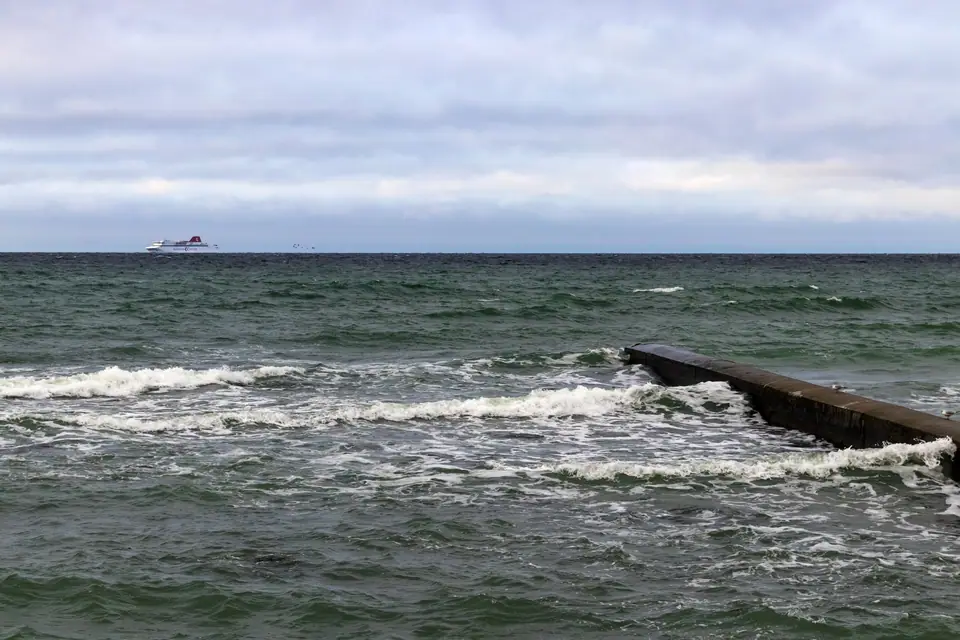
Because Gotland lies roughly 100 kilometres off the eastern coast of the Swedish mainland in the Baltic Sea, every visitor arrives in Visby either by water or by air. The historic harbour terminal receives passenger ferries directly at the foot of the town, while Visby Airport handles regional air traffic 3.5 kilometres to the north. Both gateways sit close enough to the medieval core that visitors can transition quickly from transit ramps to cobbled streets. The maritime crossing remains the traditional backbone of island transport, carrying cargo, personal vehicles, and foot passengers across open waters year round.
Foot passengers stepping off the ferries arrive at the passenger quay within 900 metres of Donners plats. That gentle ten to fifteen minute walk leads straight past the harbour basin into the southern entrance of the old quarter. Travellers planning a broader itinerary through the island can pair their transit arrangements with our Visby Travel Guide or map out urban walking routes via Stora Torget, Strandgatan and Visby's Medieval Lanes.
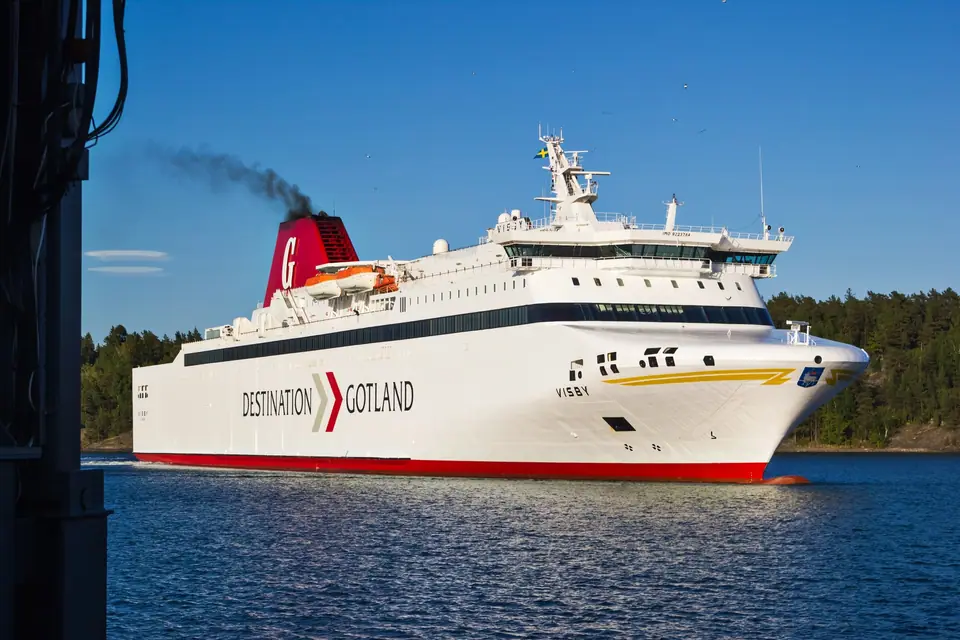
Destination Gotland Ferries from Nynäshamn and Oskarshamn
Year-round passenger and car ferry services to Gotland operate under national transport contract by Destination Gotland. Founded in 1998 as a wholly owned subsidiary of Rederi AB Gotland, Sweden's oldest passenger shipping company established in 1865, the operator transports between 1.4 and 1.82 million passengers annually. High-speed Ro-Pax vessels, including M/S Visby, M/S Drotten, M/S Gotland, and M/S Visborg, serve two mainland harbours: Nynäshamn, situated 58 kilometres south of Stockholm, and Oskarshamn along the Småland coastline. Both standard sea crossings take approximately 3 hours, offering lounge seating, restaurant services, and vehicle decks for cars, caravans, and bicycles.
Reaching the ferry terminal at Nynäshamn from central Stockholm is straightforward without personal transport. SL commuter train line 43 runs directly between Stockholm City and Nynäshamn station, terminating right beside the passenger gangway. Dedicated connecting motorcoaches operate between Cityterminalen in Stockholm and the Nynäshamn quay, timed specifically to meet scheduled sailings. Connecting bus services run from regional hubs such as Uppsala during peak holiday intervals. Because summer demand spikes during island events, vehicle space on vessels fills rapidly. Travellers should check the operator website for seasonal sailing schedules and book vehicle reservations well in advance.
| Route / Hub | Mainland Terminal Connection | Crossing or Flight Duration | Arrival Proximity to Visby Centre |
|---|---|---|---|
| Nynäshamn Ferry | SL commuter train line 43 or Cityterminalen bus | 3 hours | 900 metres (10 to 15 minute walk to Donners plats) |
| Oskarshamn Ferry | Regional Kalmar Länstrafik coach connections | 3 hours | 900 metres (Visby ferry terminal quay) |
| Stockholm Air Routes | Arlanda (ARN) and Bromma (BMA) airports | 35 to 50 minutes | 3.5 kilometres north via Road 149 |
| Island Bus Network | Visby Bus Station (Österväg) | Varies by island destination | 300 metres outside Österport and Söderport |
Weather conditions on the Baltic Sea fluctuate throughout the calendar, altering the deck experience. Winter crossings face chilly conditions, with January recording average highs of 2°C and lows of -2°C across 7 wet days, while February drops to lows of -3°C across 6 wet days. March stays crisp with highs of 4°C and lows of -2°C. Spring brings drier maritime air, as April delivers 10°C highs, 1°C lows, and only 25 millimetres of precipitation across 4 wet days. May warms pleasantly to highs of 15°C and lows of 5°C. Summer sea travel features comfortable temperatures, reaching 19°C in June, 22°C in July with 61 millimetres of rain across 10 wet days, and 21°C in August. Autumn sees September holding at 17°C highs and 10°C lows, cooling down to 11°C in October, 6°C in November, and 4°C in December. Travellers visiting during festive or historical gatherings can align transit dates with our guide to Medieval Week (Medeltidsveckan) and the 1361 Battle of Visby at Korsbetningen.
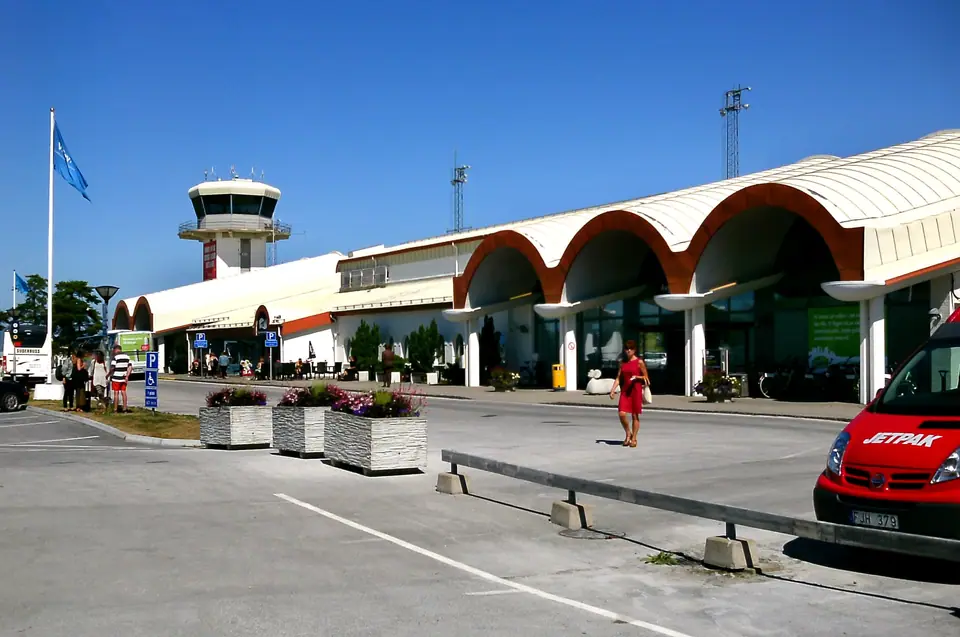
Domestic Flights into Visby Airport (VBY)
Visby Airport opened on 27 January 1942, providing an essential aviation link between Gotland and mainland Sweden during all seasons. The current passenger terminal was inaugurated in 1985 and lies 3.5 kilometres north of the medieval town wall along Road 149. Commercial aviation connects Gotland directly to the capital, with scheduled flights linking Visby with Stockholm Arlanda Airport and Stockholm Bromma Airport. Flight times between Stockholm and Visby range between 35 and 50 minutes, providing a rapid crossing over the Baltic Sea for business travellers and weekend visitors.
The terminal facility offers vehicle hire desks, short-term and long-term parking areas, and bicycle paths leading south toward town. Local taxis wait outside the arrivals doors, delivering passengers into the walled core in approximately 10 minutes. During peak summer flight windows, airport shuttle buses connect arriving flights with central Visby stops. Cyclists can also rent bicycles or pedal their own machines into town, following paved paths that track parallel to the coastline and the limestone cliffs into the north gate of the ring wall.
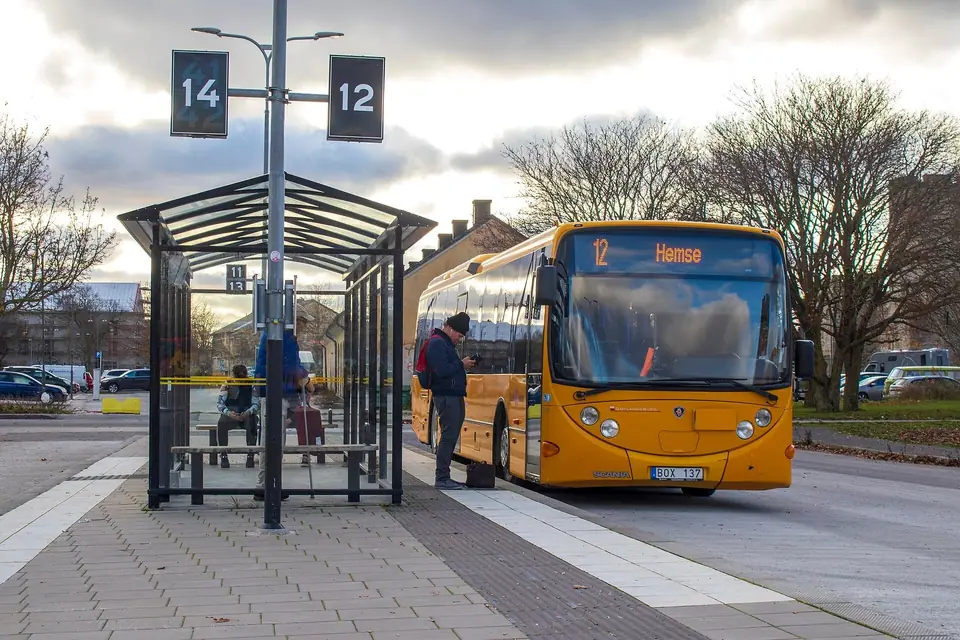
Regional Gotlandsbuss Network from Visby Bus Station
Public land transport across Gotland radiates outward from Visby bus station, situated on Österväg roughly 300 metres outside the medieval gates of Österport and Söderport. Operated under the regional collective transport framework known as Kollektivtrafik på Gotland, these yellow Gotlandsbuss vehicles serve rural parishes, coastal fishing hamlets, and agricultural towns. City bus lines circle the residential and commercial districts outside the historic ramparts, connecting suburban shopping centres and outlying neighbourhoods with the town perimeter.
Regional routes run north toward Fårösund, connecting travellers to the free vehicle ferry that crosses to Fårö, as well as south toward Hemse, Klintehamn, and Burgsvik. Because rural timetables change significantly between peak summer weeks and off-peak school terms, passengers must verify current timetables online or at the terminal building before departing. Urban Visby itself remains best explored entirely on foot, as narrow cobbled lanes and stairs prevent standard buses from entering the historic perimeter.
Where it is
- 1Visby
- Visby Airport (VBY) · about 4 km from Visby in a straight line
- Directions in Google Maps
Stations and taxi ranks: OpenStreetMap. Airports: OurAirports. Distances are in a straight line.
Traveller tips
Real advice from people who have been to Visby. Every tip is read by our team before it goes live.
No tips yet. Been here? Yours could be the first.
Thank you! Your tip will appear here after a quick review.
More in Visby
Continue exploring Visby with related neighbourhood, food, and planning guides