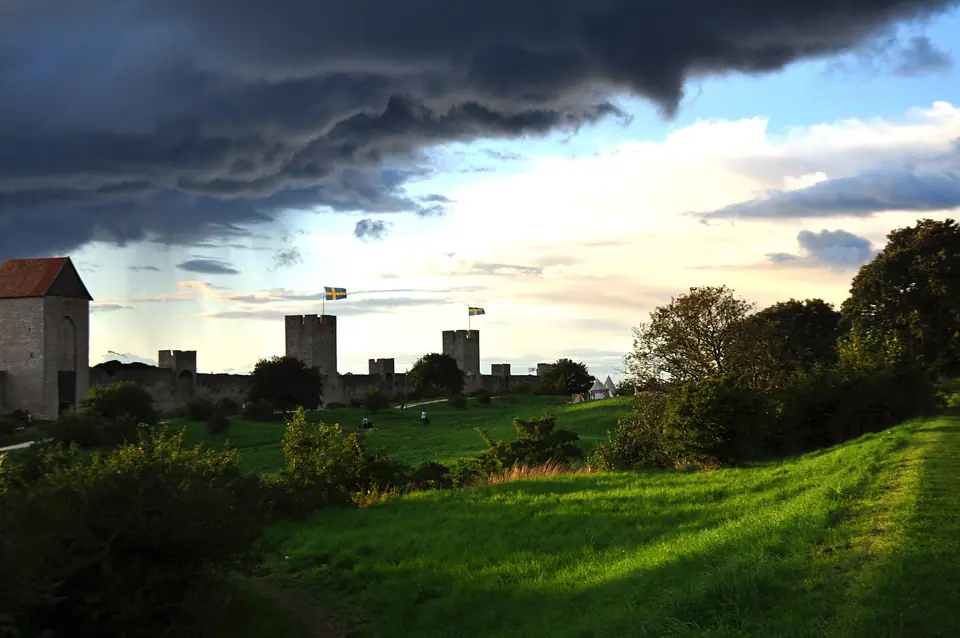
Photo: Helen Simonsson · CC BY-SA 4.0
Medieval Week and the 1361 Battle of Visby at Korsbetningen
Discover the 1361 Battle of Visby at Korsbetningen and plan your trip to Medeltidsveckan, Sweden's premier historical festival held every August.
Few events altered Gotland's regional standing more abruptly than the Danish invasion of July 1361. King Valdemar IV Atterdag of Denmark landed on the island and defeated the local Gutnish yeomanry in a catastrophic engagement outside the town gates. Today, that dramatic turning point is commemorated at the quiet limestone monument of Korsbetningen and re-examined through Medeltidsveckan. Staged across Gotland every August since 1984, this gathering forms Sweden's largest historical festival, turning the town into an active centre for living history, craft demonstrations, and academic discourse.
King Valdemar Atterdag and the Summer Campaign of 1361
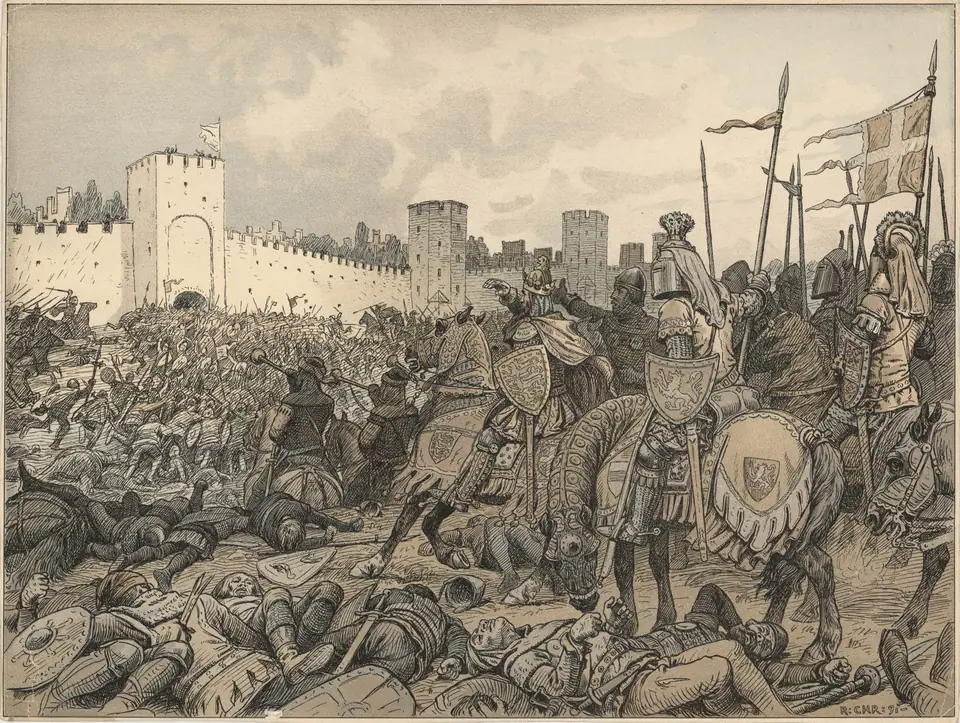
On 22 July 1361, King Valdemar IV Atterdag landed on Gotland's west coast near Kronvall. He brought an experienced expeditionary force of roughly 2,500 Danish and German soldiers. The invaders first encountered island resistance on 25 July at Fjäle mire in Mästerby. There, approximately 1,500 rural defenders were killed before the Danish army broke through the marshland defence and advanced northward toward the merchant capital.
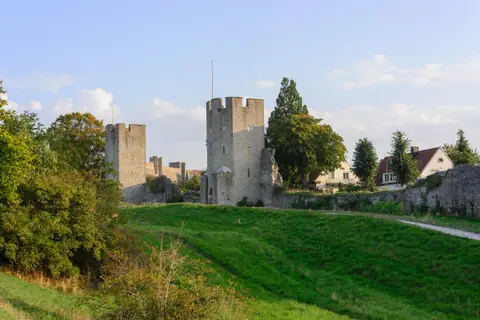
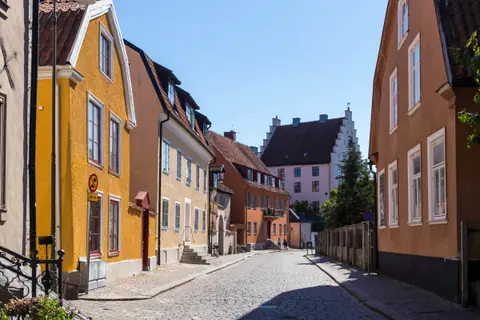
On the morning of 27 July 1361, an improvised force of rural yeomen and parish farmers assembled south of the town fortifications. The city burghers kept the strong defensive gates firmly barred, choosing not to risk their own militia outside the protective perimeter. Trapped against the limestone ramparts of the Visby city wall and towers, roughly 1,800 Gotlandic defenders were cut down by seasoned mercenaries. Following the massacre, the town council negotiated an immediate surrender to preserve their warehouses and foreign shipping privileges. This capitulation established the legend of the Brandskattning taxation, which claimed King Valdemar extracted three massive beer vats filled with silver and gold on the main cobbles of Stora Torget.
The Memorial Cross and Mass Graves of Korsbetningen
The human cost of the 1361 confrontation remains visible at Korsbetningen, situated roughly 600 metres southeast of Söderport along Korsbetningsgatan. The site occupied the grounds of Solberga Abbey, a medieval Cistercian nunnery. In the summer heat immediately following the slaughter, burial parties dug five massive pits to entomb the dead before decay set in. Unlike typical medieval war graves where equipment was stripped, the fallen were buried wearing their full fighting attire.
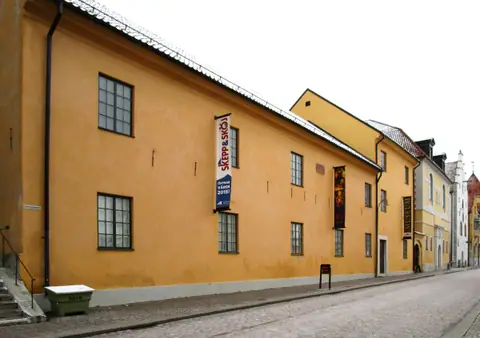
Archaeological digs led between 1905 and 1930 revealed 1,185 skeletons. Many still wore chainmail coifs, gauntlets, and articulated coats of plates. These finds provide European military historians with exceptional physical evidence of mid-fourteenth-century infantry armour. Today, a late-fourteenth-century ringed limestone cross, known as Valdemarskorset, stands above the burial turf. Its worn Latin inscription marks the resting place of the Gutnish dead. Most of the restored armour, weapons, and skeletal casts excavated from the pits are curated for public view at Gotlands Museum (Fornsalen) near the harbour.
Medeltidsveckan Festival Structure and Week 32 Programming
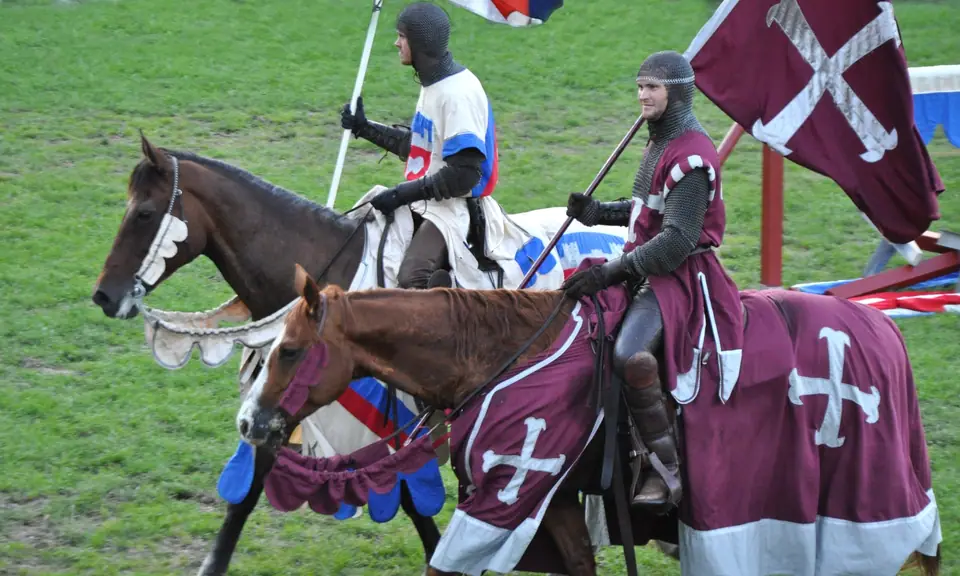
Medeltidsveckan was established in 1984 and occurs annually during calendar week 32 in August. The festival spans eight consecutive days and features more than 800 scheduled events across the island. The historic core becomes a stage for jousting spectacles by the Torneamentum troupe, authentic tavern re-enactments, and lectures detailing Baltic trade routes.
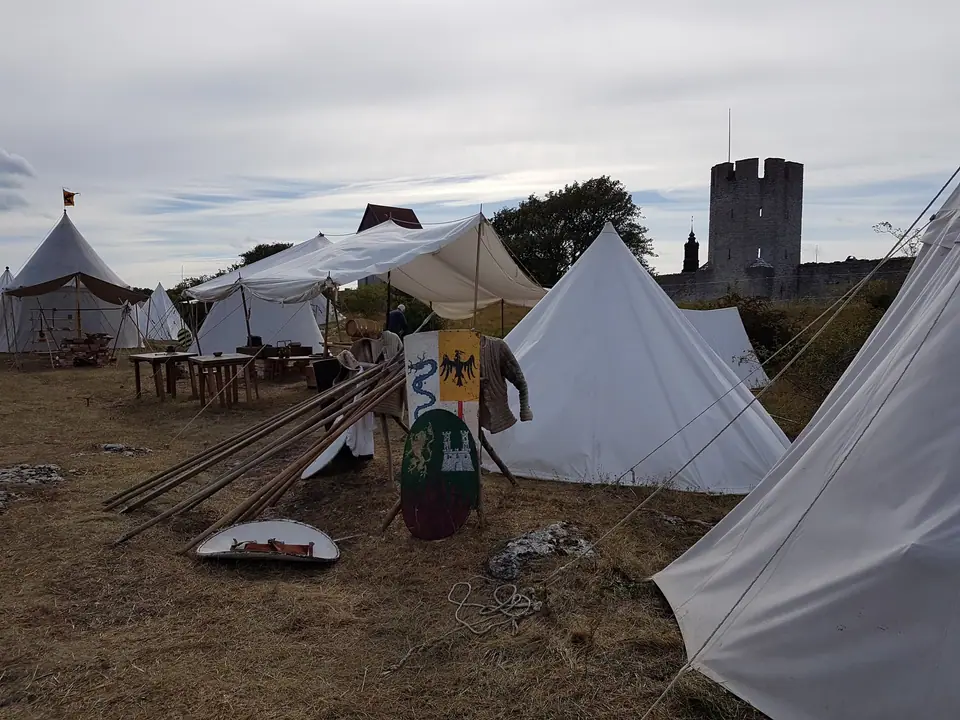
While period encampments and costumed participants fill the parks, the event functions as an accessible cultural festival. Standard street clothes are completely welcome across all public venues. Because event locations, workshops, and concert admissions change every summer, travellers should consult the official festival programme for seasonal tickets and exact timings.
| Festival Zone | Primary Activity | Physical Setting | Recommended Timing |
|---|---|---|---|
| Strandpromenaden Encampment | Living history, blacksmithing, leathercraft | Open grassy lawns beneath coastal wall | Midday to late afternoon |
| Torneamentum Jousting Arena | Chivalric riding, lance passes, martial displays | Dedicated outdoor arena outside city wall | Late afternoon or evening sessions |
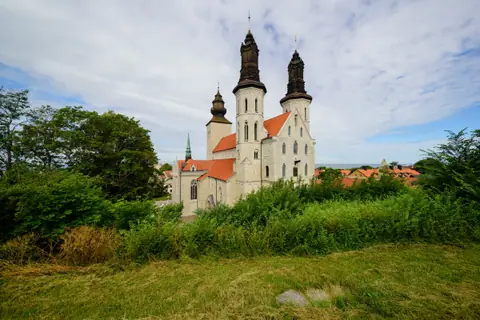
| Sankt Nicolai and Ruin Venues | Chamber concerts, choral singing, lectures | Acoustic limestone church shells | Evening performances |
| Korsbetningen Memorial Grounds | Historical reflection, wreath laying, guided talks | Solberga Abbey lawns and stone ring cross | Early morning for quiet atmosphere |
Weather Profile and Packing for Gotland in August
August provides pleasant summer conditions on Gotland, but island maritime patterns can shift quickly across the Baltic Sea. Open-Meteo ten-year records show that August in Visby averages an afternoon high of 21°C and an overnight low of 13°C. The month registers 57 mm of rainfall distributed across approximately 10 wet days. Travellers should pack versatile layers, including a light fleece for evening lectures inside unheated roofless church ruins. Sturdy flat walking shoes with good tread are essential for negotiating uneven cobblestones, limestone gate thresholds, and grassy moat paths.
Logistics for Visiting Visby During Festival Week
Week 32 is the single busiest travel period on Gotland. As detailed in our guide on the best time to visit Visby, ferry vehicle slots from Nynäshamn and Oskarshamn sell out months in advance. Secure your ferry berths or regional flights well ahead of time. Book accommodation inside or outside the wall as early as winter, as guest rooms and apartments across the island reach capacity. If you travel on foot from the ferry terminal, Visby's inner city is fully walkable. Renting a bicycle allows easy movement between the northern campsite fields, the town centre, and Korsbetningen.
Where it is
- 1Medieval Week and the 1361 Battle of Visby at Korsbetningen
- Visby Airport (VBY) · about 4 km from here in a straight line
- Directions in Google Maps
Stations and taxi ranks: OpenStreetMap. Airports: OurAirports. Distances are in a straight line.
Traveller tips
Real advice from people who have been to Visby. Every tip is read by our team before it goes live.
No tips yet. Been here? Yours could be the first.
Thank you! Your tip will appear here after a quick review.
More in Visby
Continue exploring Visby with related neighbourhood, food, and planning guides
Visby City Wall and Towers: Walking the 3.44 km Medieval Ringmur
Visby, Sweden
Visby Cathedral and Church Ruins: Sankta Maria, Sankta Karin and Sankt Nicolai
Visby, Sweden
Gotlands Museum (Fornsalen) and the Spillings Viking Silver Hoard
Visby, Sweden
Stora Torget, Strandgatan and Visby's Medieval Lanes
Visby, Sweden
