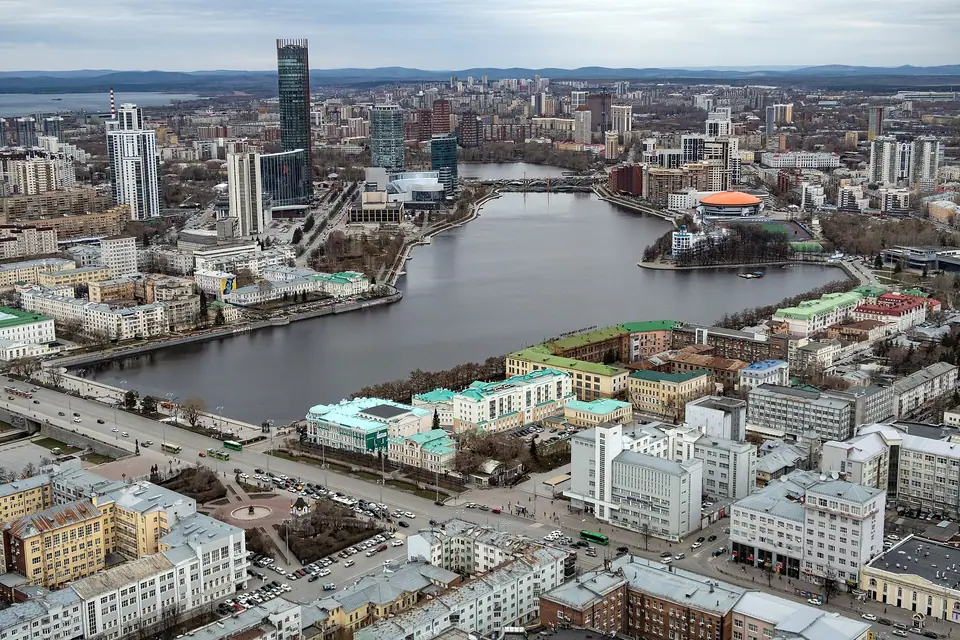
Photo: Bestalex · CC BY-SA 4.0
3 Days in Yekaterinburg: Plotinka, Constructivism and Ural Excursions
A verified three-day itinerary for Yekaterinburg, linking the historic Plotinka dam, Constructivist architectural quarters, and regional day trips across the Urals.
Three full days in Yekaterinburg allow travellers to explore the core industrial heritage of the Urals, inspect avant-garde Soviet architecture, and venture into the surrounding forested landscape. The city marks the border where Europe meets Asia. Because the central district wraps around the historic City Pond, walking forms the most efficient way to navigate the first two days of your stay. When travelling farther afield to suburban districts or surrounding regional towns, the Yekaterinburg Metro and tram network and regional suburban trains provide reliable connections.
Day 1: Imperial Foundations, Voznesenskaya Hill and Central Panoramic Views
Begin your morning on Lenin Avenue at the 1723 Plotinka dam, where the Iset River was harnessed to power the original ironworks. Stroll across Historic Square to view the hexagonal Water Tower dating from the late 1890s and examine the open-air geological display of polished Ural mineral boulders. Step into the Yekaterinburg Museum of Fine Arts to see the intricate Kasli Pavilion, a masterwork of cast-iron craft created for the 1900 Paris Exposition.
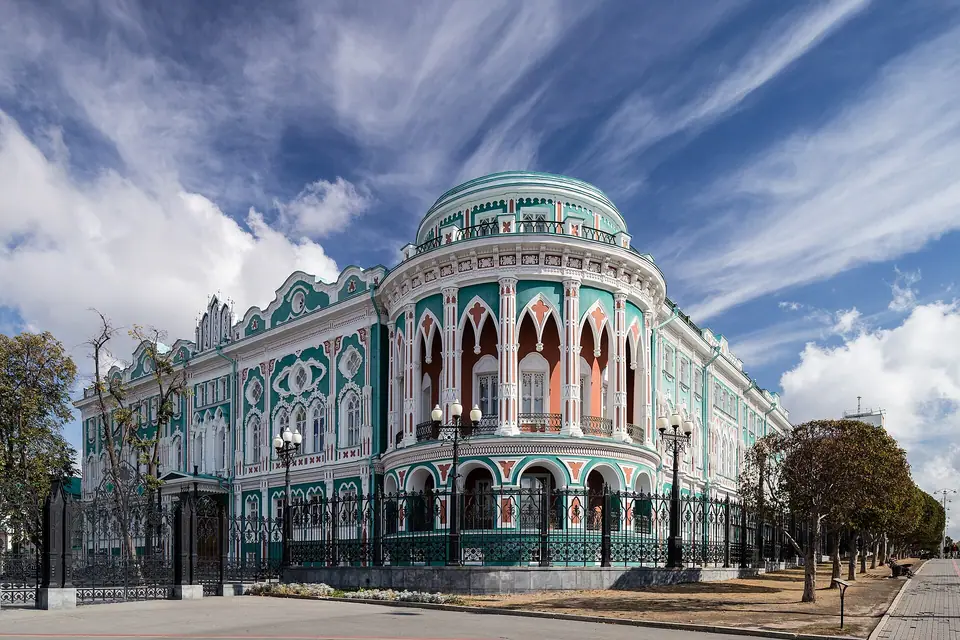
From the dam, walk east to admire the elaborate green, white, and terracotta exterior of Sevastyanov's House at 35 Lenin Avenue. Built with a distinctive corner rotunda finished in 1866, it stands out as one of the most decorative buildings in the Urals. Continue north into the leafy Literary Quarter and climb toward Voznesenskaya Hill. Here you will find the five-domed Church on the Blood, erected on the site where the Romanov imperial family spent their final days in 1918. Across the road stands the Neoclassical Rastorguyev-Kharitonov Palace complex, constructed between 1794 and 1824, which features a nine-hectare public garden and a central artificial lake.
In the late afternoon, head south past the 1912 Opera and Ballet Theatre toward Malysheva Street. Ascend to the 52nd-floor open-air observation deck of the 54-storey Vysotsky skyscraper, situated 186 metres above street level, for an expansive view across the city grid. Finish the evening by walking down the pedestrianised section of Vaynera Street near 1905 Square, where local establishments serve traditional Ural pelmeni and shangi pastries.
Day 2: Avant-Garde Constructivism, Boris Yeltsin Museum and Shartash Forest
Dedicate your second morning to Yekaterinburg's world-renowned early Soviet architecture. Head to 69 Lenin Avenue to survey Gorodok Chekistov, a self-contained residential enclave constructed during the 1930s. At its western prow sits the curved eleven-storey building of the former Hotel Iset. Inside the complex, visit the Museum of History and Archaeology of the Urals to see the Shigir Idol, a monumental wooden carving roughly 12,000 years old extracted from nearby peat bogs.
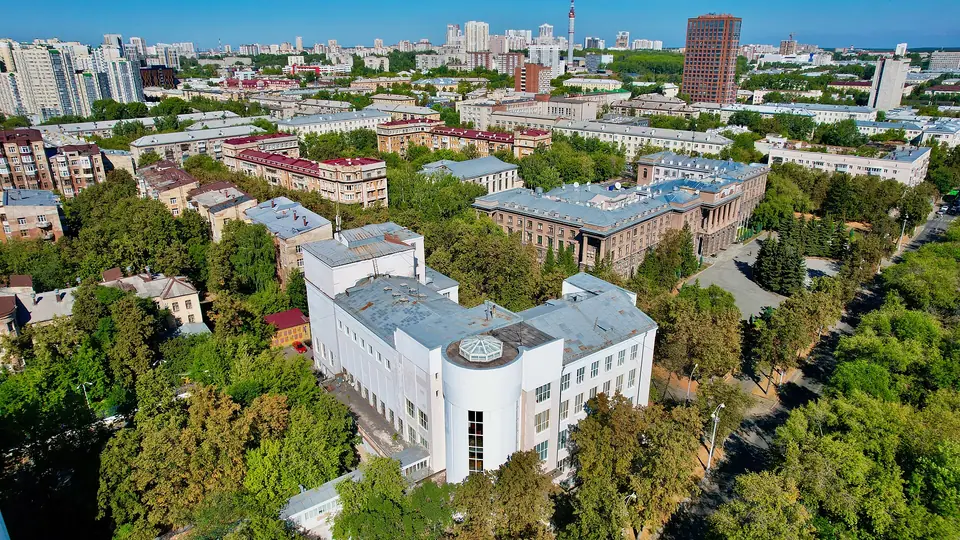
Next, take a tram north to the Uralmash district to examine the White Tower. Designed between 1929 and 1931 by architect Moisei Reisher, this pioneering reinforced-concrete water tower served the heavy machinery factory nearby and remains an internationally recognised symbol of Constructivist engineering. After inspecting the tower, return to the central pond embankment to tour the Boris Yeltsin Museum at 3 Boris Yeltsin Street. The museum spans nine chronological halls that document the political transformation of modern Russia. The complex stands right next to the 209-metre glass facade of the Iset Tower.
If daylight permits in the late afternoon, ride a tram east to the Shartash Stone Tents on the edge of Lake Shartash. These granite rock formations date back roughly 300 million years, weathered into layered horizontal slabs that provided ancient camping sites and now offer quiet walking trails among pine woods.
Day 3: Ural Day Trips to Ganina Yama or the Leaning Tower of Nevyansk
On your final day, choose between two significant regional excursions outside the city boundaries. The first option heads 15 kilometres north into the pine woods of the Four Brothers tract to visit the Ganina Yama Monastery. Founded around an abandoned iron mine pit, the complex features seven hand-hewn wooden churches, each dedicated to a member of the Romanov family. It offers a solemn retreat into Ural religious architecture, accessible by local bus or organised transfer.
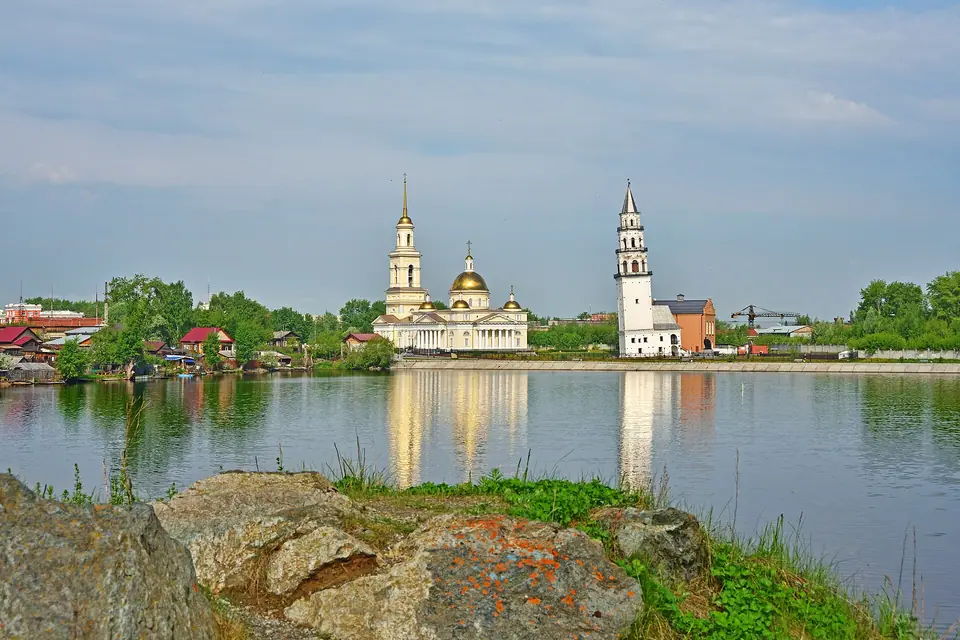
The alternative option takes you 97 kilometres north by suburban passenger train to the historic metallurgical town of Nevyansk. The centrepiece of the settlement is the 57.5-metre Leaning Tower of Nevyansk, built in the first half of the eighteenth century for the industrialist Akinfiy Demidov. A guided ascent takes visitors into the fourth-floor Whispering Room, engineered with acoustic vaults where words whispered in one corner carry clearly to the opposite corner. Higher up within the belfry sits an elaborate musical clock installed by British clockmaker Richard Phelps in 1730, which still rings out tunes across the factory pond.
Recommended Three-Day Itinerary Overview
| Day | Primary Focus | Key Landmarks Visited | Transit Method |
|---|---|---|---|
| Day 1 | Historic Centre and Embankments | Plotinka dam, Sevastyanov's House, Church on the Blood, Vysotsky skyscraper | Walking on foot |
| Day 2 | Constructivist Heritage and Modern History | Gorodok Chekistov, White Tower, Boris Yeltsin Museum, Shartash Stone Tents | Central tram routes and walking |
| Day 3 | Regional Ural Excursion | Ganina Yama Monastery or Leaning Tower of Nevyansk | Suburban train or regional bus |
Seasonal Planning for Your 3-Day Route
Ural weather shifts dramatically across the calendar year, requiring realistic adjustments to your daily pace. Open-Meteo records gathered between 2015 and 2024 indicate distinct travel seasons. Summer brings warm, pleasant walking conditions, with average daytime highs reaching 22.6 degrees in June and 24.3 degrees in July. These months see light precipitation, averaging 19 to 20 millimetres across three wet days, making walking along the City Pond comfortable late into the evening.
Spring and autumn transition rapidly. September averages daytime highs of 15.0 degrees, but by October highs drop to 6.9 degrees and lows approach 1.0 degree. April sees average highs of 10.1 degrees before climbing swiftly to 18.3 degrees in May. Winter demands heavy cold-weather preparation. January averages daytime highs of minus 9.3 degrees and night lows of minus 15.5 degrees, while December averages minus 7.8 degrees by day and minus 13.3 degrees at night. Heavy snowfall is common across December, January, and February. During sub-zero winter months, balance open-air walking around Plotinka with extended indoor visits to museum halls, concert halls, and observation decks. Check official operating schedules online in advance, as museum entry times vary between summer and winter seasons.
Where it is
- 1Yekaterinburg
- Koltsovo Airport (SVX) · about 16 km from Yekaterinburg in a straight line
- Directions in Google Maps
Stations and taxi ranks: OpenStreetMap. Airports: OurAirports. Distances are in a straight line.
Traveller tips
Real advice from people who have been to Yekaterinburg. Every tip is read by our team before it goes live.
No tips yet. Been here? Yours could be the first.
Thank you! Your tip will appear here after a quick review.
More in Yekaterinburg
Continue exploring Yekaterinburg with related neighbourhood, food, and planning guides
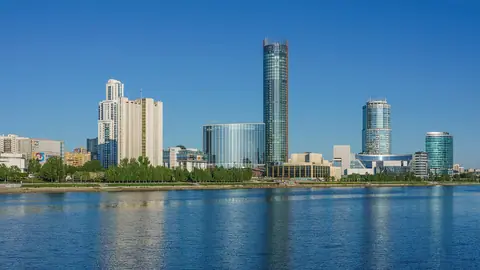
Yekaterinburg: Planning Your Visit to the Ural Capital
Yekaterinburg, Russia
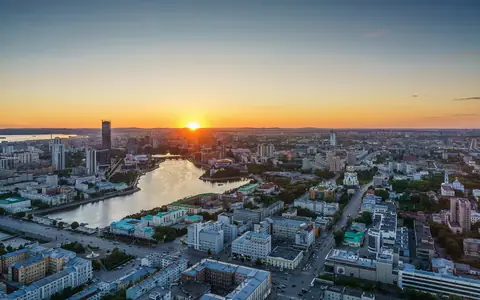
Best Things to Do in Yekaterinburg: Landmarks, Museums and Views
Yekaterinburg, Russia
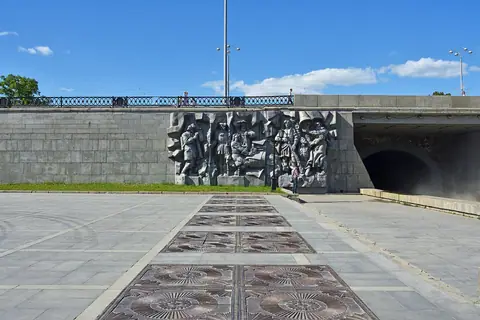
Plotinka, Historic Square & the Iset Embankment in Yekaterinburg
Yekaterinburg, Russia
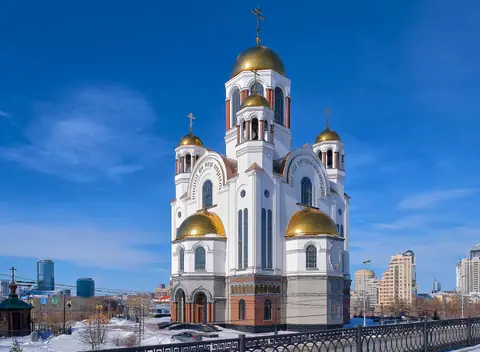
Church on the Blood & Kharitonov Palace: Voznesenskaya Hill Guide
Yekaterinburg, Russia
