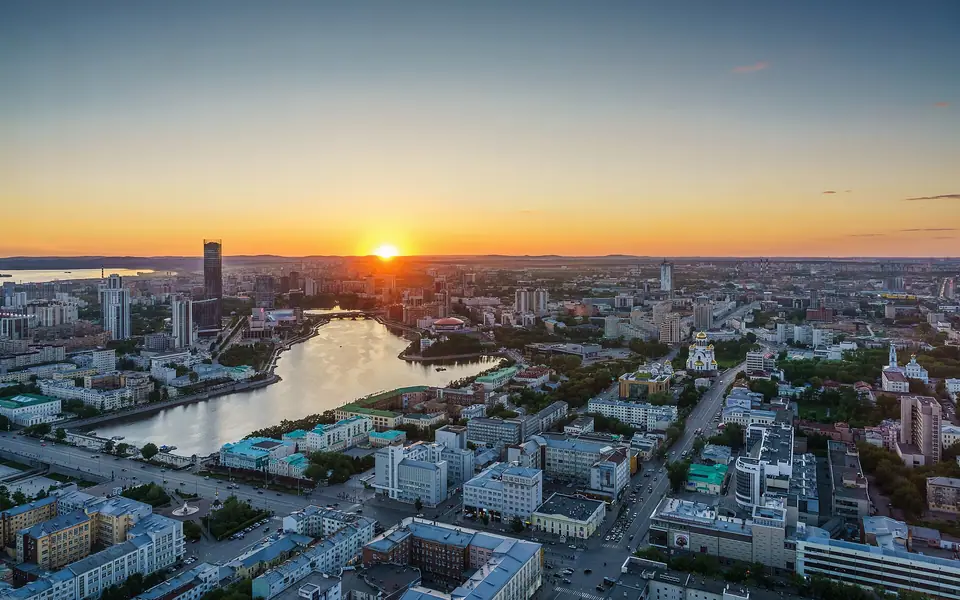
Photo: A.Savin · CC BY-SA 4.0
Best Things to Do in Yekaterinburg: Landmarks, Museums and Views
Plan your route through Yekaterinburg with our guide to historic Plotinka, Romanov memorial sites, Constructivist architectural gems, and panoramic urban towers.
From the eighteenth-century ironworks dam that birthed the city to avant-garde Soviet housing blocks and lofty observation platforms, Yekaterinburg packs three centuries of Ural industrial history into a walkable core. We have arranged these essential activities so you can trace the Iset River embankment and cross Lenin Avenue and Vaynera Street with ease.
Plotinka and the Industrial Cradle of Historic Square
Begin your exploration where the settlement started in 1723 at the larch timber and stone dam known as Plotinka. Stretching 209 metres across the river, this barrier formed the City Pond to power the original state ironworks. The adjacent 8-hectare Historic Square preserves original industrial workshops built of rough stone and red brick. These structures now hold regional collections, while the grounds display massive boulders of Ural minerals, including banded jasper, quartz, and pink rhodonite. Near the water, you can inspect the hexagonal brick Water Tower built in the late 1890s.
Walking south toward the circus district reveals striking riverside engineering projects from the Soviet era.
Riverbank Monuments and the Soviet Circus
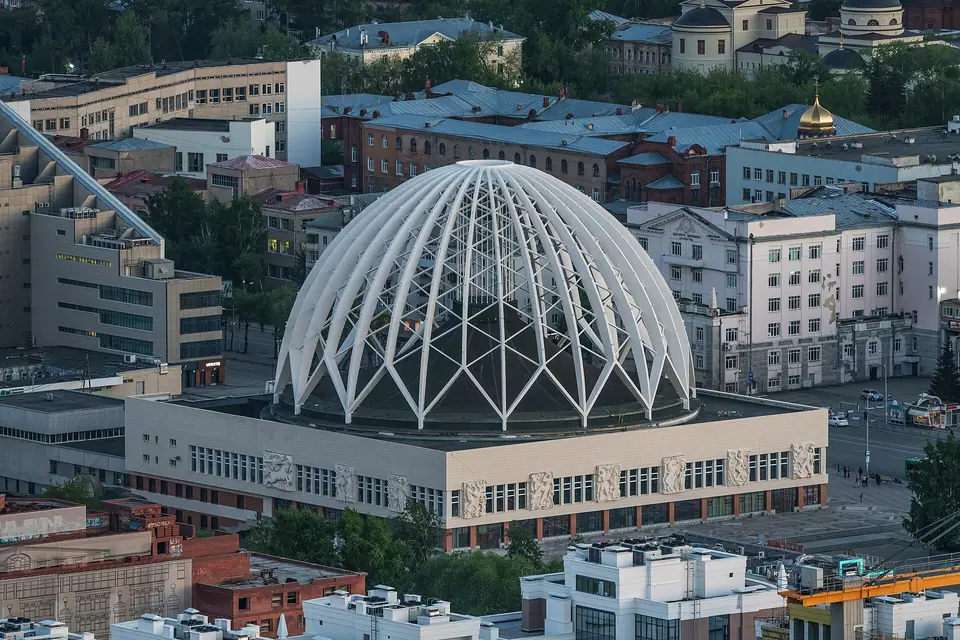
Continuing southward along the riverbank path brings you to the Yekaterinburg Circus, opened in 1980 on the southern curve of the Iset. Architects Julian Shvartsbreim and M. Korobkov collaborated with engineer Julijs Slavinskas to crown the performance arena with an open-work lattice dome rising 50 metres into the air. The semi-transparent concrete ribs remain a defining visual anchor along the southern waterfront. The surrounding quay offers quiet walking paths, footbridges, and views of modern residential towers across the water.
Voznesenskaya Hill and the Romanov Memorial Ground
Ascend the slope of Voznesenskaya Hill north of the main dam to visit the five-domed Russian-Byzantine Church on the Blood. Built between 2000 and 2003, the complex stands on the plot of the demolished Ipatiev House, where Emperor Nicholas II and his family were killed during the night of 16 to 17 July 1918. The lower sanctuary contains a memorial crypt precisely positioned over the execution cellar, while the upper church features ornate frescoes and golden icon screens.
A brief walk upward brings you to the neoclassical Rastorguyev-Kharitonov Palace on Karl Liebknecht Street. Constructed between 1794 and 1824, this sprawling estate sits next to a 9-hectare English-style landscape park. Paths lead past centuries-old trees toward an artificial pond centred on a circular white rotunda set upon an island.
Literary Quarter Streets and Historic Stages
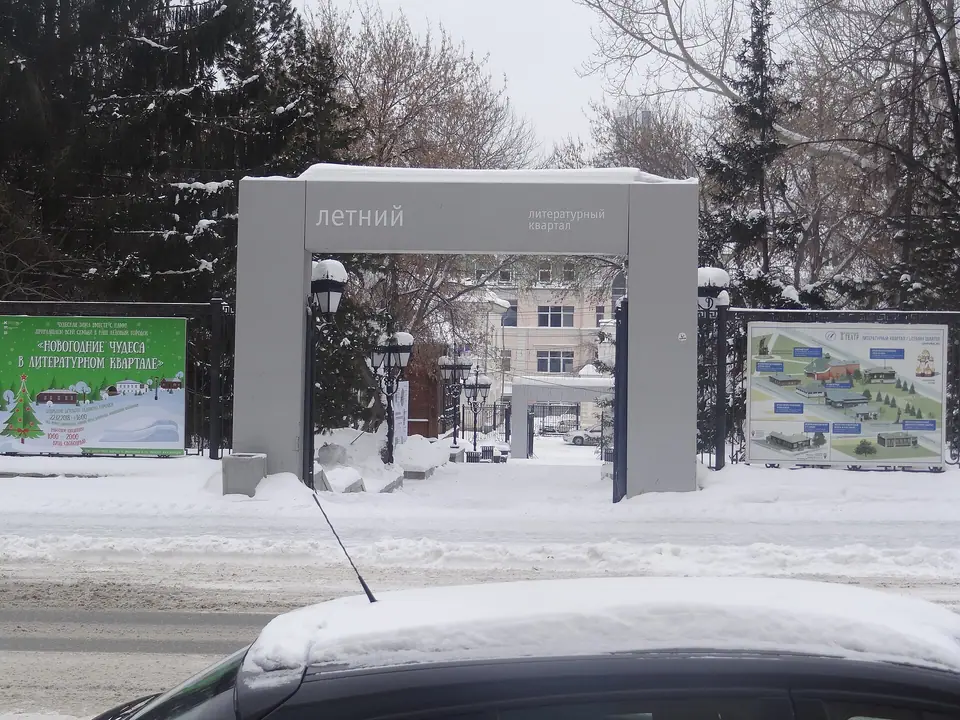
Tucked between the pond and the memorial church, the Literary Quarter preserves tranquil cobblestone lanes lined with nineteenth-century wooden houses. Intricate carved window frames decorate residential cottages that once belonged to regional storytellers. This compact district hosts quiet gardens and small municipal exhibition halls.
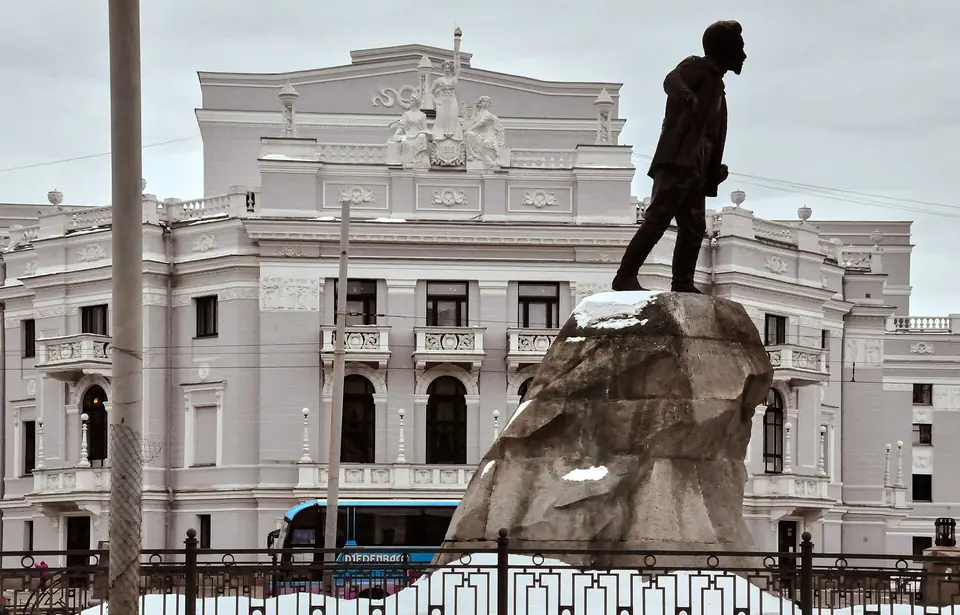
Nearby on Lenin Avenue stands the Yekaterinburg State Academic Opera and Ballet Theatre, inaugurated in 1912. Designed for 1,200 spectators, the ornate auditorium showcases classical ballets and opera productions beneath gilded ceiling mouldings and crystal chandeliers. Check the official operator site for current seasonal programmes and performance schedules before your visit.
Modern Perspectives from the Vysotsky Skyscraper and Yeltsin Center
To view the city from above, head to the 54-storey Vysotsky skyscraper on Malysheva Street. Its open-air observation platform sits on the 52nd floor at an elevation of 186 metres. From this windy perimeter, you can scan the entire grid of Soviet residential tracts, distant pine forests, and the curves of the City Pond. Because winter temperatures drop significantly, with January averages reaching highs of -9.3°C and lows of -15.5°C, wrap up thoroughly before stepping onto the perimeter deck. Summer visitors benefit from mild conditions, as July brings average daytime highs of 24.3°C.
Across the water on the northern shore of the pond, the Boris Yeltsin Presidential Center offers a deep examination of late-twentieth-century political shifts. Opened on 25 November 2015, the facility was named European Museum of the Year in 2017. Nine permanent exhibition halls guide visitors through the perestroika period, the dissolution of the Soviet Union, and the birth of the Russian Federation using interactive multimedia, authentic state cars, and presidential office reconstructions.
Avant-Garde Constructivism Across the City
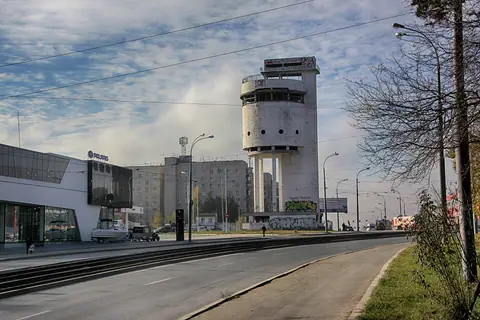
During the 1920s and 1930s, the city served as an experimental laboratory for avant-garde urban planning. Enthusiasts of Soviet functionalist design can explore monumental projects documented in our guide to Constructivist architecture in Yekaterinburg. The Gorodok Chekistov residential compound on Lenin Avenue provides an extraordinary look at communal housing blocks grouped into a self-contained neighbourhood unit. Farther north in Uralmash, the reinforced concrete White Tower, built from 1929 to 1931, stands as an iconic masterwork of early industrial water-tower engineering.
Essential Landmark Comparison for Visitors
We have summarised key practical details for the major central sights below to assist your daily planning.
| Landmark | Location | Primary Attraction | Recommended Time |
|---|---|---|---|
| Plotinka and Historic Square | Central Iset River crossing | 1723 wooden dam, mineral stones, Water Tower | 1 to 2 hours |
| Church on the Blood | Voznesenskaya Hill | Romanov memorial crypt, golden icon screens | 1 hour |
| Kharitonov Park | Karl Liebknecht Street | 9-hectare English-style park, island rotunda | 45 minutes |
| Vysotsky Observation Deck | Malysheva Street | 52nd-floor panorama at 186 metres | 1 hour |
| Boris Yeltsin Center | Boris Yeltsin Street | Nine multimedia halls on 1990s history | 2 to 3 hours |
Venturing into the Surrounding Ural Region
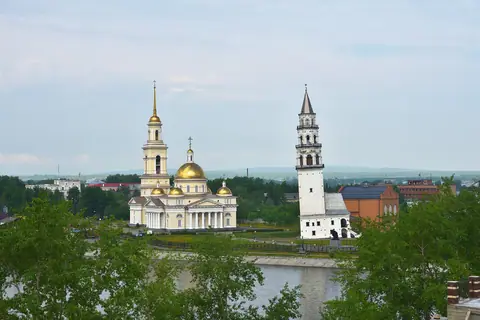
If you have extra days in the region, organise travel beyond the ring roads. Day excursions take visitors to the 57.5-metre Leaning Tower of Nevyansk or into the pine woodlands flanking ancient granite crags. Check local transport connections and weather advisories on official operator sites before departing into regional Sverdlovsk Oblast.
Where it is
- 1Yekaterinburg
- Koltsovo Airport (SVX) · about 16 km from Yekaterinburg in a straight line
- Directions in Google Maps
Stations and taxi ranks: OpenStreetMap. Airports: OurAirports. Distances are in a straight line.
Traveller tips
Real advice from people who have been to Yekaterinburg. Every tip is read by our team before it goes live.
No tips yet. Been here? Yours could be the first.
Thank you! Your tip will appear here after a quick review.
More in Yekaterinburg
Continue exploring Yekaterinburg with related neighbourhood, food, and planning guides
Constructivist Architecture in Yekaterinburg: White Tower & Chekist Town
Yekaterinburg, Russia
Ganina Yama Monastery & the Europe-Asia Border Near Yekaterinburg
Yekaterinburg, Russia
Shartash Stone Tents & Nevyansk Leaning Tower: Day Trips from Yekaterinburg
Yekaterinburg, Russia

What to Eat in Yekaterinburg: Ural Pelmeni, Shangi and Regional Specialities
Yekaterinburg, Russia
