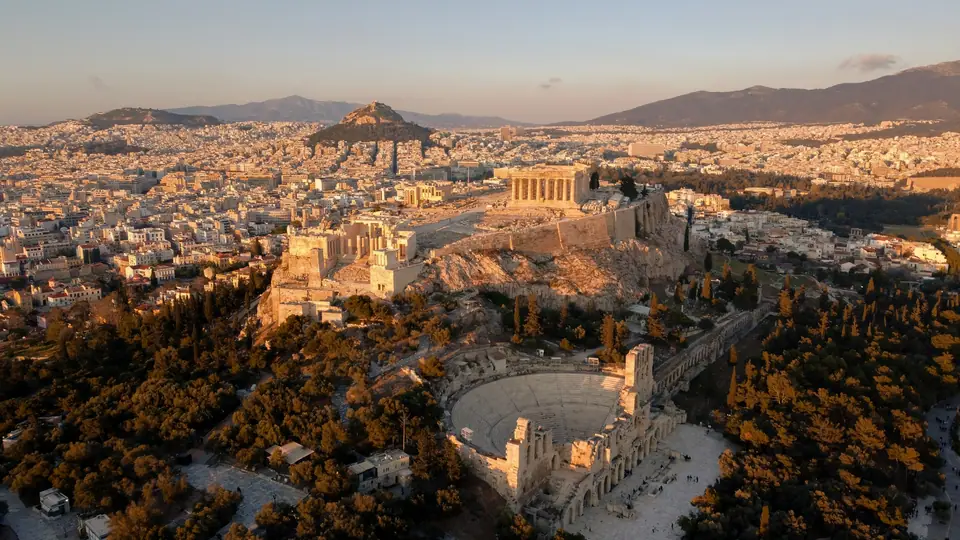
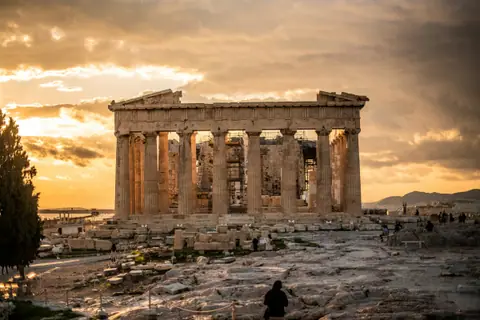
Photo by Jim Niakaris on Unsplash
Athens: Neighbourhoods, Timed Tickets & Local Tips
How central Athens fits around the Acropolis rock, which archaeological tickets must be booked ahead, and how to handle summer heatwaves and hotel fees.
Most island-bound travellers give Athens only thirty-six hours before catching a morning ferry from Piraeus. Nearly all of them board the ship wishing they had stayed longer. On the surface, the Greek capital can feel noisy, dense, and baking hot in July and August. Once you step onto the 3.5-kilometre pedestrian promenade that rings the Acropolis rock, the traffic disappears. You can walk from fifth-century BCE temples to shaded neoclassical squares and lively meze lanes without crossing a major road. Give Athens three well-paced days and structure your hours around the sun.
How the Commercial Triangle and the Acropolis ring fit together
Central Athens is remarkably compact. Almost every monument, museum, and restaurant district sits inside a walkable circle around the limestone plateau of the Acropolis (ah-KROH-poh-lees) and the commercial triangle to its north:
- Syntagma Square (105 63) / Plaka & Monastiraki (105 58 & 105 55): At the eastern apex of the historic centre sits elevated Syntagma Square (SEEN-tahg-mah, Constitution Square). The nineteenth-century Old Royal Palace, now the Hellenic Parliament, overlooks the square above the main interchange between Metro Lines 2 and 3. Walking downhill west along pedestrian Ermou Street or Mitropoleos Street brings you into Plaka (PLAH-kah, 105 58). Plaka is the oldest continuously inhabited residential quarter on the northern and eastern slopes of the Acropolis. Above its upper alleys clings tiny whitewashed Anafiotika (ah-nah-fee-OH-tee-kah). At the western foot of the rock sits lively Monastiraki Square (moh-nah-stee-RAH-kee, 105 55), where the Ancient Agora, Roman Agora, flea market, and Metro Lines 1 and 3 converge.
- South Slope & Koukaki (117 41) / Psyrri, Thissio & Kolonaki (105 54, 118 51 & 106 73): Along the sunny southern foot of the Acropolis runs Dionysiou Areopagitou. It is one of the finest pedestrian boulevards in Europe. It links the Acropolis south entrance and the Acropolis Museum with the leafy cafés of Koukaki (koo-KAH-kee) and the marble Apostolou Pavlou promenade in Thissio (thee-SEE-oh). North of Monastiraki lies the former artisans' quarter of Psyrri (psee-REE, 105 54), packed with late-night tavernas. Northeast of Syntagma rises upscale Kolonaki (106 73) on the slopes of Lycabettus Hill. Every street sign in central Athens displays names in both the Greek alphabet and Latin letters.
Timed-entry tickets, the 2025 ticket overhaul, and midday heat closures
Managing crowds and summer temperatures has changed how visitors book archaeological sites across Athens. Before locking in your 3-day Athens itinerary, note three official rules enforced by the Ministry of Culture:
- Official Hellenic Heritage Timed Slots (hhticket.gr) / Abolition of the Old Combined Ticket: Every visitor to the Acropolis must book a strict one-hour timed entry slot in advance. The hilltop enforces a daily cap of 20,000 visitors divided into hourly quotas. Always purchase tickets directly on the official state portal at hhticket.gr rather than third-party reseller sites that add markups. In April 2025, the Greek Ministry of Culture discontinued the old multi-site combined pass and eliminated the split winter discount tariff. Each archaeological site (including the Ancient Agora, Roman Agora, Kerameikos, and Temple of Olympian Zeus) and the separately administered Acropolis Museum (theacropolismuseum.gr) now requires its own individual ticket.
- Free Admission Days & EU Youth Concessions: Citizens of European Union member states aged up to 25 enjoy free admission to state-run archaeological sites and museums with a valid passport or ID card. They still need to book a free timed-entry voucher at the Acropolis portal. Non-EU children and teenagers up to age 18 qualify for concessions. State sites offer free entry to all visitors on the first and third Sunday of each month between 1 November and 31 March. Additional free entry days fall on 6 March, 18 April, 18 May, the last weekend of September, and 28 October.
- Emergency Midday Heatwave Closures (July & August): When summer afternoon temperatures in the Attica basin reach or exceed 40°C, the Ministry of Culture orders temporary midday closures of the Acropolis and open-air sites. Book the earliest morning entry slot or the final two hours before sunset. Keep midday reserved for air-conditioned museums and long shaded lunches.
Currency, the Climate Crisis Resilience Fee, Schengen EES, and street safety
Greece uses the euro (EUR). Contactless Visa and Mastercard cards and mobile wallets are accepted by law across every business in Greece. That includes taxis, OASA metro turnstiles, street kiosks (periptera, peh-REEP-teh-rah), and neighbourhood tavernas. Carry a small reserve of local notes and coins for tips and farmers' markets. Rounding up a taverna bill by a modest percentage in cash is appreciated. When budgeting for accommodation across Athens's neighbourhoods, remember that hotels and short-term rentals collect a mandatory government Climate Crisis Resilience Fee (Telos Anthektikotitas) per room, per night. The fee scales by official hotel star rating and runs higher from April through October than from November through March.
Greece is a full member of the Schengen Area, allowing 90 days visa-free within any 180-day period for UK, US, Canadian, and Australian passport holders. Non-EU arrivals register biometric fingerprints and facial scans at the airport under the European Union's Entry/Exit System (EES). Athens is very safe for walking day and night around the Acropolis ring. Pickpockets do work crowded carriages on Metro Line 1 (Green Line) between Piraeus, Omonia, and Monastiraki and on airport trains. Keep your phone and wallet in a zipped front bag. Avoid dimly lit side streets immediately west of Omonia Square late at night. Drink the clean municipal tap water fed from the Mornos and Evinos mountain reservoirs, and wear grippy rubber soles as advised in our what to wear guide. European two-pin Type C and Type F sockets supply electricity at 230 volts and 50 Hz. Useful Greek greetings include Kalimera (kah-lee-MEH-rah, good morning) and Efcharisto (ef-hah-rees-TOH, thank you). Pharmacies display a green cross and speak good English for minor travel remedies.
Where it is
- 1Athens
- Athens Eleftherios Venizelos International Airport (ATH) · about 20 km from Athens in a straight line
- Directions in Google Maps
Stations and taxi ranks: OpenStreetMap. Airports: OurAirports. Distances are in a straight line.
Traveller tips
Real advice from people who have been to Athens. Every tip is read by our team before it goes live.
No tips yet. Been here? Yours could be the first.
Thank you! Your tip will appear here after a quick review.
More in Athens
Continue exploring Athens with related neighbourhood, food, and planning guides
How to Get to Athens: Airport Metro, Piraeus Ferries & OASA Cards
Athens, Greece
Best Time to Visit Athens: Weather, Summer Heat & Easter Dates
Athens, Greece
What to Wear in Athens: Grippy Shoes, Sun Protection & Church Rules
Athens, Greece
Acropolis Guide: Timed Tickets, Entrances, Heat & the Museum
Athens, Greece
