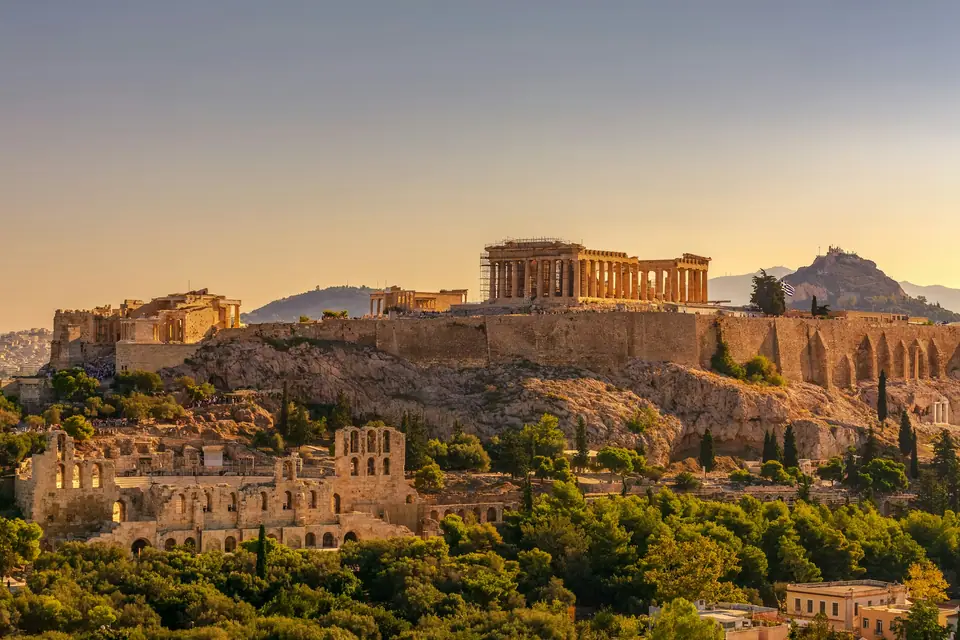
Photo by Constantinos Kollias on Unsplash
Athens
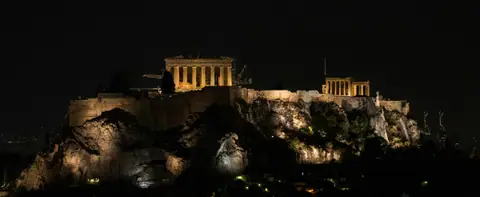
Rising 156 metres above a sun-drenched Attica basin framed by Mount Hymettus and the Saronic Gulf, the marble temples of the fifth-century BCE Acropolis anchor a walkable capital of neoclassical lanes, pine-shaded sunset hills, and island ferry piers.
Quick decisions
How many days?
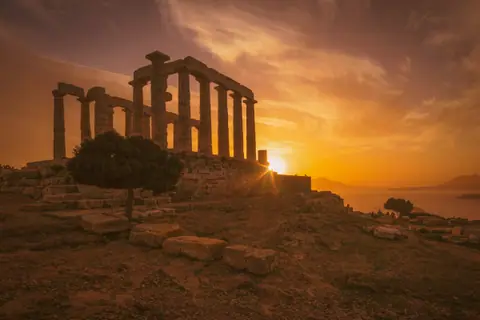
2 days: cover the Acropolis, the Acropolis Museum, the Ancient Agora, and Plaka. 3 days: add the National Archaeological Museum and sunset at Cape Sounion on our 3-day itinerary. 4 to 5 days: add a day trip to Delphi or car-free Hydra.
Where should I stay?
Plaka and Monastiraki (postcodes 105 58 and 105 55): pedestrian lanes and rooftop Parthenon views. Koukaki (117 41 to 117 42): calmer local cafés right below the south slope. Syntagma (105 63): direct airport metro and bus hub. Compare every district in our where to stay guide.
Do I need a car?
No. Central Athens enforces the Daktylios inner traffic ring, street parking in the historic triangle is virtually impossible, and the core archaeological walkway around the Acropolis is completely pedestrianised. Only rent a car when departing for the Peloponnese or Cape Sounion.
Best for
Classical history fans: unmatched fifth-century BCE temples and museums. Food lovers: late-night tavernas, souvlaki (soov-LAH-kee) grills, and the central Varvakios market. Island hoppers: the main Aegean ferry gateway at Piraeus.
Before you go
Timed tickets: book the Acropolis for an hourly slot on the official Hellenic Heritage portal (hhticket.gr). Summer heat: open-air sites can close at midday during July and August heatwaves. Shoes: pack rubber-soled footwear for slick marble paths.
Getting around
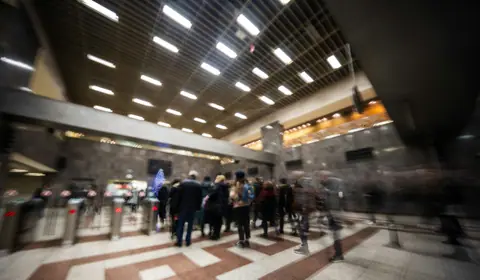
From the airport: Metro Line 3 (Blue Line) runs directly to Syntagma and Monastiraki, and the X95 express bus operates day and night. In the city: use a reloadable Ath.ena Card or tap a contactless bank card at OASA gates, as explained in our transport guide.
Continue your trip
Aegean ferries to the Cyclades, Crete, and the Saronic islands sail from Piraeus (on Metro Lines 1 and 3), with additional Cycladic sailings from Rafina and Lavrio. Read our Athens day trips guide for Delphi, Nafplio, and Mycenae.
Overview
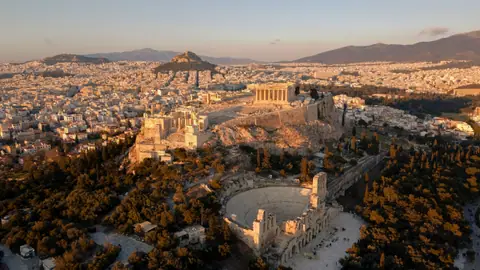
Approaching from the airport along the Attiki Odos highway, modern Athens initially looks like a dense sea of white concrete apartment blocks (polykatoikies) stretching between the marble ridges of Mount Pentelicus and Mount Hymettus. Then the road rounds a bend and the fifth-century BCE Parthenon appears high on the limestone crag of the Acropolis (ah-KROH-poh-lees), 156 metres above sea level. Around the base of that sacred rock, a 3.5-kilometre pedestrian promenade links the major monuments of Classical antiquity without a single lane of car traffic. Democracy, Western theatre, and Socratic philosophy took shape inside these few hundred metres during the fifth century BCE under Pericles.
The biggest planning mistake is treating Athens as a one-night transit stop before boarding an island ferry at Piraeus. Give the capital at least three full days. Visit the Acropolis at first entry, spend midday inside the air-conditioned galleries of the Acropolis Museum or National Archaeological Museum, and wander the whitewashed steps of Plaka and Anafiotika at dusk. Start with our Athens travel guide and seasonal planner.
Getting there
International flights land at Athens International Airport Eleftherios Venizelos (ATH) at Spata, 30 kilometres east of Syntagma Square. Metro Line 3 (Blue Line) runs directly from the elevated airport terminal station into the historic centre at Syntagma (40 minutes) and Monastiraki (43 minutes) before continuing all the way to the ferry port of Piraeus (pee-reh-AHS). Around the clock, the X95 express bus links the airport with Syntagma, while the X96 bus runs straight to Piraeus. Compare airport fare zones, ferry gates E1 to E12, and KTEL coach terminals in our getting to Athens guide.
Where to stay
Nearly every visitor sight sits within a twenty-minute walk of the Acropolis rock, making central location far more important than hotel size. First-timers who want neoclassical lanes on their doorstep choose Plaka (postcode 105 58) or lively Monastiraki (105 55). Travellers seeking quieter residential streets, speciality bakeries, and immediate access to the Acropolis Museum book in Koukaki and Makrygianni (117 41 and 117 42). Nightlife fans look to Psyrri (105 54), while boutique shoppers and gallery lovers favour hillside Kolonaki (106 73). Compare every quarter in our where to stay in Athens guide.
Things to do
Begin with our step-by-step Acropolis and Acropolis Museum guide and our self-guided Plaka, Anafiotika, and Monastiraki walk. Beyond those two anchors, our Athens things to do guide covers the Ancient Agora and Temple of Hephaestus, the National Archaeological Museum, the 1896 all-marble Panathenaic Stadium, sunset on Philopappos and Lycabettus Hills, and the Athens Riviera. For excursions beyond the basin, see our day trips from Athens guide.
Food and drink
Athenians eat on the move by day and linger over shared plates late into the night. Start the morning with a warm sesame-crusted bread ring called koulouri (koo-LOO-ree) from a street cart in Monastiraki, paired with an iced espresso (freddo espresso) and a flaky spinach-and-feta pie (spanakopita). For a quick lunch, order pork or chicken souvlaki wrapped in griddled pita with tomato, red onion, and garlicky tzatziki, followed by honey-drenched fried dough balls called loukoumades (loo-koo-MAH-thes) on Aiolou Street. After sunset, claim a pavement table at a neighbourhood taverna or ouzeri in Psyrri, Koukaki, or Pangrati for grilled octopus, barrel-aged feta, and small plates of meze.
Culture
Inhabited continuously for more than 5,000 years, Athens reached its Classical golden age in the fifth century BCE after the Persian Wars, when Pericles commissioned sculptor Phidias and architects Ictinus and Callicrates to rebuild the Acropolis temples in Pentelic marble. Following Roman, Byzantine, and four centuries of Ottoman rule, Athens was proclaimed capital of the newly independent Kingdom of Greece in 1834, leaving a legacy of grand nineteenth-century neoclassical buildings along Panepistimiou Avenue. Before packing for ancient marble slopes and Orthodox churches, read our what to wear in Athens guide.
Weather by month
Athens is warmest in July, with average highs around 33°C, and coldest in January, when nights drop to about 5°C. December is the wettest month by rainfall (86 mm), with rain on about 8 days. For mild weather with fewer rainy days, aim for April, May and October.
| Month | Low | Range | High | Rain | Rainy days |
|---|---|---|---|---|---|
| Jan | 5°C | 12°C | 72 mm | 8 d | |
| Feb | 7°C | 14°C | 50 mm | 7 d | |
| Mar | 8°C | 16°C | 52 mm | 7 d | |
| Apr | 11°C | 20°C | 27 mm | 5 d | |
| May | 16°C | 25°C | 30 mm | 5 d | |
| Jun | 20°C | 30°C | 31 mm | 6 d | |
| Jul | 23°C | 33°C | 10 mm | 2 d | |
| Aug | 23°C | 33°C | 12 mm | 2 d | |
| Sep | 20°C | 29°C | 30 mm | 3 d | |
| Oct | 15°C | 23°C | 28 mm | 3 d | |
| Nov | 11°C | 19°C | 65 mm | 7 d | |
| Dec | 8°C | 14°C | 86 mm | 8 d |
Averages of daily values from 2015 to 2024. Rainy days are days with at least 1 mm of rain. Source: Open-Meteo · Compare destinations by month.
Athens on the map
Every place we cover in Athens. Tap a category or pin to explore.
In-depth Athens guides
Browse the guides grouped by topic: sights, neighbourhoods, food, transport, day trips and trip planning.
Sights, Landmarks & Parks
Key monuments, viewpoints, museums and nature trails.
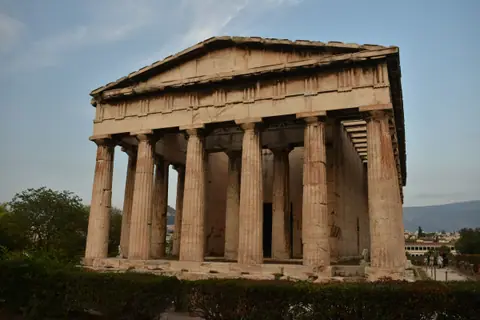 Best Things to Do in Athens: 13 Ancient Ruins, Hills & MuseumsFrom the fifth-century BCE Parthenon and the Temple of Hephaestus to gold Mycenaean masks, pine-covered sunset hills, and open-air summer cinemas.
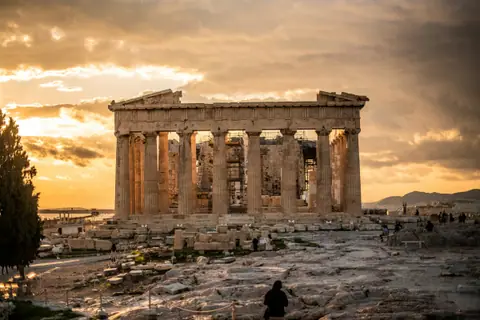 Acropolis Guide: Timed Tickets, Entrances, Heat & the MuseumEverything you need for a smooth Acropolis visit: booking official hourly slots, choosing the quieter South Slope gate, and pairing the hill with its museum.
Neighbourhoods & Where to Stay
Districts, historic quarters and the best bases for your stay.
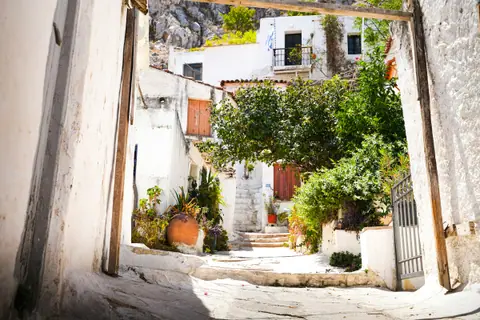 Plaka, Anafiotika & Monastiraki Walking Guide: 10-Stop RouteA two-and-a-half-hour downhill and hillside loop from Syntagma through Byzantine chapels, Cycladic whitewashed steps, and Roman ruins to sunset at Thissio.
 Where to Stay in Athens: Plaka, Koukaki, Syntagma & KolonakiComparing central Athens neighbourhoods by postcode, metro lines, night noise, and walkability to the Acropolis, plus which streets to avoid after dark.
Getting Around & Arrival
Airport transfers, public transit, passes and driving rules.
Day Trips & Excursions
Easy half-day and full-day trips from the city.
Trip Planning & Itineraries
When to visit, what to pack and day-by-day routes.
 Athens: Neighbourhoods, Timed Tickets & Local TipsHow central Athens fits around the Acropolis rock, which archaeological tickets must be booked ahead, and how to handle summer heatwaves and hotel fees.
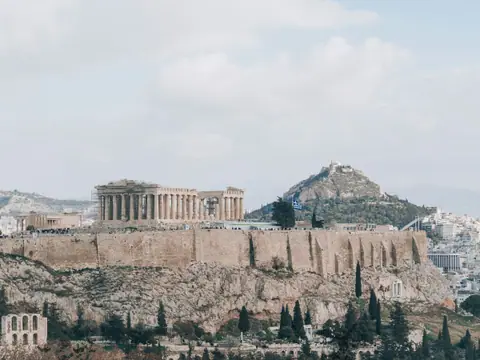 Best Time to Visit Athens: Weather, Summer Heat & Easter DatesWhy April to early June and late September to October are ideal for climbing the Acropolis, plus how to manage summer heatwaves and Orthodox Easter dates.
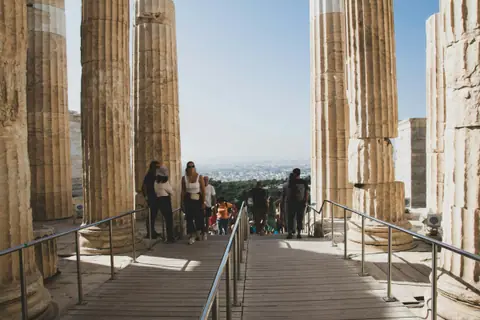 What to Wear in Athens: Grippy Shoes, Sun Protection & Church RulesWhy rubber-soled footwear is non-negotiable on ancient Pentelic marble, how to dress for unshaded summer ruins, and modesty rules at Orthodox churches.
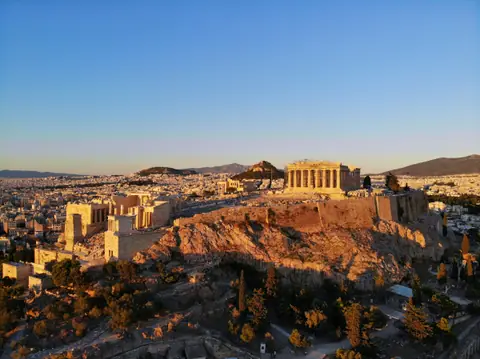 Athens 3-Day Itinerary: Acropolis, Agora, Plaka & Cape SounionThree well-paced days structured around morning archaeological slots, air-conditioned midday museums, golden-hour hill walks, and sunset at Cape Sounion.
Need your embassy or consulate in Greece? See embassies and consulates in Greece.
Reviews
Log in to write a review.
No reviews yet.