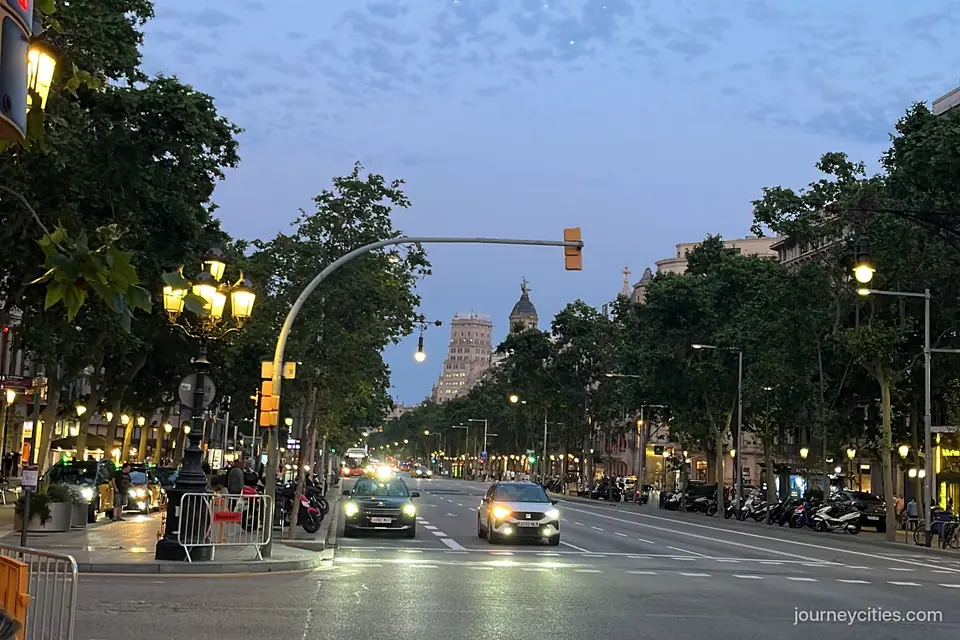
Photo: JourneyCities
Casa Batlló and Casa Milà: Comparing Gaudí Houses
Comparing Casa Batlló and Casa Milà helps visitors choose the right modernist interior to tour along Passeig de Gràcia.
Passeig de Gràcia showcases two of Antoni Gaudí's most famous domestic commissions within a short stroll of each other. Casa Batlló sits lower down the boulevard amid competing modernist townhouses. Casa Milà, often called La Pedrera, occupies a prominent corner four blocks further north. While both buildings hold UNESCO World Heritage status, they offer very different visitor experiences. Batlló is an imaginative private remodel packed with iridescent details and flowing timber. Milà stands as a massive residential block defined by rough-hewn stone, self-supporting facades, and structural innovation. Understanding their contrasting designs helps travellers decide whether to explore one or both buildings.
Architectural Contrasts on Passeig de Gràcia
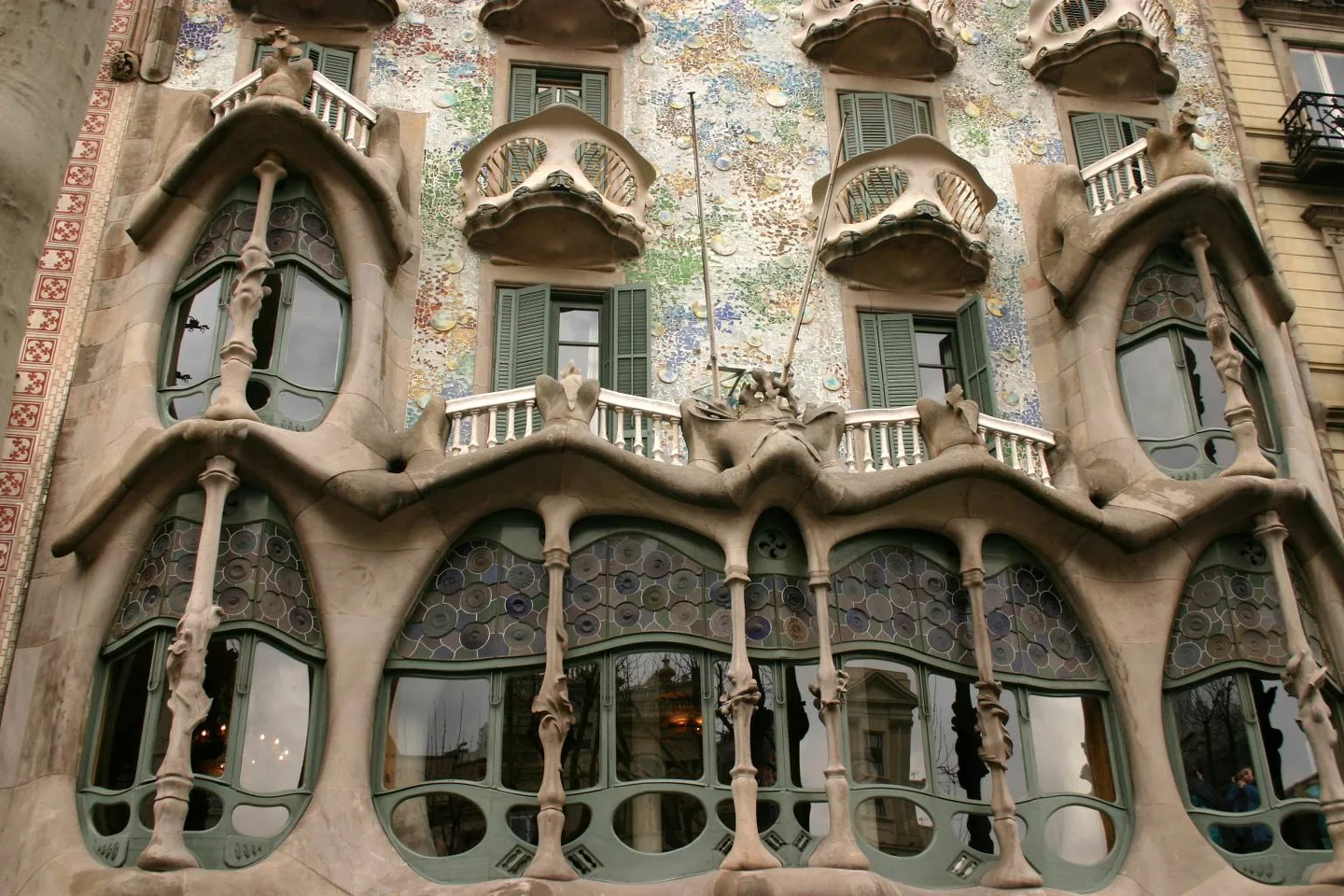
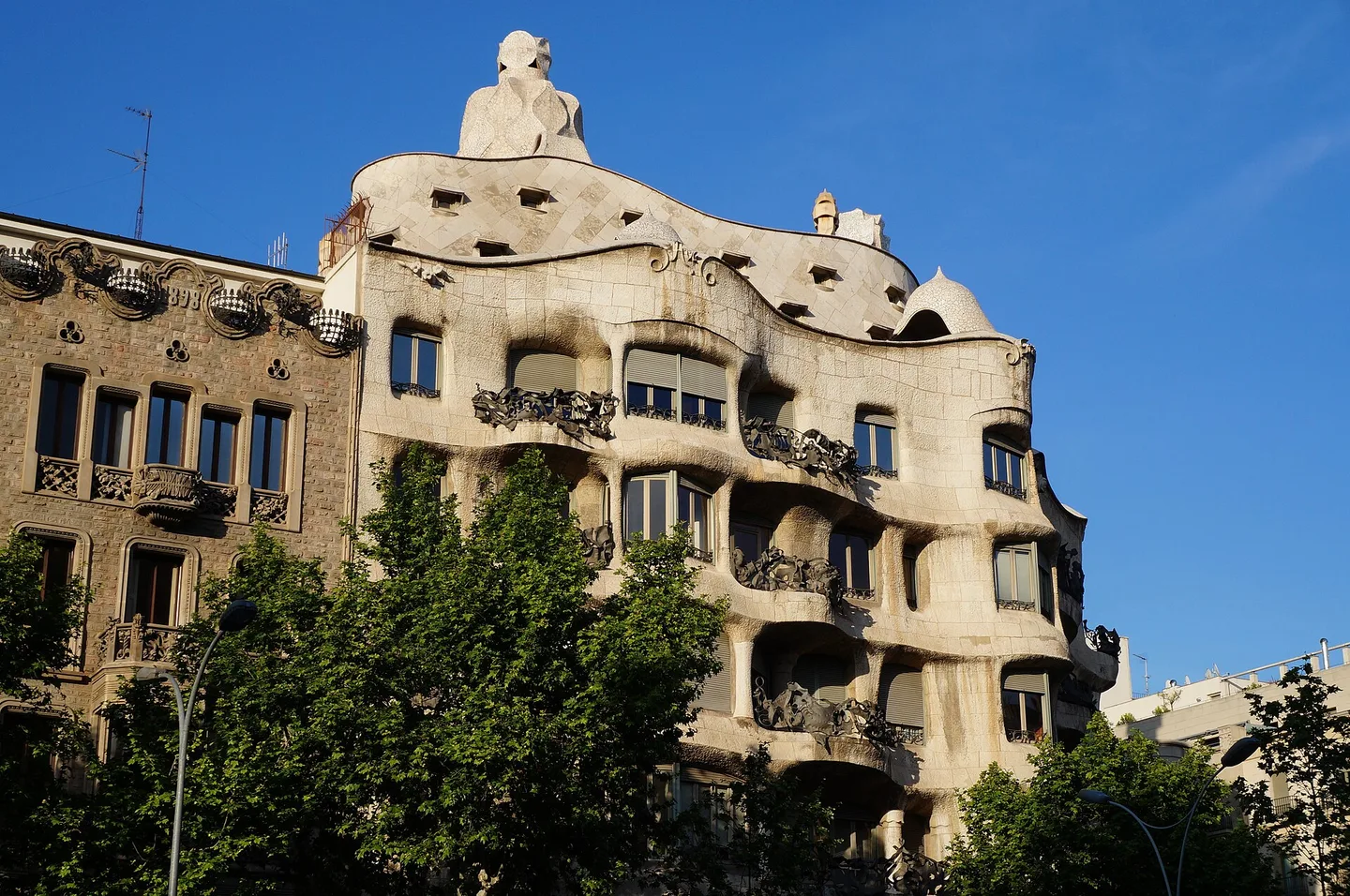
Casa Batlló anchors the renowned Block of Discord alongside striking works by Lluís Domènech i Montaner and Josep Puig i Cadafalch. Gaudí completely transformed an existing building for the industrialist Josep Batlló, producing skeletal stone columns, sinuous window frames, and colourful trencadís mosaics. Four blocks uphill, Casa Milà presents an entirely different urban presence. Commissioned by Pere Milà, this free-standing apartment block broke architectural conventions with its undulating limestone exterior and twisting wrought-iron balconies. While Batlló charms viewers through brilliant colour, Milà impresses through sculptural weight and daring engineering.
Visitors short on time often wonder how their design highlights compare side by side:
| Feature | Casa Batlló | Casa Milà (La Pedrera) |
|---|---|---|
| Primary Concept | Marine forms and Saint George legend | Natural stone quarry and organic curves |
| Central Void | Tiled blue lightwell with graduated tones | Two wide open courtyards feeding light |
| Upper Level | Loft arches and arched dragon spine | Catenary brick arches resembling a ribcage |
| Rooftop Experience | Intimate terrace with mosaic chimney stacks | Stepped terrace with sculpted warrior vents |
| Apartment View | Noble Floor grand reception rooms | Furnished early-twentieth-century flat |
Casa Batlló: Marine Curves and Dragon Scales
Entering Casa Batlló immerses visitors in a world modelled on aquatic life and organic growth. The lower levels feature a grand salon with undulating stained-glass windows overlooking the boulevard. Carved wooden doors, fluid bannisters, and rippling ceilings eliminate almost all straight lines from the noble living quarters. Gaudí placed a central light shaft at the heart of the home, lining it with ceramic tiles that shift from pale sky blue below to deep cobalt above. This graduation balances daylight across every level of the structure.
Above the living quarters, whitewashed catenary arches support a loft that once served as laundry space. The experience finishes on the famous roof terrace, where colourful ceramic tiles shape the arching back of the dragon slain by Saint George. Four-armed crosses and polychrome chimney clusters rise against the city skyline. Standard admissions cover the lower floors, whereas higher-tier options allow entry to private salons and upper terraces. Confirm exact ticket inclusions and daytime opening windows on the official foundation site before booking.
Casa Milà: Undulating Stone and Rooftop Warriors
Casa Milà earned the nickname La Pedrera, meaning the stone quarry, because contemporary critics mocked its raw limestone facade. Gaudí avoided load-bearing perimeter walls by using steel girders and stone pillars, allowing completely open floor layouts. Visitors step into two broad inner courtyards that funnel fresh air and natural light down through the apartments. A period flat shows how wealthy bourgeois families lived in early twentieth-century Catalonia, complete with classic furniture and brass fittings.
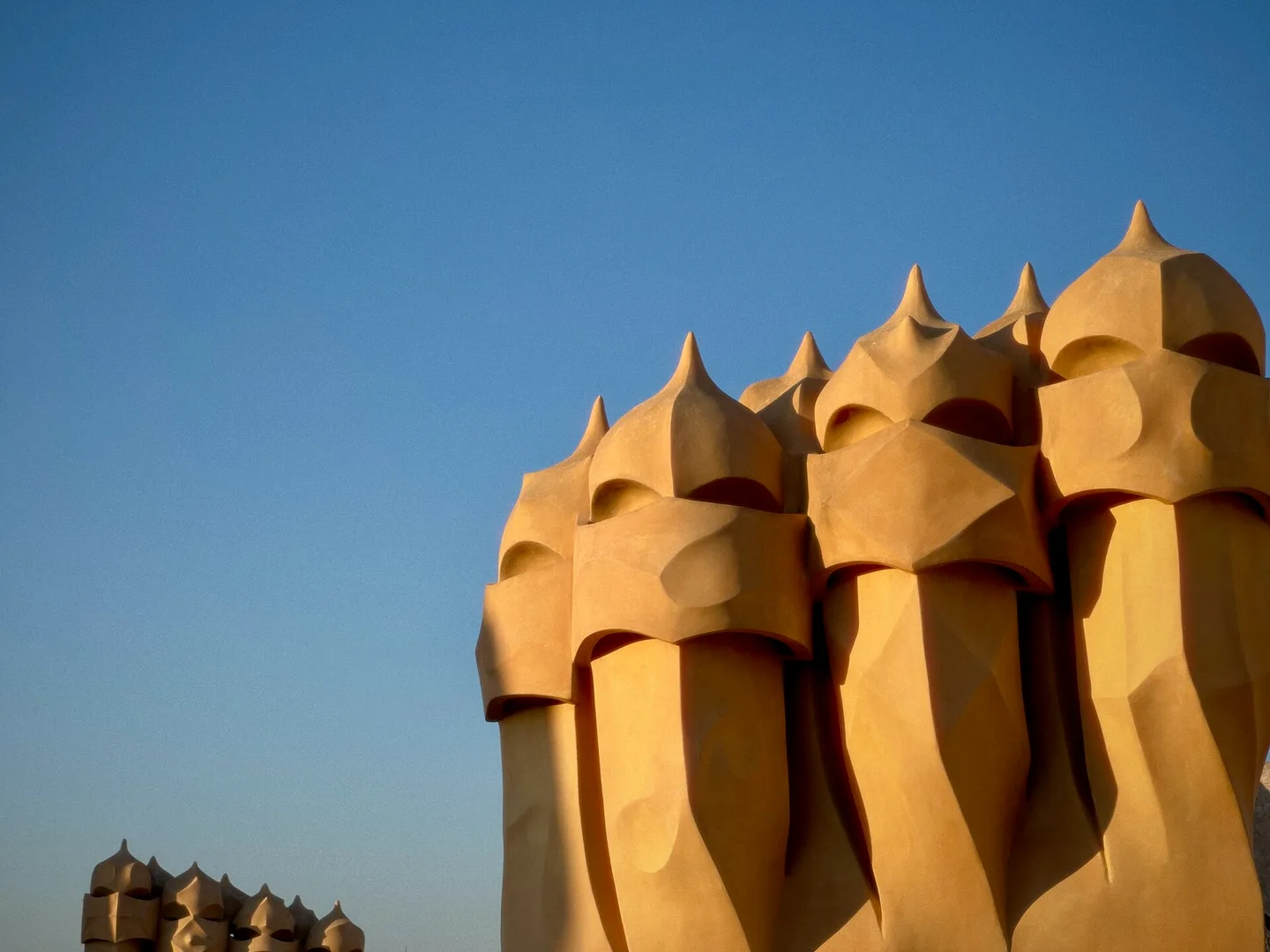
The attic houses a permanent exhibition beneath hundreds of parabolic brick arches that echo the ribcage of an enormous whale. Stepping out onto the undulating roof terrace reveals one of Barcelona's most dramatic vistas. Gaudí disguised ventilation shafts and stairwells as towering figures resembling helmeted guardians. Wandering these stepped terraces provides expansive panoramas across the grid of the Eixample neighbourhood. Night presentations and early morning slots offer quieter access to these rooftop sculptures. Check the foundation portal ahead of arrival for evening tour calendars.
Ticket Planning and Selecting Your Route
Because full admission costs add up quickly, most travellers choose to enter one house while admiring the exterior of the other. Casa Batlló offers a decorative, fantasy-driven experience that appeals strongly to design fans. Casa Milà features deeper architectural substance, spacious courtyards, and a distinctive rooftop landscape. Booking online in advance secures your desired entry slot and avoids walk-up booking surcharges at ticket windows.
- Select Casa Batlló if you want vivid colours, imaginative lightwells, and ornate woodwork.
- Choose Casa Milà if you prefer sweeping rooftop views, structural history, and furnished period apartments.
- Both properties sit on central transport links. They are easy to combine with other major sights across the city.
- Save entry funds by touring one building, then reserve separate access for the Sagrada Família or the historic Palau de la Música.
- Pick up transport passes through our Barcelona tickets guide before navigating the metro between houses.
Diagonal and Passeig de Gràcia metro stations serve both monuments directly. Strolling the four blocks between them lets you enjoy the leafy avenue, iron street lamps, and elegant shopfronts of the Eixample. Prioritise your personal architectural interests to pick the house that best suits your holiday plans.
Official prices and opening hours
- Casa BatlloOfficial site ↗
- Casa Mila (La Pedrera)Official site ↗
Where it is
- 1Casa Batlló and Casa Milà
- Josep Tarradellas Barcelona-El Prat Airport (BCN) · about 13 km from here in a straight line
- Directions in Google Maps
Stations and taxi ranks: OpenStreetMap. Airports: OurAirports. Distances are in a straight line.
Traveller tips
Real advice from people who have been to Barcelona. Every tip is read by our team before it goes live.
No tips yet. Been here? Yours could be the first.
Thank you! Your tip will appear here after a quick review.
More in Barcelona
Continue exploring Barcelona with related neighbourhood, food, and planning guides
Visiting Spotify Camp Nou and the Barça Museum in Barcelona
Barcelona, Spain
Palau de la Música Catalana: Guided Tours, Skylight and Booking
Barcelona, Spain
Picasso Museum Barcelona: Medieval Palaces, Early Works and Tickets
Barcelona, Spain
Montjuïc Guide: Cable Car, MNAC, Miró Museum and Fortress Views
Barcelona, Spain
