Photo: JourneyCities
Palau de la Música Catalana: Guided Tours, Skylight and Booking
This Catalan Modernista concert hall showcases floral mosaics, stone carvings, and an inverted stained-glass dome in central Barcelona.
Standing along a narrow corner just off the main avenue, the Palau de la Música Catalana represents the pinnacle of Catalan Art Nouveau design. Architect Lluís Domènech i Montaner conceived this performance space as a celebration of local choral traditions, songcraft, and civic identity. Instead of relying on traditional heavy masonry, the structure uses a rational steel framework that supports sweeping curtains of glass, sculpted stone, and glazed ceramics. This bold engineering choice allowed the hall to receive abundant natural daylight during daytime musical rehearsals. Stepping inside from the surrounding street grid immediately reveals how decorative arts blend with functional concert design. Every surface displays handcrafted floral motifs, glazed tilework, and allegorical figures celebrating Catalan folk melody. Travellers walking across historic districts can easily weave this stop into a broader route between the neighbouring Gothic Quarter and the historic lanes of El Born.
Modernista Vision and Choral Heritage
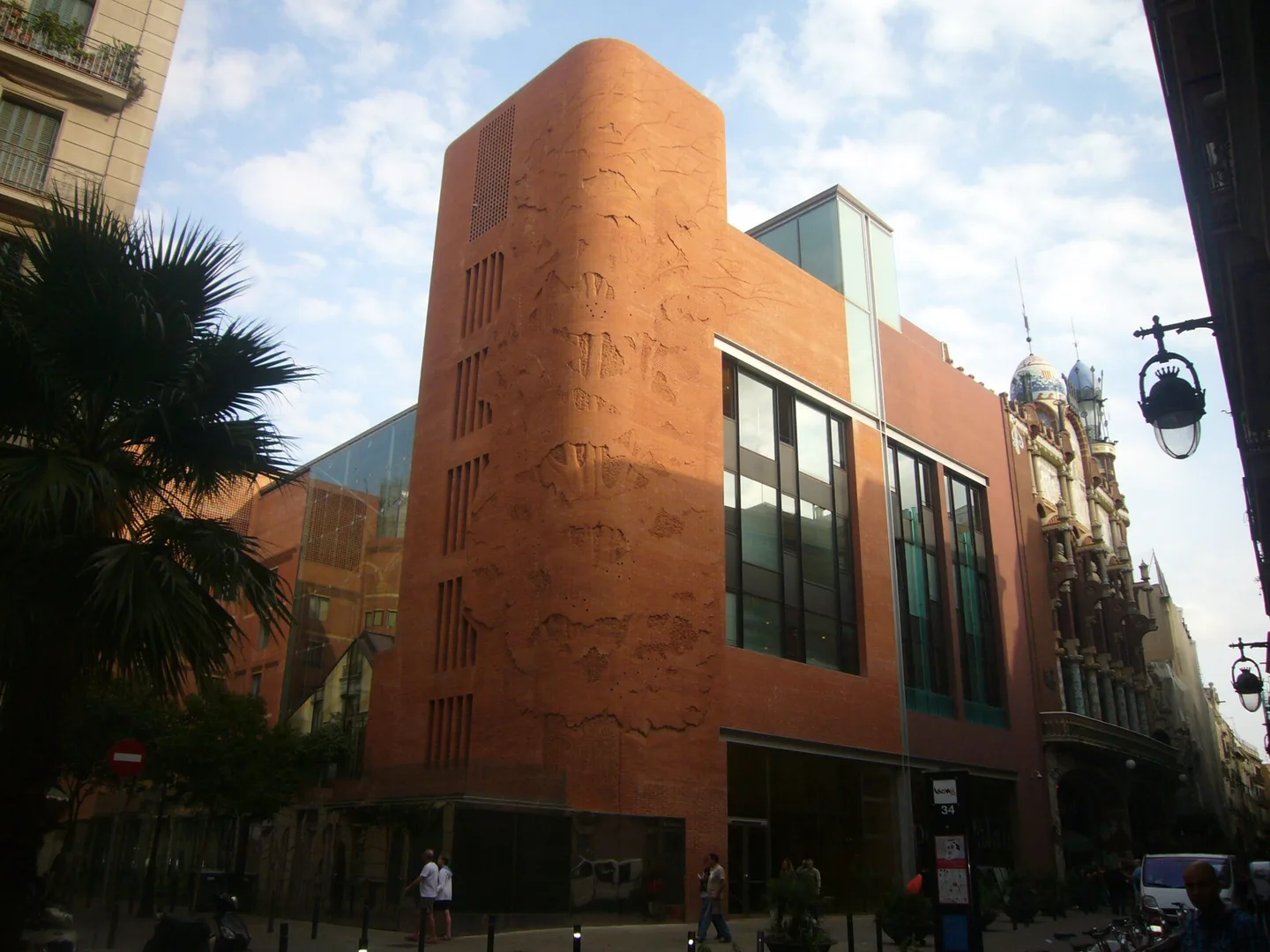
The building originated through the vision of the Orfeó Català choral society, which sought a grand permanent hall for polyphonic singing and public gatherings. Domènech i Montaner designed an expressive space that discarded cold academic rules in favour of organic curves and bright Mediterranean tones. Red brick walls, exposed iron arches, and polished stone piers establish a rhythmic structural grid throughout the interior circulation foyers. As visitors ascend the grand ceremonial staircase, glazed ceramic balusters reflect soft light spilling from tall casement windows. Sculptural reliefs honouring European masters, including Ludwig van Beethoven, balance native folk symbols carved directly into the concert proscenium. The resulting harmony between local craft traditions and early twentieth-century ironwork earned the monument recognition as a preserved international cultural treasure. Walking through the ground-floor vestibule offers an instant appreciation of how music shaped Barcelona civic renewal.
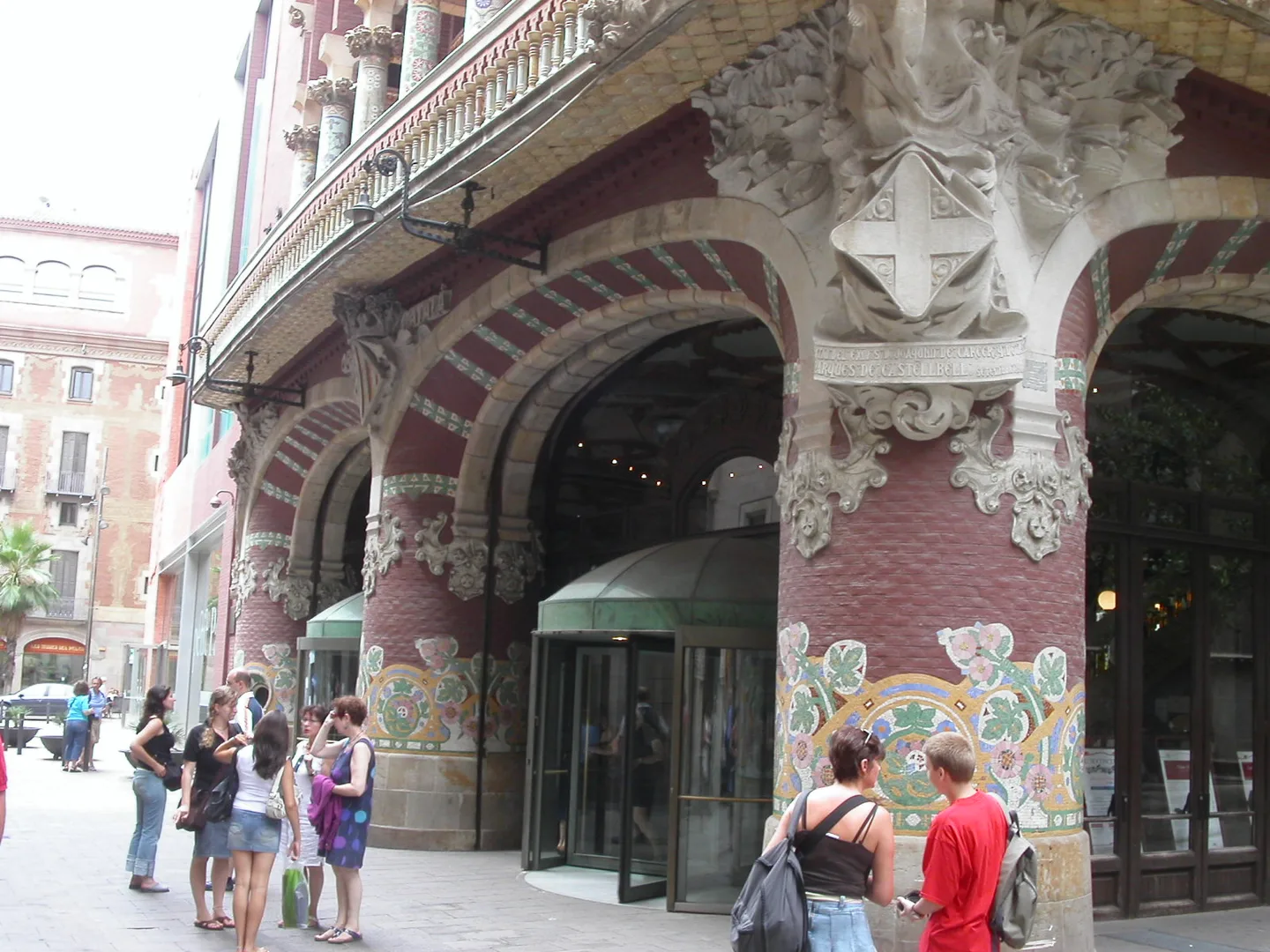
The foyer welcomes patrons with wide brick vaults supported by sturdy pillars adorned with glazed floral crests. This transition zone once greeted concertgoers arriving on foot from nearby avenues, serving as an atmospheric buffer before they entered the main stalls. Natural materials define each threshold, moving from rough-hewn stone steps to polished handrails crafted from smooth local hardwoods and tinted glass. Every decorative flourish carries symbolic weight, paying tribute to the rural landscapes, regional poetry, and seasonal flowers of Catalonia.
Sculptural Facades and Mosaic Balconies
Before entering the auditorium, spending unhurried time along the exterior streets reveals remarkable decorative details embedded directly into the public streetscape. The corner facade displays a massive sculptural allegory carved by Miquel Blay, representing Catalan popular song gathered beneath an armed guardian figure. Above the street level, double-tiered colonnades wrap the upper balcony, where every single pillar features an individual geometric and botanical mosaic pattern. Workers assembled these multicoloured mosaic surfaces using tiny fragments of glazed ceramic tiles, creating durable garden patterns that never fade under bright sun.
- Corner sculpture by Miquel Blay honouring Catalan popular song traditions across all generations.
- Upper open loggia supported by unique mosaic-clad pillars decorated with vivid floral bands.
- Original brick ticket windows built directly into the street columns at pavement level.
- Busts of classical composers set into the main brick facade overlooking the street corner.
These street-facing artistic details transformed an otherwise narrow urban passage into an open-air gallery for local pedestrians. Taking photographs from across the alley gives a clear perspective on the contrast between industrial red brick and fine ornamental ceramics. Strolling along the pavement reveals how intricately the building envelope integrates into the historic neighbourhood fabric.
Behind the upper colonnade lies the Lluís Millet hall, a spacious drawing room named after the co-founder of the choral society. This luminous salon features floor-to-ceiling glass doors opening onto the mosaic balcony, allowing gentle air and filtered sunlight to sweep across the room. Massive iron chandeliers shaped like stylised plant tendrils hang from the painted ceilings, complementing tall stained-glass panels depicting blooming garden beds. During performance intermissions, concert patrons gather here to converse beneath decorative bronze fixtures and floral friezes. Check official venue notices before arrival for current access tiers, timed admissions, and rehearsal restrictions.
The Sunken Stained-Glass Skylight
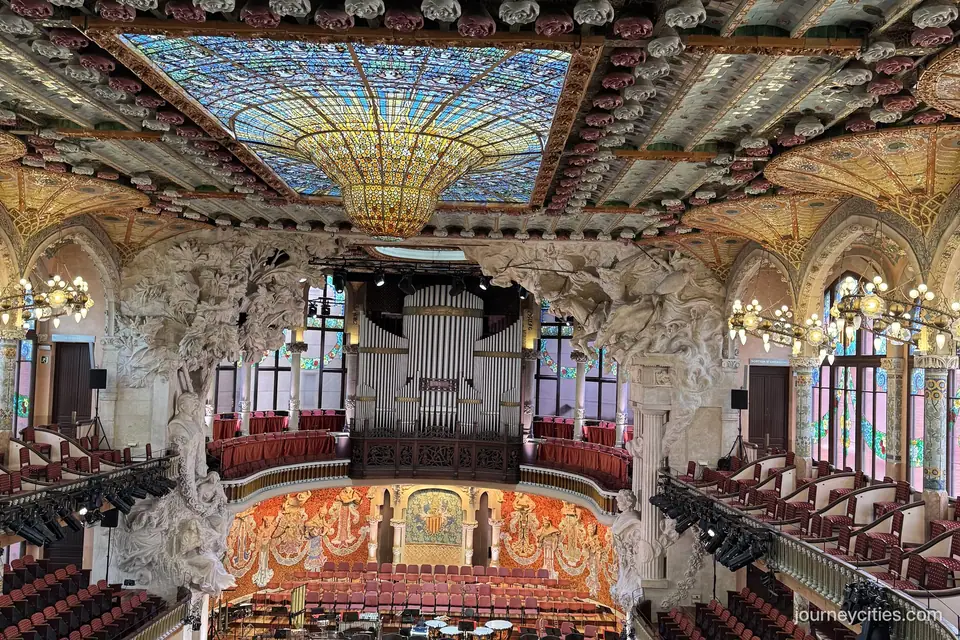
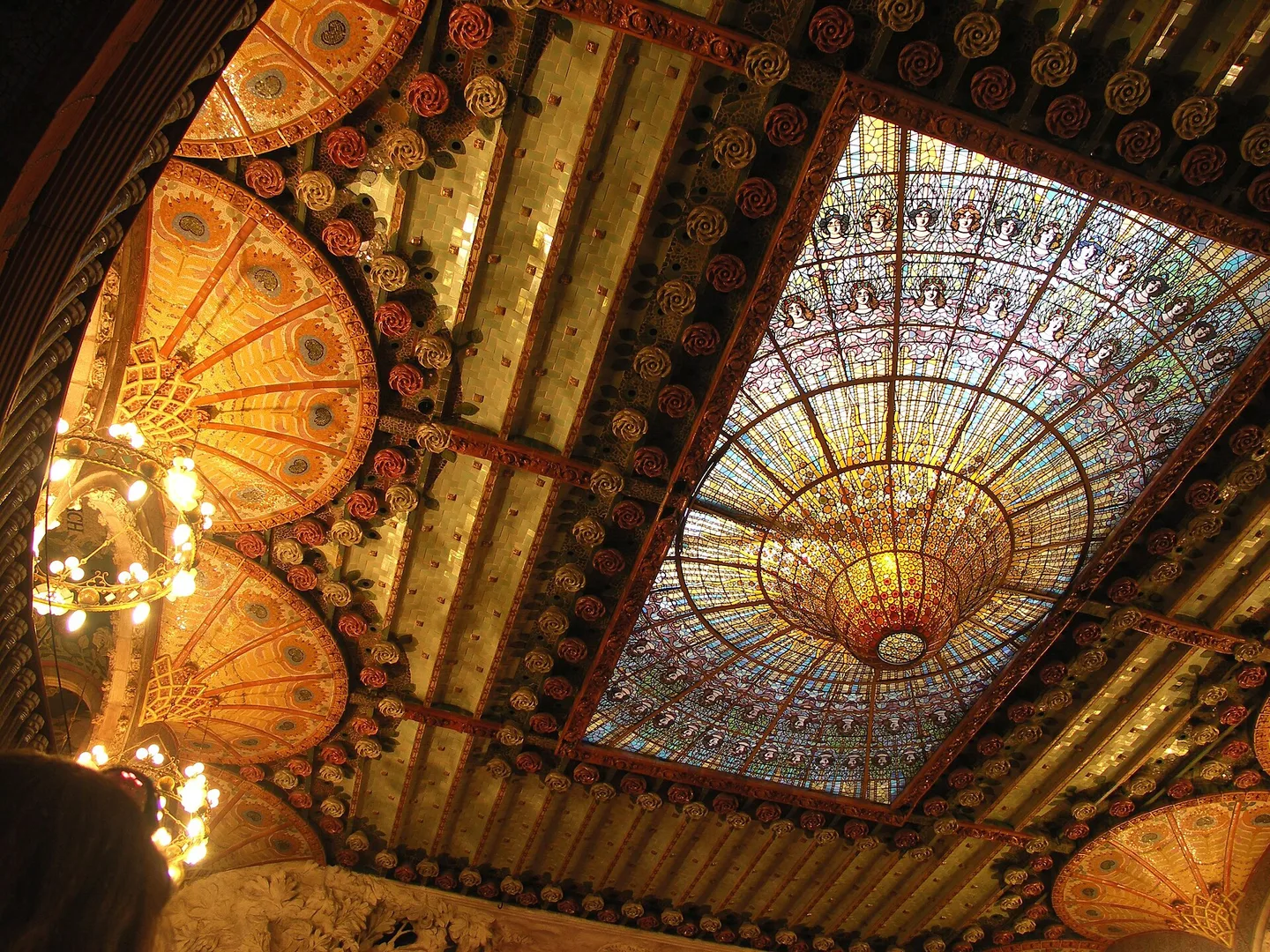
The undeniable visual focus of the grand concert hall is the colossal inverted stained-glass skylight created by glass master Antoni Rigalt. Suspended directly above the centre stalls, this concave glass dome acts like a natural sun pendant that illuminates the entire hall without electric lamps. At its core, warm amber and golden glass panes evoke radiant sunlight, while outer rings shift into soft blue, turquoise, and sky tones. Surrounding the dome, rows of winged female muses sculpted in high relief appear to emerge from the back of the performance stage. Each muse plays a different period instrument, dressed in flowing skirts covered in mosaic tiles. Natural light flowing through the glass ceiling brings out the delicate pastel shades of these stone musicians throughout clear afternoons. Sitting quietly in the upper gallery gives an unbroken view of how light transforms the acoustics and atmosphere of this luminous auditorium.
The stage proscenium continues this rich theatrical iconography, flanked by massive tree-like sculptures that bend gracefully over the performance platform. On one side, Catalan folk music finds representation through traditional regional motifs and poetic figures. On the opposite flank, classical European art appears through an expressive bust of Beethoven positioned beneath the Ride of the Valkyries. Even the organ pipes rising behind the stage blend seamlessly into the ceramic framing, creating an acoustic backdrop that unites sound and visual splendour.
Comparing Tours, Concerts and Access
Travellers can experience this musical palace either through scheduled daytime visits or by purchasing evening tickets for live performances. Guided itineraries allow close inspection of the stained glass, the upper circle, and the private rehearsal rooms behind the grand stage. In contrast, attending an evening concert reveals the acoustic richness of the space while hearing classical guitar, choral works, or chamber orchestras. Consider how both options compare when planning your stay in Barcelona:
| Visit Format | Key Highlights | Recommended For |
|---|---|---|
| Daytime Guided Visit | Close views of the Rigalt skylight, Lluís Millet balcony, and architectural commentary | Visitors interested in architecture and photography |
| Evening Live Concert | Authentic hall acoustics, symphonic music, and night-time stage lighting | Music lovers seeking live performance atmosphere |
To reach the hall, take public metro lines directly to Urquinaona station, which stands only a short two-block walk from the entrance. Because seating capacity inside the historic hall is strictly regulated, securing bookings in advance prevents disappointment on busy holiday weekends. Travellers organising a multi-day route can combine an early morning visit with a walking route planned through our planned three-day neighbourhood routes. Check current performance calendars and seasonal daytime schedule windows on the official box-office portal prior to arrival.
Official prices and opening hours
- Palau de la Musica CatalanaOfficial site ↗
Where it is
- 1Palau de la Música Catalana
- Josep Tarradellas Barcelona-El Prat Airport (BCN) · about 13 km from here in a straight line
- Directions in Google Maps
Stations and taxi ranks: OpenStreetMap. Airports: OurAirports. Distances are in a straight line.
Traveller tips
Real advice from people who have been to Barcelona. Every tip is read by our team before it goes live.
No tips yet. Been here? Yours could be the first.
Thank you! Your tip will appear here after a quick review.
More in Barcelona
Continue exploring Barcelona with related neighbourhood, food, and planning guides
Where to Stay in Barcelona: Distinct Quarters and Local Bases
Barcelona, Spain
Barcelona in Three Days: Historic Quarters, Modernisme and Panoramic Ridges
Barcelona, Spain
Visiting Spotify Camp Nou and the Barça Museum in Barcelona
Barcelona, Spain
Picasso Museum Barcelona: Medieval Palaces, Early Works and Tickets
Barcelona, Spain
