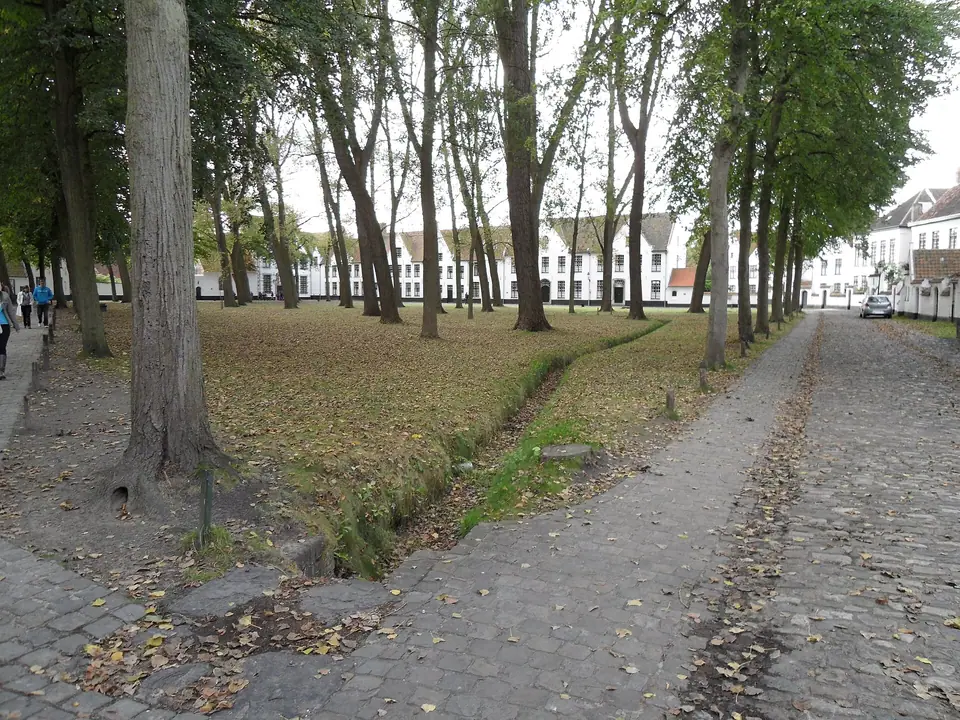
Photo: Andries Van den abeele · CC BY-SA 4.0
Begijnhof Beguinage, Minnewater Lake & Hidden Godshuizen Walk
Walk the peaceful southern gateway of Bruges: the historic Begijnhof, Minnewater Lake, and surrounding Godshuizen almshouses.
In the southern curve of the Bruges canal ring, where the waters of the canal widen into the tree-lined basin of Minnewater before splitting into the inner Reien, lies the city's most serene architectural landscape. Here you can cross an arched stone bridge into the Princely Beguinage Wijngaerde (Begijnhof). Located within the historic city centre listed as a UNESCO World Heritage site. Outside its gates, you can follow quiet paths through historic Godshuizen (almshouses), where charitable housing founded centuries ago still marks the city. For a wider view of the medieval layout, check our Bruges travel guide.
| Stop on the Sanctuary Walk | Admission Cost | Opening Hours | What Makes It Special |
|---|---|---|---|
| Princely Beguinage Wijngaerde. | Check the official site. | Check the official site. | Whitewashed houses around a silent poplar lawn. |
| Minnewater (Lake of Love) & Sashuis. | Free public park. | Open daily. | Poertoren gunpowder tower, Sashuis lock house and resident swans. |
| Godshuizen De Nieuwe Pastorie & Fontaine. | Courtyard access varies. | Check the official site. | Walled charity cottages on Boeveriestraat and Kreupelenstraat. |
| Godshuizen De Meulenaere & Sint-Jozef. | Courtyard access varies. | Check the official site. | Flower-filled brick courtyards on Nieuwe Gentweg. |
The Princely Beguinage Wijngaerde
Cross the arched stone Wijngaerde bridge at the northern end of Minnewater and pass beneath the gateway into another century. Bruges marked 800 years of the Bruges Beguinage's history in 2025. The Prinselijk Begijnhof Wijngaerde was built as an enclosed village for Beguines (begijnen). These unmarried and widowed lay religious women of the Middle Ages dedicated their lives to prayer and charity without taking permanent monastic vows.
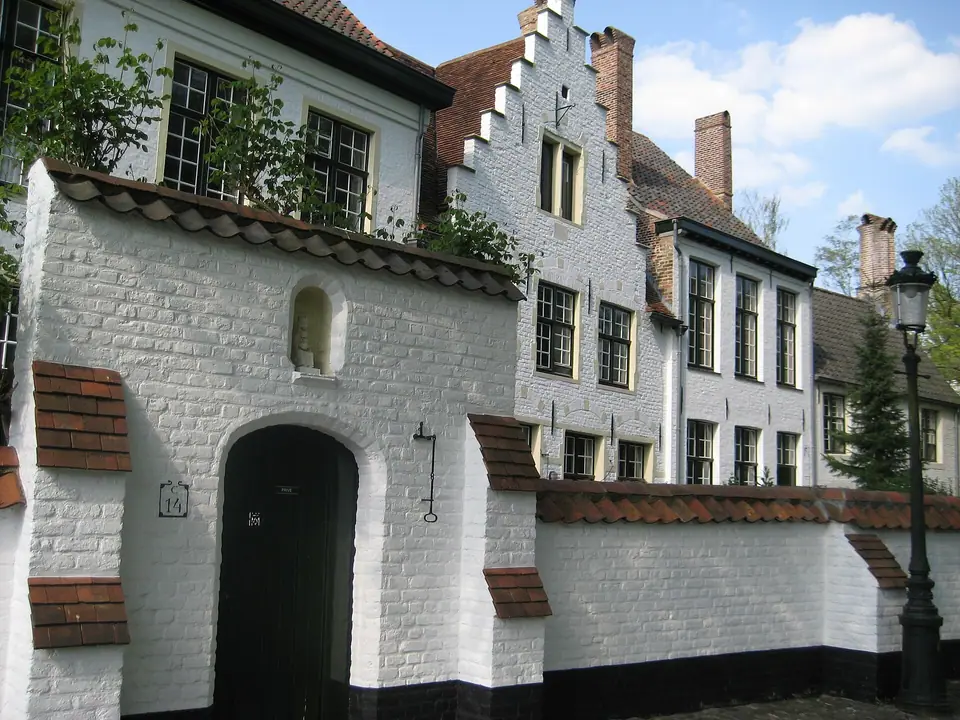
Unlike nuns in a closed convent, each Beguine earned her living and lived around the central lawn of tall poplar trees. She also remained free to leave the community and marry if she chose. Whitewashed brick houses still line the quiet grounds. Notice the signs asking visitors to maintain silence inside the peaceful enclosure. For details on visiting the Beguine house museum and interior spaces, check the official site. Inside, you can observe traditional rooms, domestic tools, and an enclosed courtyard garden.
Minnewater ("Lake of Love"): Medieval Harbour and the Legend of Minna
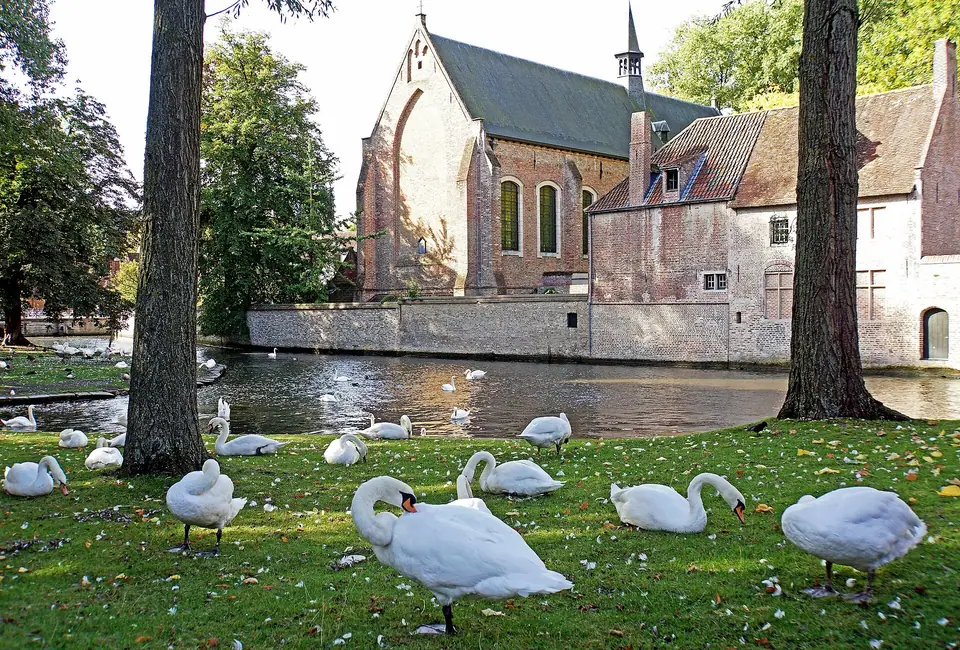
Stepping back out of the Beguinage bridge brings you directly onto the banks of Minnewater. Nineteenth-century Romantic poets translated Minnewater as "Lake of Love" and recorded the legend of the maiden Minna. In reality, the basin's true history is far more practical, and equally fascinating.
During the Middle Ages, Minnewater functioned as an engineered hydraulic reservoir and inner barge harbour where water levels were regulated before entering the city canals. Walk across the stone bridge at the southern end of the lake for classic views toward the historic church towers. At the western end of the bridge stands the Poertoren (Gunpowder Tower), part of the old water defences. Nearby stands the historic Sashuis (Lock-Keeper's House), where sluice gates once helped control the flow of canal waters.
How to Find Bruges's Hidden Godshuizen Almshouses
While many visitors walk through the Begijnhof, you can also explore historic Godshuizen ("Houses of God" or almshouses) scattered down quiet residential side streets. You can find more peaceful routes on our guide to things to do in Bruges. In earlier centuries, wealthy Bruges benefactors and craft guilds endowed walled clusters of tiny cottages around quiet gardens. These charity foundations provided dignified housing for elderly guild members and widows.
Several of these historic complexes still offer quiet residential spaces for local seniors today. Because their outer doors often blend into street walls, you might walk past them unless you know where to look. Always enter with care, respect residents, and maintain quiet:
- De Meulenaere & Sint-Jozef (Nieuwe Gentweg). This double complex of whitewashed cottages surrounds quiet manicured gardens.
- Spanoghe (Katelijnestraat). Step through the unassuming door on Katelijnestraat to discover a peaceful courtyard of tiny brick houses.
- De Pelikaan (Groenerei). Located along the quiet Groenerei canal, this complex features a carved stone relief showing a pelican symbolising charity.
- De Vos (Noordstraat, near Walplein). This historic almshouse complex includes a central courtyard pump and chapel near local brewery streets.
While walking the cobbled path inside the Princely Beguinage, step quietly into the Beguinage Church on the eastern side of the green. The whitewashed interior offers a quiet space for reflection in keeping with the contemplative heritage of the grounds.
On the eastern side of Minnewater Park, look for the quiet footpaths along the waterside green. A short walk leads toward the surviving medieval Gentpoort, which remains one of Bruges's historic city gates.
To navigate walking routes across the city, download the free Visit Bruges Route App on your phone. You can also pick up local walking guides at the tourist information office. At Stationsplein next to the railway station or at Market Square inside the Historium.
Entering the southern gateway of the historic centre through Minnewater Park introduces the city's peaceful garden and charitable heritage. Swans glide across the former medieval water reservoir while willow trees frame the brick watchtower and stone bridge at the lock house. Crossing the arched bridge into the walled Princely Beguinage leads into a tranquil green lawn ringed by whitewashed seventeenth-century houses. Stepping softly along the cobbled paths respects the monastic sisters who still reside inside the historic enclosure.
Beyond the Beguinage walls, dozens of small brick almshouse courtyards known as godshuizen lie tucked along quiet residential streets. Wealthy medieval guilds and merchant families founded these whitewashed cottage gardens to provide housing for elderly townspeople. Walking a self-guided loop connecting several open almshouse courtyards reveals peaceful floral gardens hidden just steps from the main squares.
Walking slowly through the southern garden belt rewards visitors who appreciate quiet green spaces and charitable social history. Under the tall poplar trees of the Beguinage lawn, whitewashed brick facades and green-painted shutters preserve the serene atmosphere of a seventeenth-century religious community. Inside the small museum house near the entrance gate, period kitchenware, lace pillows, and furniture show how individual beguines lived and worked. Stepping back across the stone bridge to Wijngaardplein brings you to waterside horse-trough fountains and views down to the sash-house lock.
Continuing into the surrounding lanes of Boeveriestraat and Katelijnestraat uncovers one peaceful almshouse courtyard after another. Each complex features its own small chapel, water pump, and neat flowerbeds tended by residents behind a street-side brick archway. Keep voices low when stepping inside open almshouse gardens, as these historical cottages remain private residential homes today.
Combining the lakeside paths of Minnewater, the walled Beguinage lawn, and the surrounding almshouse courtyards creates a serene half-day walking route. Morning light filtering through the tall trees of the Beguinage highlights the whitewashed brick gables and green shutters around the quiet grass court. Outside along the southern rampart canal, shaded benches look across the water toward the brick lock house and the medieval watchtower. Taking time to explore the nearby almshouse gardens in Boeveriestraat and Katelijnestraat reveals how guild charity shaped the neighbourhood fabric.
This southern green belt lies directly on the walking path between the railway station and the central squares. It makes a peaceful stop at the start or end of your trip. Pause at a waterside terrace near the sash bridge to watch the swans before heading deeper into the historic centre.
Stopping on the stone bridge beside the lock house gives walkers a classic view back across the water toward the whitewashed Beguinage walls.
Where it is
- 1Begijnhof Beguinage, Minnewater Lake & Hidden Godshuizen Walk
- Brussels Airport (BRU) · about 94 km from here in a straight line
- Directions in Google Maps
Stations and taxi ranks: OpenStreetMap. Airports: OurAirports. Distances are in a straight line.
Traveller tips
Real advice from people who have been to Bruges. Every tip is read by our team before it goes live.
No tips yet. Been here? Yours could be the first.
Thank you! Your tip will appear here after a quick review.
More in Bruges
Continue exploring Bruges with related neighbourhood, food, and planning guides
Flemish Primitives in Bruges: Groeningemuseum, Memling & Michelangelo
Bruges, Belgium
Basilica of the Holy Blood, Veneration Schedule & Jeruzalemkerk Guide
Bruges, Belgium
De Halve Maan Brewery, Underground Beer Pipeline & Historic Taverns
Bruges, Belgium
What to Eat in Bruges: Certified Chocolatiers, Flemish Stews & Waffles
Bruges, Belgium
