Photo: Daniela Kloth · CC BY-SA 4.0
Markt Square, Belfort Climb & Burg Square Town Hall Guide
Explore Bruges's twin historic plazas by climbing the 366 steps of the Belfort on Markt Square and touring the Town Hall on Burg Square.
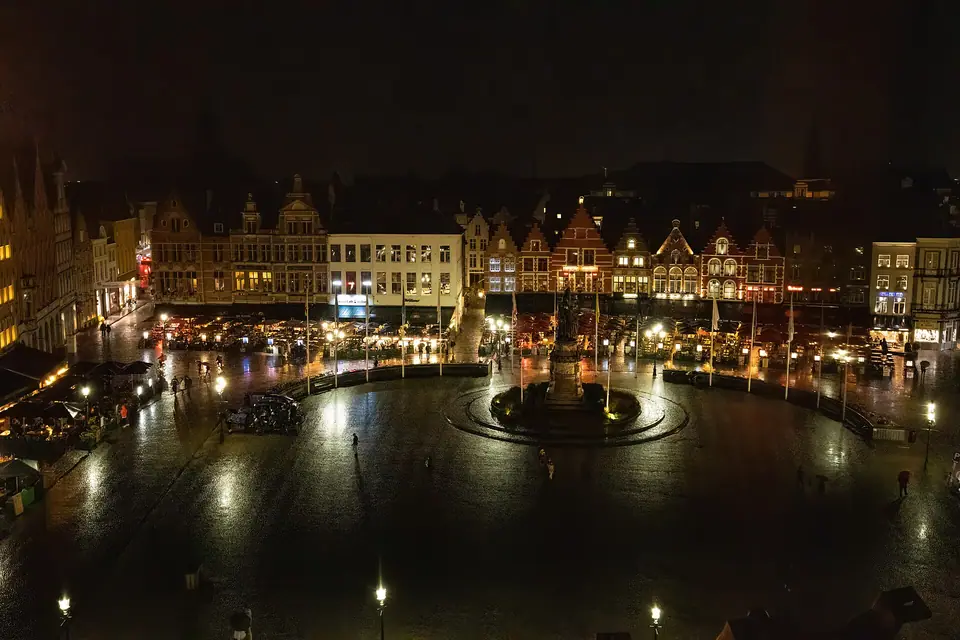
Connected by the short passage of Breidelstraat, Markt Square (De Markt) and Burg Square (De Burg) form the dual civic and historical heart of Bruges. These two adjacent plazas divided urban governance cleanly between distinct authorities across earlier centuries. Markt Square served as the commercial marketplace crowned by the Belfort (Belfry), and adjacent Burg Square remained the administrative seat anchored by the Stadhuis (Town Hall) and the Basilica of the Holy Blood.
| Monument on Markt & Burg | Admission Advice | Schedule | Key Interior Highlight |
|---|---|---|---|
| Belfort (Belfry of Bruges). | Included in Musea Brugge Card; reserve a time slot online. | Check the official site. | 366 steps, intermediate chambers, and carillon bells. |
| Stadhuis (Gothic Town Hall). | Ticket includes access to Brugse Vrije; Musea Brugge Card valid. | Check the official site. | Upstairs Gothic Hall with vaulted oak ceiling and historical murals. |
| Brugse Vrije (Liberty of Bruges). | Included in Stadhuis ticket (or Musea Brugge Card). | Check the official site. | Carved oak and alabaster Renaissance chimneypiece. |
| Historium & Tourist Office. | Tourist office Markt situated inside Markt 1. | Check the official site. | View overlooking Markt Square and information counters. |
Markt Square: The Cloth Hall, Guild Gables, and Heroes
Covering a wide expanse of cobblestones, Markt Square has long hosted the central market of the town. You can consult our Bruges travel guide to plan an efficient walking route through this pedestrianised centre. In the centre of the square stands the prominent bronze monument honouring Jan Breydel and Pieter de Coninck. These local leaders directed municipal artisan guilds through historical uprisings against outside rulers during turbulent medieval campaigns.
Looking carefully around the four edges of the plaza helps travellers distinguish genuine historic brickwork from later revivalist architecture. The southern side is dominated by the broad Hallen (Cloth Hall), where textiles were inspected and traded internationally. The eastern side is occupied by the grand white limestone neo-Gothic Provinciaal Hof (Provincial Court). This monument replaced the medieval Waterhalle, an ancient covered water basin where cargo barges sailed directly beneath a timber roof. Along the northern perimeter stand tall step-gabled brick townhouses decorated with regional heraldic emblems.
How to climb the 366 steps of the Belfort
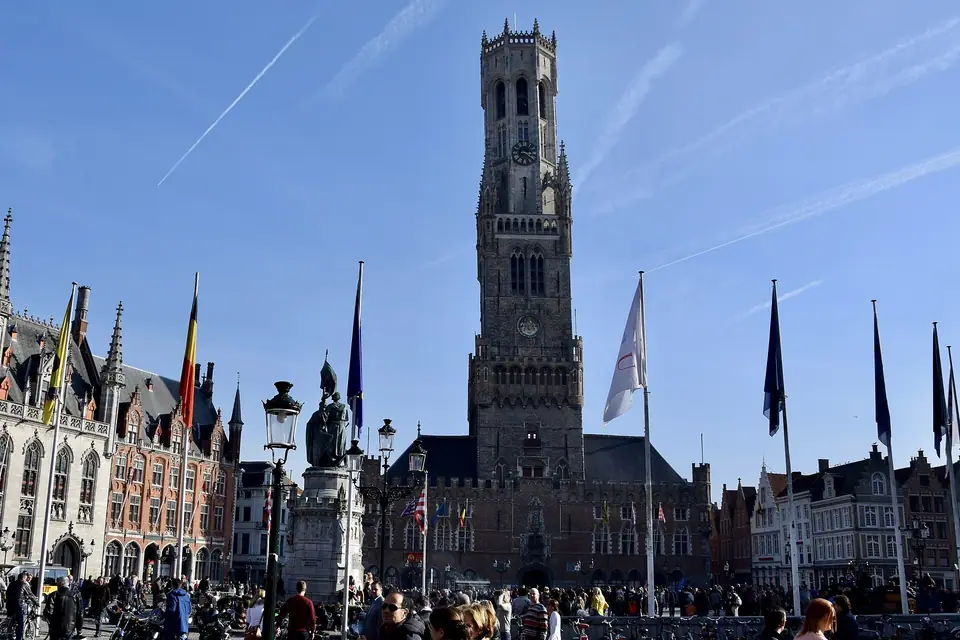
The Belfry, with the City Halls below, has watched over Bruges for centuries as an official UNESCO World Heritage Site at Markt 7. Its solid brick base supports an octagonal upper lantern that towers directly over the surrounding pedestrian lanes. Ascending this famous landmark requires steady pacing and patience along historic stone spiral stairs.
Climbing the 366 steps of the Belfry is quite an effort, which makes sensible footwear particularly beneficial. We certainly recommend reserving your time slot for busy locations such as the Belfry well before your morning departure. Be punctual, as otherwise your ticket will expire before staff allow entry at the turnstile. With the advantageous Musea Brugge Card you have 72 hours to visit municipal collections across the town. The challenging stair climb provides three interesting intermediate chambers where visitors can catch their breath comfortably:
- The Treasury Room. Heavy iron grilles and reinforced wooden chests recall ancient eras when municipal charters, tax registers, and official seals rested under civic protection.
- The Drum Chamber. A massive brass cylinder operates the carillon automatically, turning like a colossal mechanical music box to trigger the exterior ringing hammers.
- The Carillon and Bell Chamber. At the upper viewing level, arched openings provide expansive panoramas across the historic city rooftops toward distant Flemish fields.
Burg Square: Town Hall and the Brugse Vrije
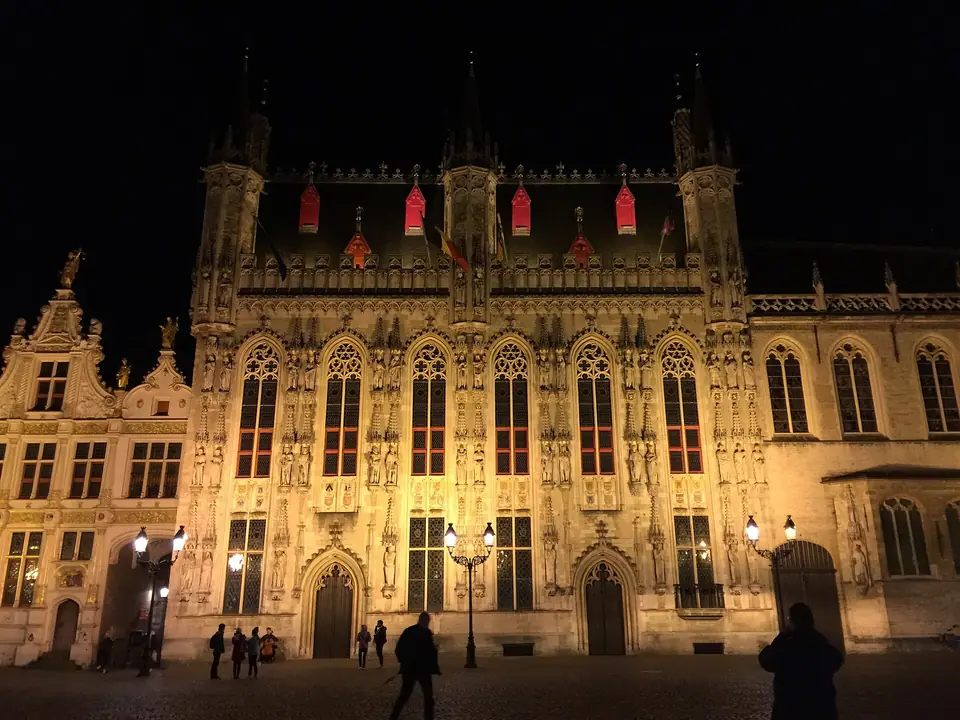
Stepping east from Markt Square brings visitors directly into historic Burg Square, where striking architectural traditions stand together. The plaza frames the Romanesque chapel of the Basilica of the Holy Blood and the Gothic facade of the Town Hall. Beside them stand the Renaissance Old Civil Registry, the baroque Provost's House, and the classical administrative manor.
Inside the municipal Stadhuis (City Hall), a standard entry ticket also provides free admission to the neighbouring Brugse Vrije. Climb the grand interior staircase to reach the decorated Gotische Zaal (Gothic Hall) beneath timber vaults. Overhead arches a timber pendant vault adorned with painted biblical keystones and historical heraldry. Large nineteenth-century wall murals illustrate ceremonial events, trade charters, and memorable civic assemblies across urban history. Next door inside the Brugse Vrije stands a decorative Renaissance chimneypiece executed in carved oak, marble, and polished alabaster.
Traveller tips for the civic centre
- Markt tourist office and central services. For regional brochures and heritage maps, visit the municipal tourist office situated inside the Historium building at Markt 1. Official administrative correspondence for Visit Bruges is handled nearby at the office address on Burg 12.
- Saint Donatian's Cathedral pavement outline. Underneath the northern trees of Burg Square lie buried foundations of the former Sint-Donaaskathedraal, traced directly within the stones.
After touring the ornate Gothic Hall inside the Town Hall, take time to explore the ground-floor historical exhibition rooms. Detailed displays explain how medieval shipping barges accessed the Waterhalle and how civic magistrates resolved commercial trade disputes.
Beside the Brugse Vrije on the southeastern corner of Burg Square, locate the vaulted stone passage of Blinde-Ezelstraat. Walking beneath this sculpted bridge arch brings travellers directly toward canal embankments and open colonnades of the traditional fish market.
Markt Square continues to host outdoor merchant stalls where regional vendors present fresh local food and traditional goods. To continue planning your cultural walks through historic neighbourhoods, consult our detailed overview of things to do in Bruges.
Taking time to look closely at the masonry details around both squares reveals centuries of civic pride and guild craftsmanship. Carved stone coats of arms, gilded roof finials, and pointed gothic window tracery decorate the facades facing the cobblestones. Inside the Gothic Hall of the City Hall, vaulted timber ribs and historical murals depict pivotal scenes from the medieval county of Flanders. Next door in the Old Civil Registry, black-and-white marble columns and a carved fireplace showcase sixteenth-century Renaissance judicial design.
On Markt Square, the central bronze statue honours the fourteenth-century guild leaders who defended municipal liberties. Up inside the belfry tower, stopping at the intermediate treasury and drum chamber lets you catch your breath during the climb. Watching the carillonneur play the keyboard baton console on concert days shows how the massive bronze bells are rung across the city. After descending, follow the vaulted Blind Donkey Alley southward to reach the fish market colonnade and the canal quays.
Comparing the architectural styles across Markt Square and Burg Square illustrates how Bruges evolved from a medieval fortress into a European trading metropolis. On the Markt, the brick watchtower of the Belfort and its lower Cloth Hall bays reflect the commercial power of the cloth merchants. Step-gabled guild houses along the northern edge of the square now shelter lively brasserie terraces looking toward the central monument. Walking through the short street into Burg Square brings you to the administrative enclave where counts, bishops, and aldermen governed the city.
Inside the City Hall, high gothic windows illuminate polychrome vault bosses and wall murals tracing the history of Flanders. Stepping out through the rear archway of Burg Square over the Blind Donkey Bridge places you directly beside the fish market colonnade and canal quays. Visiting both squares early in the day lets you admire the stone carvings and courtyards in peace before midday groups gather.
Where it is
- 1Markt Square, Belfort Climb & Burg Square Town Hall
- Brussels Airport (BRU) · about 94 km from here in a straight line
- Directions in Google Maps
Stations and taxi ranks: OpenStreetMap. Airports: OurAirports. Distances are in a straight line.
Traveller tips
Real advice from people who have been to Bruges. Every tip is read by our team before it goes live.
No tips yet. Been here? Yours could be the first.
Thank you! Your tip will appear here after a quick review.
More in Bruges
Continue exploring Bruges with related neighbourhood, food, and planning guides
How to Get to Bruges: Trains, De Lijn Buses, Bikes & Parking
Bruges, Belgium
Best Time to Visit Bruges: Seasons, Festivals & Quiet Months
Bruges, Belgium
What to Wear in Bruges: Cobblestone Shoes & North Sea Layers
Bruges, Belgium
Where to Stay in Bruges: Canal-Front Dijver vs Sint-Anna & 't Zand
Bruges, Belgium
