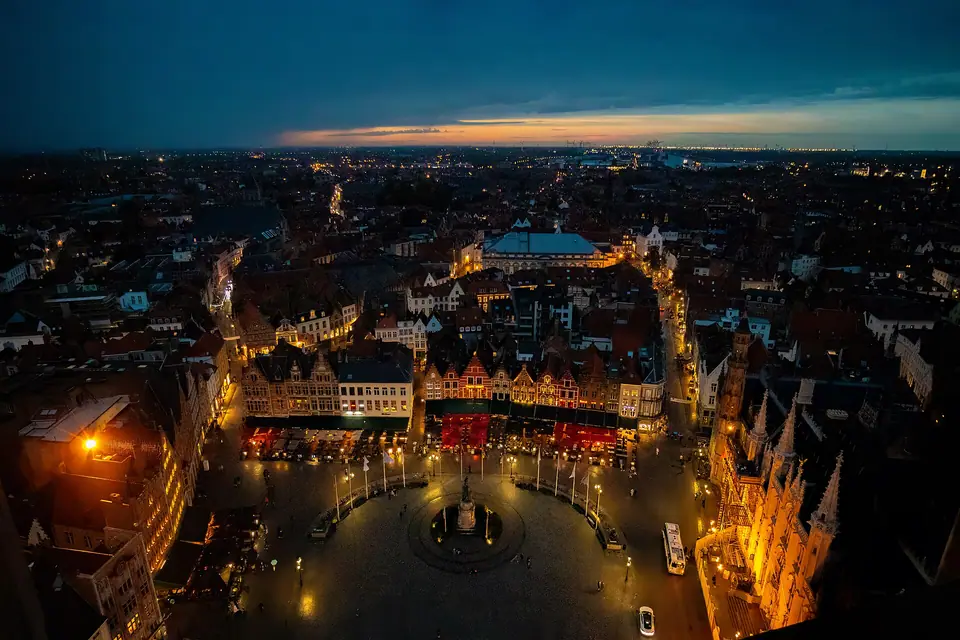
Photo: Daniela Kloth · CC BY-SA 4.0
Best Things to Do in Bruges: Canals, Belfort, Art & Breweries
Explore the essential experiences in Bruges, from climbing the Belfort and cruising the canals to Flemish Primitive art and peaceful almshouses.
What sets Bruges apart from other preserved medieval towns in Europe is the density of world-changing art and civic history packed behind its brick facades. Within a short walk of Markt Square, you can stand before early oil panels that defined the Northern Renaissance and admire historic marble sculptures. You can climb the historic municipal belfry and step into quiet charity courtyards where locals still reside. Pair this overview with our Bruges travel guide and our 3-day Bruges itinerary.
Climb the Belfort and cross into Burg Square
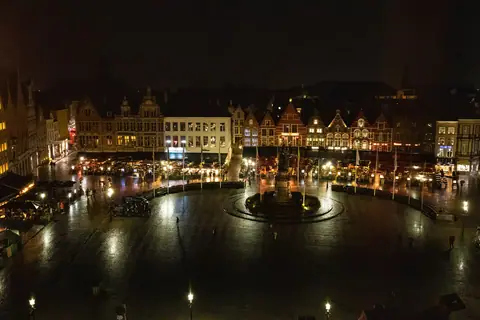
Rising above the colourful guild gables of Markt Square, the Belfort (Belfry of Bruges) stands as a proud civic landmark. Climbing the 366 steps of the Belfry is quite an effort, so visit when in good condition. Be punctual for your scheduled time, otherwise your ticket will expire. The climb rewards visitors with historic mechanical chambers and expansive views over the city rooftops.
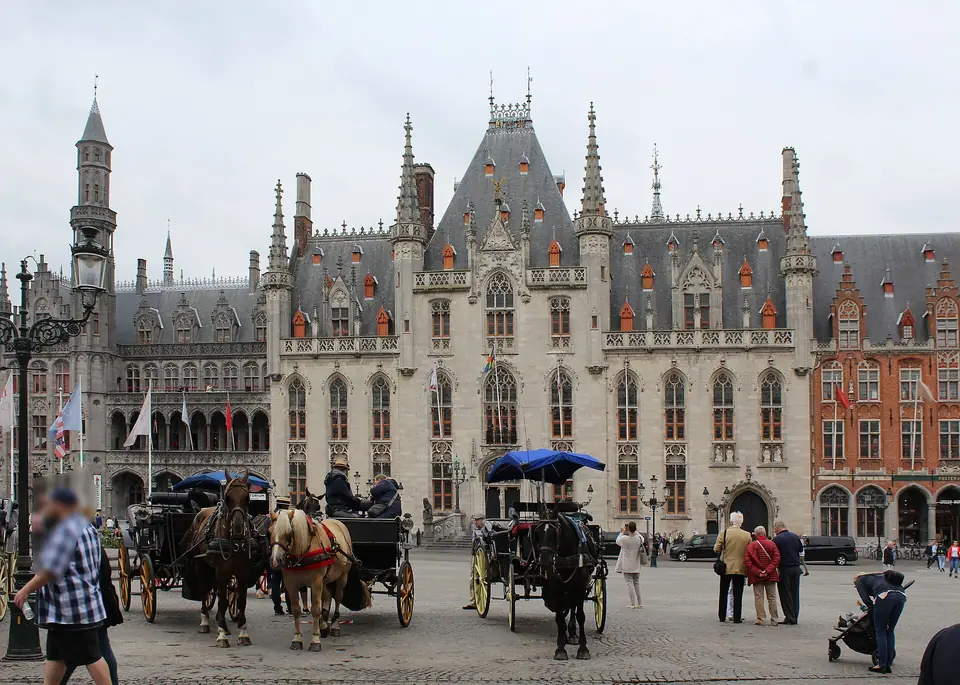
Immediately upon descending, walk through the vaulted passage of Breidelstraat into Burg Square, a focal point of local government for centuries. On the square stands the Stadhuis (City Hall), celebrated for its ornate Gothic architecture. Visiting the Stadhuis includes free access to the adjoining Brugse Vrije, making it easy to admire both civic landmarks together.
Cruise the inner canals from Rozenhoedkaai
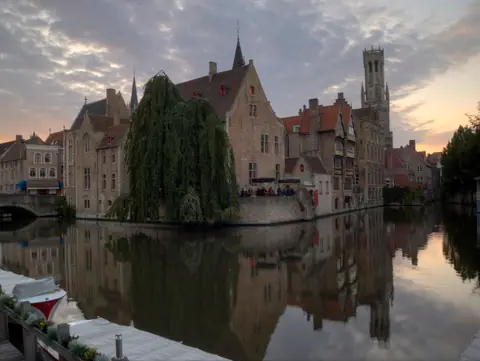
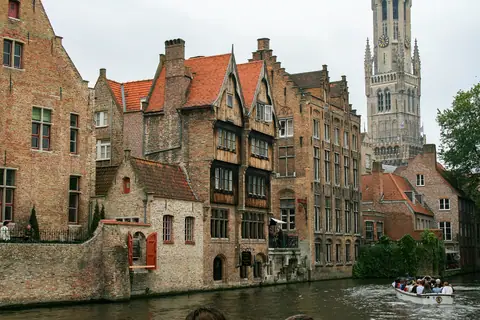
Two minutes south of Burg Square through the Blind Donkey Alley and the Fish Market lies Rozenhoedkaai. Once upon a time, rosaries were sold at this waterside spot, which now offers classic views of the Belfort framed by brick facades and canals. You can pair canal sightseeing with our dedicated Bruges canal boat tours guide.
Boarding an open-top boat gives you a water-level perspective of the medieval stonework that remains hidden from the street. Skippers steer beneath low stone bridges and glide past historic quay houses. Along the waterways, you can spot old water gates that once allowed trading vessels to unload merchandise directly into private cellars.
Stand before Jan van Eyck, Hans Memling, and Michelangelo
Art lovers should dedicate ample time to Bruges's museum collections along the Groeningemuseum and Mariastraat museum corridor. At the Groeningemuseum, you can admire works by the Flemish Primitives, celebrated across centuries of European painting history. The galleries display Jan van Eyck as well as remarkable masterworks by Hieronymus Bosch and Gerard David.
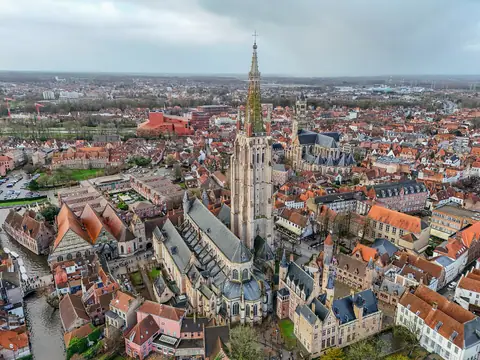
Nearby stands Sint-Janshospitaal, which preserves historic hospital architecture and celebrated panels by Hans Memling. Directly across the street rises the Church of Our Lady Museum, home to Michelangelo's marble Madonna and Child sculpture. A discounted combiticket also gives access to the adjacent Gruuthusemuseum, which allows seamless exploration of local heritage.
Walk the Begijnhof, Godshuizen almshouses, and Kruisvest windmills
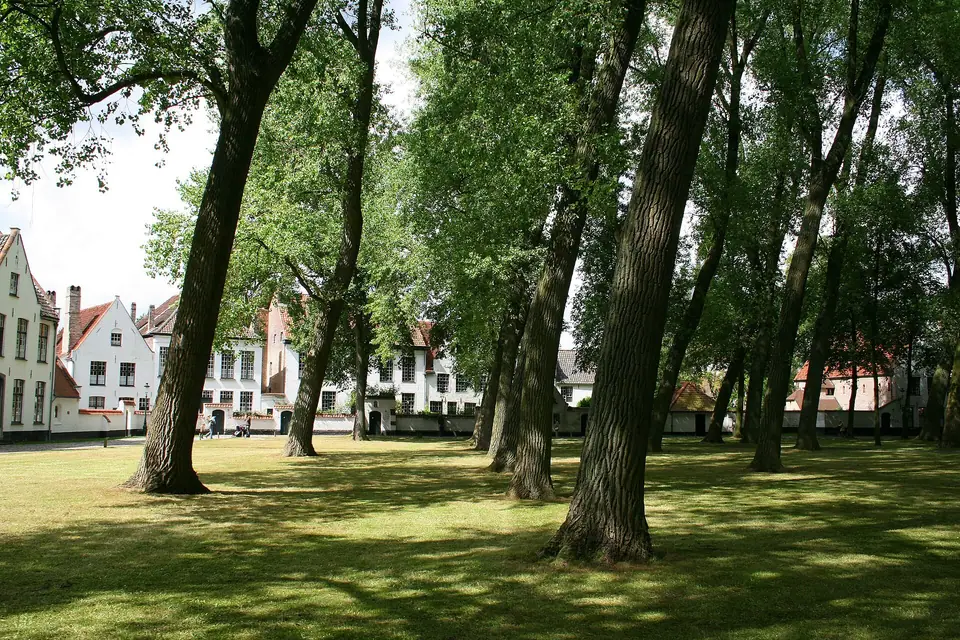
For quiet contemplation away from commercial thoroughfares, cross the arched bridge into the Bruges Beguinage. The city marked 800 years of the Bruges Beguinage's history with a rich programme of events. Its peaceful courtyard surrounded by whitewashed houses provides an atmospheric retreat right beside the Minnewater waters.
Beyond the Beguinage, seek out Bruges's historic Godshuizen (almshouses), which are quiet courtyard cottages established across past centuries for charitable housing. Finish your walking route on the elevated grassy ramparts of Kruisvest, where historic wooden post windmills catch the breeze. For safety reasons, the Sint-Janshuismolen can only accommodate a maximum of 25 students per half hour.
Practical hints for exploring Bruges
- Use the Musea Brugge Card for flexible sightseeing. With the advantageous Musea Brugge Card you have 72 hours to do so. A Musea Brugge card purchased online becomes active at the start of your first visit and can be activated up to one year after purchase.
- Arrange an official city guide ahead of time. To gain deeper insight into the medieval architecture and municipal history, plan ahead. You can book a guide through the local guide associations up to a week in advance.
- Look out for accessible photography markers. Tactile 'Selfie for All' tiles are installed across locations in Flanders. These tactile tiles are designed to help blind and visually impaired visitors line up memorable travel photographs independently.
Cathedrals, modern culture, and evening quays
Beyond the headline monuments, step inside Saint Salvator's Cathedral to admire historic tapestries and sacred furnishings. The interior preserves decorative choir fittings and memorials linked to the civic guilds. For contemporary cultural architecture, visit Concertgebouw Brugge at 't Zand 34, which opened in 2002 as an iconic international music venue.
Those interested in local religious tradition can learn about the Procession of the Holy Blood, linked to the Basilica of the Holy Blood. Each spring, spectators gather to watch this historic pageant, which joined the UNESCO intangible cultural heritage list in 2009.
In the evening, take a gentle walk along the quiet northern quays of Jan van Eyckplein, Spiegelrei, and Sint-Annarei. With daytime excursion boats moored for the night, the illuminated step-gabled facades reflect across the calm canal water.
Balancing headline civic monuments around Markt and Burg with quieter neighbourhood walks keeps your sightseeing varied and relaxed. Morning hours work well for climbing the belfry steps or boarding an open-top canal boat before midday queues form at the jetties. Afternoon hours suit the Flemish Primitives galleries, hospital wards, and church sculptures along the southern cultural belt. As dusk settles over the inner canals, floodlights warm the brick bridges around Rozenhoedkaai and Bonifacius Bridge.
Stepping just a few streets away from the central squares brings you to green rampart paths, wooden windmills, and whitewashed almshouse courtyards. Pairing classic gothic architecture with a brewery tour or a chocolate workshop gives visitors a living taste of Flemish craft traditions. Check the official civic museum portal before your visit to coordinate timed entries and current exhibitions.
Whether you explore on foot, by canal boat, or aboard a rented bicycle heading toward the polder villages, the compact street plan makes navigation effortless. Pause at a waterside terrace or a timbered brown café between stops to enjoy the unhurried rhythm of the historic centre.
Walking along the quiet northern quays of Spinolarei and Potterierei shows a peaceful residential side of the historic port. Brick merchant facades with stepped gables face calm water where swans drift past historic stone bridges. Stepping into parish churches along the route reveals carved oak pulpits, black-and-white marble rood screens, and Flemish altar canvases. Taking a break at a canal-side tearoom or neighbourhood bakery keeps an afternoon walking loop unhurried and enjoyable.
Culture lovers can also check the seasonal programme at the contemporary concert hall near ’t Zand Square for evening chamber or orchestral performances. From its upper terrace, panoramic windows look back across the medieval rooftops toward the three historic towers of the old town. Ending your evening with a slow walk through the floodlit courtyard of Burg Square brings the architecture to life after dark.
Spending time along the outer green belt between the medieval stone gates of Gentpoort, Kruispoort, and Ezelpoort reveals how the fortifications encircled the city. Footpaths wind beneath chestnut and lime trees beside the moat where local rowers and ducks share the quiet water. Crossing back over a wooden footbridge leads straight into cobbled residential lanes lined with step-gabled cottages. Combining these peaceful perimeter walks with the famous central squares gives visitors a complete sense of the medieval town plan.
Taking an early morning walk along the quiet quays before the canal boats start lets you photograph the medieval brick bridges in calm light.
Where it is
- 1Bruges
- Brussels Airport (BRU) · about 94 km from Bruges in a straight line
- Directions in Google Maps
Stations and taxi ranks: OpenStreetMap. Airports: OurAirports. Distances are in a straight line.
Traveller tips
Real advice from people who have been to Bruges. Every tip is read by our team before it goes live.
No tips yet. Been here? Yours could be the first.
Thank you! Your tip will appear here after a quick review.
More in Bruges
Continue exploring Bruges with related neighbourhood, food, and planning guides
3-Day Bruges Itinerary: Medieval Canals, Flemish Masters, Beer & Damme
Bruges, Belgium
Markt Square, Belfort Climb & Burg Square Town Hall Guide
Bruges, Belgium
Bruges Canal Boat Tours, Rozenhoedkaai & Secret Bridges Walk
Bruges, Belgium
Flemish Primitives in Bruges: Groeningemuseum, Memling & Michelangelo
Bruges, Belgium
