Photo: Jean-Pol GRANDMONT · CC BY-SA 4.0
Best Time to Visit Bruges: Seasons, Festivals & Quiet Months
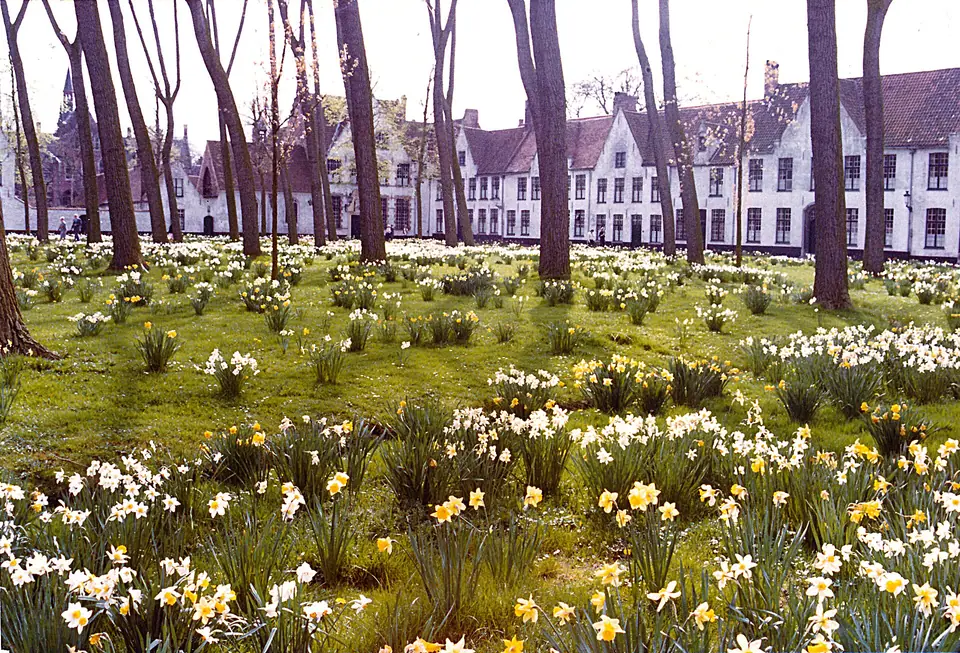
Compare Bruges across the seasons, from spring daffodils at the Begijnhof and the Ascension Day Procession of the Holy Blood to Winter Glow.
Located near the North Sea, Bruges has a mild, breezy maritime temperate climate shaped by Atlantic winds. Continental European extremes rarely reach the city, and summer days stay moderate while winter afternoons feel brisk. Choosing when to visit comes down to daylight, canal foliage, and festival crowds. Pair this seasonal guide with our Bruges packing and footwear guide and our 3-day Bruges itinerary.
| Season & Months | Climate & Conditions | Canal Boats & Daylight | Crowd Level & Key Highlights |
|---|---|---|---|
| Spring (April to May). | Mild breezes with fresh spring blooms. | Full daily boat service with expanding daylight. | Moderate crowds, peaking during Ascension. Begijnhof daffodils & Holy Blood Procession. |
| Summer (June to August). | Warmest months with extended daylight. | Full daily boat service and late evening twilights. | Peak daytime crowds. Evening carillon concerts and lively canal terraces. |
| Autumn (September to October). | Crisp air and autumn colours. | Full daily boat service with earlier golden hours. | Moderate crowds. Crimson Virginia creeper vines on brick canals. |
| Winter (November to March). | Chilly days and atmospheric evenings. | Boats run during Winter Glow, subject to winter conditions later. | Festive season in December followed by a very quiet late winter. |
The two sweet spots: Mid-April to May and Mid-September to October
For comfortable walking conditions, regular canal boat operations, and manageable hotel rates, target mid-April through late May or mid-September through late October on weekdays. In early to mid-April, yellow daffodils carpet the central orchard lawn of the whitewashed Princely Beguinage (Begijnhof) beneath tall poplar trees. At the same time, white mute swans nest along the banks of Minnewater Lake.
In late September and October, the Virginia creeper and Boston ivy draping the medieval brick walls around Bonifacius Bridge, St John's Hospital, and Groenerei turn deep burgundy and flame orange. Earlier sunsets allow you to photograph blue-hour canal reflections and dine on seasonal Flemish stews without waiting until late into the night.
Ascension Day and the Procession of the Holy Blood (May)
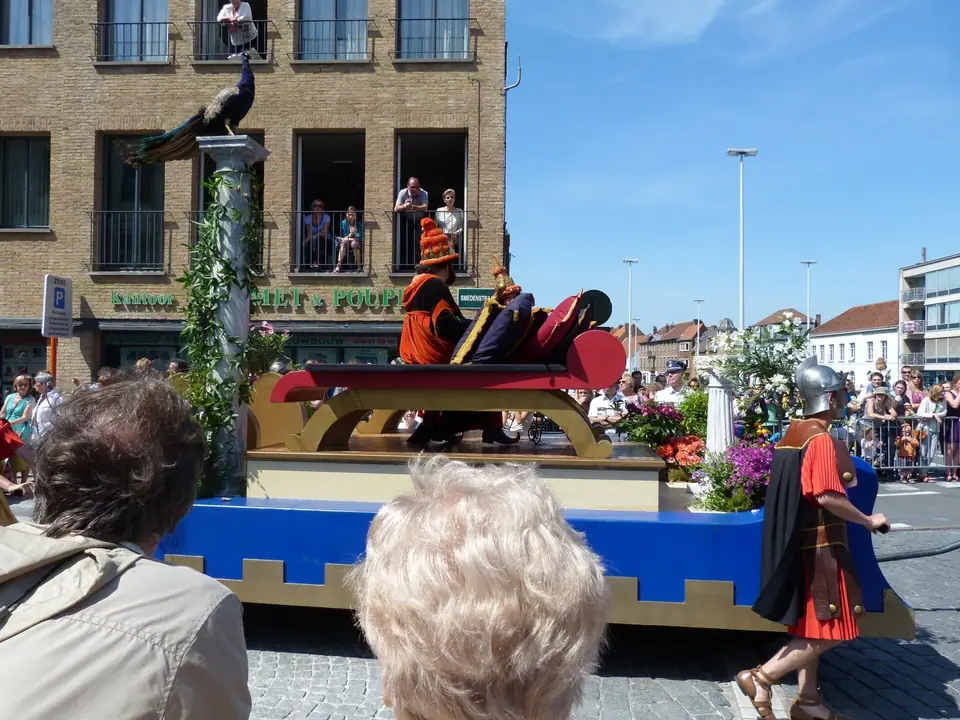
Every year on Ascension Day, forty days after Easter. Bruges stages its historical pageant: the Procession of the Holy Blood (Heilig-Bloedprocessie). Inscribed on the UNESCO Representative List of the Intangible Cultural Heritage of Humanity in 2009. Dating back to the thirteenth century, the afternoon procession brings more than 1,700 Bruges citizens dressed in historical costumes on foot, in carts, or on horseback. Participants re-enact biblical scenes and stories of the city, culminating in carrying the reliquary linked to the Basilica of the Holy Blood.
Between 30,000 and 45,000 spectators gather in the heart of Bruges to watch the pageant. If you plan to visit on Ascension Day, book accommodation well in advance and tour municipal museum sites on surrounding days.
Summer evenings (June to August) vs Winter Glow (late November to early January)
In June, July, and August, Bruges benefits from northern twilights. The central axis between Markt Square and the Church of Our Lady grows busy by day, but summer evenings remain relaxed. You can cycle along the tree-lined Damse Vaart canal to Damme. Sit outdoors at a canal terrace, and listen to open-air carillon concerts from the belfry.
From 20 November 2026 through 31 January 2027, the city hosts Winter Glow. Festive stalls bring light and warmth with seasonal refreshments, while dedicated light trails illuminate historic facades and canals across the centre.
Quiet low season (mid-January to March): What stays open?
To enjoy museum galleries and historic lanes without crowds, visit on a weekday between mid-January and mid-March. Musea Brugge locations, the Belfort, and local taverns operate throughout the year. Fireplace taverns serving Belgian beers and hearty dishes offer a warm escape on cool afternoons. Open-top canal boats operate on weather-dependent schedules when conditions permit during the coldest weeks.
Practical tips for planning your visit
- Avoid mid-day Saturdays if visiting on a weekend. Saturday brings both the weekly local market on ’t Zand Square and peak weekend rail arrivals. If staying Friday to Sunday, schedule boat tours and museum climbs early in the day.
- Check the Belgian school holiday calendar. School breaks bring domestic family crowds to Bruges even outside the main summer window.
Classical music lovers can explore programming at Concertgebouw Brugge, which opened in 2002 and welcomes over 150,000 visitors annually. The venue presents diverse performances as well as annual celebrations such as the December Dance festival.
Beer enthusiasts can plan around the Bruges Beer Festival, scheduled for 11 September to 12 September 2027. Belgian beer culture includes nearly 1,500 distinct beer types recognized on UNESCO intangible heritage lists.
Daylight shifts substantially between summer and winter in Flanders. Summer brings lingering twilights that keep streets bright late into the evening, whereas midwinter darkness sets in by late afternoon.
Traditional brown cafés and canal-side brasseries welcome guests for an afternoon beer or coffee without requiring a full meal. Check whether table service or bar ordering applies before taking a seat on an outdoor terrace.
If you are combining Bruges with Ghent or Brussels on the same rail journey, keep your train ticket handy until you exit the station. Services depart from Brugge Station regularly throughout the day.
In the quiet residential streets of Sint-Anna, Groenerei, and the Begijnhof, residents live near medieval waterways. Speaking softly in courtyards and keeping to marked paths preserves the peaceful atmosphere.
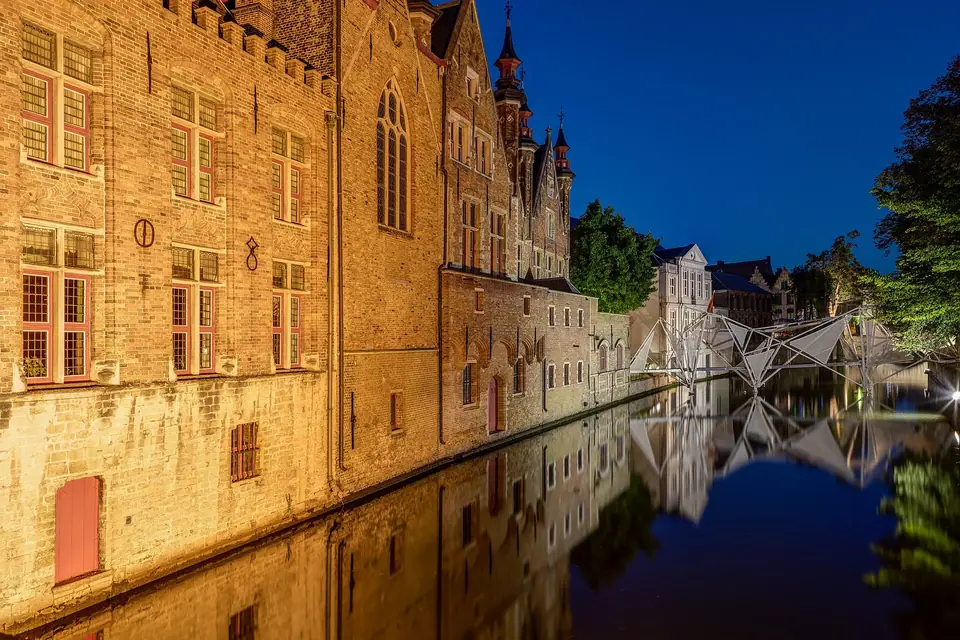
Photographers looking for clear reflections on the inner canals should aim for quiet morning hours or the dusk period just after sunset. When canal tour boats moor for the day, the water along Dijver and Rozenhoedkaai settles into calm glass.
Spring and autumn bring crisp Flanders air, blooming daffodils under the Beguinage trees, and warm amber foliage along the canals. Midweek stays during these shoulder months offer calm gallery rooms inside the civic museums and shorter waits at the canal jetties. Sidewalk cafés around the market squares provide blankets and sheltered seating so guests can watch the carillon tower in comfort. Packing a light rain shell and a warm scarf keeps you prepared for changing maritime breezes off the North Sea.
Summer brings long daylight hours, open-air carillon concerts in the belfry courtyard, and lively terrace dining until late evening. Starting your sightseeing walks early in the morning lets you photograph the bridges and squares before midday excursion groups arrive from Brussels. Winter transforms the medieval core with festive light trails, ice rinks, and cosy tavern hearths serving dark Flemish ales.
Travellers visiting between April and October enjoy green willow trees overhanging the water and open-air boats gliding beneath the bridges. Morning mist rising off the canals in early autumn creates atmospheric light for photography around the Beguinage and the fish market colonnade. Even during busy summer weeks, museum galleries and northern parish streets feel calm before mid-morning and after late afternoon. Booking accommodation and timed tower entries well ahead of your trip ensures smooth planning in every season.
During late autumn and winter, the brick gables and cobbled alleys take on a quiet, contemplative charm suited to museum lovers. Candlelit cafés and historic guild taverns offer warm indoor retreats between visits to the fine arts collections and medieval hospital wards.
Checking the municipal cultural calendar before your visit helps you pair museum sightseeing with carillon concerts and classical recitals. Throughout the year, early morning walks along the Dijver and Groenerei quays offer peaceful views before the canal boats begin their daily loops.
Weather by month
Bruges is warmest in July, with average highs around 23°C, and coldest in January, when nights drop to about 2°C. November is the wettest month by rainfall (98 mm), with rain on about 14 days. For mild weather with fewer rainy days, aim for May, June, July and August.
| Month | Low | Range | High | Rain | Rainy days |
|---|---|---|---|---|---|
| Jan | 2°C | 7°C | 91 mm | 13 d | |
| Feb | 2°C | 8°C | 70 mm | 10 d | |
| Mar | 4°C | 11°C | 77 mm | 11 d | |
| Apr | 6°C | 15°C | 70 mm | 10 d | |
| May | 9°C | 18°C | 70 mm | 10 d | |
| Jun | 12°C | 21°C | 70 mm | 10 d | |
| Jul | 14°C | 23°C | 70 mm | 10 d | |
| Aug | 14°C | 23°C | 70 mm | 10 d | |
| Sep | 11°C | 20°C | 77 mm | 11 d | |
| Oct | 8°C | 15°C | 84 mm | 12 d | |
| Nov | 5°C | 11°C | 98 mm | 14 d | |
| Dec | 2°C | 8°C | 98 mm | 14 d |
Averages of daily values from 2015 to 2024. Rainy days are days with at least 1 mm of rain. Source: Open-Meteo · Compare destinations by month.
Where it is
- 1Bruges
- Brussels Airport (BRU) · about 94 km from Bruges in a straight line
- Directions in Google Maps
Stations and taxi ranks: OpenStreetMap. Airports: OurAirports. Distances are in a straight line.
Traveller tips
Real advice from people who have been to Bruges. Every tip is read by our team before it goes live.
No tips yet. Been here? Yours could be the first.
Thank you! Your tip will appear here after a quick review.
More in Bruges
Continue exploring Bruges with related neighbourhood, food, and planning guides
Where to Stay in Bruges: Canal-Front Dijver vs Sint-Anna & 't Zand
Bruges, Belgium
3-Day Bruges Itinerary: Medieval Canals, Flemish Masters, Beer & Damme
Bruges, Belgium
Markt Square, Belfort Climb & Burg Square Town Hall Guide
Bruges, Belgium
Bruges Canal Boat Tours, Rozenhoedkaai & Secret Bridges Walk
Bruges, Belgium
