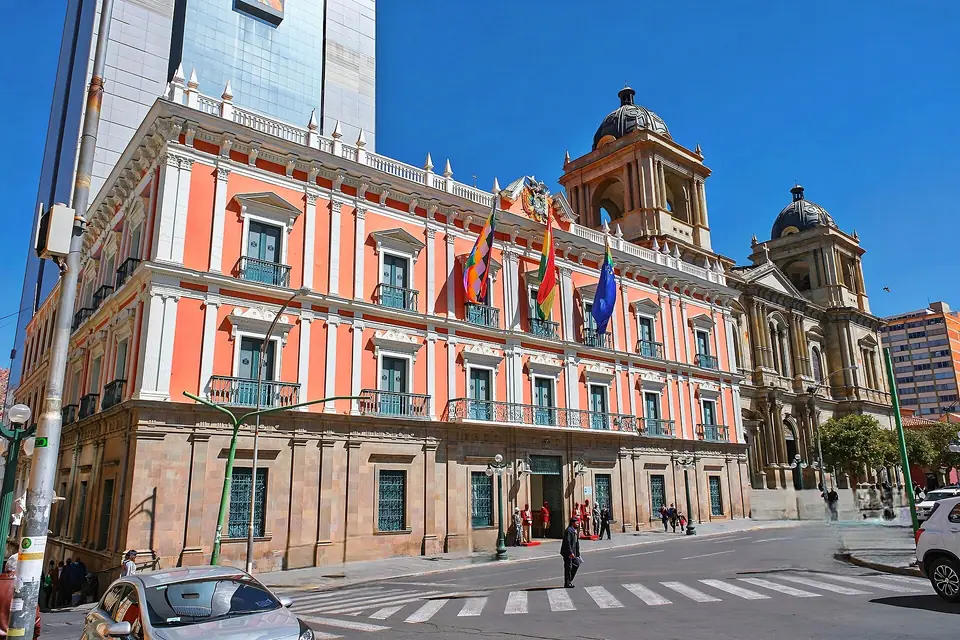
Photo: Parallelepiped09
Plaza Murillo: The Cathedral Basilica, Palacio Quemado and Clock of the South
Plaza Murillo reveals civic history across the Cathedral Basilica, the neoclassical Palacio Quemado, and national legislative halls.
Plaza Murillo stands as the political centre of Bolivia. It serves as the physical stage where republican power, civic upheaval, and national ceremony converge. The square preserves a formal layout ringed by polished stone pavements and iron lampposts. Leafy benches fill with local civil servants during quiet morning hours.
At the geographic focus of the plaza rises the bronze statue honouring Pedro Murillo. He was the independence leader executed following the uprising against Spanish authority. Standing before this central monument allows us to appreciate early colonial grid planning. The layout oriented public authority towards an open civic meeting space. Flocks of pigeons gather across the flagged terraces. Their flights create a steady rhythm of movement against the stonework of nearby government offices.
Walking through the square offers an unfiltered portrait of local life. Street bootblacks, newspaper vendors, and political demonstrators regularly share the wide pathways. This public space frequently hosts official state functions or spontaneous civic gatherings. Foot access can shift quickly when honour guards seal off specific building portals. We recommend taking a gentle circuit around the perimeter. This walk lets you observe the layered architectural facades before entering individual heritage interiors.
The square reflects the complex layers of Bolivian political evolution. Centuries of colonial administration yielded to republican struggles on these stones. Government ministries surround the perimeter with orderly masonry walls. Their tall windows look directly out over the gathered crowds and formal gardens. Visitors often pause near the central fountains to watch civil servants crossing between state departments.
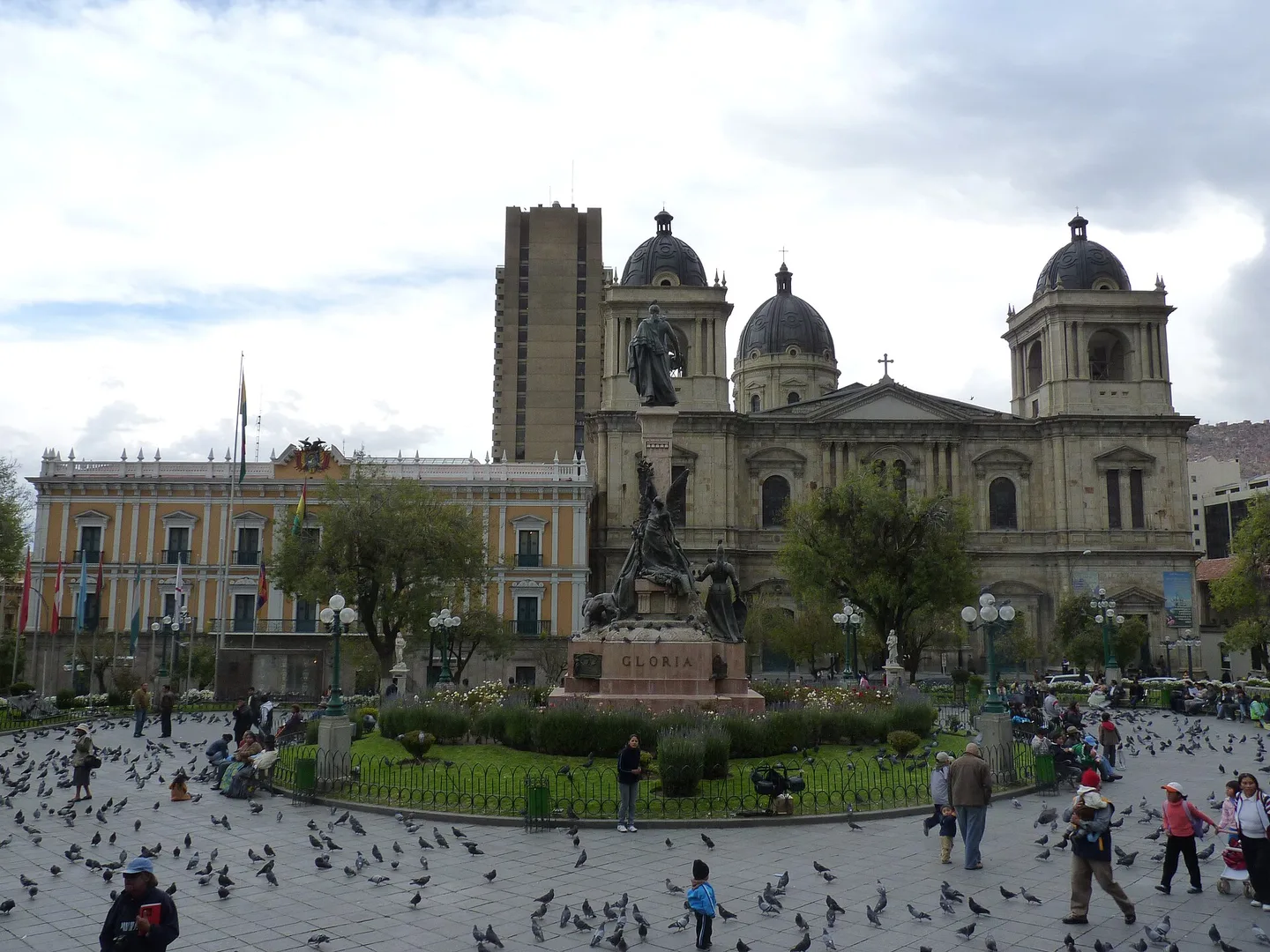
Palacio Quemado and Presidential Heritage
Dominating the southern edge of the plaza, the neoclassical Palacio Quemado served as the official presidential residence. It housed decades of turbulent republican leadership. Construction began during the early republican era following national independence. Builders established a formal Italianate palace with balanced pilasters and classical cornices.
The structure earned its sombre popular name, meaning the Burnt Palace, after anti-government rioters ignited fires across its timber framework during an uprising. Modern executive administration moved into the contemporary Casa Grande del Pueblo directly behind it. However, this historic edifice retains deep symbolic gravity. Preserved staterooms feature red carpeting, high coffered ceilings, and historical portraits. These paintings document every administration that guided the nation through conflict.
When planning your itinerary alongside other cultural experiences across La Paz, allocate time to study the exterior stonework and military guard uniforms. Armed presidential guards still stand sentry at the entrance portals in traditional red tunics. These uniforms commemorate soldiers who fought during historic border conflicts. Viewing the ornate balconies from street level highlights the delicate iron railings. Past leaders delivered pivotal national addresses to gathered crowds from these very platforms.
The building represents both architectural ambition and turbulent political memory. Its stone cornices have witnessed countless transitions of power. Restoration teams have carefully maintained the exterior masonry and tall arched windows. These efforts keep the historic facade looking sharp against the modern mountain skyline.
- Executive heritage: The historic seat of national executive governance facing the southern corner of the square.
- Classical design: Balanced pilasters, symmetry, and carved stone window crowns evoking classical Italian palaces.
- Red-tunicked guards: Ceremonial sentries patrolling entry gates in historical military uniforms.
- Civic memory: Preserved staterooms and balconies marking pivotal moments in national republican history.
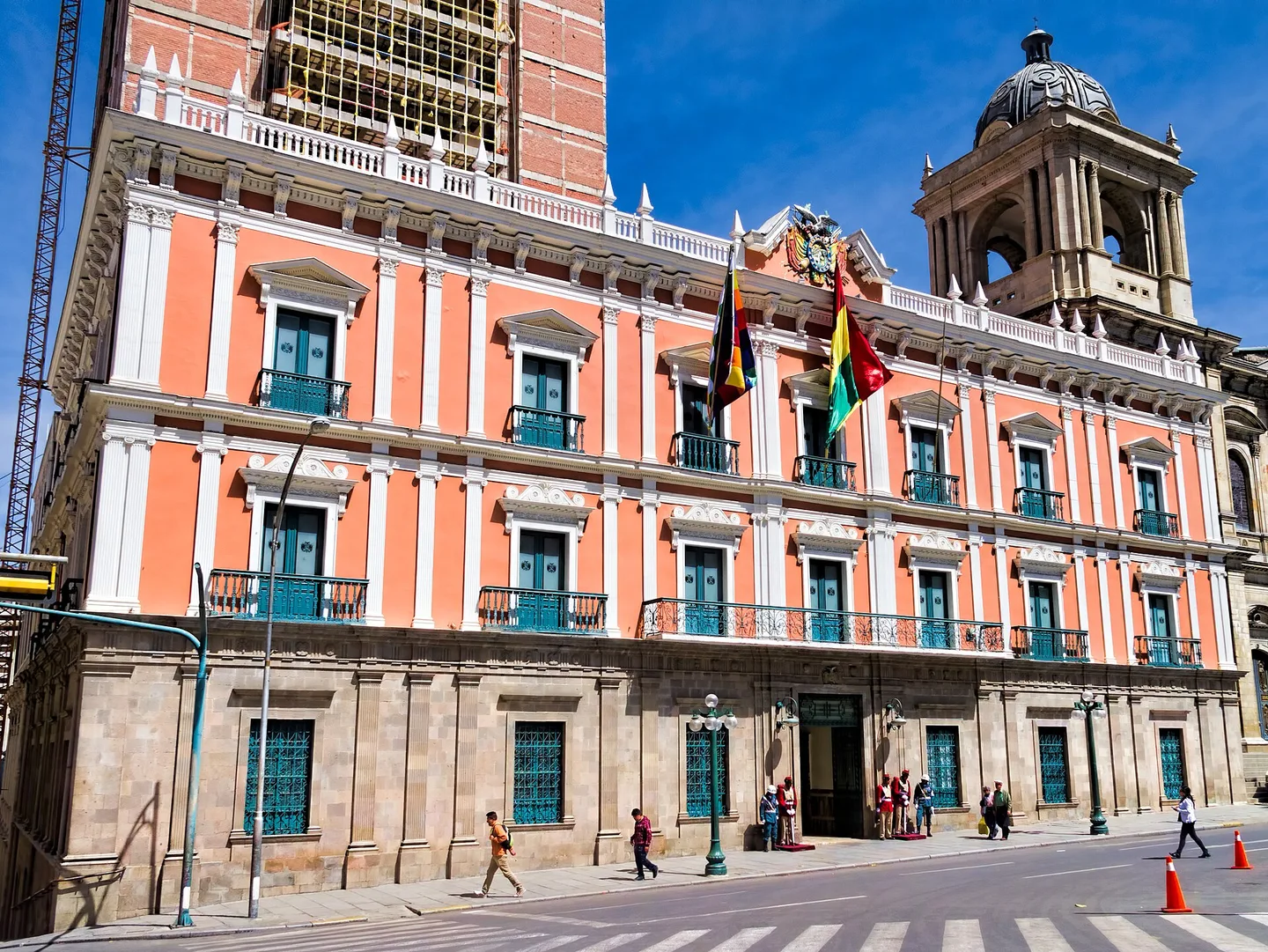
The Cathedral Basilica of Our Lady of Peace
Adjacent to the presidential palace, the Cathedral Basilica of Our Lady of Peace anchors the western corner with solid granite dignity. The cathedral features a steep sloping foundation built directly into the terrain. This masonry compensates for the dramatic drops of the surrounding canyon.
Its grand entrance displays twin towers, a heavy pediment, and a high central dome. The copper and stone reflect afternoon sunlight across the square. Inside the nave, quiet stone columns support lofty vaults finished in understated plasterwork. The sanctuary creates a cool retreat from city traffic. Stained glass windows illuminate side chapels dedicated to regional patron saints. The crypt below contains the resting places of distinguished civic and religious figures.
Taking time to sit in the rear pews provides a tranquil pause. From here we can admire the carved wooden choir stalls and bronze chandeliers. The cathedral serves an active urban congregation, and scheduled religious services take place throughout the week. These services may limit wandering through the transepts. Checking details in advance helps ensure you arrive when sanctuary doors welcome independent walkers without interrupting communal prayer.
The thick stone walls maintain a cool interior climate throughout the day. Tall arched windows filter highland light across polished granite floors. Visitors can observe traditional Catholic devotional practices beside artistic expressions of regional devotion. The building remains a focal point of religious ceremonies in the city.
| Monuments on the Square | Architectural Style | Primary Civic Role |
|---|---|---|
| Palacio Quemado | Neoclassical Italianate | Historic presidential residence |
| Cathedral Basilica | Neoclassical granite stone | Metropolitan cathedral and crypt |
| Legislative Assembly | Corinthian classical facade | National parliament and assembly |
Plurinational Legislative Assembly and the Clock of the South
Facing the eastern flank of Plaza Murillo stands the Plurinational Legislative Assembly. It is housed in a grand classical structure topped by a domed roof. Its monumental pediment and Corinthian columns project solemn authority. These chambers host the senators and deputies who draft national statutes.
The defining visual detail of this legislative palace remains the celebrated Clock of the South mounted on its stone pediment. In an intentional statement of regional identity, officials reversed the mechanical clockwork so the hour hands turn anticlockwise. The Roman numerals follow this reversed trajectory. They represent the natural motion of solar shadows cast across dials in the southern hemisphere. Watching the hands move backwards prompts thoughtful reflection on how geography and culture reshape conventional European standards of measurement.
The surrounding alleys offer convenient connections when you continue onward through a wider regional itinerary across La Paz. Cobbled thoroughfares lead uphill towards colonial museums along Calle Jaén. Other roads lead downhill towards commercial avenues lined with local transport minibuses. We suggest concluding your circuit by observing the clock chime from a sheltered perimeter stone bench. Evening light casts long shadows across the square.
This corner of the plaza highlights the intersection between Andean identity and traditional civic architecture. The reversed clock face continues to draw curious observers throughout the day. Local guides and historians frequently pause beneath the portico to explain its cultural significance. The landmark reinforces the plaza as a dynamic space of national symbolism.
Official prices and opening hours
- Mi Teleférico Cable Car Network (La Paz – El Alto)Official site ↗
- Tiwanaku UNESCO Archaeological Site & MuseumsOfficial site ↗
Where it is
- 1Plaza Murillo
- El Alto International Airport (LPB) · about 6 km from here in a straight line
- Directions in Google Maps
Stations and taxi ranks: OpenStreetMap. Airports: OurAirports. Distances are in a straight line.
Traveller tips
Real advice from people who have been to La Paz. Every tip is read by our team before it goes live.
No tips yet. Been here? Yours could be the first.
Thank you! Your tip will appear here after a quick review.
More in La Paz
Continue exploring La Paz with related neighbourhood, food, and planning guides