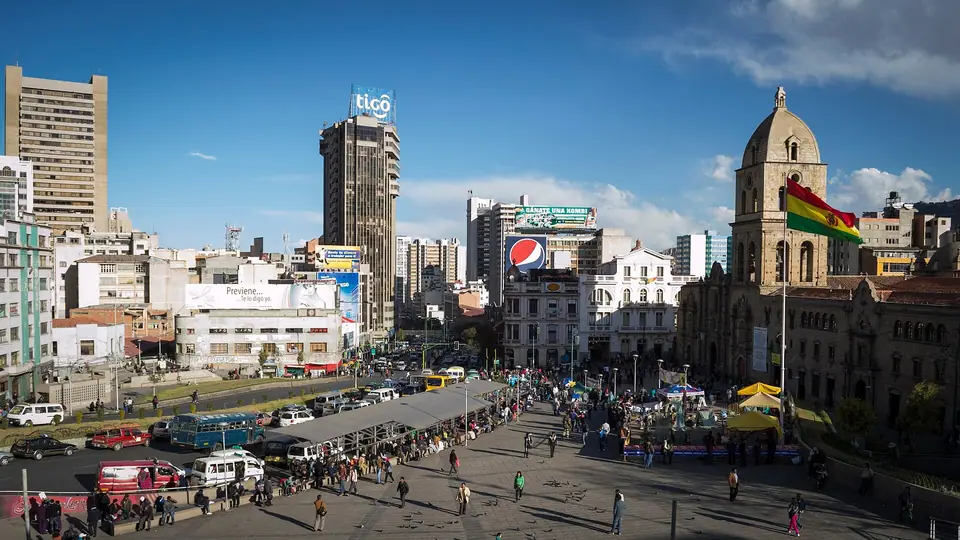
Photo: Israel Durán
Basilica of San Francisco and the Witches' Market in La Paz
Intricate stone carving meets indigenous Andean ritual remedies across the historic urban heart of high-altitude central La Paz.
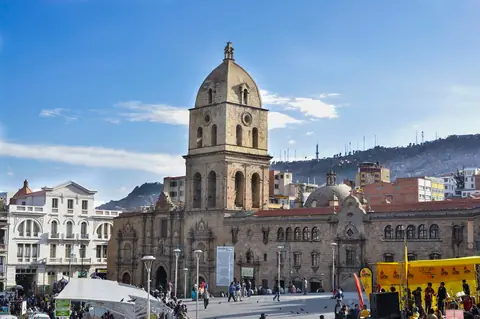
Stepping out onto the stone plaza before the Basilica of San Francisco reveals one of the most striking architectural landmarks in Bolivia. The church complex anchors the central valley. It presents an elaborate exterior carved from local quarry stone that reflects deep Andean artistic expression. Indigenous artisans integrated native flora, fauna, and traditional cosmological symbols into European Baroque architectural forms across the grand portal. Pausing on the plaza steps lets us absorb the dense stream of pedestrians moving between historic lanes and modern transit arteries. Inside, quiet side chapels, gilded altars, and thick stone walls offer immediate respite from the continuous hum of downtown traffic outside.
Mestizo Baroque Stonework of San Francisco
The facade of the basilica stands as a celebrated example of Mestizo Baroque stone relief. It features intricate carvings that reward close observation. Relief sculptures show tropical birds, native plants, and masked faces woven into classical Catholic scrollwork. This shows how Aymara craftsmen left their permanent cultural mark. Moving through the arched entrance leads into a lofty nave where centuries of devotion remain palpable in dark timber pews and gilded timber retablos. Natural daylight filters softly through elevated clerestory windows. It illuminates polished stonework and religious statuary that date back to colonial civic expansion.
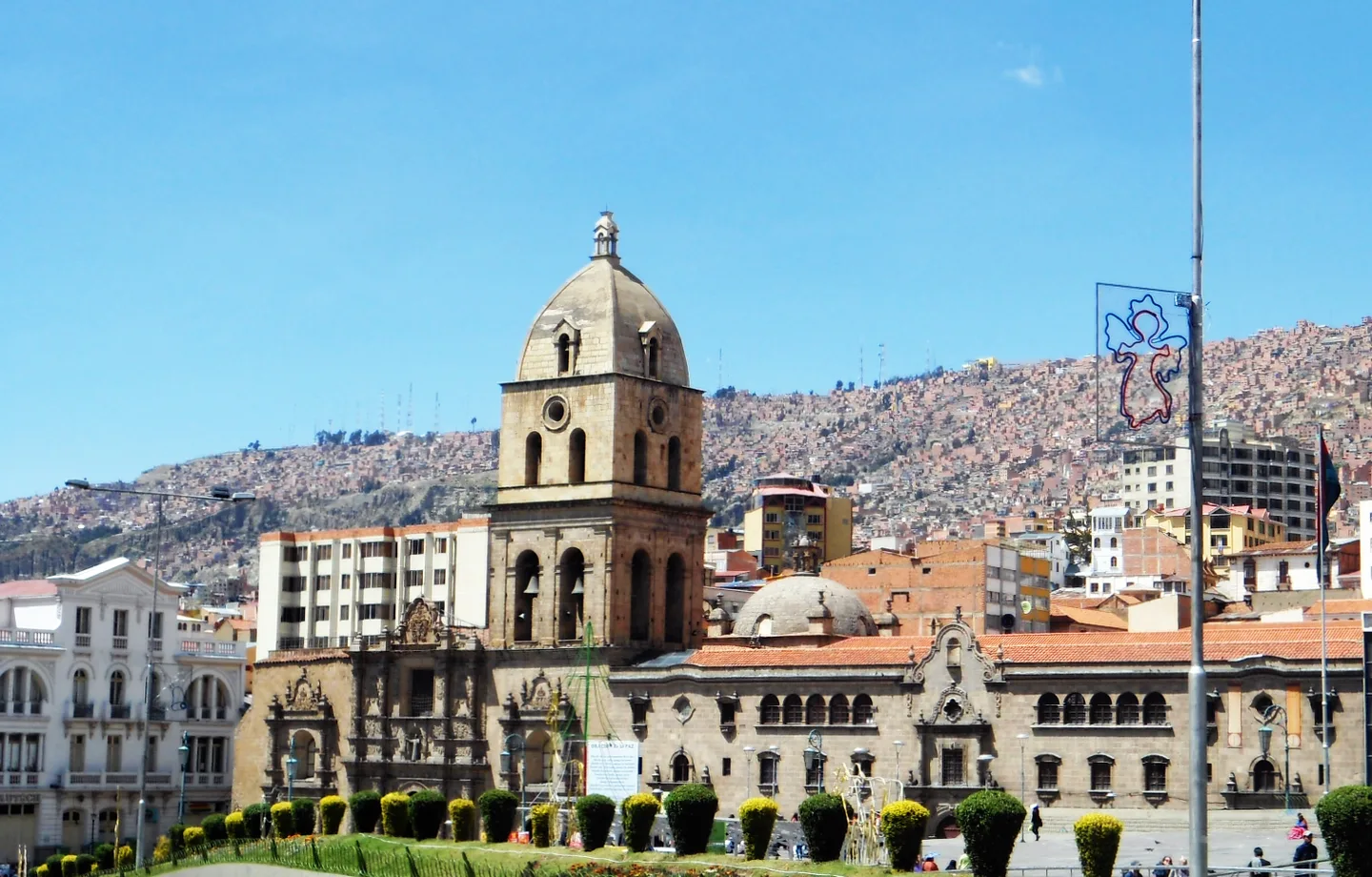
Visitors exploring the interior complex can often access the cloistered courtyards and convent museum. These areas preserve religious oil paintings, historical vestments, and tranquil gardens. Climbing towards the choir loft reveals panoramic angles across the central aisle, highlighting the detailed vaulted ceiling overhead. The church exterior continues to serve as an indispensable gathering focal point where local vendors, shoe polishers, and families congregate throughout the day. You can coordinate this visit alongside our La Paz city travel guide to place this grand religious sanctuary within its proper civic heritage.
Walking into El Mercado de las Brujas
Directly behind the basilica plaza, the cobbled gradient rises steeply towards the celebrated lanes known collectively as El Mercado de las Brujas. As we ascend Calle Sagárnaga and turn onto Calle Linares, the surrounding architecture shifts from grand colonial masonry to tight commercial storefronts. Traditional healers and knowledgeable vendors display piles of medicinal herbs, ritual incense, and ceremonial sweets intended for domestic offerings. Dried llama fetuses hang from doorway awnings. They represent ancient foundational offerings buried beneath new homes to seek prosperity and protection from Pachamama.
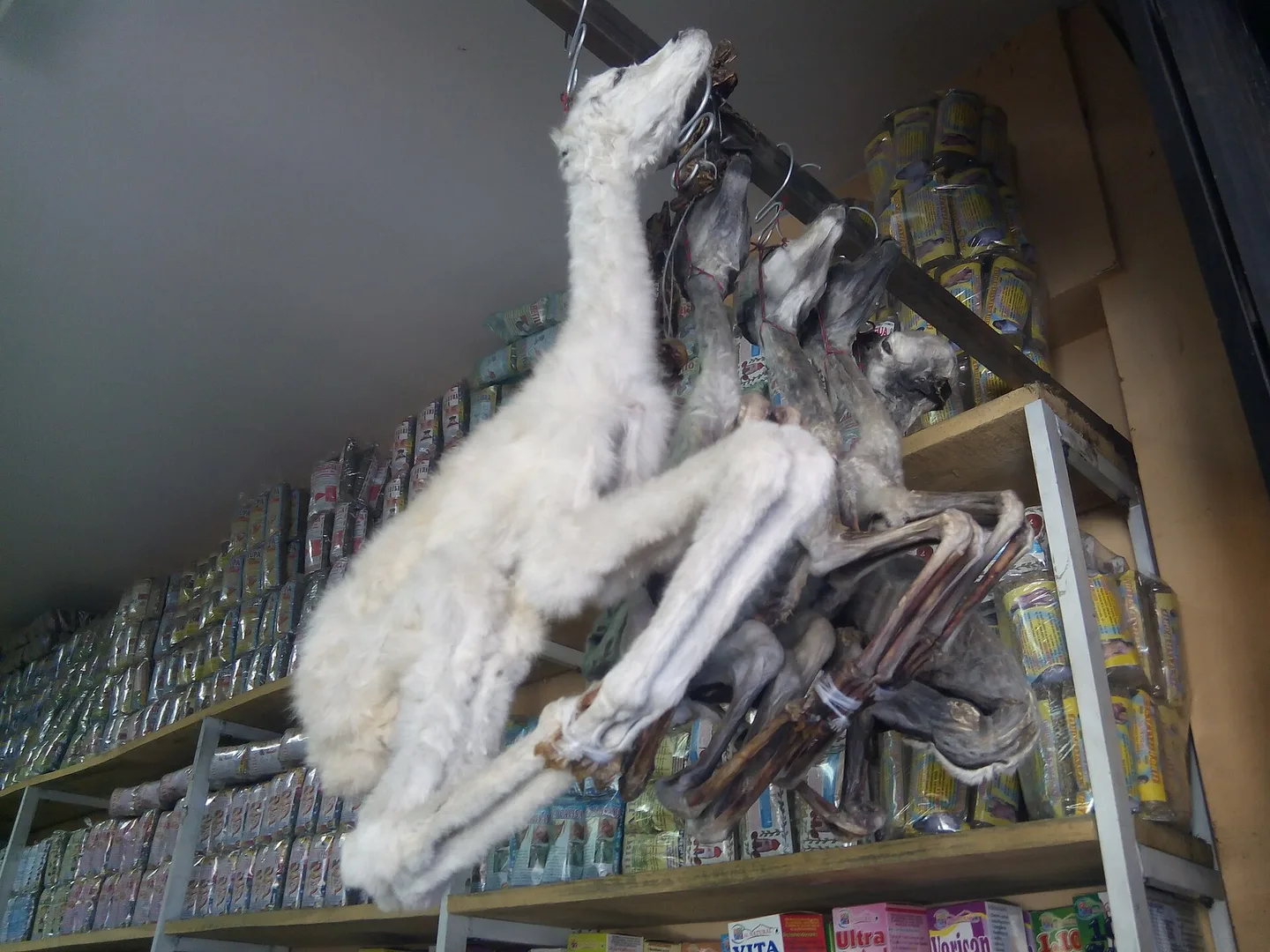
Wandering these flagstone alleyways provides authentic insight into living Aymara spiritual traditions that remain entirely vital in daily modern life. Herbalists assemble custom bundles designed to bring health, safe travel, or fortune. They explain the symbolic purpose of each raw ingredient with quiet authority. Alongside ritual goods, local workshops display woven alpaca garments, embroidered textiles, ceramic amulets, and traditional musical instruments crafted from Andean cane. Respectful observation remains essential here. Always ask permission before taking photographs of market traders or their personal ceremonial merchandise.
Navigating Central Market Alleys and Street Stalls
To help orient your exploration across this dense neighbourhood, we have organised the primary street sectors and their distinct local specialties below. Moving between these interconnected thoroughfares allows you to witness the complete transition from spiritual trading stalls to daily municipal produce trading.
| Street Sector | Primary Character | Notable Sights |
|---|---|---|
| Plaza San Francisco | Civic gathering hub and colonial stone portal | Basilica facade, street performers, public steps |
| Calle Linares | Core ritual and spiritual merchandise lane | Herbal remedies, Pachamama offerings, dried amulets |
| Calle Sagárnaga | Artisan craft shops and traveller services | Handwoven alpaca goods, leatherwork, small cafes |
| Mercado Lanza | Multi-level municipal concrete food market | Fresh fruit juices, breakfast stalls, city views |
Exploring the neighbouring Mercado Lanza complex introduces an authentic contrast of raw concrete modernist architecture filled with steaming food counters and flower stalls. Sampling fresh fruit drinks or warm api along the upper walkways lets us rest our legs while viewing urban life below. Connecting these stops with our guide to things to do across central La Paz allows you to link these lively market corridors with nearby historic museums and leafy plazas smoothly.
Urban Approaches and Altitude Precautions
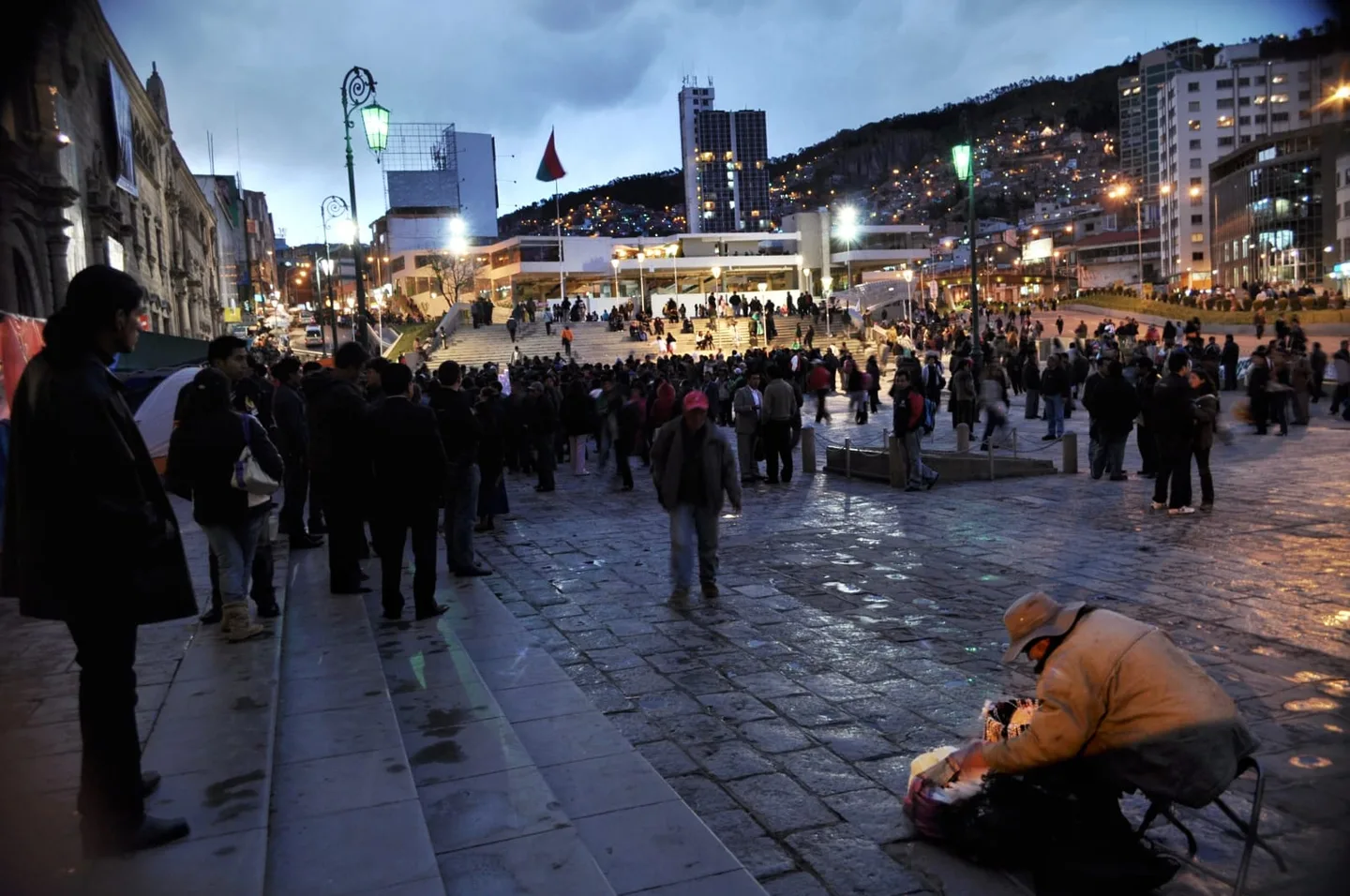
Navigating the steep cobblestones around the Witches' Market requires measured pacing because the high elevation quickly strains unacclimatised lungs. Every upward step along Calle Linares feels twice as demanding as a standard city walk. This makes comfortable footwear and regular rest breaks essential. Carrying bottled water and pausing at small street-side cafes helps maintain steady hydration as your body adjusts to the thin mountain air. Early morning hours offer quieter walking conditions before midday delivery carts and afternoon walking groups fill the narrow lanes.
Reaching this historic precinct remains simple from nearly any neighbourhood across the valley, thanks to clean aerial lines and central avenue minibuses. Arriving via cable car lets you look down upon the red-brick urban basin before descending directly towards the historic core. Street signs clearly mark the turns between San Francisco and the market streets, keeping orientation straightforward throughout your walk. Taking time to absorb both the Catholic grandeur of the basilica and the indigenous ceremonies of the surrounding lanes reveals the true cultural depth of the city.
Official prices and opening hours
- Mi Teleférico Cable Car Network (La Paz – El Alto)Official site ↗
- Tiwanaku UNESCO Archaeological Site & MuseumsOfficial site ↗
Where it is
- 1Basilica of San Francisco and the Witches' Market in La Paz
- El Alto International Airport (LPB) · about 6 km from here in a straight line
- Directions in Google Maps
Stations and taxi ranks: OpenStreetMap. Airports: OurAirports. Distances are in a straight line.
Traveller tips
Real advice from people who have been to La Paz. Every tip is read by our team before it goes live.
No tips yet. Been here? Yours could be the first.
Thank you! Your tip will appear here after a quick review.
More in La Paz
Continue exploring La Paz with related neighbourhood, food, and planning guides
Things to Do in La Paz: Urban Cable Cars, Historic Markets and High Altiplano Day Trips
La Paz, Bolivia
Arriving in La Paz: Flights to El Alto and Overland Andean Routes
La Paz, Bolivia
Best Time to Visit La Paz: Dry Andean Winter Skies, Gran Poder and Seasonal Normals
La Paz, Bolivia
Where to Stay in La Paz: Sopocachi, Casco Viejo and Zona Sur
La Paz, Bolivia
