Photo: Dennis G. Jarvis
Tiwanaku and Puma Punku Day Trip from La Paz
High on the windswept Altiplano, the monumental pre-Inca ruins of Tiwanaku and Puma Punku display remarkable megalithic stonework within easy reach of La Paz.
Crossing the Altiplano to the Sacred Valley
Leaving the urban rim of La Paz behind, the road ascends swiftly towards the open expanse of the Bolivian Altiplano. Snow-capped Andean summits frame the western horizon as the highway cuts across high-altitude plains where herds of llamas graze along dry pastures. Many travellers start by riding the regional transport connections up to El Alto before boarding shared minibuses heading towards the border community of Desaguadero. The terrain here sits well above the clouds, requiring visitors to pace themselves steadily and carry ample water to counter the dry mountain air.
As you approach the modern village of Tiwanaku, the dusty rural basin reveals low mounds that conceal centuries of pre-Inca civil engineering. This capital flourished as the ceremonial and political heart of a vast Andean empire centuries before Cusco rose to regional prominence. Today, the archaeological complex spreads across several distinct zones, separated by farming fields and quiet dirt roads. Planning an early departure guarantees quiet walking conditions before midday tour groups arrive from the capital city.
Kalasasaya, the Sun Gate, and the Semi-Subterranean Temple
The primary compound greets visitors with the vast sunken Semi-Subterranean Temple, carved directly into the soil. Embedded into its sandstone retaining walls are dozens of sculpted limestone heads, each bearing distinct facial features that reflect different cultures of the ancient Andes. Standing at the centre of this sunken court, you look directly upward towards the imposing stone staircase of the Kalasasaya temple. This elevated ceremonial enclosure was engineered with precision alignments that marked the solstices and equinoxes across ancient agricultural cycles.
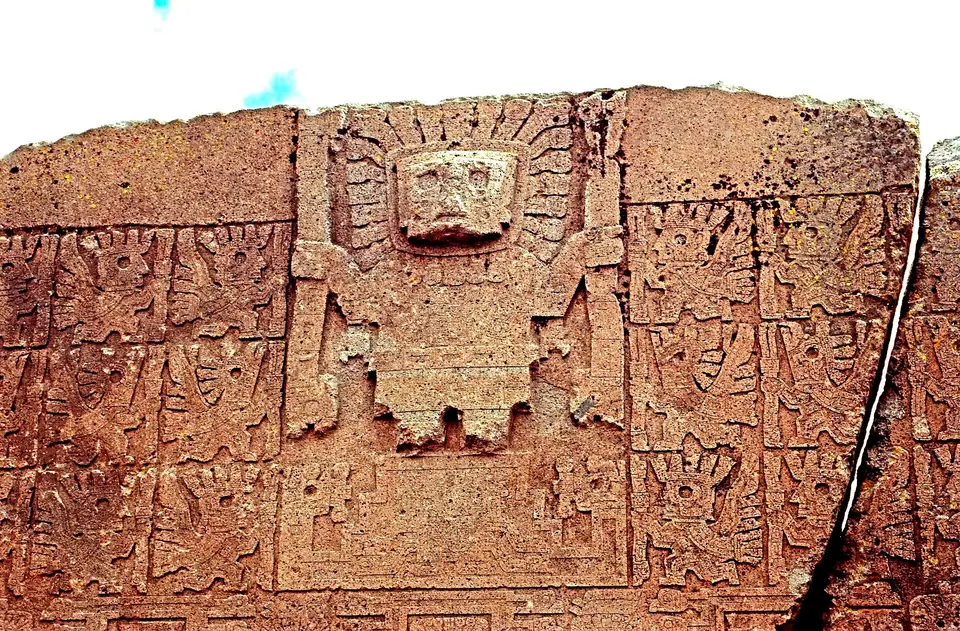
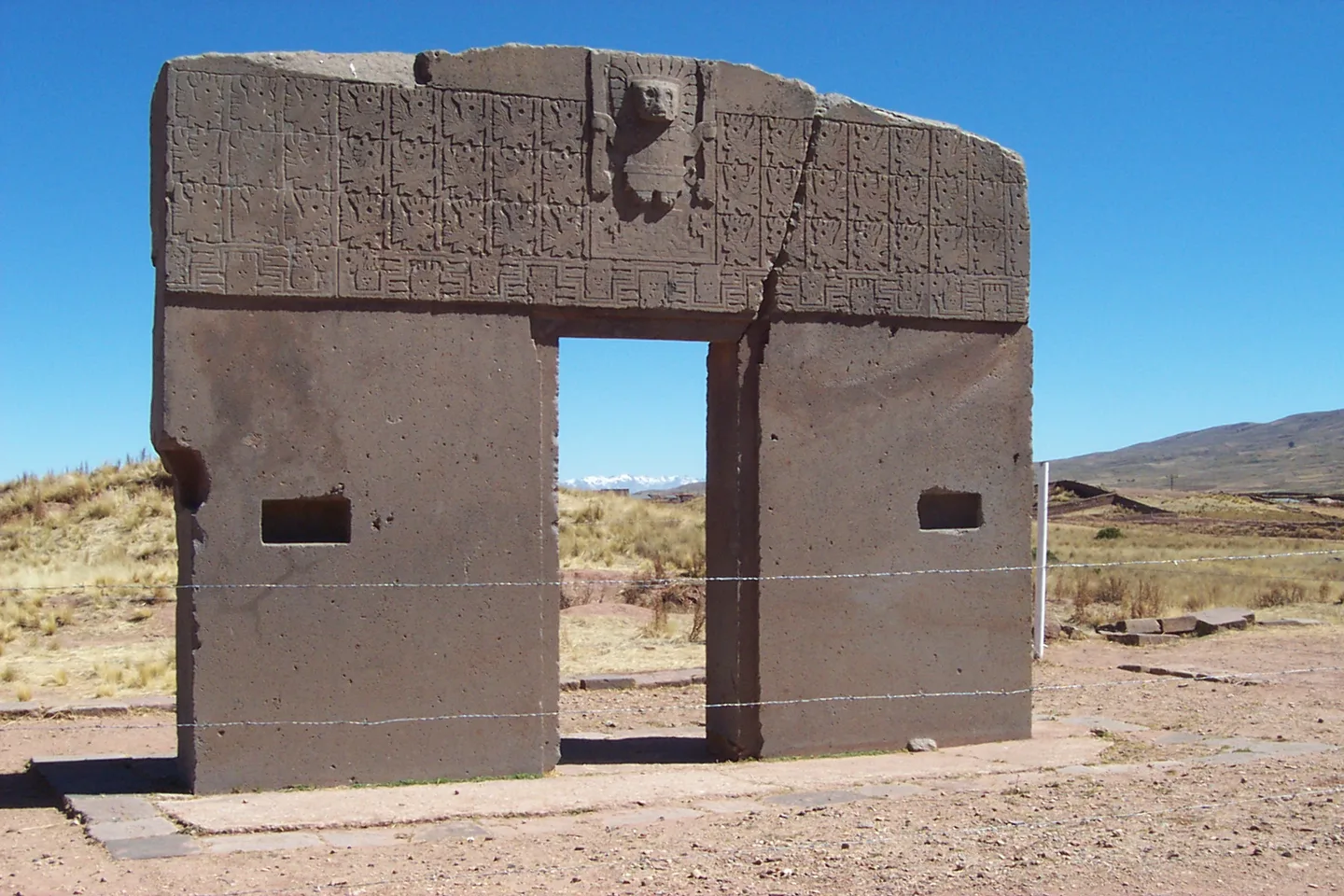
Passing through the monumental entrance of Kalasasaya brings you face-to-face with the Ponce Monolith, a single pillar carved with intricate ritual symbols. In the northwestern corner of the platform rests the famous Gate of the Sun, carved from a single block of volcanic andesite. The central relief displays the staff-bearing deity surrounded by winged attendants, capturing the spiritual iconography of early Bolivian civilisations. The following sequence allows an orderly exploration of the primary enclosure:
- Descend into the sunken courtyard to view the carved stone heads set into the masonry walls.
- Ascend the central stairway to view the freestanding Ponce Monolith inside the open courtyard.
- Walk to the western perimeter to study the intricate friezes of the freestanding Gate of the Sun.
- Circle the base of the stepped Akapana pyramid to appreciate the scale of ancient earthworks.
The Precision Andesite Slabs of Puma Punku
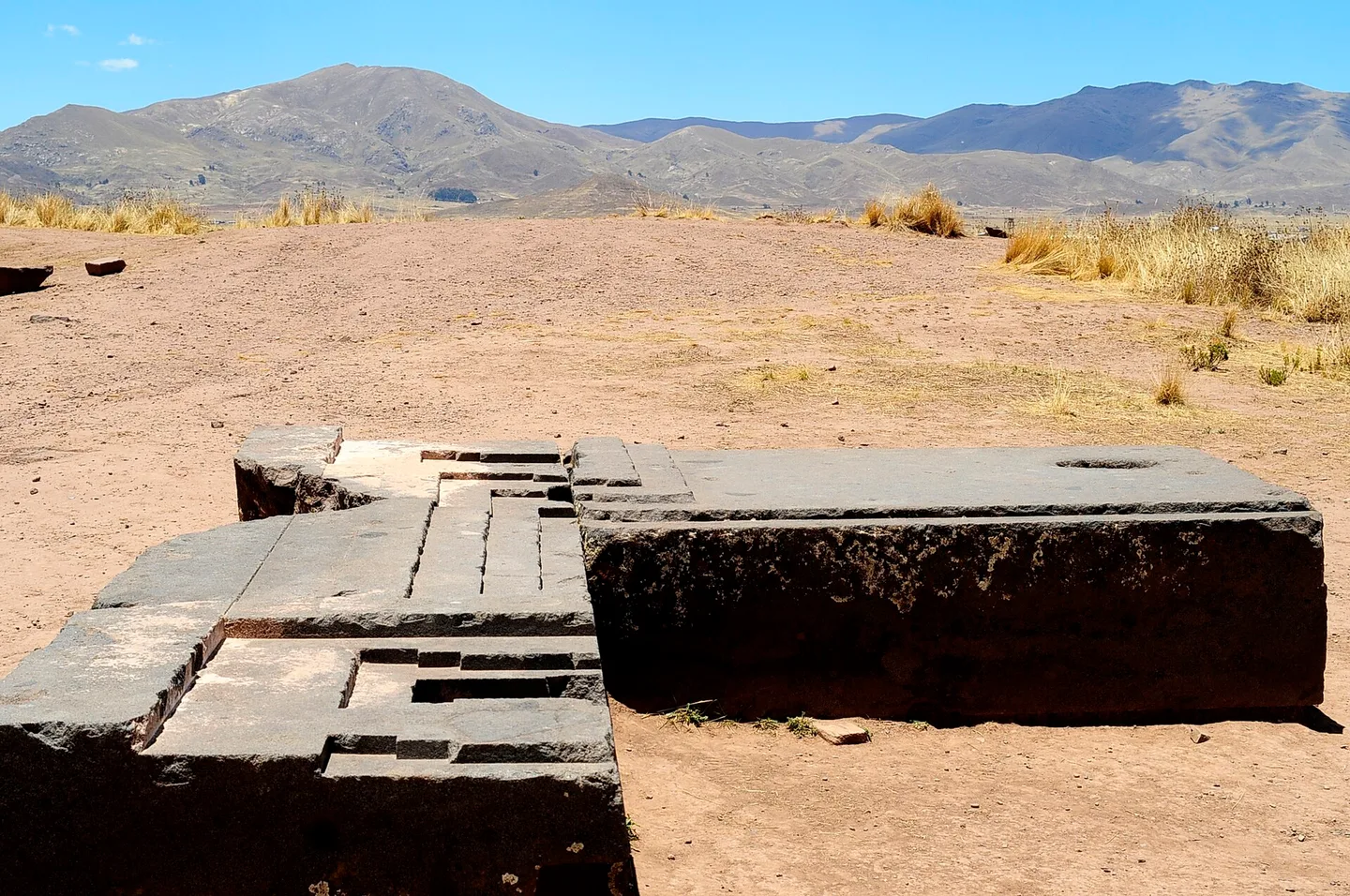
Located a short walk southwest of the main precinct, the isolated site of Puma Punku presents an entirely different structural puzzle. This stepped platform terrace once supported grand ceremonial halls built from massive blocks of andesite and red sandstone. What captures attention immediately is the staggering craftsmanship of the stone dressing. Ancient masons cut right angles with astonishing accuracy, chiselling smooth grooves and modular interlocking joints that held massive slabs firmly in place without traditional mortar.
Wandering among the tumbled lintels reveals the famous H-shaped blocks, each cut with identical internal profiles that suggest standardised prefabrication techniques. Bronze and copper alloy clamps once tied these massive stones together against tectonic ground shifts, showing sophisticated metallurgical knowledge. Because Puma Punku receives fewer tour buses than the main temple grounds, it offers a quieter atmosphere to study ancient masonry techniques. Pair this site with other regional excursions across your itinerary planning in La Paz to comprehend the full architectural heritage of the highlands.
On-Site Museums and Essential Day-Trip Planning
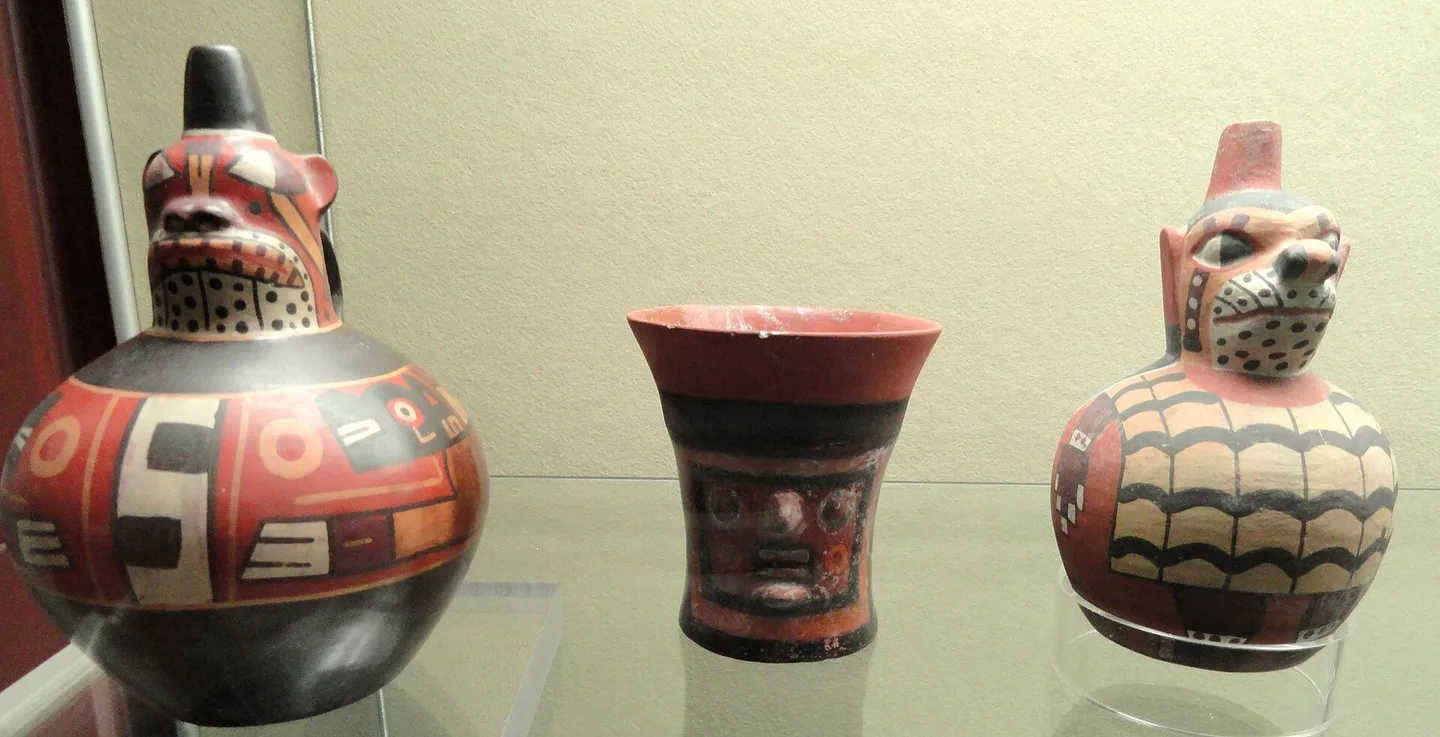
Before heading back to the capital, spend time exploring the two enclosed museums situated near the entrance gate. The Museo Cerámico houses delicate polychrome vessels, incense burners, and bone tools recovered during decades of scientific excavations. Nearby, the Museo Lítico protects the imposing Bennett Monolith, a towering carved stela that once stood inside the Semi-Subterranean Temple. Keeping this massive carving indoors shields its detailed surface carvings from weathering caused by intense high-altitude sunlight and mountain frost.
| Site Sector | Key Architectural Feature | Recommended Focus |
|---|---|---|
| Main Complex | Semi-Subterranean Temple and Kalasasaya | Study the carved stone heads and solstitial alignments. |
| South Complex | Puma Punku Terraces | Observe interlocking H-blocks and mortise joints. |
| Museum Precinct | Ceramic and Lithic Exhibition Halls | View the colossal Bennett Monolith and ceremonial pottery. |
Local minibuses depart regularly from the modern village square back to the El Alto transit hub throughout the afternoon. Because high-altitude sunshine turns rapidly into cold winds once shadows lengthen, carrying warm layers remains essential for the return journey. Check seasonal opening hours and entry arrangements in the practical details box before finalising your schedule.
Official prices and opening hours
- Mi Teleférico Cable Car Network (La Paz – El Alto)Official site ↗
- Tiwanaku UNESCO Archaeological Site & MuseumsOfficial site ↗
Where it is
- 1Tiwanaku and Puma Punku Day Trip from La Paz
- El Alto International Airport (LPB) · about 52 km from here in a straight line
- Directions in Google Maps
Stations and taxi ranks: OpenStreetMap. Airports: OurAirports. Distances are in a straight line.
Traveller tips
Real advice from people who have been to La Paz. Every tip is read by our team before it goes live.
No tips yet. Been here? Yours could be the first.
Thank you! Your tip will appear here after a quick review.
More in La Paz
Continue exploring La Paz with related neighbourhood, food, and planning guides
Three Days in La Paz: Historic Canyon, Urban Cableways and Tiwanaku
La Paz, Bolivia
What to Eat in La Paz: Salteñas, Anticuchos and Andean Street Dining
La Paz, Bolivia
Plaza Murillo: The Cathedral Basilica, Palacio Quemado and Clock of the South
La Paz, Bolivia
Basilica of San Francisco and the Witches' Market in La Paz
La Paz, Bolivia
