Old Montreal Historic Route and Riverside Sights
Follow our heritage route across Old Montreal cobbles, discovering historic squares, riverside paths, and ancient underground stone foundations.
Our journey begins in the historic heart of the city at Place d'Armes, an open stone square surrounded by layered architecture. The grand twin towers of Notre-Dame Basilica dominate the southern perimeter, showing carved limestone fronts and deep neo-Gothic arches. Standing in the centre of the paved plaza, we look across towards early commercial offices and neoclassical bank buildings. Stepping towards the church doors, visitors notice sculpted religious statues flanking the portals beneath the high pinnacles. Confirm current entry rules on the official basilica portal before joining the ticket queue. Guests seeking lodging close to this central district can review local rooms in our Old Montreal hotel reviews.
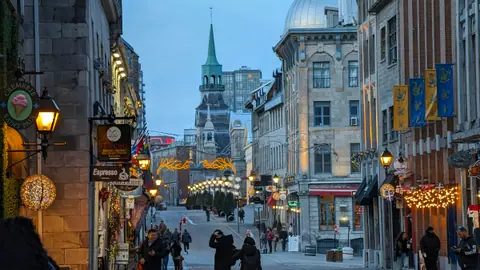
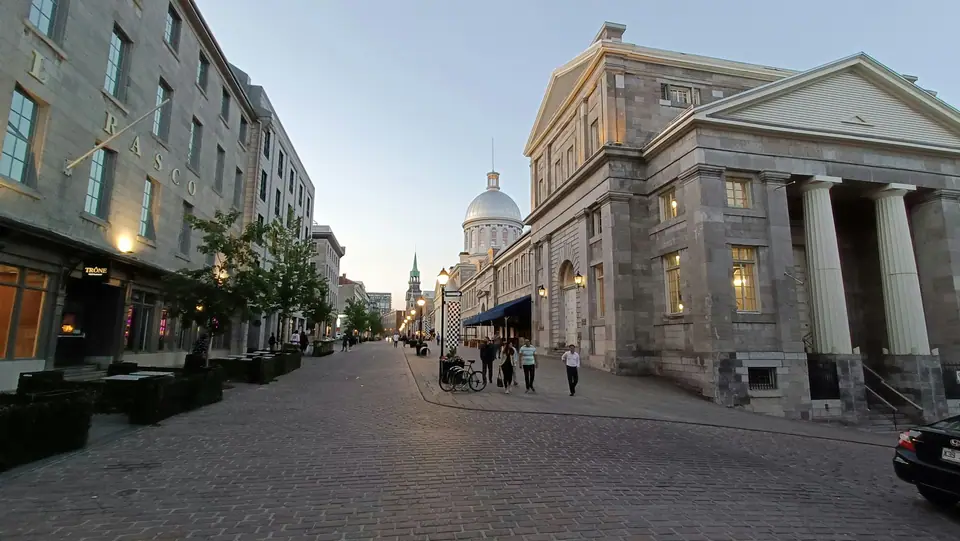
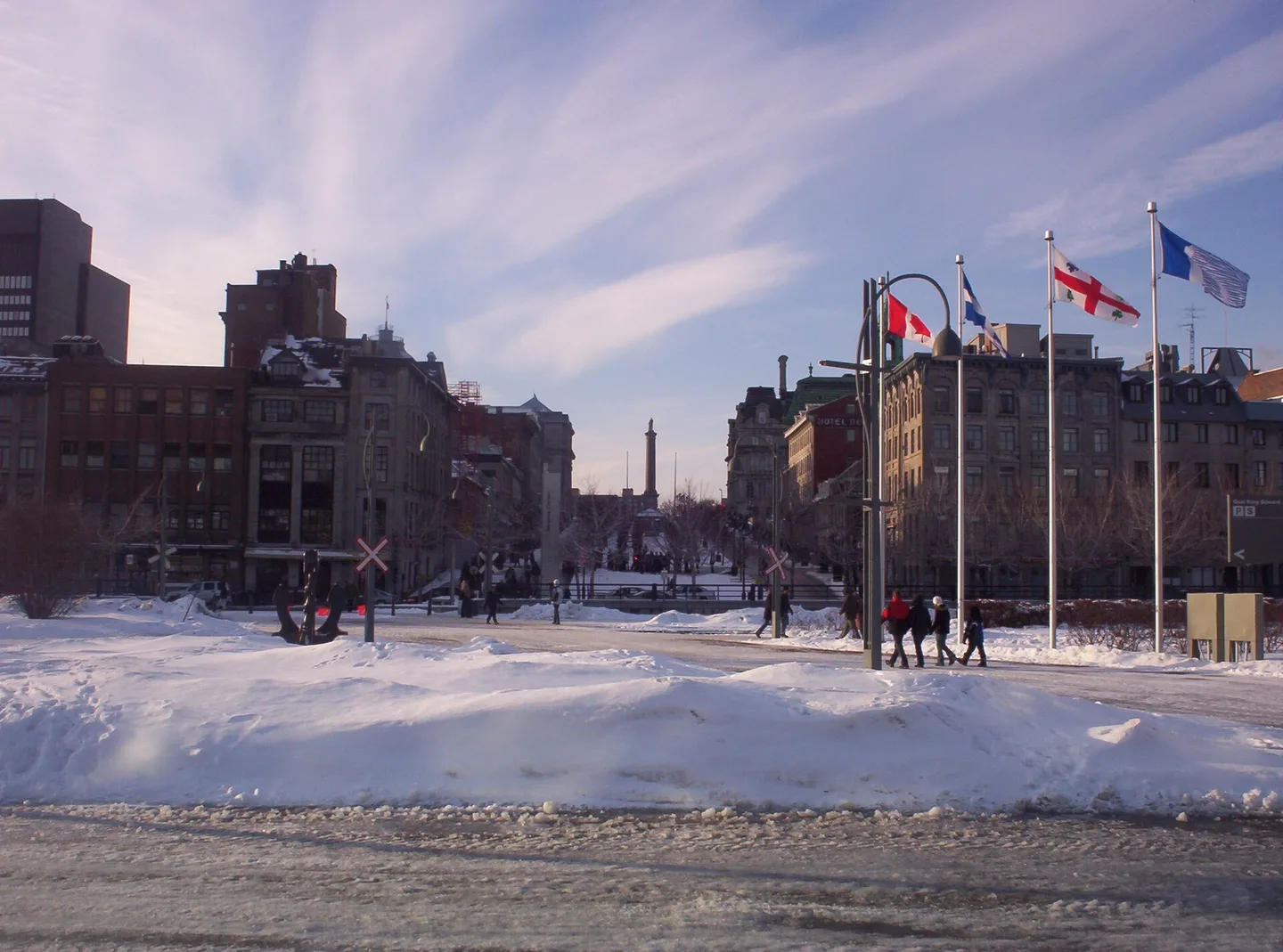
Leaving the plaza behind, we wander down the gently sloping stone lanes towards the Saint Lawrence waterfront. The cobbled corridor of Rue Saint-Paul reveals narrow limestone façades dating back through several centuries of colonial commerce. Artisan boutiques, independent art galleries, and small coffee houses now occupy the historic ground floors. Street lamps cast long shadows across the uneven pavers, inviting an unhurried pace through the heritage grid. The route curves naturally into Place Jacques-Cartier, a wide sloping terrace that connects upper street fronts with the waterfront docks. Here, local portrait artists set up easels during warm afternoons, while terrace diners enjoy cold refreshments beneath broad awnings.
Along Rue Saint-Paul to Place Jacques-Cartier
Taking time to admire the varied architecture along Rue Saint-Paul helps us appreciate how the settlement expanded beyond its original stockade walls. Heavy timber doorways, decorative iron railings, and thick fire-break gables characterise these solid stone warehouses. The cobbles underfoot can feel uneven, so sturdy flat shoes remain essential during a full day on foot. As we step onto the gentle incline of Place Jacques-Cartier, harbour breezes sweep upwards from the nearby river basin. Public benches line the open public square, offering peaceful spots to observe everyday street life. For additional suggestions on cultural landmarks and neighbourhood itineraries, browse our curated Montreal sightseeing overview.
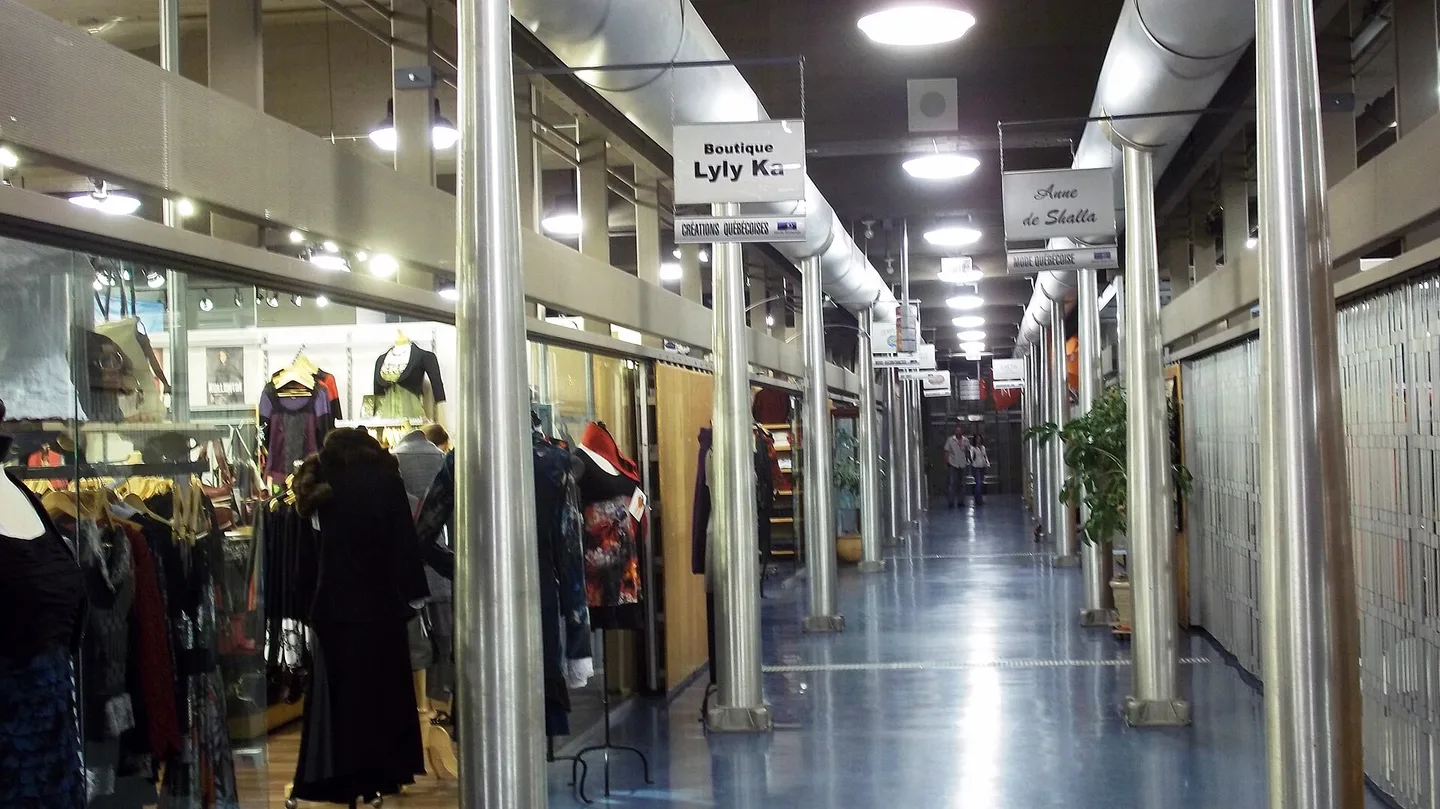
From the crest of the plaza, we turn eastwards along the cobbled alleys towards Marché Bonsecours. This prominent neoclassical landmark features a gleaming silver dome that catches the shifting morning sun. Once the main agricultural market of the port, the vast two-storey building today showcases regional crafts, fine homeware, and fashion garments. Polished timber floorboards echo underfoot as shoppers browse through rows of glass vitrines and boutique displays. Outside the market doors, the Old Port promenade opens up directly ahead. River vessels glide across the Saint Lawrence channel, creating a relaxed waterside panorama that balances the dense inland stone architecture.
Bonsecours Market and Waterside Vistas
The riverside boardwalk extends for several scenic kilometres along the former working quays, giving open vistas across wide water channels. Converted cargo piers now host seasonal leisure activities, bicycle paths, and quiet sitting areas beside the water edge. We often pause along the wooden piers to watch cargo barges and pleasure boats navigate the river currents. The contrast between maritime shipping heritage and restored civic buildings gives the district its distinct personality.
- Place d'Armes and Notre-Dame Basilica anchor the western high ground of the quarter.
- Rue Saint-Paul features continuous stone façades, independent shops, and restored timber storefronts.
- Place Jacques-Cartier slopes directly towards the open quays with spacious outdoor café terraces.
- Marché Bonsecours presents local artisan goods beneath an imposing neoclassical cupola.
- The Old Port promenade provides uninterrupted views across the Saint Lawrence River.
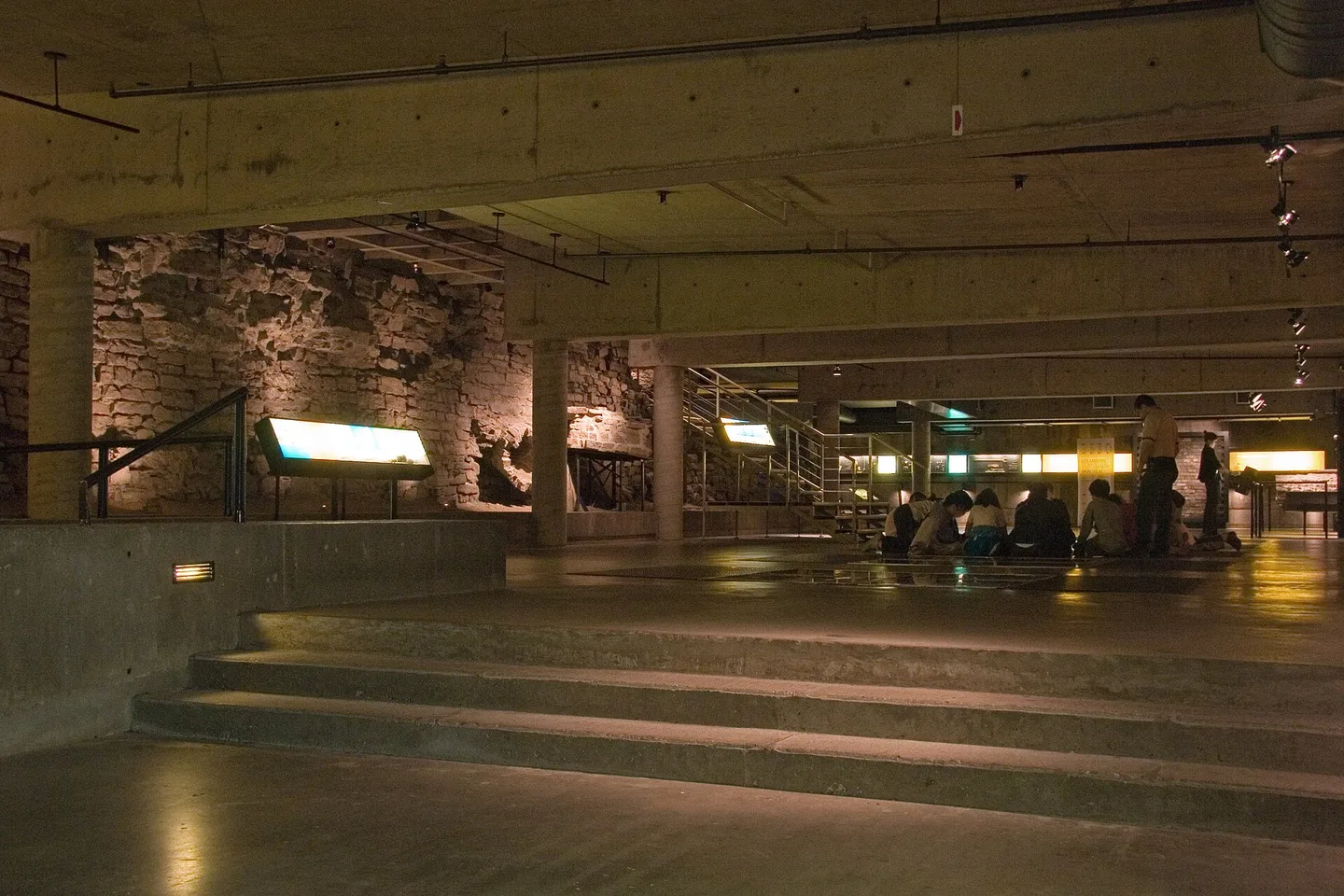
Turning back towards the western harbourfront, our route reaches the original birthplace of the settlement at Pointe-à-Callière. Here, an innovative archaeological museum stands directly over excavated colonial ruins and ancient Indigenous meeting grounds. Below street level, suspended walkways lead through exposed stone foundations, historic cemetery plots, and vaulted brick drainage channels. The cool stone chambers offer a dramatic glimpse into centuries of continuous urban renewal. Confirm current museum ticketing details on the official Pointe-à-Callière portal.
Underground History at Pointe-à-Callière
Stepping along the underground walkways at Pointe-à-Callière reveals the direct structural roots of the city. Preserved stone footings show how seventeenth-century timber forts transformed gradually into durable masonry warehouses. Clear interpretive signs explain the engineering methods used to build dry foundations beside the riverbanks. Emerging back into daylight, we find ourselves surrounded by quiet side streets lined with leafy trees and restored stone residences. The compact footprint of this historic quarter means travellers can comfortably complete the entire circuit in half a day. We recommend pausing frequently to observe subtle architectural details, from iron boot-scrapers beside doorways to carved limestone dates above lintels.
Official prices and opening hours
- Notre-Dame Basilica of Montreal (Vieux-Montréal)Official site ↗
- Pointe-à-Callière Archaeology and History ComplexOfficial site ↗
Where it is
- 1Old Montreal Historic Route and Riverside Sights
- Montreal / Pierre Elliott Trudeau International Airport (YUL) · about 15 km from here in a straight line
- Directions in Google Maps
Stations and taxi ranks: OpenStreetMap. Airports: OurAirports. Distances are in a straight line.
Traveller tips
Real advice from people who have been to Montreal. Every tip is read by our team before it goes live.
No tips yet. Been here? Yours could be the first.
Thank you! Your tip will appear here after a quick review.
More in Montreal
Continue exploring Montreal with related neighbourhood, food, and planning guides