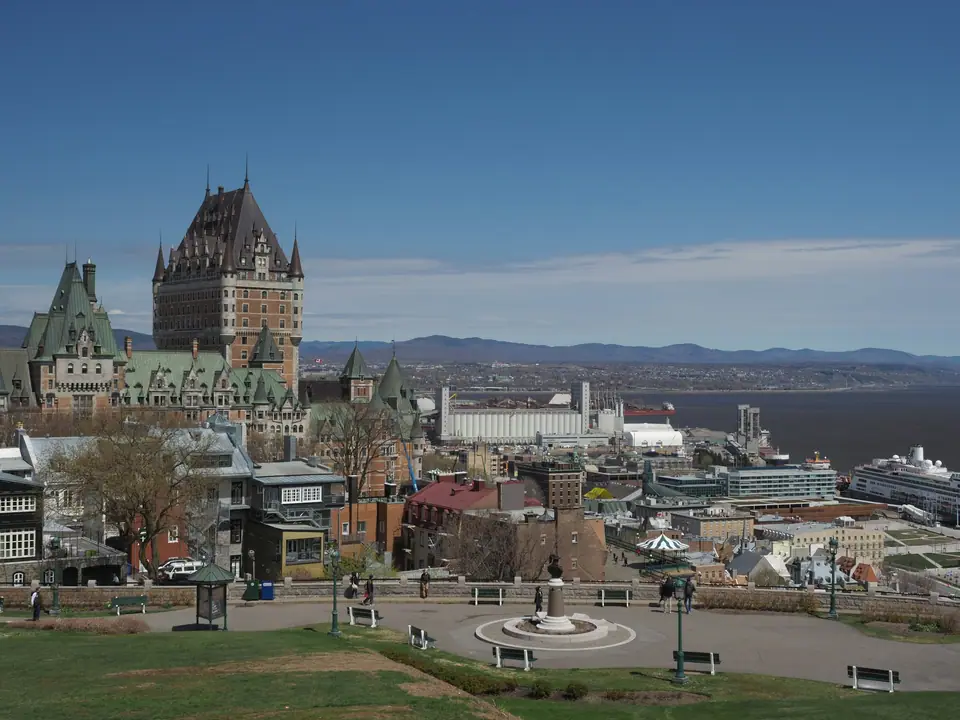
Photo by Mr. Hickmott on Unsplash
Quebec City Day Trip from Montreal: Transport and Old Town Routes
We plan a rewarding Quebec City day trip from Montreal across heritage rail corridors, stone ramparts, and riverfront lanes.
Travelling northeast across southern Quebec brings us into North America's only preserved fortified city north of Mexico. Setting out early from Montreal allows us to spend a full day exploring French colonial heritage, stone bastions, and river panoramas. The journey crosses broad farm plains along the St. Lawrence River before terminating directly at the foot of Cap Diamant.
Comparing Rail and Coach Travel Across the St. Lawrence Plain
Two primary public transit options link both cities without requiring a private car. Passenger trains operated by VIA Rail depart from Gare Centrale in downtown Montreal and arrive at Gare du Palais. This rail line follows a quiet route south of the river before crossing towards the provincial capital, giving passengers ample space and steady work tables.
Alternatively, the Orleans Express coach network departs regularly from the central bus terminal at Berri-UQAM. The coaches travel along regional highway corridors, stopping at intermediate hubs before pulling into the same Gare du Palais terminus. Coaches run frequently throughout the day, offering useful flexibility if morning train departures sell out weeks in advance.
| Transport Mode | Departure Point | Arrival Station | Key Practical Advantage |
|---|---|---|---|
| VIA Rail Train | Gare Centrale | Gare du Palais | Spacious seating and scenic riverside approaches |
| Orleans Express Coach | Gare d'autocars de Montreal (Berri-UQAM) | Gare du Palais | Frequent departures and reliable highway links |
Checking regional rail connections through our Montreal transport overview helps align morning connections with local metro lines. Both options deposit passengers right at the edge of the historic quarter, eliminating the need for suburban transfers or car park searches.
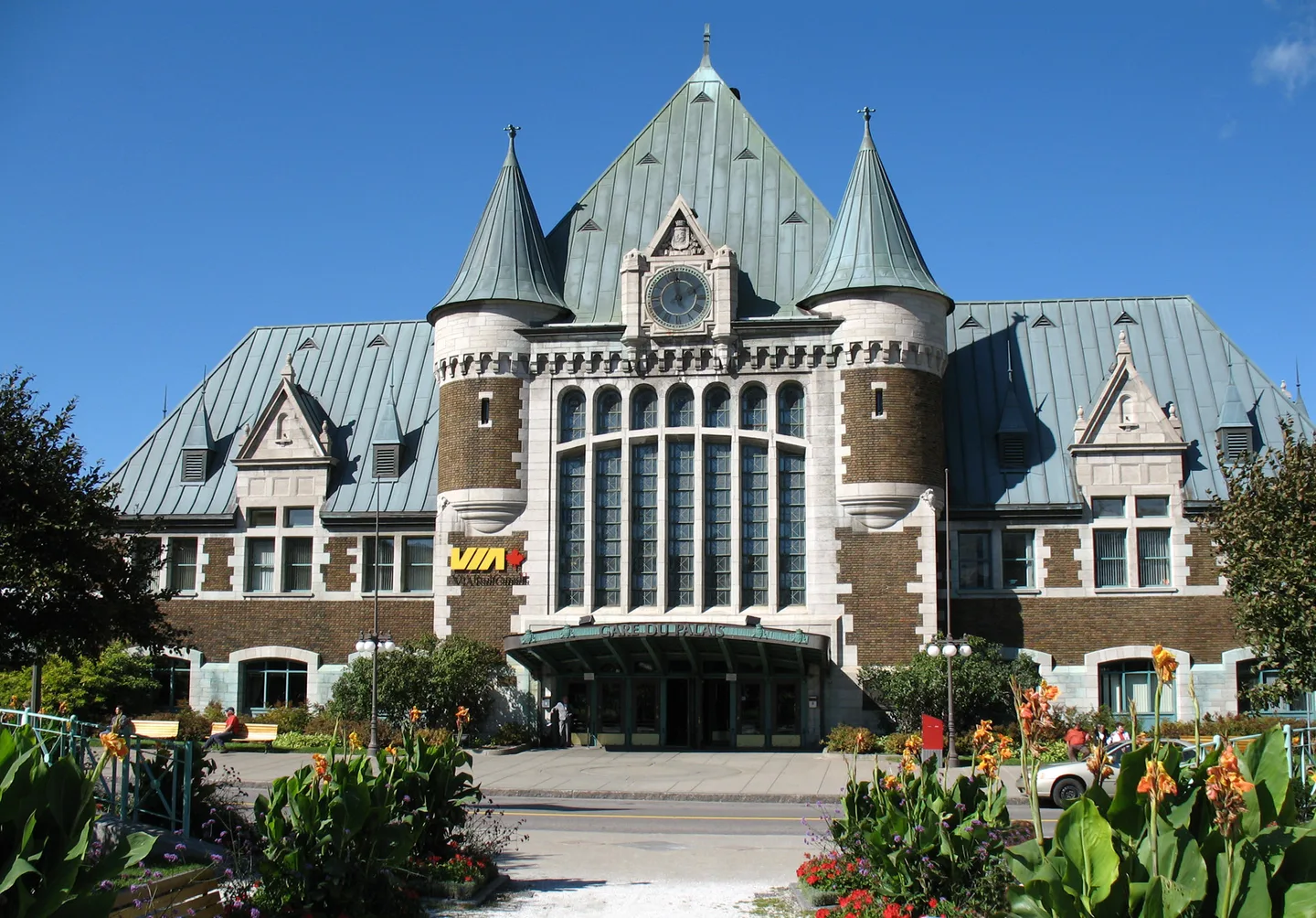
Arrival at Gare du Palais and Climbing to Upper Town
Stepping into Gare du Palais introduces visitors to classical rail architecture inspired by French chateaux. The terminal features steep copper roofs, arched windows, and brick vaults that immediately echo the historic district above. From the ticket concourse, we step directly out into the Lower Town neighbourhood of Saint-Roch and the Old Port.
Reaching Upper Town on foot requires climbing gentle hillside streets or ascending stone staircases built along the cliffside. We recommend walking up Rue Saint-Paul past antique shops before turning uphill along Cote de la Canoterie. This route follows historic supply lines that once connected naval docks to garrison headquarters along the cliff edge.
- Walk uphill via Cote du Palais to enter through the restored stone gate.
- Follow Rue des Remparts to view historic cannon emplacements overlooking the water.
- Pause at the Seminary courtyard to admire preserved stone facades from early colonial settlements.
Those who prefer a gentler slope can follow Rue Saint-Jean directly through the fortification walls into the walled precinct. Entering through the city gates reveals quiet residential lanes lined with dormer windows and fieldstone chimneys.
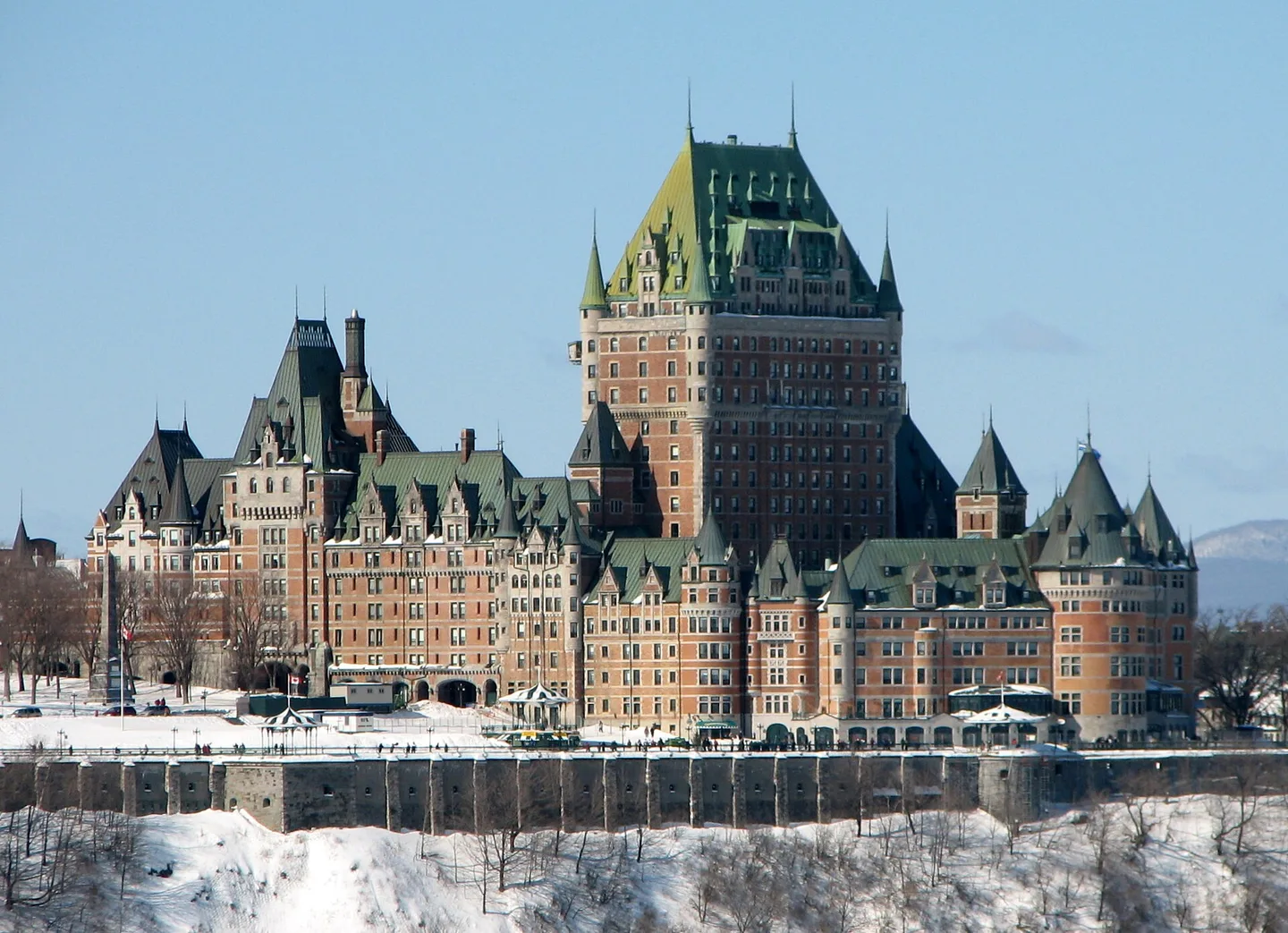
Navigating Chateau Frontenac and the Dufferin Terrace Promenade
Dominating the skyline of Upper Town is the majestic Chateau Frontenac, built by the Canadian Pacific Railway. This grand railway hotel stands on the heights of Cap Diamant, overlooking the narrowest point of the river. Its copper turrets, stone arches, and soaring central tower define the visual identity of the entire settlement.
Stretching beneath the hotel walls, Dufferin Terrace forms an expansive wooden boardwalk open to pedestrians year-round. Walking along this promenade gives clear vistas across the St. Lawrence River towards Levis on the southern bank. Gazing down from the railing, we can watch ocean vessels and cross-river ferries navigate deep tidal channels.
Beneath the timber planks of Dufferin Terrace lie the archaeological remnants of Saint-Louis Forts and Chateaux. Governors ruled New France from this cliff edge for over two centuries, making it the political centre of colonial North America. Extending an urban journey by adding a longer stay in Quebec City allows more time to study these preserved underground masonry structures.
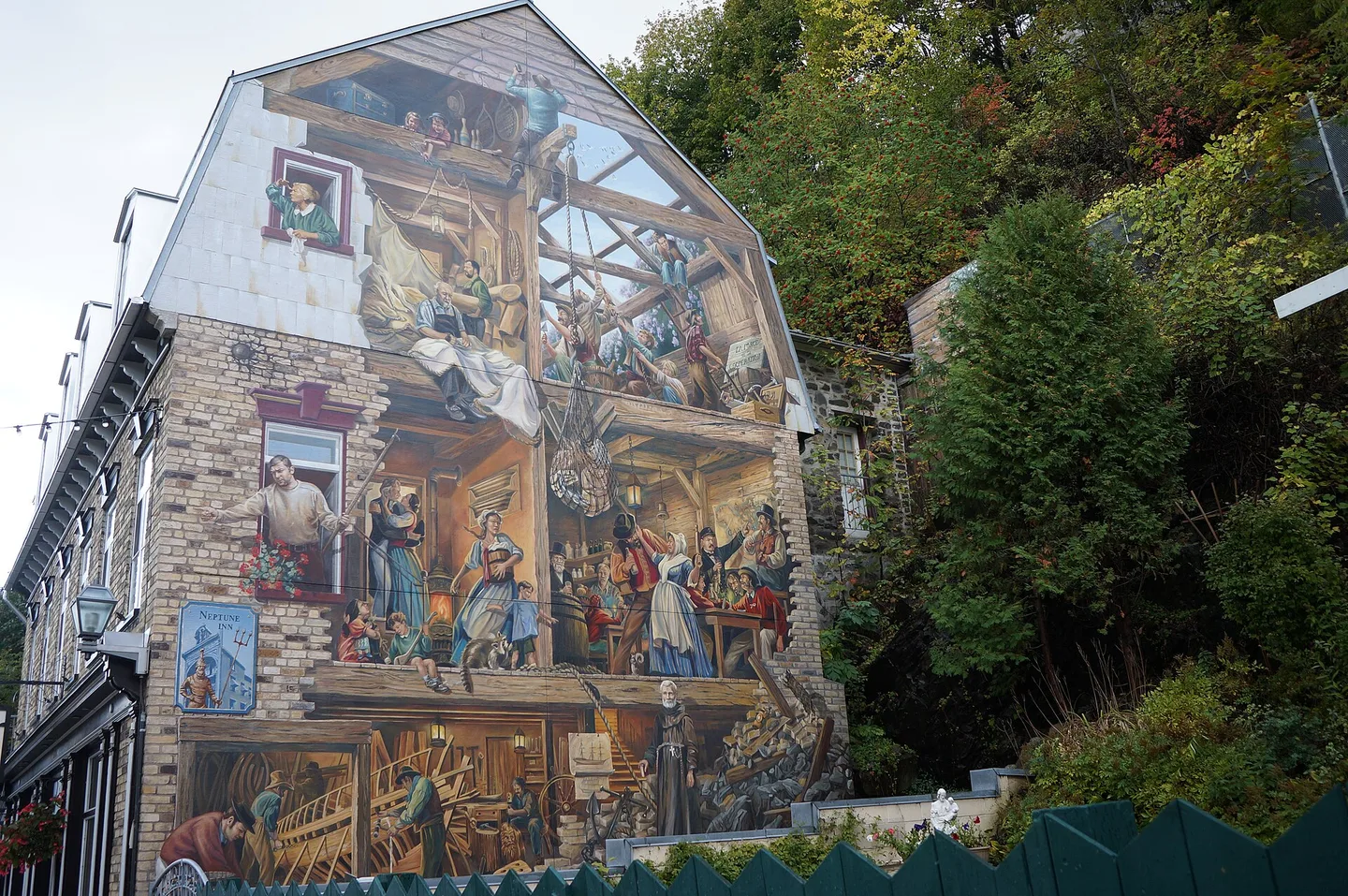
Descending the Breakneck Steps into Quartier Petit-Champlain
From the terrace, we descend into Lower Town using the historic Escalier Casse-Cou, commonly known as the Breakneck Steps. This steep wooden and stone staircase links Upper Town cliff paths to the oldest commercial lanes in North America. Alternatively, an electric funicular runs diagonally along the rock face, providing sweeping glass views during the short descent.
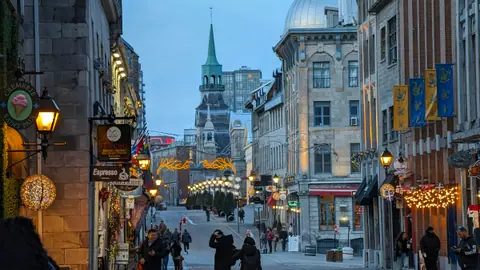
At the base of the cliff lies Rue du Petit-Champlain, a narrow pedestrian street lined with artisan boutiques and restored stone houses. Gabled roofs, hanging trade signs, and timber shutters give this corridor a distinctive atmosphere preserved through careful conservation. Exploring early in the afternoon avoids the heaviest tour groups that arrive from regional cruise docks.
A few steps further brings us to Place Royale, the cobblestone square where Samuel de Champlain established his first trading post. The square is anchored by Notre-Dame-des-Victoires, one of the oldest stone churches on the continent. After exploring these lanes, we make our way along the riverfront back towards Gare du Palais for the evening return journey, following suggestions from our Montreal route planner.
Official prices and opening hours
- STM 747 Airport Bus & 24-Hour Metro PassOfficial site ↗
Where it is
- 1Quebec City Day Trip from Montreal
- Quebec Jean Lesage International Airport (YQB) · about 14 km from here in a straight line
- Directions in Google Maps
Stations and taxi ranks: OpenStreetMap. Airports: OurAirports. Distances are in a straight line.
Traveller tips
Real advice from people who have been to Montreal. Every tip is read by our team before it goes live.
No tips yet. Been here? Yours could be the first.
Thank you! Your tip will appear here after a quick review.
More in Montreal
Continue exploring Montreal with related neighbourhood, food, and planning guides