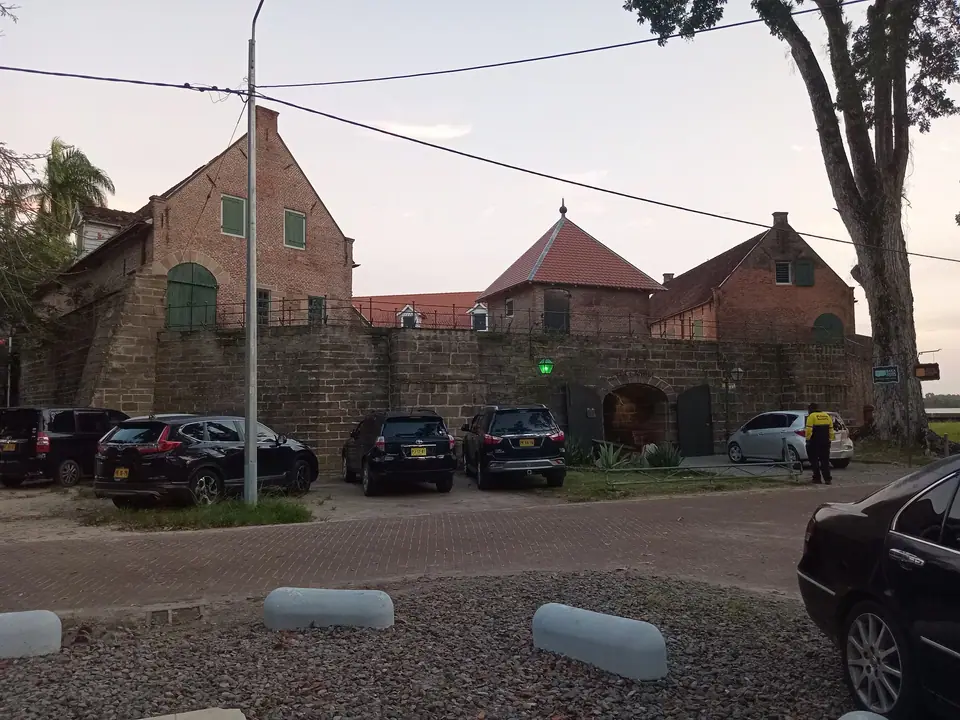
Photo: WBSAM · CC BY-SA 4.0
Fort Zeelandia, Onafhankelijkheidsplein, and Palmentuin
Riverside fortifications, the grand presidential lawn, and tall royal palm groves define the historic core of Paramaribo.
Standing beside the broad Suriname River, Fort Zeelandia forms the anchor of the colonial waterfront. The compact pentagonal layout features weathered shell-stone walls, dark red brickwork, and timber officers' quarters. Cool breezes drift off the water, offering a welcome break from the humid tropical air. We follow the paved pathways past historic cannons that still point out across the muddy tidal currents. The bastions provide an uninterrupted view along the bend where river craft drift quietly past.
Surrounding the fort, older colonial outbuildings house small cultural foundations and quiet courtyards shaded by leafy tamarind trees. Walking along the cobblestones gives a clear sense of the defensive settlement that grew into the modern capital. The entire compound feels peaceful during early mornings before mid-afternoon heat settles across the riverbank. Visitors often combine their fortress walk with other historic riverfront sights along the nearby water promenade.
River transport continues to shape daily life along the wide estuary. Fishing boats and wooden water taxis navigate the murky water toward downstream villages and Commewijne plantations. Small landing steps sit just outside the bastion walls, where traders once tied up cargo vessels. The salty scent of the Atlantic mingling with fresh river currents drifts across the stone parapets throughout the morning.
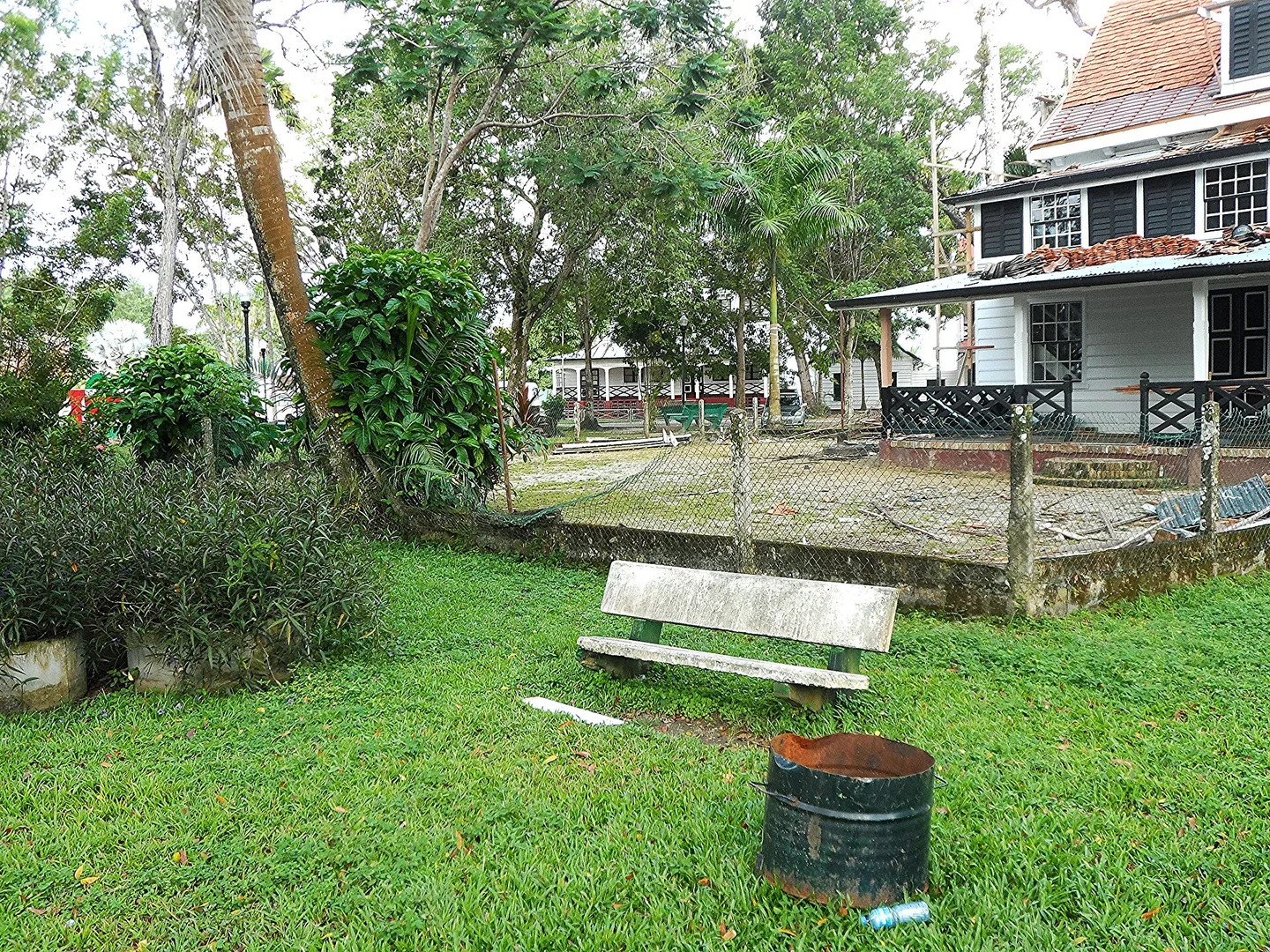
Riverside Bastions at Fort Zeelandia
Entering the central gateway brings visitors into a tidy courtyard enclosed by whitewashed brick walls and tiled roofs. The buildings house the Surinaams Museum, which preserves regional archaeological finds, colonial furniture, and indigenous craft traditions. Gallery rooms display pre-Columbian ceramics unearthed along coastal shell ridges alongside detailed plantation-era ledgers. Each room is arranged clearly with informative panels in Dutch and English. Timber floorboards creak gently underfoot as natural river light filters through tall shuttered windows.
Beyond the primary ethnographic displays, the museum addresses regional history through maritime objects, trade goods, and colonial uniforms. Stepping out onto the raised bastion platforms allows you to observe the thick masonry construction up close. The outer brickwork reveals layers of repair spanning several centuries of colonial administration and modern republic history. Visitors seeking ticketing details or daily entry arrangements should refer directly to the museum reception desk.
The defensive layout reveals how early engineers adapted European fortification models to tropical swamp soils. Deep foundations rested on shell deposits and hardwood piles driven into tidal mud. Heavy iron guns mounted on rotating timber carriages allowed defenders to sweep the river channel. Today, children lean over the parapet walls to spot mudskippers and crabs darting across the shoreline mudflats at low tide.
Navigating the Surinaams Museum Collection
We trace an easy route through the compound by moving through the museum galleries before surveying the outer ramparts. A dedicated exhibition space focuses on interior rainforest societies, presenting woven basketry, hunting tools, and ceremonial feather ornaments. Another wing reconstructs an early dispensary and colonial library filled with bound maritime maps. The displays avoid clutter, presenting historical artefacts alongside archival photographs of early waterfront life.
Outside the museum rooms, an open terrace cafe overlooks the water, making a pleasant stop for fruit juice. Heritage walkers can plan onward routes using the comprehensive guide to Paramaribo to connect with nearby timber churches and covered market halls. The fort area remains compact enough to cover comfortably on foot without rush. Shaded wooden benches under breadfruit trees offer comfortable resting spots between gallery visits.
| Historic Landmark | Primary Feature | Walking Focus |
|---|---|---|
| Fort Zeelandia | Shell-stone bastions and brick barracks | Museum galleries and riverbank viewpoints |
| Onafhankelijkheidsplein | Open green lawn and government offices | Timber architecture and statue monuments |
| Palmentuin | Shaded royal palm grove | Canopy paths and tropical bird watching |
Leaving the fortress gate, an easy paved path leads directly toward the open expanse of Onafhankelijkheidsplein. The open green space forms the civic heart of the historic district, lined by prominent government ministries. To the north stands the white timber Presidential Palace, built in neoclassical style with ornate balconies and porticos. A landscaped garden stretches behind the facade, while the public lawn in front attracts kite flyers on breezy afternoons.
The square links several key chapters of the nation's civic growth, marked by stone monuments and historic flagpole plazas. Grand colonial mansions border the perimeter, their painted white weatherboards set against dark wooden louvres. We enjoy walking the loop around the lawn to study the distinctive architectural blend of Dutch and Caribbean carpentry. When crossing the open grass under direct sunlight, carrying drinking water and sun protection is essential.
Government ministries surrounding the green feature wide verandas designed to capture passing trade winds. Intricate fretwork adorns the eaves of the Ministry of Finance, constructed with imported red bricks and a towering wooden bell tower. Citizens gather on national holidays across the grass for parades, musical concerts, and civic speeches. During regular weekdays, the grassy square remains a tranquil crossroads between the riverfront and downtown commercial streets.
Crossing Onafhankelijkheidsplein to the Presidential Palace
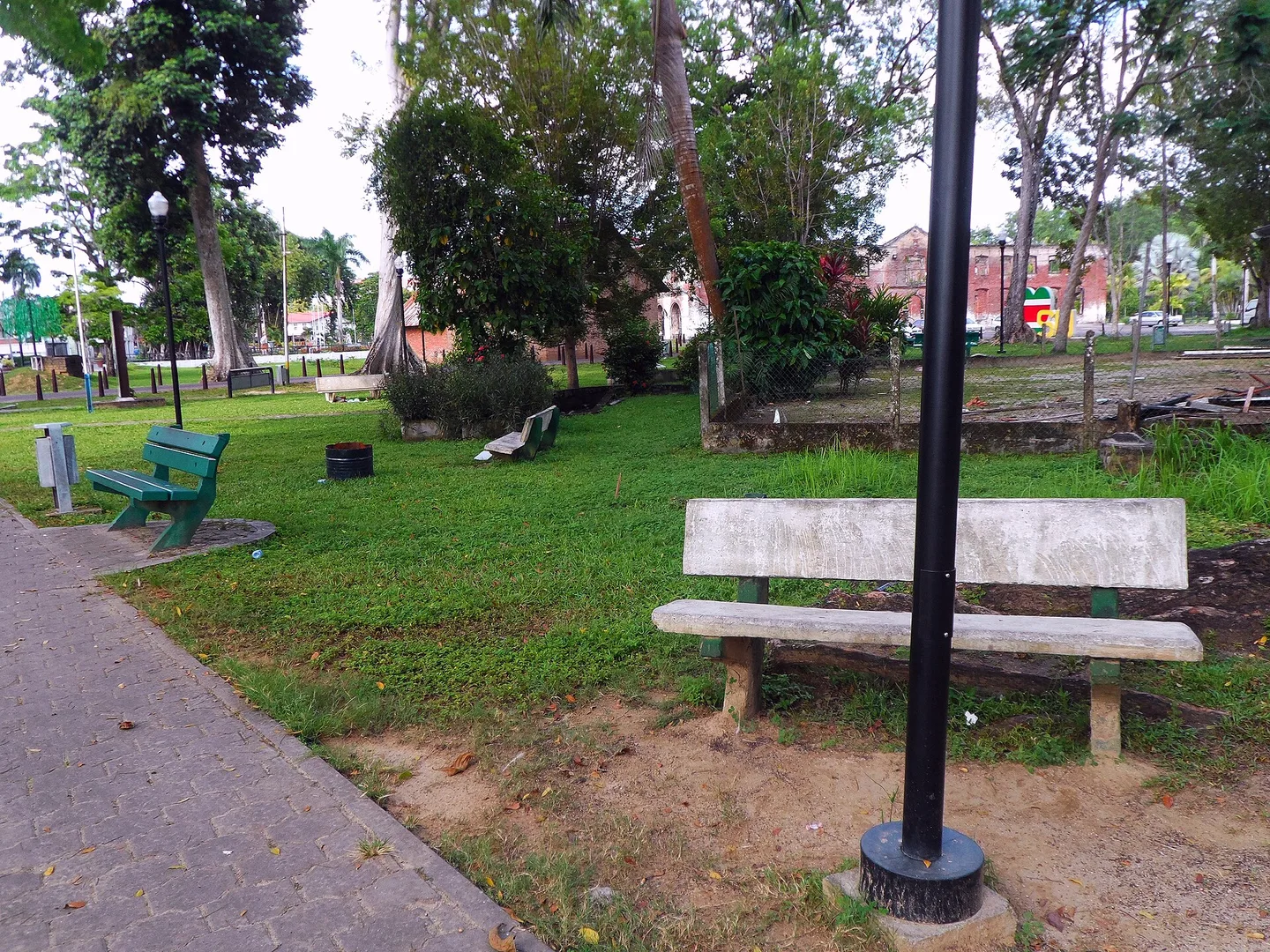
Directly behind the Presidential Palace, the entrance gates open into the peaceful green oasis of Palmentuin. This royal palm garden was originally planted as an aristocratic park before becoming public recreational ground. Hundreds of tall royal palms rise into the sky, their feather-shaped fronds filtering harsh midday sunshine into dappled light. Flat earthen trails wind between the towering trunks, creating a calm refuge from city traffic.
The towering canopy provides habitat for various tropical birds, including yellow-hooded blackbirds, kiskadees, and parakeets that chitter among the fronds. Small capuchin monkeys occasionally travel through the upper branches, drawing the attention of quiet onlookers. Benches placed along the paths offer shaded seats for reading or resting weary legs. The garden remains one of the greenest public spaces in central Paramaribo.
The dense palms create a distinct microclimate, keeping ground temperatures noticeably cooler than the unshaded asphalt of nearby streets. Rainwater collects in small drainage ditches lined with ferns and wild aroids, supporting frogs and dragonflies. Morning joggers frequently loop through the park trails alongside city workers taking a quiet shortcut toward riverfront offices. The rustle of breeze blowing through high palm fronds muffles the hum of capital traffic just outside the perimeter fence.
Canopy Walks Through Palmentuin
To experience the full heritage triangle smoothly, we recommend following a logical sequence that maximizes natural morning shade. This simple sequence keeps outdoor exposure comfortable during warm hours:
- Start at Fort Zeelandia to tour the Surinaams Museum galleries and admire open river views.
- Cross the lawns of Onafhankelijkheidsplein while viewing the timber facade of the Presidential Palace.
- Finish beneath the cooling royal palm trees of Palmentuin during the midday heat.
After finishing a walk through Palmentuin, several exits open back toward local streets, fruit stalls, and riverfront avenues. Combining these three connected landmarks allows you to absorb the capital's heritage, politics, and botanical beauty within a single relaxed morning.
Official prices and opening hours
- Fort Zeelandia & Surinaams MuseumOfficial site ↗
Where it is
- 1Fort Zeelandia, Onafhankelijkheidsplein, and Palmentuin
- Johan Adolf Pengel International Airport (PBM) · about 42 km from here in a straight line
- Directions in Google Maps
Stations and taxi ranks: OpenStreetMap. Airports: OurAirports. Distances are in a straight line.
Traveller tips
Real advice from people who have been to Paramaribo. Every tip is read by our team before it goes live.
No tips yet. Been here? Yours could be the first.
Thank you! Your tip will appear here after a quick review.
More in Paramaribo
Continue exploring Paramaribo with related neighbourhood, food, and planning guides
What to Eat in Paramaribo: Pom, Saoto and Surinamese Flavours
Paramaribo, Suriname
Saint Peter and Paul, Mosque and Synagogue: Paramaribo Religious Architecture
Paramaribo, Suriname
Waterkant, Central Market and UNESCO Wooden Streets of Paramaribo
Paramaribo, Suriname
Jules Wijdenbosch Bridge, Peperpot Nature Park and Meerzorg Guide
Paramaribo, Suriname
