Photo: Hsanghie24 · CC BY-SA 4.0
Saint Peter and Paul, Mosque and Synagogue: Paramaribo Religious Architecture
Paramaribo presents an exceptional urban meeting of faiths, displaying monumental timber churchcraft alongside a peaceful shared boundary between mosque and synagogue.
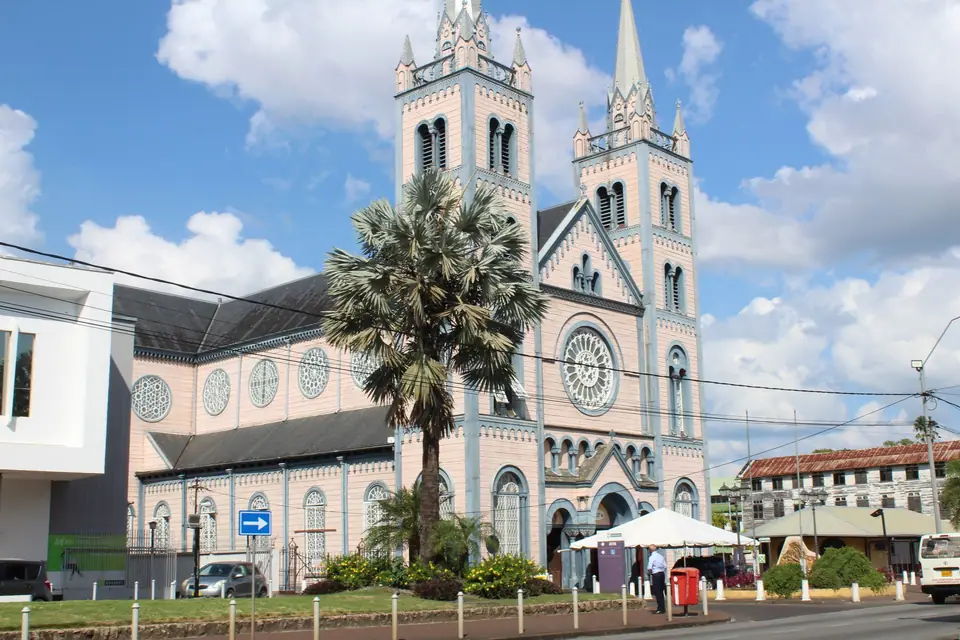
Paramaribo holds one of the most remarkable religious streetscapes in northern South America, where different global traditions share neighbouring plots of land. Standing within the historic colonial grid, the Saint Peter and Paul Cathedral-Basilica rises as a towering monument crafted entirely from native Surinamese timber. The yellow and grey exterior displays Neo-Gothic spires, while the unpainted cedar interior creates a soothing, resonant sanctuary away from equatorial heat. Walking along the wooden nave allows visitors to admire soaring arches shaped without traditional European stone masonry.
The central Catholic sanctuary reveals how European builders adapted their Gothic ideals to Amazonian hard timbers. Every ribbed vault and carved column inside the basilica exposes natural wood grains, giving the interior an unvarnished warmth that contrasts with classic whitewashed walls. Modest light filters through colourful clerestory windows, highlighting intricate craftsmanship across the choir screen and pulpit. Linking these timber streets with colonial waterfront squares and market halls shapes an easy half-day route on foot.
The Historic Consecration and Colonial Setting
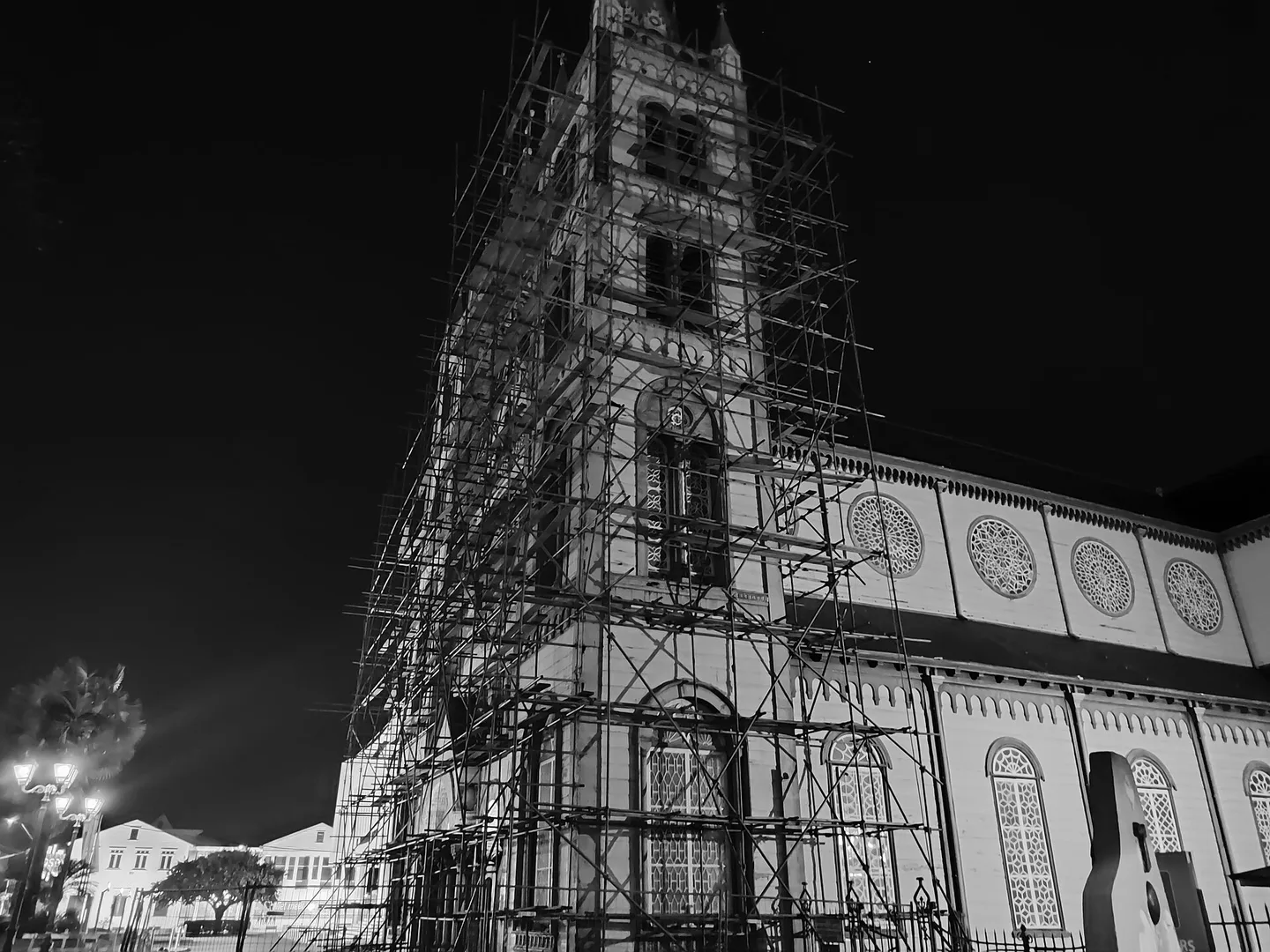
Located on Henck Arronstraat, this monumental basilica anchors a wide thoroughfare lined with traditional white sash-windowed townhouses and lush tropical greenery. Moving down the central aisle, visitors immediately notice the scent of weathered cedar and the soft creak of historic floorboards beneath their shoes. The surrounding district preserves an intact colonial urban layout, making a combined walking tour straightforward. Travellers can effortlessly reach nearby riverside monuments, government squares, and palm gardens without needing motorised transport.
Preserving such an expansive wooden structure requires continuous care against tropical humidity, sudden downpours, and termite activity. Structural restoration over recent decades reinforced the soaring twin belfries and renewed decayed beams with locally sourced timber. Stepping out onto the front stone stairs returns you directly to the relaxed street rhythm of the capital. The towering church facade offers a grand backdrop for photographers admiring the city's unique architectural timber heritage.
Keizerstraat Mosque and Neveh Shalom Synagogue Side by Side
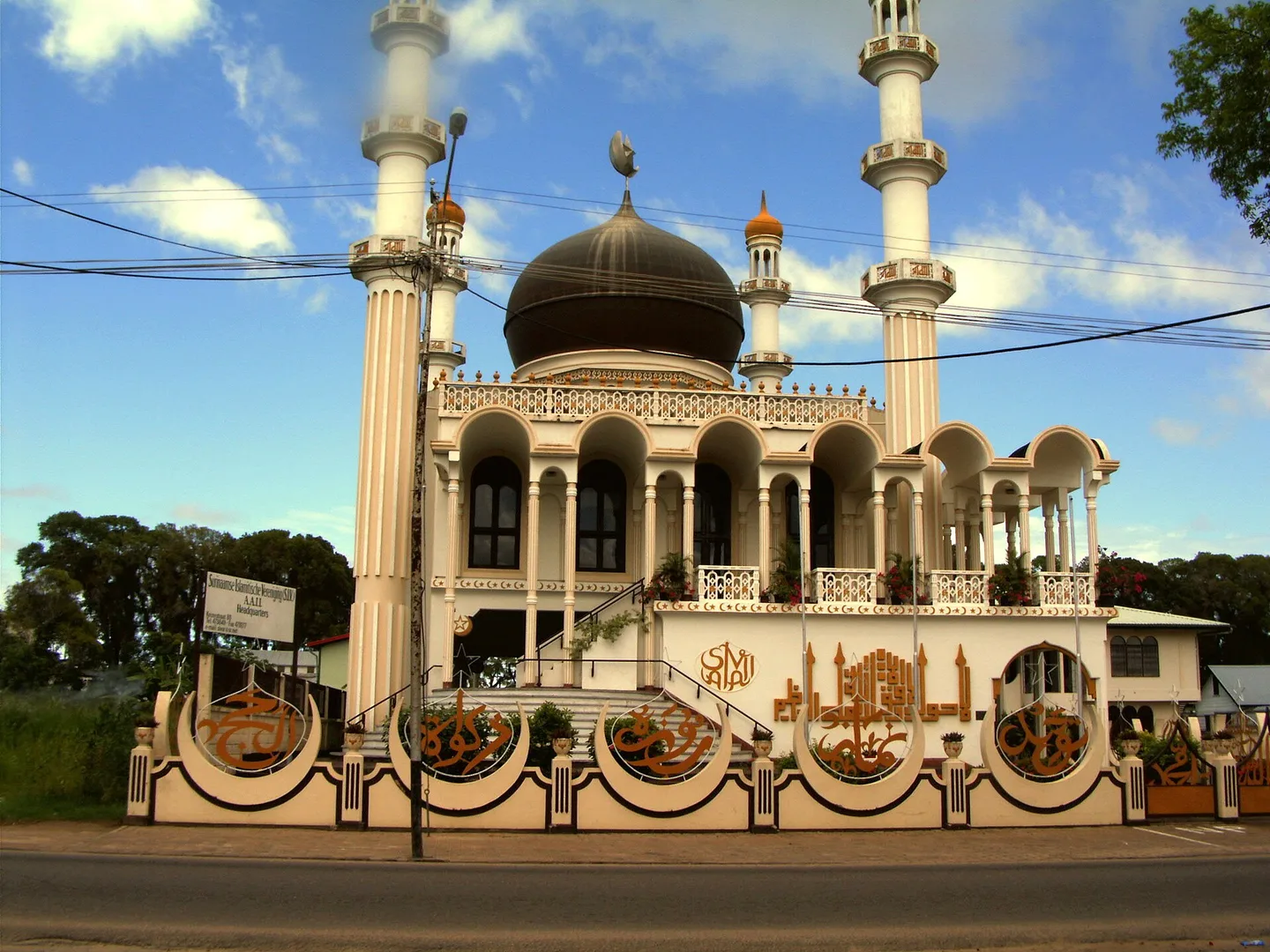
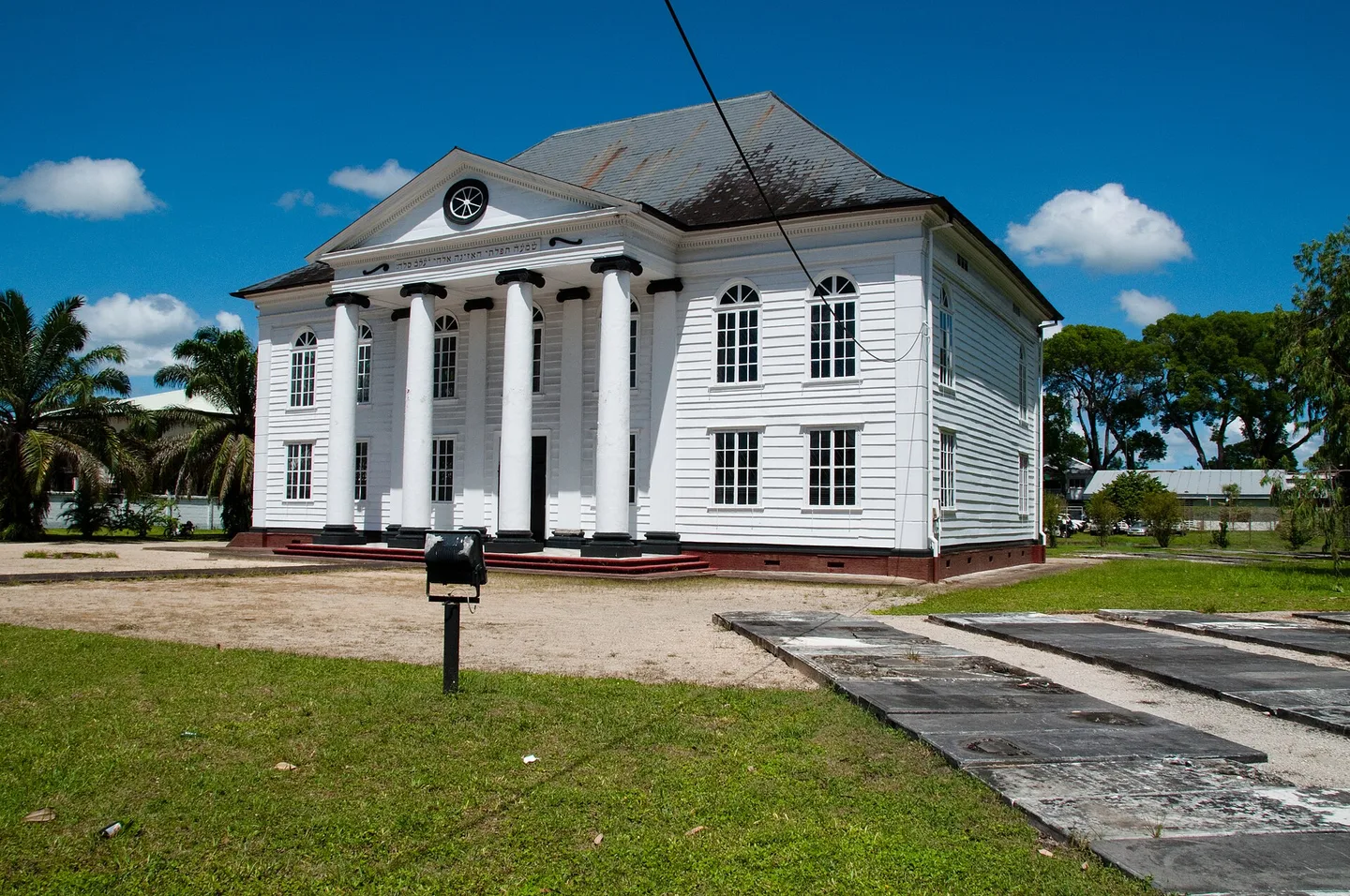
A short stroll southwest brings travellers to Keizerstraat, where one of the world's most peaceful interfaith scenes unfolds. Here, the central mosque of the Surinaamse Islamitische Vereniging stands directly adjacent to the Neveh Shalom Synagogue, sharing a common perimeter fence. The Islamic community constructed their grand building featuring pale domes and four slender minarets, creating an elegant presence along the roadway. Immediately next door, the historic synagogue features classical proportions and symmetrical wooden details.
This shared boundary demonstrates the enduring intercommunal harmony defining modern Surinamese society. Both congregations have celebrated festivals and maintained amicable relations across many decades without municipal intervention or physical separation. Inside Neveh Shalom, the sanctuary floor follows Portuguese Sephardic tradition, laid with fine white sand that softens footsteps and honours ancestral history. Together, the neighbouring sites present an uplifting lesson in coexistence that remains rare across major international cities.
Practical Walking Sequence and Visiting Etiquette
Navigating between these landmarks requires only modest foot travel, making an unhurried morning tour very rewarding. Pairing this sacred architecture route with inner-city layout and river bus tips keeps afternoon connections effortless. Because active religious communities look after each location, visitors should observe polite dress codes, covering shoulders and knees before passing through interior doorways. When entering the Keizerstraat mosque, guests must remove outdoor shoes and store them neatly beside the portal.
- Saint Peter and Paul Basilica: Enter quietly through the Henck Arronstraat portal, keeping voices low during quiet personal prayer sessions.
- Keizerstraat Mosque: Remove shoes at the designated entrance rack, maintain modest dress, and avoid walking across active prayer carpets.
- Neveh Shalom Synagogue: Respect the historic sand floor, walk gently along perimeter aisles, and observe photography rules posted at the entry.
| Religious Landmark | Street Location | Primary Architectural Trait | Special Interior Feature |
|---|---|---|---|
| Saint Peter and Paul | Henck Arronstraat | Wooden Neo-Gothic facade | Unpainted cedar vaulted ceilings |
| Keizerstraat Mosque | Keizerstraat | Four minarets with central dome | Spacious carpeted prayer hall |
| Neveh Shalom Synagogue | Keizerstraat | Classical timber structure | Traditional white sand floor |
Morning remains the most comfortable time for a self-guided walking route, before midday temperatures rise across the central district. Shaded pavements on Henck Arronstraat lead conveniently towards the waterfront, allowing you to conclude the circuit near historic river wharves. Always carry bottled water, wear breathable cotton attire, and bring a small headscarf for mosque access. Exploring these three sacred structures grants deep insight into the multi-ethnic spirit that shapes daily life across Paramaribo.
Official prices and opening hours
- Fort Zeelandia & Surinaams MuseumOfficial site ↗
Where it is
- 1Saint Peter and Paul, Mosque and Synagogue
- Johan Adolf Pengel International Airport (PBM) · about 42 km from here in a straight line
- Directions in Google Maps
Stations and taxi ranks: OpenStreetMap. Airports: OurAirports. Distances are in a straight line.
Traveller tips
Real advice from people who have been to Paramaribo. Every tip is read by our team before it goes live.
No tips yet. Been here? Yours could be the first.
Thank you! Your tip will appear here after a quick review.
More in Paramaribo
Continue exploring Paramaribo with related neighbourhood, food, and planning guides
Where to Stay in Paramaribo: Waterfront Resorts, Heritage Guesthouses and Rainville
Paramaribo, Suriname
Three Days in Paramaribo: Colonial Timber, River Crossings and Plantation Trails
Paramaribo, Suriname
What to Eat in Paramaribo: Pom, Saoto and Surinamese Flavours
Paramaribo, Suriname
Fort Zeelandia, Onafhankelijkheidsplein, and Palmentuin
Paramaribo, Suriname
