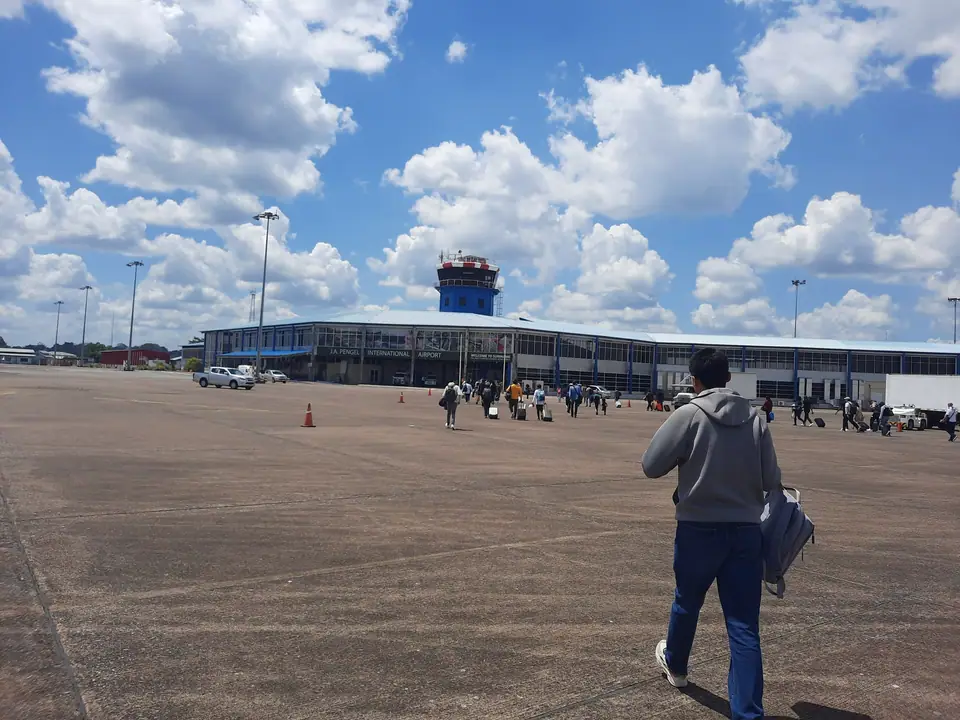
Photo: Ymnes · CC BY-SA 4.0
Arriving in Paramaribo: Air Routes, Regional Runways, and River Crossings
Reaching Suriname requires navigating coastal river frontiers, regional jungle airstrips, or long-haul aviation corridors connecting directly to the historic capital.
Arriving in the capital of Suriname brings travellers through deep coastal forests, winding river bends, and historic timber quarters. Most visitors landing from transatlantic routes or Caribbean hubs arrive at Johan Adolf Pengel International Airport. The facility stands south of the capital amid the sandy savannahs of Zanderij. From the terminal exit, shared minibuses and licensed taxis transport passengers along the single northward highway towards the Suriname River. The drive offers an immediate transition from interior forest canopies to suburban avenues lined with canals and timber cottages.
Long-Haul Aviation and the Zanderij Highway
International flights land primarily at Johan Adolf Pengel International Airport, known across the region by its aviation code PBM. Direct intercontinental connections link the runway with Amsterdam. Regional airlines operate regular rotations to Caribbean islands and northern South America. The arrival concourse features customs counters, official foreign exchange kiosks, and local telecommunications desks. Organising transport before stepping outside into the humid tropical air helps prevent confusion with unregulated drivers.
Shared vans known locally as route taxis gather directly outside the main exit doors after scheduled commercial arrivals. These passenger vans run along the two-lane highway towards the central riverbank, dropping visitors near colonial avenues and modern hotels. Traffic often slows near the southern suburbs, meaning travellers should allow extra time when heading back south for return flights. Reserving a room among heritage hotels in Paramaribo near the riverbank secures an easy arrival after the highway transit.
Domestic Flights from Zorg en Hoop Airfield
Travellers intending to visit interior rainforest nature reserves or remote riverside villages bypass the southern international runway entirely. Domestic flights depart from Zorg en Hoop Airfield, located directly inside the urban boundary just southwest of the historic centre. Small regional carriers and chartered bush planes operate twin-engine turboprops from this modest runway. Passengers boarding here enjoy close views of suburban neighbourhoods before ascending over dense Amazonian forest canopies.
Booking interior flights requires early coordination, as light aircraft seats fill quickly with researchers, freight, and eco-lodge guests. Luggage allowances on small bush planes remain strict due to cargo weight limits across unimproved jungle strips. The airfield terminal operates with simple wooden benches, a flight manifest desk, and basic refreshment stalls. Stepping into the compact waiting hall feels like entering an older era of adventurous South American aviation. Reviewing the Paramaribo travel guide helps coordinate inner-city transit between airfields and historic landmarks.
Cross-Border River Ferries from French Guiana and Guyana
Entering the country by overland transport requires boarding scheduled cross-border river ferries that span broad equatorial estuaries. Eastern arrivals from French Guiana cross the Marowijne River aboard motorised pirogues or the official international roll-on ferry. Passengers depart from Saint-Laurent-du-Maroni, clear French border controls, and disembark on the riverfront pier at Albina. From Albina, collective passenger cars run westward along the asphalt East-West Link directly to the capital.
Western arrivals from Guyana cross the wide Corentyne River using the scheduled vehicular ferry service connecting Moleson Creek to South Drain. After clearing Guyanese exit formalities, the river ferry glides across muddy tidal waters towards the Surinamese border control complex. Shared cars and route buses wait outside the customs compound at South Drain to convey passengers through Nieuw Nickerie. The overland route crosses several major bridges over coastal rivers before entering the capital across the high Jules Wijdenbosch Bridge.
Navigating City Arrivals and Coastal Transport Links
Selecting the most suitable arrival route depends heavily on your departure region and overall journey itinerary. The following overview contrasts the primary international and regional gateways serving travellers heading towards central riverfront districts:
| Arrival Gateway | Transit Mode | Primary Origin | Terminus in City |
|---|---|---|---|
| Johan Adolf Pengel (PBM) | International jet service | Amsterdam, Caribbean, South America | Zanderij Highway to city centre |
| Zorg en Hoop (ORG) | Light turboprop charters | Interior forest airstrips | Southwest city suburbs |
| Albina Riverfront Pier | International river ferry | Saint-Laurent-du-Maroni, French Guiana | East-West Link minibus terminal |
| South Drain Ferry Slip | Scheduled vehicle vessel | Moleson Creek, Guyana | Nickerie passenger coach line |
Once you reach the capital's historic core, most timber landmarks, waterfront squares, and museums stand within comfortable walking distances. Local minibuses depart from designated roadside shelters near the central riverside market, serving outer residential neighbourhoods. Hiring licensed city taxis from major hotel reception desks offers a straightforward solution during heavy tropical downpours. Travellers arriving with open afternoon schedules can easily transition into touring historic waterfront battlements and wooden cathedral towers.
Official prices and opening hours
- Fort Zeelandia & Surinaams MuseumOfficial site ↗
Where it is
- 1Paramaribo
- Johan Adolf Pengel International Airport (PBM) · about 41 km from Paramaribo in a straight line
- Directions in Google Maps
Stations and taxi ranks: OpenStreetMap. Airports: OurAirports. Distances are in a straight line.
Traveller tips
Real advice from people who have been to Paramaribo. Every tip is read by our team before it goes live.
No tips yet. Been here? Yours could be the first.
Thank you! Your tip will appear here after a quick review.
More in Paramaribo
Continue exploring Paramaribo with related neighbourhood, food, and planning guides

Day Trips from Paramaribo to Brownsberg, Brokopondo and Jodensavanne
Paramaribo, Suriname
Coastal Wildlife and Turtle Reserves Around Paramaribo
Paramaribo, Suriname
Paramaribo Field Guide: UNESCO Wooden Quarter, Riverfront Walks and Urban Transit
Paramaribo, Suriname
What to Do in Paramaribo: Fort Zeelandia and Historic Timber Landmarks
Paramaribo, Suriname
