Photo by Oat Appleseed on Unsplash
Best Time to Visit Seoul
Seoul's seasons in official numbers: a mild spring, a hot rainy summer, a clear autumn with late-October colour and a cold, dry winter.
Short answer: autumn suits most visitors. October brings clear days with average highs around 20°C, and in 2026 autumn colour was expected to peak in the Greater Seoul area in late October. Spring is the other strong choice. Summer is hot, humid and very wet, and winter is cold but dry, which suits museums, markets and food.
How Seoul's climate works
The Korea Meteorological Administration describes a country with four distinct seasons. August is the warmest month and January the coldest. Seoul's long-term averages for 1991 to 2020 give an annual mean temperature of 12.8°C and about 1,417.9 mm of rain and snow a year. That total is not spread evenly: more than half of the year's rain falls during the summer rainy season.
The figures below come from those official normals. They are averages, so a single week can be warmer, colder or wetter than the table suggests.
- January: highs of about 2.1°C, lows of about -5.5°C, and 16.8 mm of precipitation.
- April: highs of about 17.9°C and lows of about 8.0°C.
- July: highs of about 29.0°C, lows of about 22.3°C, 414.4 mm of rain and humidity of about 76.2%.
- August: highs of about 30.0°C, lows of about 22.9°C and 348.2 mm of rain.
- October: highs of about 20.2°C and lows of about 10.6°C.
Spring for palace gardens and long walks
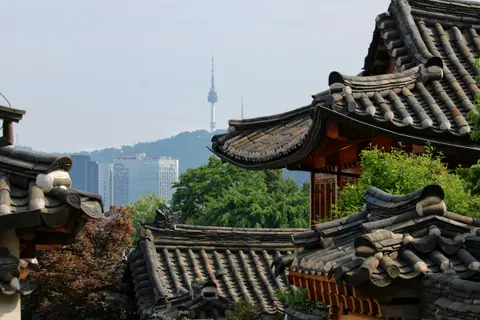
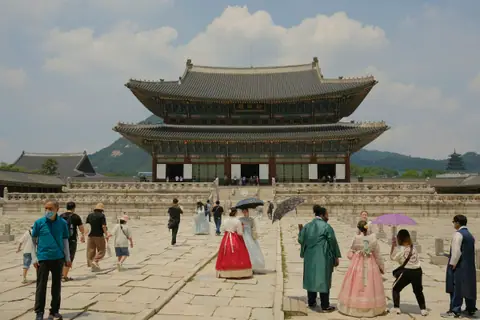
By April, days are mild and evenings cool, with average highs near 18°C and lows near 8°C. It is comfortable weather for the long walks that Seoul demands: across Gyeongbokgung, through the lanes of Bukchon and along Cheonggyecheon. The Secret Garden at Changdeokgung, with more than 56,000 trees and plants, is at its freshest in spring. Bring a light jacket for the evenings, as our packing guide explains.
Summer: heat, humidity and the rainy season
The rainy season, called changma, starts in the south of the country in late June and moves north, lasting about 30 days on average. In Seoul, July is the wettest month, with about 414.4 mm of rain, and August follows with about 348.2 mm. Highs reach about 30°C and nights stay warm, so the air feels heavy.
Typhoons add to the risk. In an average year two or three of the roughly 28 typhoons that form in the Northwest Pacific affect the Korean peninsula, between June and October. The UK government's advice treats June to November as typhoon season. Plan indoor options for summer days: the National Palace Museum and the National Folk Museum sit inside the Gyeongbokgung complex, and Starfield Library at COEX is free to enter.
Autumn for clear skies and colour
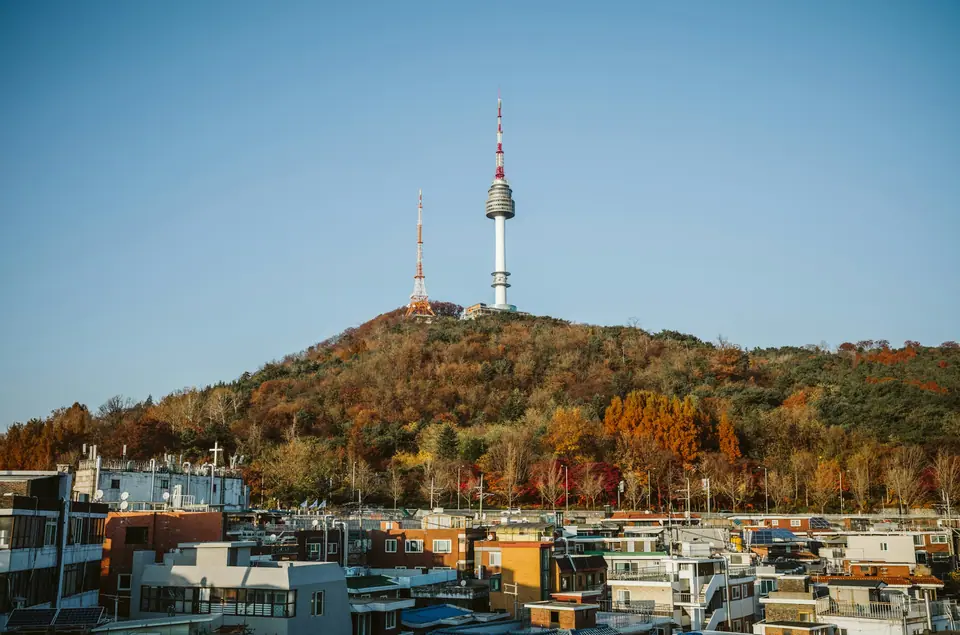
Autumn is the season many visitors pick, and the numbers support it. October averages highs of about 20°C and lows of about 11°C, and the summer rain has gone. In 2026 the Korea Tourism Organization's foliage map expected colour to peak in the Greater Seoul area in late October. Palace gardens, Namsan and Bukhansan National Park are the obvious places to see it in the city.
Nami Island, about an hour away by train, turns red and gold with ginkgo leaves in autumn. Our day trips guide explains how to get there by train and ferry. On autumn weekends, set off early.
Winter for food, markets and museums
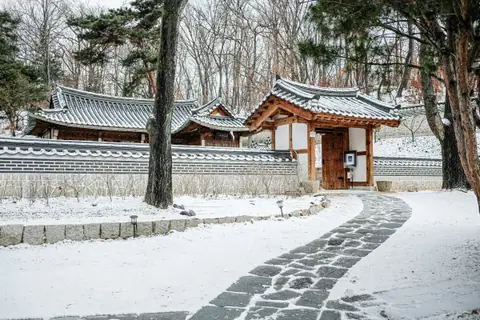
January is cold, with average highs around 2°C and lows near -5.5°C. It is also dry, with about 16.8 mm of precipitation in the month. Clear, cold days suit the observation decks of N Seoul Tower and short palace visits, broken up by warm meals in the markets. A bowl of noodle soup in Namdaemun's Kalguksu Alley or a mung bean pancake at Gwangjang Market tastes better in the cold, as our street food guide suggests.
Pack proper winter clothing for this season: a warm coat, a hat, gloves and shoes with a good grip. Indoor sights such as COEX, the museums and the shopping streets of Myeongdong keep you warm between walks.
Holidays and closing days
Korea's two big holidays, Seollal (Lunar New Year) and Chuseok (Korean Thanksgiving Day), follow the lunar calendar, so their dates move each year. Some sights close for them. The 3rd Tunnel at the DMZ, for example, closes on Mondays, weekday public holidays, Seollal and Chuseok.
The palaces follow their own pattern. Gyeongbokgung closes on Tuesdays, while Changdeokgung, Changgyeonggung and Deoksugung close on Mondays. When a closing day falls on a public holiday, the palace usually opens and closes on the next working day instead. Jongmyo allows visitors to walk on their own on national holidays, as well as on Saturdays and the last Wednesday of each month.
Choosing by what you want to do
- Walking and palaces: April or October, with mild days and cool evenings.
- Autumn colour: late October, after checking that year's foliage forecast.
- Markets, museums and food: January, if you pack for the cold.
- Least suitable for long outdoor days: July and August, when rain and humidity peak.
Check the forecast before you go
Weather can change these plans. The Korea Meteorological Administration publishes forecasts and earthquake information, and the UK government reminds visitors that the typhoon season can bring disruption. Look at the forecast a few days before you travel and again each morning in Seoul. Our three-day route includes indoor swaps for rainy days.
How Seoul compares with the rest of Korea
The Korea Meteorological Administration says the country's climate mixes continental and oceanic features. Outside the high mountains, annual mean temperatures range from 10 to 16°C, and the central region receives 1,100 to 1,400 mm of precipitation a year. Seoul sits near the top of that range for rain, with about 1,417.9 mm, because its summers are so wet. The practical result is simple: pack for a hot, wet summer or a properly cold winter.
Seasonal sights at their best
- Spring: the Secret Garden at Changdeokgung and the walk along Cheonggyecheon.
- Summer: the museums at Gyeongbokgung and the covered food alley at Gwangjang Market.
- Autumn: Bukhansan, Namsan, Nami Island and picnics in Mangwon Hangang Park.
- Winter: clear views from N Seoul Tower and long lunches in the markets.
Weather by month
Seoul is warmest in August, with average highs around 29°C, and coldest in January, when nights drop to about -7°C. July is the wettest month by rainfall (310 mm), with rain on about 18 days. For mild weather with fewer rainy days, aim for October.
| Month | Low | Range | High | Rain | Rainy days |
|---|---|---|---|---|---|
| Jan | -7°C | 2°C | 18 mm | 3 d | |
| Feb | -5°C | 5°C | 26 mm | 5 d | |
| Mar | 0°C | 12°C | 40 mm | 6 d | |
| Apr | 6°C | 18°C | 64 mm | 7 d | |
| May | 12°C | 23°C | 106 mm | 8 d | |
| Jun | 18°C | 27°C | 121 mm | 10 d | |
| Jul | 22°C | 29°C | 310 mm | 18 d | |
| Aug | 23°C | 29°C | 260 mm | 16 d | |
| Sep | 17°C | 25°C | 131 mm | 9 d | |
| Oct | 9°C | 19°C | 76 mm | 6 d | |
| Nov | 2°C | 11°C | 59 mm | 7 d | |
| Dec | -5°C | 3°C | 26 mm | 5 d |
Averages of daily values from 2015 to 2024. Rainy days are days with at least 1 mm of rain. Source: Open-Meteo · Compare destinations by month.
Where it is
- 1Seoul
- Seoul Gimpo International Airport (GMP) · about 17 km from Seoul in a straight line
- Directions in Google Maps
Stations and taxi ranks: OpenStreetMap. Airports: OurAirports. Distances are in a straight line.
Traveller tips
Real advice from people who have been to Seoul. Every tip is read by our team before it goes live.
No tips yet. Been here? Yours could be the first.
Thank you! Your tip will appear here after a quick review.
More in Seoul
Continue exploring Seoul with related neighbourhood, food, and planning guides