Cannaregio, Cicchetti Bars & Lagoon Islands (Murano & Burano)
Quiet canals in Cannaregio, how to order cicchetti and ombra, and island-hopping to Murano, Torcello and Burano.
Walk ten minutes north from the busy Strada Nova shopping street and the character of Venice changes completely. Stretching across the entire northern edge of the historic city under postcode 30121, Cannaregio (kahn-nah-REH-joh) is the most populous, residential sestiere in Venice. Nearly a third of the island city's inhabitants live along its quiet lanes. Its three long, parallel east-to-west canals (the Rio di Cannaregio, Rio della Sensa and Rio della Misericordia) lead out toward the northern lagoon rather than toward St Mark's Square. Because of that layout, excursion groups rarely wander up here. By day, its wide sunny stone embankments (fondamente) belong to schoolboats, artisan workshops and rowing clubs practising standing voga alla veneta. By dusk, they host the city's liveliest neighbourhood wine bars. Just north, the quay of Fondamente Nove serves as the waterbus gateway to Murano, Torcello and Burano.
The Venetian Ghetto (1516) and northern Cannaregio
Just off the broad Canale di Cannaregio (crossed by the 1580 Ponte delle Guglie and the three-arch Ponte dei Tre Archi) sits the historic Venetian Ghetto. On 29 March 1516, the Senate of the Venetian Republic decreed that the city's Jewish community must reside on a small island enclosed by canals. That island had previously housed the public copper foundries. In Venetian dialect, a foundry was called a geto (from getar, to cast molten metal), giving every modern language the word "ghetto". Two low bridged gates were locked each evening by guards paid for by the residents. Napoleon finally ordered the wooden gates removed in 1797.
Forbidden from expanding beyond the island's footprint as Ashkenazi, Sephardic and Levantine families arrived from Germany, Spain, Portugal and the Ottoman Empire, residents built upward. Dividing storeys with low ceilings, they created seven- and eight-storey residential towers. Those tall buildings still ring the quiet, plane-tree-shaded expanse of Campo del Ghetto Nuovo and neighbouring Campo del Ghetto Vecchio. Exterior facades had to remain austere brickwork under Republic law. Inside the upper floors, however, the community built five richly decorated synagogues (Scole) during the sixteenth and seventeenth centuries: the German (Scola Grande Tedesca, 1528), Canton, Italian, Levantine and Spanish synagogues. You can visit their gilded, lantern-lit interiors on guided tours organized by the Jewish Museum of Venice (Museo Ebraico di Venezia). Along the street of the Ghetto Vecchio, kosher bakeries bake traditional almond-and-candied-citron biscuits (impade) and dense fruit loaves (bisa).
Five minutes north across two parallel canals stands the fourteenth-century brick Gothic church of Madonna dell'Orto. This was the parish church of Jacopo Tintoretto, who lived around the corner on Fondamenta dei Mori (named after relief carvings of turbaned Levantine spice merchants). Inside the choir hang two towering canvases Tintoretto painted for his neighbours, The Worship of the Golden Calf and The Last Judgement, beside his family tomb in the right chapel.
How to do a Venetian cicchetti and ombra crawl
Running parallel between the Ghetto and Madonna dell'Orto, the sun-warmed canalside pavements of Fondamenta degli Ormesini and Fondamenta della Misericordia form the finest evening grazing strip in Venice. Only the historic market alleys behind Rialto in San Polo rival them for traditional counters. Between 18:00 and 20:30, step inside a wooden wine bar called a bacaro (BAH-kah-roh, plural bacari):
- Standing Counter Cicchetti & Ombra / Sit-Down Table Service. point to two or three small snacks (cicchetti, chee-KET-tee) inside the glass counter and drink your wine standing at the bar or along the canal wall. Standing service costs only a couple of euros per item with no cover charge (coperto), whereas requesting table service switches many bars to a higher sit-down menu tariff.
Order an ombra (literally "shadow", named after wine sellers in Piazza San Marco who moved their bench with the shadow of the Campanile to keep the wine cool) or a true Venetian spritz. Locals mix their spritz with dry prosecco, sparkling soda water and ruby-red Select bitter (created in Venice's Castello district in 1920) garnished with a large green olive. Classic cicchetti to look for on the counter include:
- Baccalà mantecato (bahk-kah-LAH mahn-teh-KAH-toh). air-dried Norwegian Lofoten cod (stoccafisso) soaked for days and poached in water and milk. Cooks whip it with extra-virgin olive oil into a snowy mousse served on grilled white polenta.
- Sarde in saor (SAHR-deh een sah-OR). fresh lagoon sardines fried in oil and layered for at least 24 hours with slow-braised white Chioggia onions, white wine vinegar, pine nuts and plump raisins. Venetian sailors originally invented this sweet-and-sour marinade to preserve fish on long voyages.
- Polpette (pohl-PET-teh) and Mezzo uovo con acciuga. crisp fried meatballs of minced beef, pork or tuna seasoned with garlic and parsley. Pair them with halves of hard-boiled egg topped with a salted Adriatic anchovy fillet.
Northern lagoon islands on ACTV Line 12: Murano, Torcello & Burano
Walk five minutes east from Madonna dell'Orto to the lagoon-facing dock of Fondamente Nove (floating pier A). Here you board ACTV Vaporetto Line 12 across the northern lagoon (postcodes 30141 and 30142, included in all 24-, 48-, 72-hour and 7-day ACTV time passes):
- Murano (postcode 30141, 10 minutes from Fondamente Nove). in 1291, the Venetian Republic ordered all glassblowing furnaces moved off the main wooden islands to Murano. That decree prevented city fires and guarded the secrets of crystal glass (cristallo), aventurine and millefiori canes. Skip touts offering "free factory tours" at the Colonna dock. Instead, disembark at Murano Museo or Murano Faro to visit the Museo del Vetro inside Gothic Palazzo Giustinian. Walk two minutes further to the twelfth-century Basilica dei Santi Maria e Donato to see its 1141 Byzantine mosaic pavement of peacocks and eagles.
- Torcello (30142, 30 minutes further on Line 12, or a 5-minute shuttle on Line 9 from Burano). before lunch on busy Burano, step onto tranquil, marsh-fringed Torcello, once a thriving lagoon port before silting channels drove residents to Venice. Walk ten minutes along the grassy canal past the eleventh-century church of Santa Fosca. Next door rises the Cathedral of Santa Maria Assunta, founded in 639 CE (Venice's oldest standing church). Inside, a twelfth-century Byzantine gold mosaic of the Virgin and Child (Madonna Hodegetria) faces a towering west-wall mosaic of the Last Judgement.
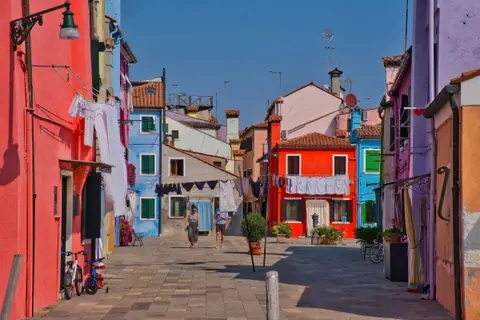
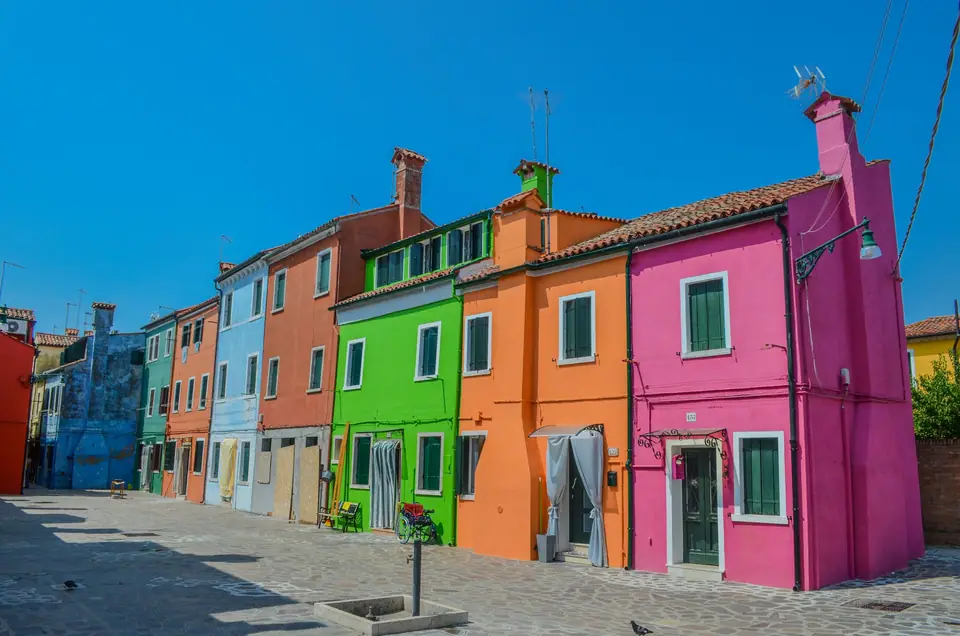
- Burano (30142). cross back to the fishing and needle-lace (merletto) island of Burano. Its two-storey cottages are painted in municipal-approved shades of magenta, cobalt blue, emerald green and ochre yellow so fishermen could spot their home canal through winter fog. Visit the Museo del Merletto on Piazza Baldassare Galuppi and sit down for a plate of risotto di gò (creamy risotto simmered in a rich broth of tiny lagoon goby fish). Pick up a bag of crunchy S-shaped butter biscuits called bussolà buranelli before catching Line 12 back to Fondamente Nove at sunset.
Where it is
- 1Venice and its Lagoon
- Venice Marco Polo Airport (VCE) · about 7 km from the site in a straight line
- Directions in Google Maps
Stations and taxi ranks: OpenStreetMap. Airports: OurAirports. Distances are in a straight line.
Traveller tips
Real advice from people who have been to Venice. Every tip is read by our team before it goes live.
No tips yet. Been here? Yours could be the first.
Thank you! Your tip will appear here after a quick review.
More in Venice
Continue exploring Venice with related neighbourhood, food, and planning guides