Venice
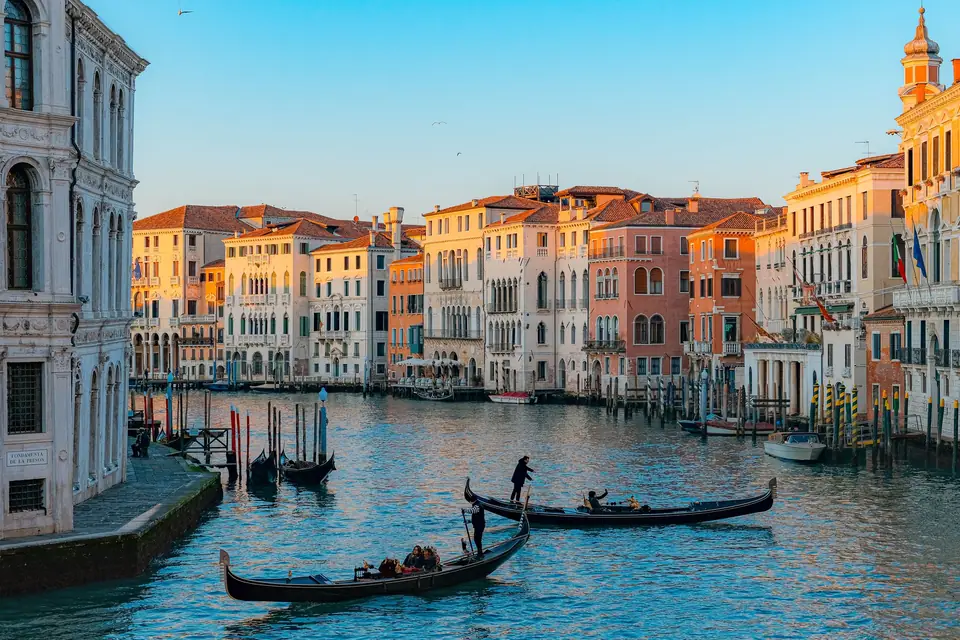
Built across 118 islands inside a crescent-shaped Adriatic lagoon and linked by more than 400 stone footbridges, the former Republic of Venice pairs Byzantine gold mosaics in St Mark's Basilica and Gothic marble palaces along the Grand Canal with quiet canalside cicchetti wine bars in Cannaregio, Dorsoduro and San Polo.
Quick decisions
How many days?
3 days. St Mark's Square and the Doge's Palace on Day 1, the Rialto Market, Frari and Dorsoduro on Day 2, and Murano, Torcello and Burano on Day 3. 4 days or more. add the Biennale venues in Castello and Giudecca using our 3-day Venice itinerary.
Where should I stay?
Dorsoduro (postcode 30123) or San Polo (30125). central, artistic and peaceful after dark. Cannaregio (30121). canalside wine bars and level walking from Santa Lucia train station. San Marco (30124). steps from the basilica, though busy at midday. Compare all six sestieri in our neighbourhood guide.
Do I need a car?
Never. Cars, mopeds and bicycles are banned throughout historic Venice. Every journey happens on foot or by boat; drivers leave vehicles in garages at Piazzale Roma (30135), Tronchetto or mainland Mestre (30170).
Best for
Early-morning walkers. mist-draped stone bridges and empty squares before day-trippers arrive. Art lovers. Bellini, Titian, Tintoretto and Veronese hanging inside the churches and confraternity halls they were painted for. Evening grazing. standing at wooden bacaro counters with cicchetti and a Select spritz.
Before you go
Access registration. on peak spring and summer days, day visitors register on the municipal portal, while overnight hotel guests claim a free exemption code. Waterbus passes. buy a 24-, 48-, 72-hour or 7-day ACTV pass rather than single tickets. Full rules sit in our practical Venice briefing.
Getting around
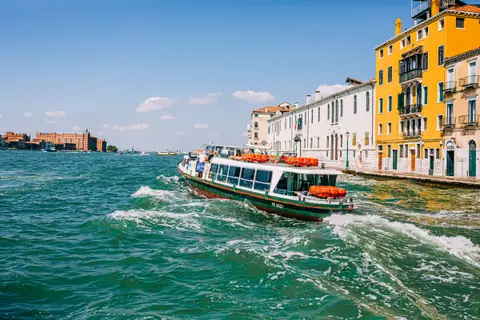
From Marco Polo Airport (VCE). ATVO and ACTV Line 5 buses reach Piazzale Roma in 20 minutes, while Alilaguna waterbuses cross the lagoon straight to central docks. In the city. ride ACTV vaporetti (Lines 1 and 2) and standing traghetto gondola ferries explained in our transport guide.
Overview
Venice makes geographical sense the moment you discard road-map habits and read it as a medieval maritime republic built facing the water. Protected from the open Adriatic Sea by the narrow sandy barrier islands of the Lido and Pellestrina, the historic city rests across 118 small islands inside a shallow, 550-square-kilometre lagoon. Millions of alder, oak and larch timber piles driven deep into compacted clay support the limestone foundations above. An inverted S-curve of deep water, the 3.8-kilometre Grand Canal (Canal Grande, kah-NAHL GRAHN-deh), divides the urban core into six historic administrative districts called sestieri (ses-TYEH-ree): Cannaregio (postcode 30121), Castello (30122) and San Marco (30124) on the northern and eastern bank; Dorsoduro (30123), San Polo (30125) and Santa Croce (30135) on the southern and western curve. Only four bridges span the Grand Canal on foot.
Between mid-morning and mid-afternoon, excursion crowds funnel along the signposted corridor linking Santa Lucia railway station, the Rialto Bridge and Piazza San Marco. Step two canals sideways into residential Castello or northern Cannaregio, or sleep on the islands so you have the dawn embankments and lamp-lit squares to yourself, and the city slows to walking pace. Start planning with our Venice travel guide, check seasonal tides and Biennale dates in best time to visit Venice, and pack bridge-friendly shoes with what to wear in Venice.
Getting there
Mainline Frecciarossa and Italo high-speed trains cross the four-kilometre Ponte della Libertà causeway from mainland Mestre to terminate directly on the Grand Canal at Venezia Santa Lucia station (postcode 30121). Road traffic, airport coaches and municipal buses stop five minutes away across the glass-stepped Costituzione Bridge at Piazzale Roma (30135), the absolute limit for wheeled vehicles. From Venice Marco Polo Airport (VCE) on the northern mainland edge of the lagoon, you can reach Piazzale Roma in 20 minutes by ATVO or ACTV Line 5 coach, or arrive directly by boat aboard an Alilaguna airport waterbus or private water taxi. Compare every transfer and ACTV pass rule in how to get to Venice.
Where to stay
Where you stay in Venice dictates how many stepped stone bridges you climb with luggage and how peaceful your streets feel after dusk. Choosing a hotel within two or three level blocks of a vaporetto pier or near Santa Lucia station in Cannaregio spares your arms on arrival. Dorsoduro and San Polo offer the strongest balance of sunny waterfront promenades, artisan squares and central walking, while eastern Castello suits Biennale visitors. Compare all six districts and their postal codes in where to stay in Venice.
Things to do
Anchor your visit by booking an early slot at St Mark's Basilica and the Doge's Palace, riding Vaporetto Line 1 down the full sweep of the Grand Canal, admiring Titian and Tintoretto inside the Frari and Scuola Grande di San Rocco, and boarding Line 12 from Fondamente Nove to the northern lagoon islands of Murano, Torcello and Burano. See the complete ranking in best things to do in Venice and link each stop with our 3-day Venice itinerary.
Food and drink
Venetian cooking revolves around shallow lagoon habitats, Adriatic seafood and the standing wine bar counter. Begin the evening at a traditional bacaro (BAH-kah-roh) ordering small plates of cicchetti (chee-KET-tee): whipped Norwegian stockfish mousse (baccalà mantecato) on grilled white polenta, sweet-and-sour marinated sardines (sarde in saor) with slow-cooked onions, pine nuts and raisins, and crisp beef or tuna meatballs (polpette). Pair them with an ombra (small glass of house Veneto wine) or a Venetian spritz mixed with ruby-red Select bitter before sitting down for cuttlefish-ink risotto (risotto al nero di seppia) or lagoon goby risotto on Burano. Discover our favourite counters in our Cannaregio, cicchetti and islands guide.
Culture
Founded by Roman mainlanders fleeing Lombard and Hunnic invasions onto marshy lagoon shoals in the fifth and sixth centuries, the Most Serene Republic of Venice (La Serenissima) governed maritime trade between western Europe, Constantinople and the eastern Mediterranean until Napoleon ended its independence in 1797. That thousand-year bridge to Byzantium and the Islamic world shaped everything from the pointed ogee arches of Venetian Gothic palaces and the glass furnaces of Murano to the colour-rich Renaissance painting school of Giovanni Bellini, Giorgione, Titian, Veronese and Jacopo Tintoretto.
Weather by month
Venice is warmest in July, with average highs around 29°C, and coldest in January, when nights drop to about 1°C. November is the wettest month by rainfall (89 mm), with rain on about 9 days. For mild weather with fewer rainy days, aim for September.
| Month | Low | Range | High | Rain | Rainy days |
|---|---|---|---|---|---|
| Jan | 1°C | 7°C | 47 mm | 6 d | |
| Feb | 2°C | 10°C | 54 mm | 6 d | |
| Mar | 6°C | 14°C | 56 mm | 7 d | |
| Apr | 9°C | 18°C | 68 mm | 8 d | |
| May | 14°C | 22°C | 79 mm | 9 d | |
| Jun | 18°C | 27°C | 72 mm | 7 d | |
| Jul | 20°C | 29°C | 58 mm | 6 d | |
| Aug | 20°C | 29°C | 66 mm | 6 d | |
| Sep | 16°C | 24°C | 78 mm | 7 d | |
| Oct | 11°C | 19°C | 86 mm | 8 d | |
| Nov | 6°C | 13°C | 89 mm | 9 d | |
| Dec | 2°C | 8°C | 58 mm | 7 d |
Averages of daily values from 2015 to 2024. Rainy days are days with at least 1 mm of rain. Source: Open-Meteo · Compare destinations by month.
Venice on the map
Every place we cover in Venice. Tap a category or pin to explore.
In-depth Venice guides
Browse the guides grouped by topic: sights, neighbourhoods, food, transport, day trips and trip planning.
Sights, Landmarks & Parks
Key monuments, viewpoints, museums and nature trails.
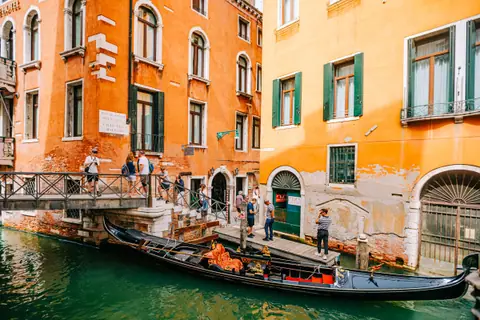 Best Things to Do in Venice: Palaces, Mosaics & CanalsTwelve essential Venice experiences pairing early-morning masterpieces with quiet afternoon canals and lagoon boats.
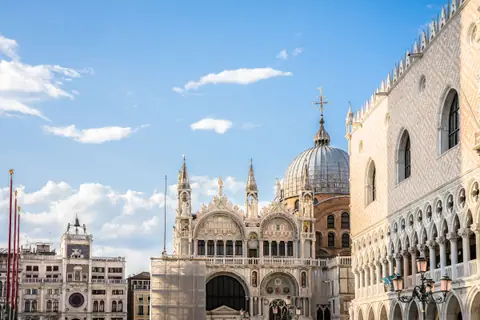 St Mark's Square, the Basilica and the Doge's Palace GuideByzantine mosaics, the Doge's Palace council halls, the Bridge of Sighs and how to beat the San Marco queues.
Neighbourhoods & Where to Stay
Districts, historic quarters and the best bases for your stay.
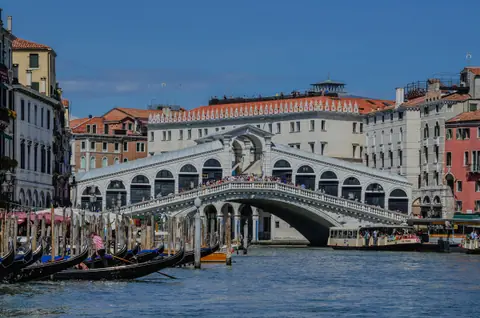 The Grand Canal, Rialto Market and Dorsoduro Walking GuideGrand Canal palace architecture, the morning Rialto Market, San Polo's great churches and Dorsoduro's galleries.
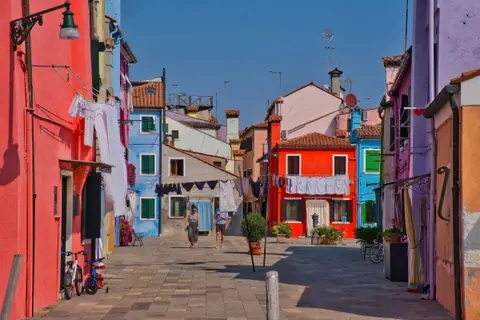 Where to Stay in Venice: All 6 Sestieri ComparedAll six Venetian districts and Giudecca compared for bridge-free arrival, boat access and quiet nights.
Food & Drink
Local dishes, markets, cafés and dining districts.
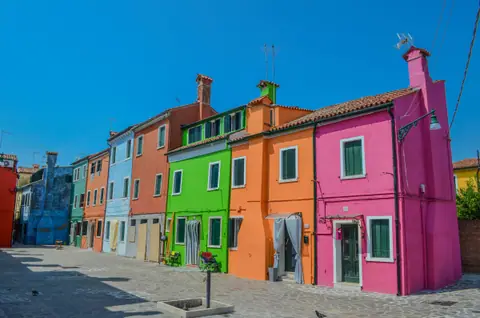
Getting Around & Arrival
Airport transfers, public transit, passes and driving rules.
Trip Planning & Itineraries
When to visit, what to pack and day-by-day routes.
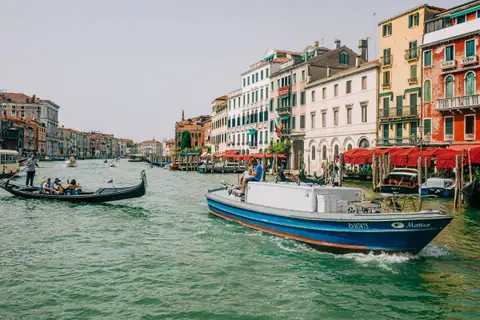 Venice: Practical Rules Before You GoLagoon access rules, ACTV waterbus passes, stepped bridge etiquette and how Venice's district numbering works.
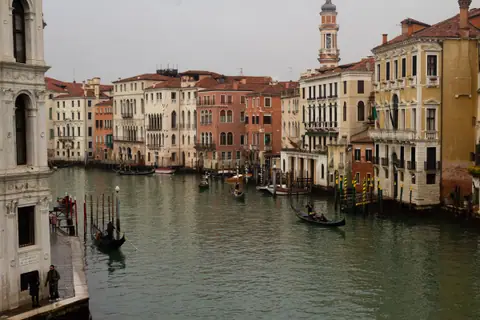 Best Time to Visit Venice: Seasons, Biennale & Acqua AltaClear spring and autumn light, Biennale exhibition months, Carnival masks and how Venice manages high tides.
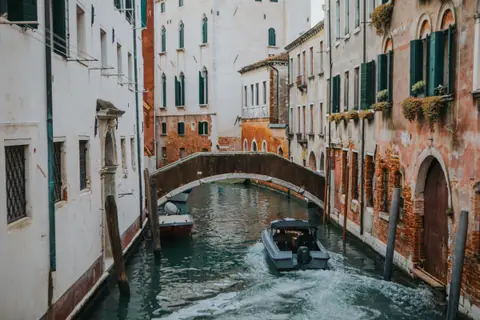 What to Wear in Venice: Bridge Shoes, Basilica Rules & LayersNon-slip shoes for stepped Istrian stone bridges, compact luggage for waterbuses and St Mark's Basilica rules.
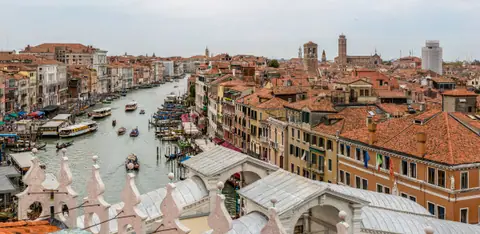 3 Days in Venice Itinerary: Canals, Palaces & Lagoon IslandsThree unhurried days pairing early-morning icons around San Marco and Rialto with Dorsoduro, Murano, Burano and Cannaregio.
Need your embassy or consulate in Italy? See embassies and consulates in Italy.
Reviews
Log in to write a review.
No reviews yet.