What to Wear in Venice: Bridge Shoes, Basilica Rules & Layers
Non-slip shoes for stepped Istrian stone bridges, compact luggage for waterbuses and St Mark's Basilica rules.
Short answer. wear broken-in shoes with grippy rubber soles for Venice's 400 stepped stone bridges. Pack a single cabin-sized bag you can carry up stairs by hand. Carry a light scarf or overshirt to cover shoulders inside churches, and leave large backpacks at your hotel before visiting St Mark's Basilica.
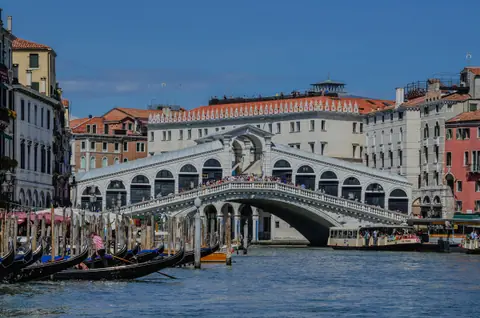
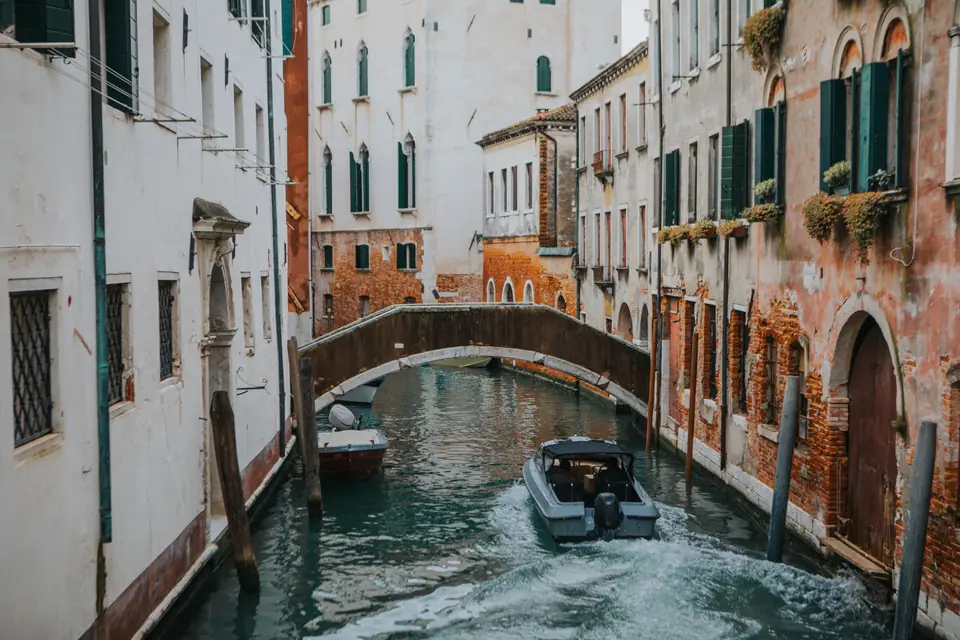
Because Venice is a 100 percent pedestrian and boat city, your clothing and luggage choices have a direct physical impact on your day. On a typical sightseeing loop from Cannaregio through Rialto and Dorsoduro to San Marco, you will walk 14,000 to 18,000 steps. Along the way you will climb fifty or more arched bridges paved in smooth white Istrian stone (pietra d'Istria) and dark grey volcanic trachyte slabs quarried in the Euganean Hills.
Footwear for Istrian stone bridges and floating docks
Non-porous Istrian limestone resisted salt water for a thousand years, which is why Venetian builders used it on every bridge edge, staircase and doorway threshold. Over centuries of footsteps, however, those white stone risers polish to a satin sheen. They turn slick whenever morning lagoon mist, drizzle or winter frost settles on the steps. Boarding an ACTV vaporetto also requires stepping across a metal gangplank onto a floating pontoon that rocks in the wake of passing boats.
- Rubber-Soled Trainers and Lugged Ankle Boots / Smooth Leather Soles and Stiletto Heels. cushioned walking trainers with siped rubber treads, crepe-soled loafers or waterproof Chelsea boots grip wet Istrian stone and flexing boat ramps securely all day. Smooth leather-soled dress shoes slide dangerously on polished bridge steps, while narrow stiletto heels wedge between uneven trachyte paving blocks (masegni, mah-SEN-yee).
Bring two pairs of broken-in walking shoes so you can alternate pairs each day. Even dry stone pavements fatigue thin soles after five hours of walking between parish churches and museums.
Luggage strategy: why smaller bags win on bridges
Unless you book an expensive private water taxi from door to door, you will carry your own luggage from the train platform, bus terminal or nearest vaporetto pier. Even hotels near a dock usually require crossing one to four stepped bridges. Only a few major bridges fit temporary wheeled ramps during autumn marathon weeks; historic neighbourhood bridges have steps only.
Pack a cabin-sized two-wheel or four-wheel spinner case under 12 kilograms or a structured travel backpack that you can lift cleanly by its top handle for thirty seconds at a time. Dragging a heavy 25-kilogram hard-shell trunk step by step over historic stone bridges snaps spinner wheels and wakes residents in quiet alleys. Standard ACTV waterbus tickets include one piece of luggage up to 150 centimetres in combined dimensions (length + width + height) plus a small handbag. Oversized trunks crowd the narrow boarding deck and require an extra luggage ticket. If you arrive in Venice with heavy cases during a longer Italian rail tour, use the staffed left-luggage offices (Deposito Bagagli) on Platform 1 at Venezia Santa Lucia station or at Piazzale Roma. Pack an overnight bag for your island hotel, as explained in our transport guide.
St Mark's Basilica dress code and strict bag ban
Patriarchal St Mark's Basilica and Venice's working parish and monastic churches enforce traditional Italian church dress and security rules at the door. These rules apply at the Basilica dei Frari, Santi Giovanni e Paolo, Santa Maria della Salute, San Giorgio Maggiore and Il Redentore:
- Shoulders and knees covered. sleeveless vests, strapless tops, low-cut beachwear and short shorts or skirts above the knee are turned away by doorway stewards. In summer, wear breathable linen trousers, a midi skirt or knee-length shorts. Keep a lightweight cotton scarf or linen overshirt in your pocket to slip over bare shoulders before entering.
- No backpacks or large bags inside St Mark's Basilica. to protect the fragile eleventh-century marble wainscot and gold mosaics along narrow aisles, security staff forbid all backpacks, rucksacks, camera bags and large tote bags inside the basilica. Leave daypacks in your hotel room for your morning San Marco slot and carry only a small cross-body pouch, phone and wallet.
Season-by-season layering for the lagoon microclimate
Because open water surrounds every district, wind chill on vaporetto decks and outer promenades makes spring, autumn and winter feel noticeably cooler than inland Veneto towns. You feel that breeze most strongly along the Zattere, Riva degli Schiavoni and Fondamente Nove. In July and August, high lagoon humidity amplifies afternoon heat. Match your wardrobe to our seasonal weather guide:
- Spring (March to May). pack breathable cotton or merino base layers, a mid-weight jumper or cardigan, and a windproof trench coat or shell jacket for boat rides to Murano and Burano. Keep a compact folding umbrella in your coat pocket for passing April showers.
- Summer (June to August). bring airy linen or loose cotton shirts, UV sunglasses and a wide-brimmed hat that stays secure in a boat breeze. Pack a small bottle of DEET or icaridin insect repellent for warm dusk dinners near quiet garden canals.
- Autumn (September to November). dress in removable layers for warm sunny middays and cool misty evenings. In late October and November, pack waterproof GORE-TEX walking shoes or ankle boots. If a medium acqua alta tide wets the lowest corners of San Marco before the raised metal walkways clear, street vendors sell disposable knee-high plastic overboots for a few euros.
- Winter (December to February). damp lagoon air at 3°C to 8°C penetrates thin wool coats. Pack thermal underlayers, a knee-length insulated down or weatherproof wool coat, a warm scarf, hat, gloves and thick wool socks for unheated stone church floors.
Evening style for bacari, restaurants and Teatro La Fenice
Venetian evening style is smart-casual and understated rather than beach-resort casual. For standing at canalside bacari in Cannaregio or dining at a neighbourhood osteria, wear neat dark jeans or chinos with a collared linen shirt or knit top. Clean loafers or smart trainers fit right in everywhere. If you book opera or a symphonic concert inside the gilded boxes of Teatro La Fenice in San Marco (postcode 30124), dress up with a tailored jacket or cocktail dress to match the velvet-and-gold auditorium.
Weather by month
Venice is warmest in July, with average highs around 29°C, and coldest in January, when nights drop to about 1°C. November is the wettest month by rainfall (89 mm), with rain on about 9 days. For mild weather with fewer rainy days, aim for September.
| Month | Low | Range | High | Rain | Rainy days |
|---|---|---|---|---|---|
| Jan | 1°C | 7°C | 47 mm | 6 d | |
| Feb | 2°C | 10°C | 54 mm | 6 d | |
| Mar | 6°C | 14°C | 56 mm | 7 d | |
| Apr | 9°C | 18°C | 68 mm | 8 d | |
| May | 14°C | 22°C | 79 mm | 9 d | |
| Jun | 18°C | 27°C | 72 mm | 7 d | |
| Jul | 20°C | 29°C | 58 mm | 6 d | |
| Aug | 20°C | 29°C | 66 mm | 6 d | |
| Sep | 16°C | 24°C | 78 mm | 7 d | |
| Oct | 11°C | 19°C | 86 mm | 8 d | |
| Nov | 6°C | 13°C | 89 mm | 9 d | |
| Dec | 2°C | 8°C | 58 mm | 7 d |
Averages of daily values from 2015 to 2024. Rainy days are days with at least 1 mm of rain. Source: Open-Meteo · Compare destinations by month.
Where it is
- 1Venice
- Venice Marco Polo Airport (VCE) · about 8 km from Venice in a straight line
- Directions in Google Maps
Stations and taxi ranks: OpenStreetMap. Airports: OurAirports. Distances are in a straight line.
Traveller tips
Real advice from people who have been to Venice. Every tip is read by our team before it goes live.
No tips yet. Been here? Yours could be the first.
Thank you! Your tip will appear here after a quick review.
More in Venice
Continue exploring Venice with related neighbourhood, food, and planning guides