Washington DC
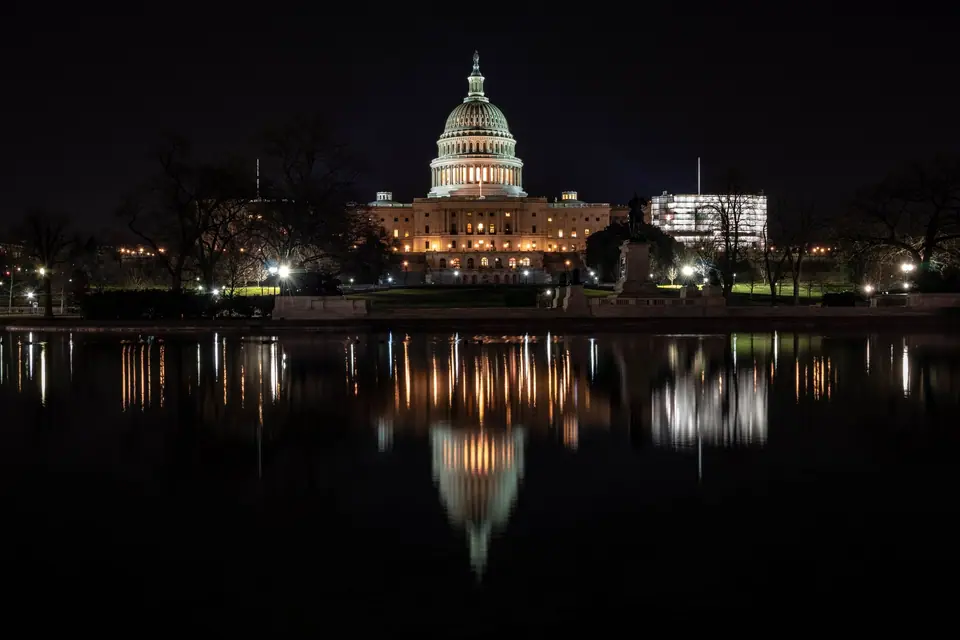
Where Pierre Charles L'Enfant's 1791 avenues converge on the two-mile National Mall, pairing 17 free Smithsonian museums, the 555-foot Washington Monument, and the US Capitol dome with historic brick rowhouses in Georgetown, Dupont Circle, and Capitol Hill.
Quick decisions
How many days?
3 days: follow our 3-day itinerary across the National Mall memorials, three Smithsonian museums, Capitol Hill, Arlington, and Georgetown. 4 to 5 days: add Old Town Alexandria, Mount Vernon, Baltimore, or Annapolis.
Where should I stay?
Penn Quarter: immediate walks to the Mall. Dupont Circle & Logan Circle: Victorian rowhouses and Red Line trains. Capitol Hill: quiet 19th-century brick streets. Georgetown: 1751 Federal streets without a Metro stop. Compare bases in our where to stay guide.
Do I need a car?
No. The six WMATA Metrorail lines, Metrobus routes, and Capital Bikeshare docks connect the monument core and historic neighbourhoods, while downtown parking is costly and scarce.
Best for
Free museums: 17 Smithsonian venues plus the National Gallery of Art. Civic architecture: the US Capitol, Library of Congress, and marble memorials. Neighbourhood dining: U Street, Shaw, Eastern Market, and The Wharf.
Before you go
ESTA & passes: Visa Waiver travellers need an approved ESTA 72 hours ahead. Reserve free timed passes 30 days ahead for the African American history museum, Washington Monument, US Capitol, and Library of Congress.
Getting around
Tap a contactless bank card or mobile SmarTrip wallet to enter and exit WMATA Metrorail from Reagan National (DCA) and Dulles (IAD); note that the old DC Circulator bus permanently closed on 31 December 2024.
Continue your trip
Amtrak Northeast Corridor trains from 1907 Washington Union Station reach Baltimore in 35 minutes, Philadelphia in 95 minutes, and New York Penn Station in 2 hours 45 minutes on the high-speed Acela.
Overview
Established along the Potomac River under the Residence Act of 16 July 1790 and laid out in 1791 by French-born engineer Pierre Charles L'Enfant, Washington, DC (the District of Columbia) was built from scratch as the ceremonial seat of the United States government. Across its two-mile central lawn from the 288-foot cast-iron dome of the US Capitol to the 1922 Doric temple of the Lincoln Memorial, the L'Enfant grid and 1910 Height of Buildings Act preserve wide horizontal sightlines. What surprises new visitors is how much of the capital is completely free. All 17 local Smithsonian Institution museums and galleries, the National Zoo, the National Gallery of Art, the US Capitol tour, and the 1897 Library of Congress charge zero admission.
Beyond the marble monuments, the 68.34-square-mile District unfolds into distinct residential neighbourhoods where more than 700,000 Washingtonians live. Federal-era brick townhouses line 1751 Georgetown above the Chesapeake and Ohio Canal, painted Victorian rowhouses frame Capitol Hill's 1873 Eastern Market and Logan Circle, live jazz and Ethiopian dining fill the U Street Corridor, and oyster piers line the one-mile Southwest Waterfront at The Wharf. Start with our top things to do in Washington DC and our seasonal weather and cherry blossom guide.
Getting there
Three airports serve the capital: Reagan National (DCA) sits 4 miles south on the WMATA Blue and Yellow Lines (15 minutes to downtown), Washington Dulles (IAD) lies 26 miles west on the WMATA Silver Line (53 minutes to Metro Center), and Baltimore/Washington International (BWI) connects via MARC Penn Line and Amtrak to Washington Union Station in 35 minutes. Read our arriving in Washington DC guide for full transit rules.
Where to stay
Choose a hotel within a 10-minute walk of a WMATA Metrorail station and verify the two-letter quadrant suffix (NW, NE, SE, SW) on every address. Penn Quarter places you steps from the Mall, Dupont Circle and Logan Circle offer leafy dining streets, Capitol Hill suits train travellers, and The Wharf brings waterfront views. Compare each base in our where to stay guide.
Things to do
Link the Washington Monument, World War II Memorial, Vietnam Veterans Wall, Lincoln Memorial, and Tidal Basin on our National Mall walking route, navigate timed-entry passes in our Smithsonian and National Gallery guide, check what to wear for Capitol security, and add Old Town Alexandria and Mount Vernon.
Food and drink
Step off the National Mall (where the Mitsitam Native Foods Cafe at the American Indian Museum and Sweet Home Café at NMAAHC lead museum dining) to try DC's signature spicy pork-and-beef half-smoke sausage at Ben's Chili Bowl (founded 1958 on U Street NW), fried chicken wings with sweet-tangy mambo sauce, Chesapeake Bay jumbo lump crab cakes at 1873 Eastern Market, and Ethiopian injera platters around Shaw.
Culture
Created as a federal district separate from any state, Washington moved its government here from Philadelphia in 1800 and rebuilt the Capitol and White House after British troops burned both on 24 August 1814. Under the 1961 Twenty-Third Amendment and 1973 Home Rule Act, DC residents cast three electoral votes for President and elect a Mayor, yet still lack voting representation in Congress, inspiring the local licence plate motto "End Taxation Without Representation".
Weather by month
Washington DC is warmest in July, with average highs around 31°C, and coldest in January, when nights drop to about -2°C. July is the wettest month by rainfall (176 mm), with rain on about 14 days. For mild weather with fewer rainy days, aim for October.
| Month | Low | Range | High | Rain | Rainy days |
|---|---|---|---|---|---|
| Jan | -2°C | 6°C | 84 mm | 9 d | |
| Feb | -1°C | 9°C | 85 mm | 10 d | |
| Mar | 2°C | 13°C | 95 mm | 10 d | |
| Apr | 8°C | 19°C | 94 mm | 11 d | |
| May | 13°C | 24°C | 128 mm | 13 d | |
| Jun | 18°C | 29°C | 127 mm | 13 d | |
| Jul | 21°C | 31°C | 176 mm | 14 d | |
| Aug | 20°C | 30°C | 158 mm | 14 d | |
| Sep | 17°C | 26°C | 131 mm | 11 d | |
| Oct | 11°C | 20°C | 91 mm | 9 d | |
| Nov | 5°C | 14°C | 83 mm | 8 d | |
| Dec | 1°C | 9°C | 105 mm | 10 d |
Averages of daily values from 2015 to 2024. Rainy days are days with at least 1 mm of rain. Source: Open-Meteo · Compare destinations by month.
Washington DC on the map
Every place we cover in Washington DC. Tap a category or pin to explore.
In-depth Washington DC guides
Browse the guides grouped by topic: sights, neighbourhoods, food, transport, day trips and trip planning.
Sights, Landmarks & Parks
Key monuments, viewpoints, museums and nature trails.
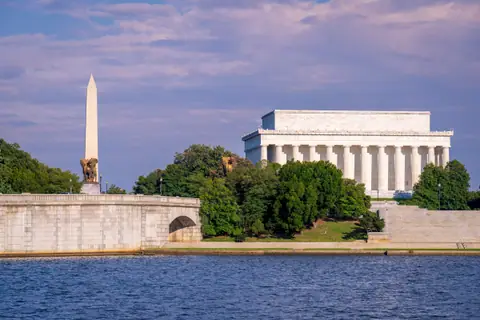 Best Things to Do in Washington DC: Smithsonian Museums, US Capitol, Library of Congress, Monuments & GeorgetownTwelve essential memorials, museums, and historic quarters across the capital, plus two tourist traps we skip.
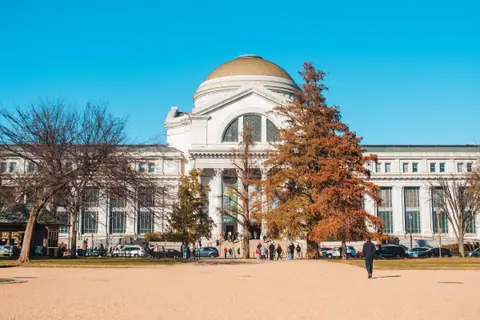 Smithsonian Museums & National Gallery Guide: Mandatory Timed Passes, Hope Diamond, Air & Space & Udvar-HazyWhich free museums require advance timed passes, what not to miss inside each, and how to reach Udvar-Hazy.
Neighbourhoods & Where to Stay
Districts, historic quarters and the best bases for your stay.
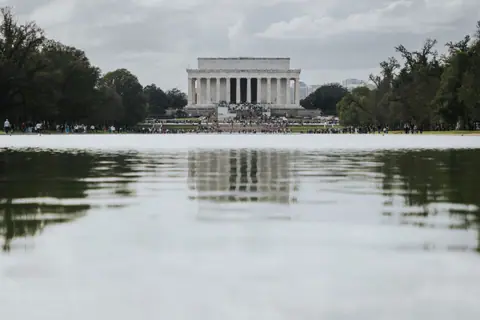 National Mall & Tidal Basin Walk: Washington Monument, WWII, Lincoln, Vietnam, MLK & Jefferson MemorialsAn 8-stop east-to-west route from the Capitol and Washington Monument to the Lincoln Memorial and Tidal Basin.
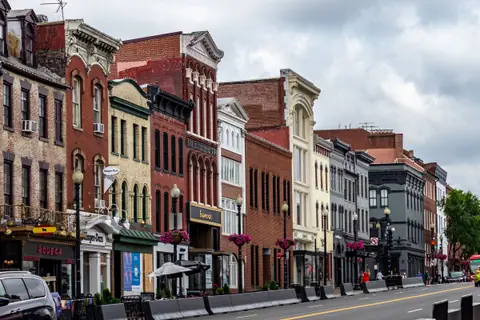 Where to Stay in Washington DC: Penn Quarter, Dupont Circle, Georgetown, Capitol Hill & The Wharf ComparedHow Penn Quarter, Dupont Circle, Capitol Hill, Georgetown, and The Wharf compare on walkability, Metro lines, and evening life.
Getting Around & Arrival
Airport transfers, public transit, passes and driving rules.
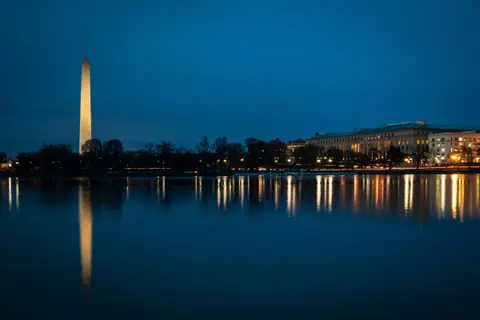
Day Trips & Excursions
Easy half-day and full-day trips from the city.
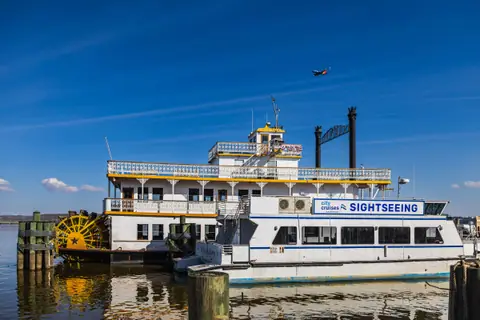
Trip Planning & Itineraries
When to visit, what to pack and day-by-day routes.
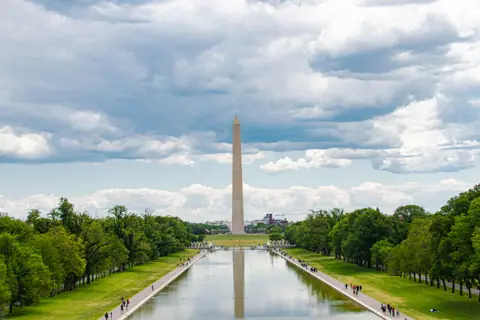 Washington DC Orientation: L'Enfant's Four Quadrants, National Mall Axis, Height Limit & Free Museum RulesHow L'Enfant's four quadrants, the 1910 height limit, and timed-entry passes work on the ground.
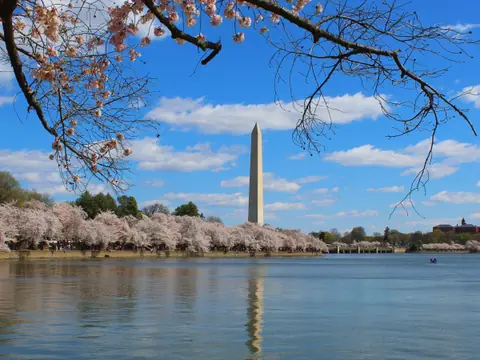 Best Time to Visit Washington DC: NOAA Climate Normals, Tidal Basin Cherry Blossoms & Autumn FoliageWhen to catch the 1912 Tidal Basin cherry blossoms or crisp October foliage, and how to handle July humidity.
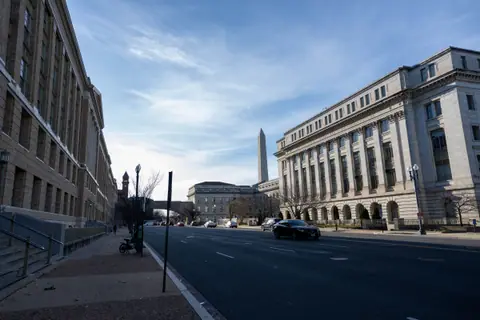 What to Wear in Washington DC: Walking Shoes for Marble Monuments, Humid Summers & Capitol Security RulesHow to dress for 8-mile marble and gravel walks, humid July afternoons, and strict Capitol Hill security scanners.
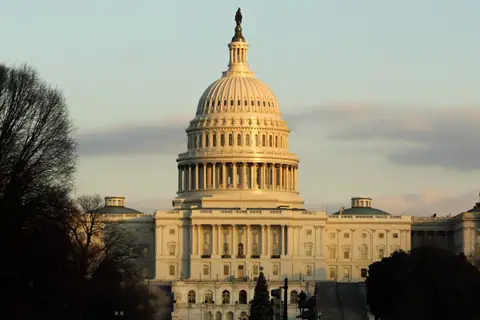 Washington DC 3-Day Itinerary: Capitol Hill, National Mall Monuments, Smithsonian Highlights & GeorgetownA balanced three-day route grouping the western memorials, Capitol Hill, flagship Smithsonians, Arlington, and Georgetown.
Need your embassy or consulate in United States? See embassies and consulates in United States.
Reviews
Log in to write a review.
No reviews yet.