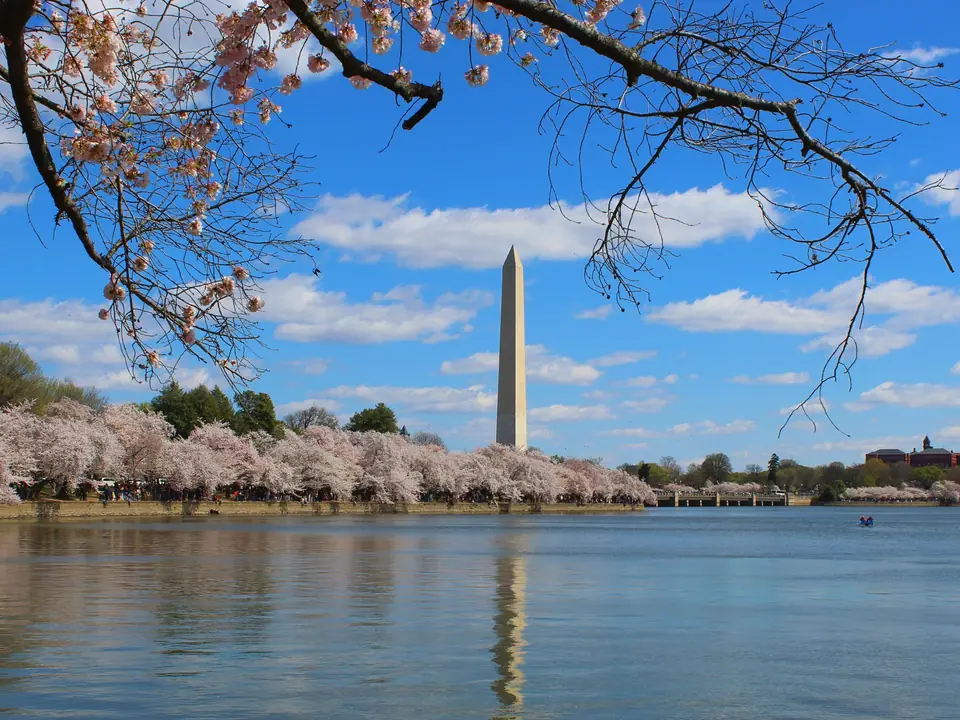
Best Time to Visit Washington DC: NOAA Climate Normals, Tidal Basin Cherry Blossoms & Autumn Foliage
When to catch the 1912 Tidal Basin cherry blossoms or crisp October foliage, and how to handle July humidity.
Short answer. Late September through early November is our favourite window to visit Washington DC. It pairs 20°C to 26°C (68°F to 79°F) afternoons and golden autumn foliage with shorter museum queues than spring. Late March to mid-April delivers the famous Tidal Basin cherry blossom display, though it coincides with the year's highest hotel rates and nationwide school field trips.
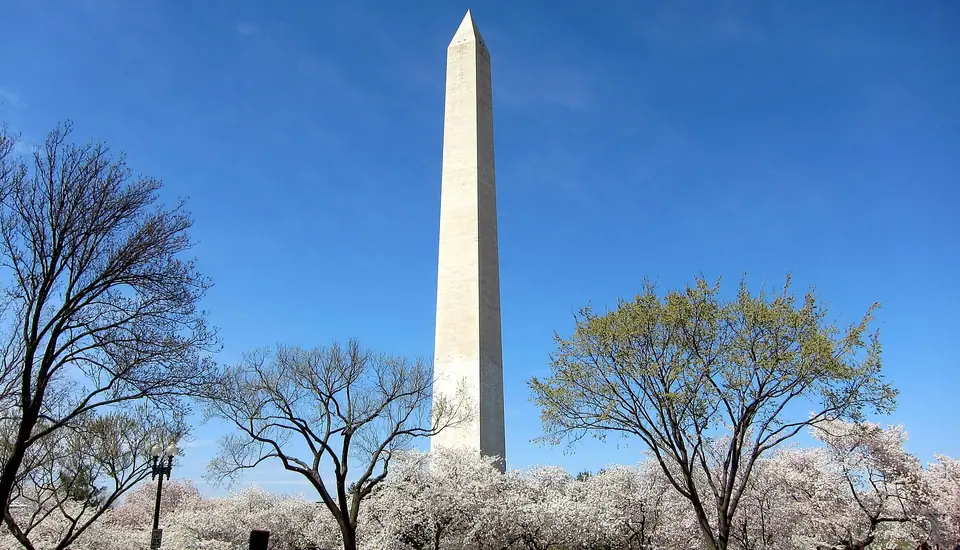
NOAA climate normals: Washington DC's four seasons explained
Positioned along the tidal Potomac River at 38.9° N latitude, Washington DC lies in the humid subtropical climate zone (Köppen Cfa). Meteorological normals recorded by the National Oceanic and Atmospheric Administration (NOAA) at Reagan National Airport (DCA) and 2015 to 2024 daily averages show four distinct seasons:
- Spring (March to May, Highs 13.1°C to 23.6°C / 56°F to 74°F). March starts brisk with an average high of 13.1°C and an overnight low of 2.3°C (36°F). Temperatures climb quickly in April (high 19.0°C / 66°F, low 7.7°C / 46°F) and May (high 23.6°C / 74°F, low 13.3°C / 56°F). Rainfall averages 94 to 95 mm across 10 to 11 wet days in March and April, rising to 128 mm in May.
- Summer (June to August, Highs 28.7°C to 31.2°C / 84°F to 89°F). Warm, muggy air rolls up the Chesapeake and Potomac valleys. July is both the warmest and wettest month of the year. Daytime highs average 31.2°C (88°F to 89°F) with a warm overnight low of 21.3°C (70°F). July brings 176 mm (6.9 inches) of rain across 14.4 wet days, mostly during late-afternoon convective thunderstorms. Washington records an average of 37 days annually at or above 32.2°C (90°F), with morning relative humidity between 65% and 75%. June averages 28.7°C and August averages 29.7°C (158 mm rain).
- Autumn (September to November, Highs 26.3°C down to 13.7°C / 79°F to 57°F). Summer humidity breaks in mid-September (high 26.3°C, low 17.2°C). October delivers crisp, sunny walking weather with an average high of 20.4°C (69°F), a low of 11.0°C (52°F), and 8.8 rainy days (91 mm). November is the driest month by rain frequency, averaging a high of 13.7°C (57°F), a low of 4.5°C (40°F), and 7.9 wet days (83 mm).
- Winter (December to February, Highs 6.4°C to 9.2°C / 44°F to 49°F). Cold but rarely severe. January is the coldest month, with an average daytime high of 6.4°C (44°F) and an overnight low of -2.0°C (28°F). January records 84 mm of precipitation over 9.4 wet days. Annual snowfall averages 13.7 inches (35 cm), falling mostly in January and February.
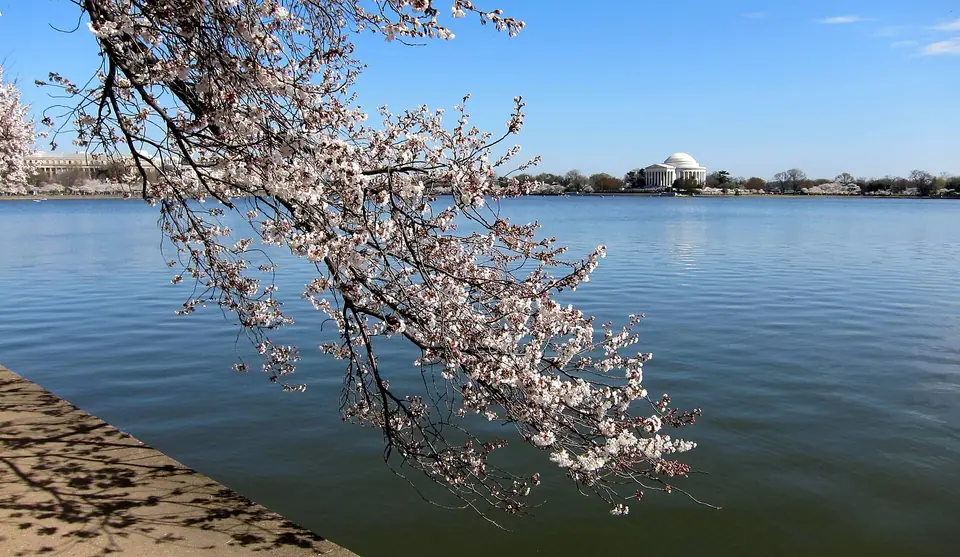
The Tidal Basin cherry blossoms: 1912 Tokyo gift and peak bloom
Washington's signature spring tradition began on 27 March 1912. On that morning, First Lady Helen Herron Taft and Viscountess Chinda planted the first two Yoshino cherry trees on the northern bank of the Tidal Basin. Those trees arrived as a gift of 3,020 trees across 12 varieties from Mayor Yukio Ozaki of Tokyo. Another 3,800 trees were gifted in 1965 to First Lady Lady Bird Johnson. Today around 3,700 cherry trees border the 107-acre Tidal Basin, East Potomac Park (Hains Point), and the Washington Monument grounds. Roughly 70% are pale-pink single-blossom Yoshino trees, while 13% are deep-pink double-blossom Kwanzan trees that open 10 to 14 days after the Yoshino peak.
The National Park Service defines Peak Bloom as the day when 70% of the Tidal Basin's Yoshino blossoms are open. Arborists issue the annual spring forecast in early March. Across more than a century of records, peak bloom has arrived as early as 15 March (1990) and 17 March (2024), and as late as 18 April (1958). The long-term average lands between 28 March and 4 April, while the four-week National Cherry Blossom Festival draws over 1.5 million visitors. To photograph the blossoms around the Tidal Basin memorials without dense crowds, arrive at sunrise between 06:30 and 08:00 via Smithsonian or L'Enfant Plaza Metro Station. From May 2024 through 2027, the National Park Service is rebuilding 4,800 linear feet of sinking Tidal Basin seawalls in a 113-million-USD project. Short waterside path sections follow signed detours during construction.
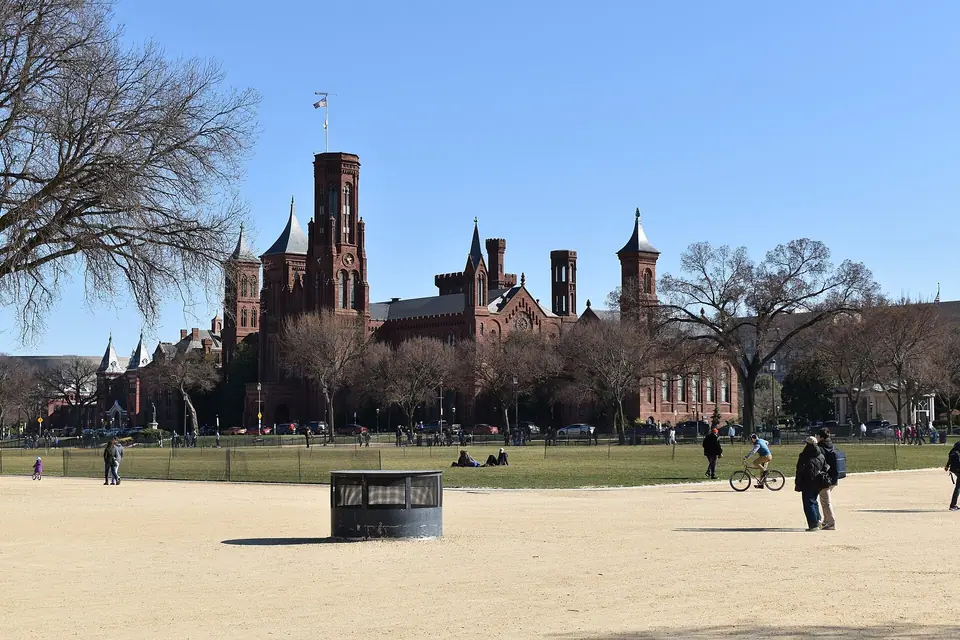
School trip surges, autumn foliage, and annual calendar highlights
Beyond the cherry blossoms, three seasonal patterns shape crowd levels and hotel pricing across the capital:
- The spring 8th-grade school trip wave (late March to early June). Throughout April and May, thousands of student tour buses arrive from across the country. The Natural History, American History, and Air and Space museums are busiest between 10:00 and 14:30. Walk historic neighbourhoods in the morning and enter Mall museums after 14:30, or visit the calmer National Portrait Gallery and Freer Gallery. In May, Passport DC opens more than 50 foreign embassies on the first two Saturdays of the month.
- Mid-summer heat strategy and 4 July. In July and August, tour the outdoor memorials before 09:30 or after 19:30 and spend midday inside air-conditioned Smithsonian galleries. On 4 July, the National Independence Day Parade marches down Constitution Avenue NW at 11:45. A 17-minute fireworks display illuminates the Lincoln Memorial Reflecting Pool at 21:09.
- Autumn foliage (20 October to 10 November) and winter value. Late October turns the American elms on the Mall, the 1,754-acre Rock Creek Park (founded 1890), and Georgetown's C&O Canal gold and scarlet. Lively foliage also frames the 22 Corinthian Capitol columns at the 446-acre US National Arboretum. From December to February, hotel rates drop to their lowest levels and the National Christmas Tree (lit on the Ellipse since 1923) glows through December. All Smithsonian museums open 364 days a year, closing on 25 December. Every four years on 20 January (next in January 2029), the Presidential Inauguration fills hotels citywide. Pack for each season with our what to wear in Washington DC guide.
Weather by month
Washington DC is warmest in July, with average highs around 31°C, and coldest in January, when nights drop to about -2°C. July is the wettest month by rainfall (176 mm), with rain on about 14 days. For mild weather with fewer rainy days, aim for October.
| Month | Low | Range | High | Rain | Rainy days |
|---|---|---|---|---|---|
| Jan | -2°C | 6°C | 84 mm | 9 d | |
| Feb | -1°C | 9°C | 85 mm | 10 d | |
| Mar | 2°C | 13°C | 95 mm | 10 d | |
| Apr | 8°C | 19°C | 94 mm | 11 d | |
| May | 13°C | 24°C | 128 mm | 13 d | |
| Jun | 18°C | 29°C | 127 mm | 13 d | |
| Jul | 21°C | 31°C | 176 mm | 14 d | |
| Aug | 20°C | 30°C | 158 mm | 14 d | |
| Sep | 17°C | 26°C | 131 mm | 11 d | |
| Oct | 11°C | 20°C | 91 mm | 9 d | |
| Nov | 5°C | 14°C | 83 mm | 8 d | |
| Dec | 1°C | 9°C | 105 mm | 10 d |
Averages of daily values from 2015 to 2024. Rainy days are days with at least 1 mm of rain. Source: Open-Meteo · Compare destinations by month.
Where it is
- 1Washington DC
- Ronald Reagan Washington National Airport (DCA) · about 6 km from Washington DC in a straight line
- Directions in Google Maps
Stations and taxi ranks: OpenStreetMap. Airports: OurAirports. Distances are in a straight line.
Traveller tips
Real advice from people who have been to Washington DC. Every tip is read by our team before it goes live.
No tips yet. Been here? Yours could be the first.
Thank you! Your tip will appear here after a quick review.
More in Washington DC
Continue exploring Washington DC with related neighbourhood, food, and planning guides
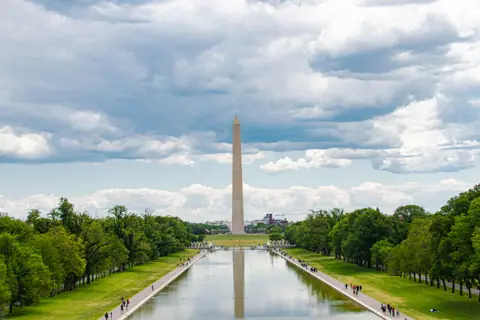
Washington DC Orientation: L'Enfant's Four Quadrants, National Mall Axis, Height Limit & Free Museum Rules
Washington DC, United States
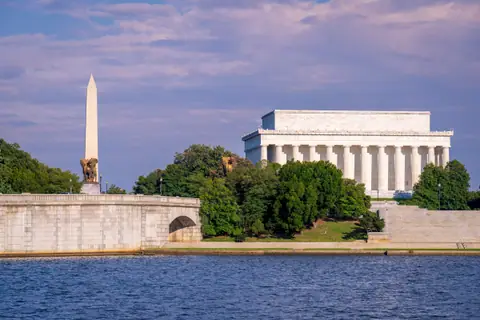
Best Things to Do in Washington DC: Smithsonian Museums, US Capitol, Library of Congress, Monuments & Georgetown
Washington DC, United States
Arriving in Washington DC: Reagan National (DCA), Dulles (IAD) Silver Line, BWI MARC, Union Station & SmarTrip
Washington DC, United States
What to Wear in Washington DC: Walking Shoes for Marble Monuments, Humid Summers & Capitol Security Rules
Washington DC, United States
