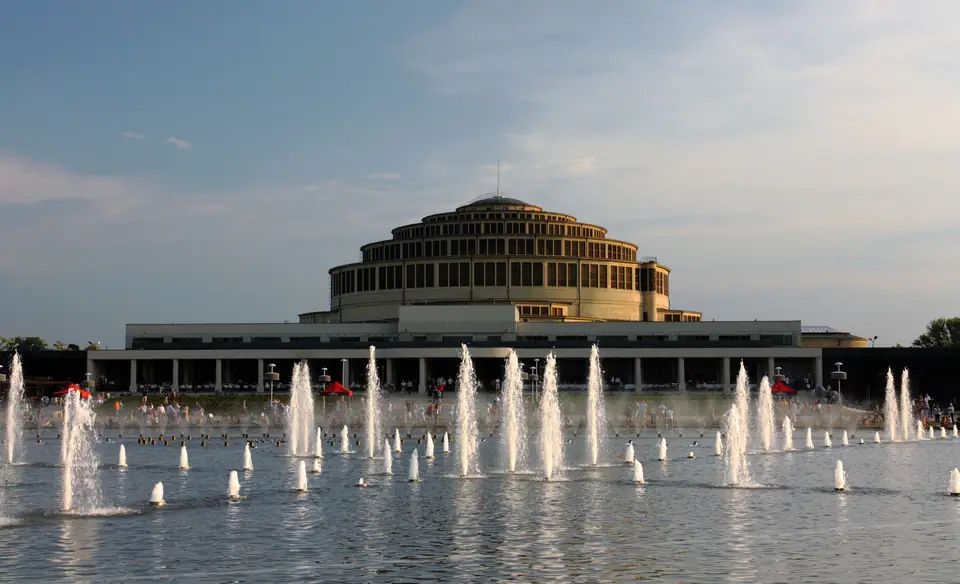
Photo: Rdrozd · CC BY-SA 4.0
Warmest Polish Summers, July Downpours and Odra Frost
Seasonal swings bring warm riverbanks, heavy summer downpours, and quiet winter mornings along Wrocław waterways and historic districts.
Wrocław experiences pronounced seasonal shifts across southwestern Poland, contrasting warm summer riverbanks with crisp winters along frozen Odra channels.
Summer Warmth, Pergola Water Jets, and Sudden July Downpours
Summer brings long daylight hours, lively riverside paths, and open courtyards across the historic centre. Many visitors head straight towards Centennial Hall (Hala Stulecia) and Pergola Fountains, where tall water jets arc across the stone pond in rhythmic sequences. Surrounding parklands give welcome tree shade when afternoon air turns warm and humid.
However, summer also brings sudden convective cloudbursts. July frequently produces intense afternoon thunderstorms that soak cobblestones within minutes and turn narrow lanes into fast runoff channels. Stepping beneath vaulted arcades or ducking inside nearby heritage halls helps wait out passing squalls safely.
Check ground routes across Wrocław historic districts and river islands before heading out with light rain shells. Wet granite paving demands steady footwear throughout summer, even when sudden storms clear rapidly back into fresh evening sunshine.
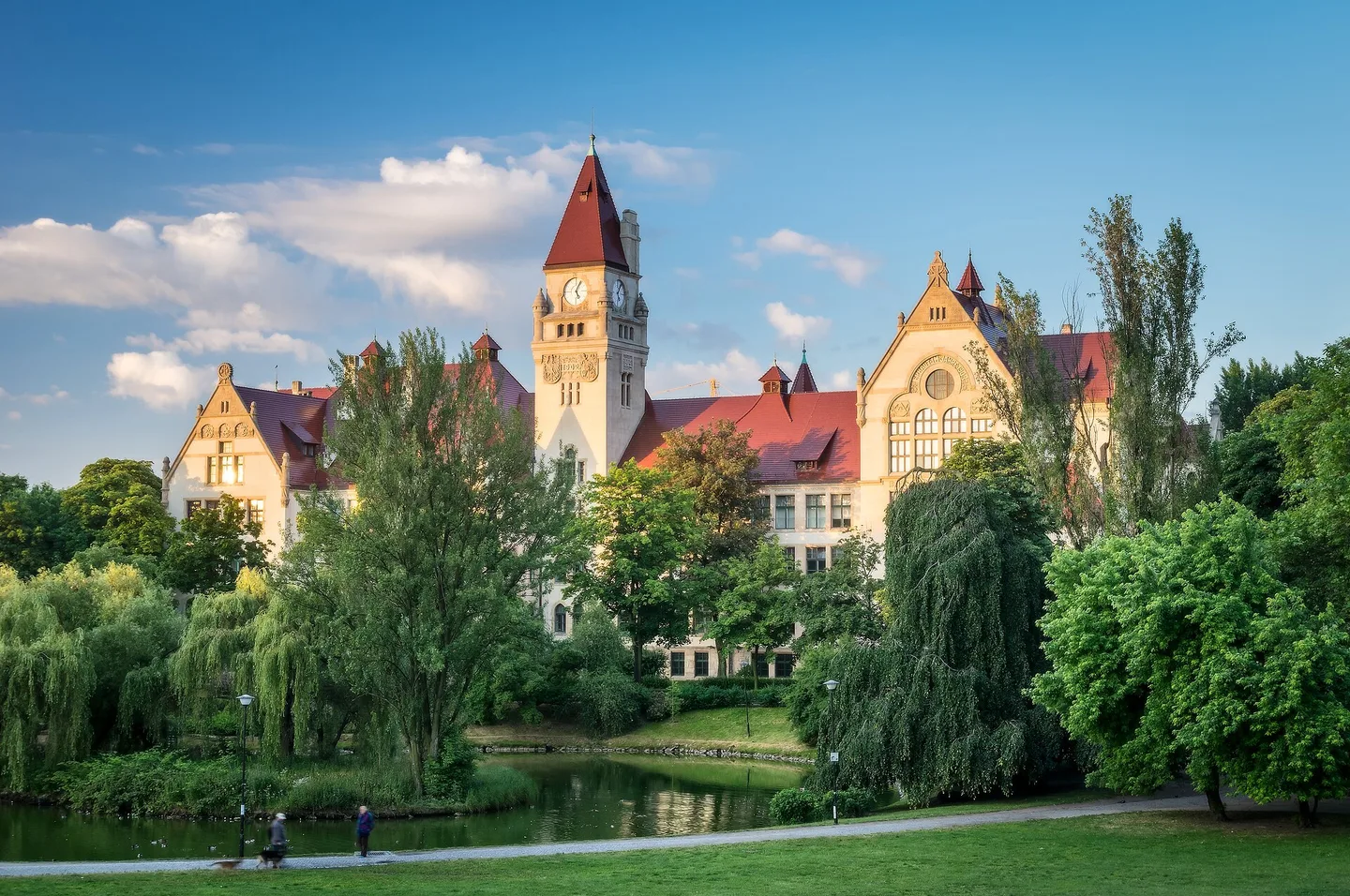
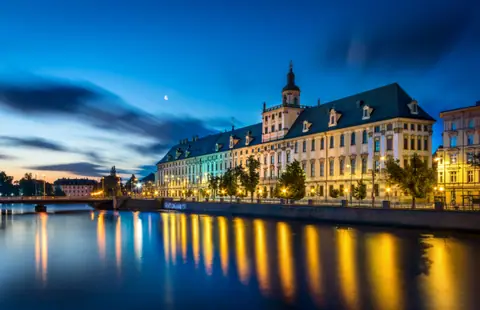
Late summer evenings stay comfortably warm, letting locals linger along island quays well after sunset while cool Odra breezes sweep past stone embankments. Twilight walks around the historic university quarter feel calm during warm July and August evenings.
Renting a small wooden rowing boat or boarding an open launch along the main Odra channel offers fresh river air. Boat decks let walkers view brick university facades cleanly without harsh midday glare along paved streets.
Autumn Transitions, Golden Foliage, and Riverside Bridges
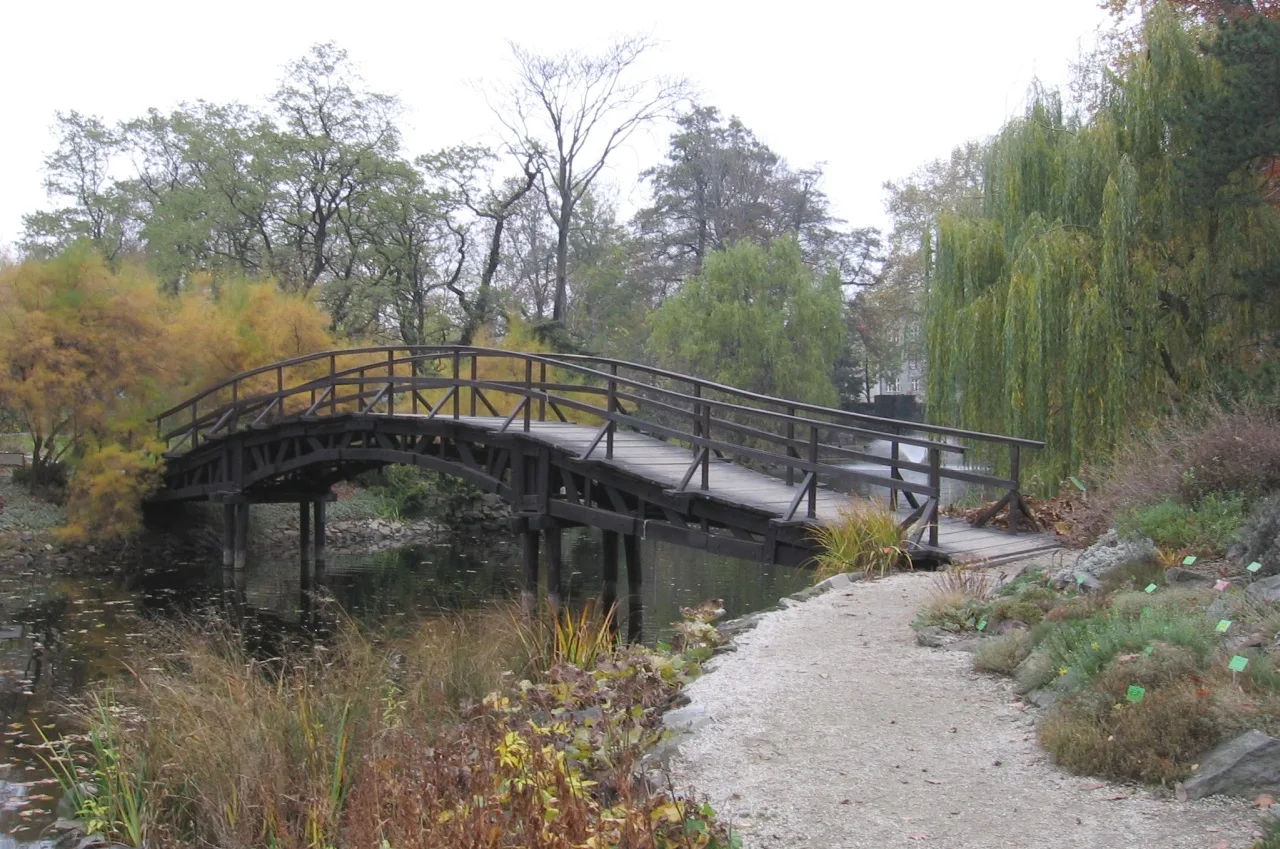
Autumn arrives across Lower Silesia with crisp morning breezes and deep golden chestnut leaves along brick embankments. Walking between mainland quarters and northern river islets feels refreshing when light mist drifts across the water in early October. Gothic spires and riveted iron footbridges gradually emerge through quiet golden park clearings along the riverbank.
Red-brick university halls stand out sharply against yellow tree canopies and clear northern skies, while fallen leaves gather along stone stairways descending to the river.
Crossing the Odra becomes a calm seasonal pleasure during early autumn afternoons. Walking out towards Grunwaldzki Bridge lets you watch cargo barges slip beneath steel suspension cables flanked by golden riverside trees.
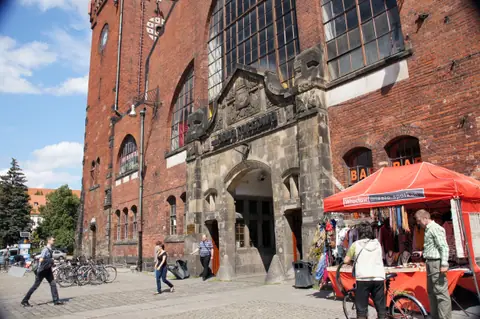
University squares stay peaceful outside student rush hours, letting walkers study carved sandstone portals and quiet courtyards before early dusk.
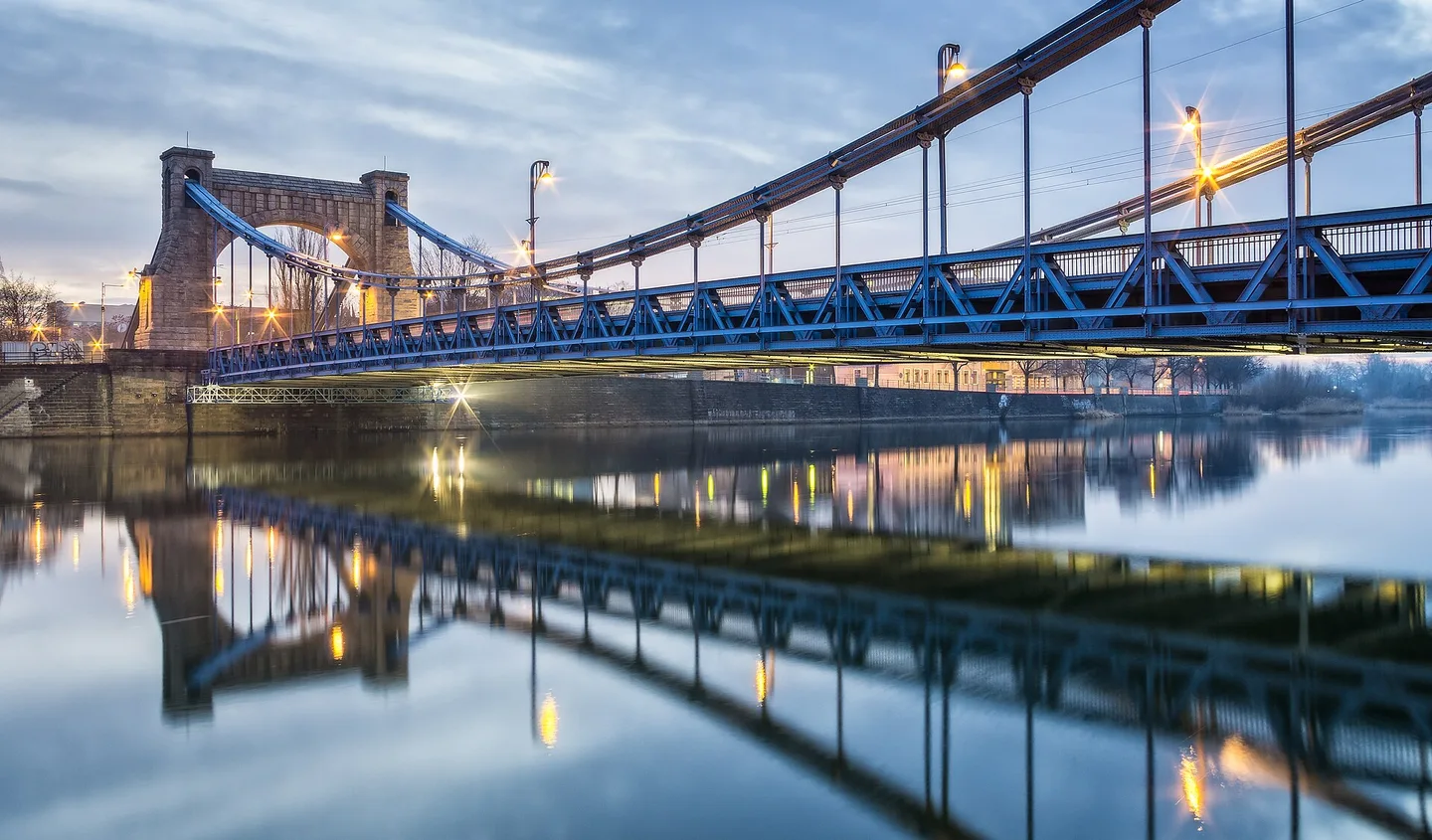
By late autumn, daylight fades early and brisk winds blow across open plains, making woollen coats and windproof scarves essential on exposed iron bridges.
November brings frequent overcast skies and damp air, lighting the historic centre early with amber street lamps reflecting off wet flagstones.
Winter Frost, Quiet Cobblestones, and Museum Havens
Winter carries crisp eastern frost that coats island footpaths and botanical gardens in white rime, while thin ice edges calm former river channels.
Chilly winter afternoons pair naturally with warm indoor cultural halls, leaving unhurried hours inside the vast circular canvas of Racławice Panorama before stepping back outdoors.
Indoor galleries and cathedral churches cluster easily across Wrocław Old Town monuments and museum halls so freezing walks stay brief.
Fresh snow softens footsteps along quiet Ostrów Tumski cathedral lanes, where compact historic blocks keep warm cafés and traditional cellar dining rooms steps away.
Early winter mornings reward photographers with untracked snow across medieval market squares before municipal trams, bakery vans, and street sweepers clear the fresh dusting.
Seasonal Packing and Footwear Across Varied Odra Weather
Packing across Polish seasons means prioritising reliable rubber-tread footwear, because smooth granite cobblestones grow slick during both July thunderstorms and January frosts.
Spring and autumn reward breathable wool layers and compact umbrellas sturdy enough for sudden riverside wind gusts.
| Season | Dominant Weather Characteristic | Essential Footwear or Packing Priority |
|---|---|---|
| Summer | Warm sunshine with sudden torrential downpours | Breathable clothing, compact umbrella, grippy walking trainers |
| Autumn | Crisp sunny spells turning into damp chilly breezes | Layered knitwear, light windproof coat, water-resistant shoes |
| Winter | Sub-zero frosts, icy pavements, and occasional snow | Thermal base layers, woollen hat, insulated boots with deep tread |
| Spring | Rapidly fluctuating temperatures and brisk winds | Versatile medium jacket, adaptable layers, sturdy walking shoes |
Spring gradually thaws riverbanks and fills park borders with green shoots, though brisk morning frosts can linger deep into April. Matching outdoor island circuits to dry forecasts helps keep every season calm across the Odra basin.
Weather by month
Wrocław is warmest in July, with average highs around 26°C, and coldest in January, when nights drop to about -3°C. July is the wettest month by rainfall (91 mm), with rain on about 14 days. For mild weather with fewer rainy days, aim for August and September.
| Month | Low | Range | High | Rain | Rainy days |
|---|---|---|---|---|---|
| Jan | -3°C | 3°C | 28 mm | 16 d | |
| Feb | -3°C | 5°C | 26 mm | 13 d | |
| Mar | 0°C | 9°C | 35 mm | 14 d | |
| Apr | 4°C | 15°C | 31 mm | 11 d | |
| May | 8°C | 20°C | 60 mm | 13 d | |
| Jun | 12°C | 23°C | 65 mm | 13 d | |
| Jul | 14°C | 26°C | 91 mm | 14 d | |
| Aug | 13°C | 25°C | 60 mm | 12 d | |
| Sep | 9°C | 20°C | 48 mm | 11 d | |
| Oct | 5°C | 14°C | 38 mm | 12 d | |
| Nov | 1°C | 8°C | 31 mm | 13 d | |
| Dec | -2°C | 4°C | 28 mm | 15 d |
Averages of daily values from 2015 to 2024. Rainy days are days with at least 1 mm of rain. Source: Open-Meteo · Compare destinations by month.
Official prices and opening hours
- Centennial Hall (Hala Stulecia) & Pergola FountainsOfficial site ↗
- Racławice Panorama (Panorama Racławicka)Official site ↗
Where it is
- 1Wrocław
- Copernicus Wrocław Airport (WRO) · about 11 km from Wrocław in a straight line
- Directions in Google Maps
Stations and taxi ranks: OpenStreetMap. Airports: OurAirports. Distances are in a straight line.
Traveller tips
Real advice from people who have been to Wrocław. Every tip is read by our team before it goes live.
No tips yet. Been here? Yours could be the first.
Thank you! Your tip will appear here after a quick review.
More in Wrocław
Continue exploring Wrocław with related neighbourhood, food, and planning guides