Best Time to Visit Madrid: 657m Plateau Weather, Crowds & Festivals
How Madrid's 657-metre plateau shapes its four sharp seasons, and which months balance terrace weather with calmer museums.
Madrid stands at 657 metres above sea level on the central Castilian plateau, ringed by mountain ranges that block Atlantic and Mediterranean moisture. As a result, its climate follows the classic Castilian proverb: nueve meses de invierno y tres de infierno (nine months of winter and three of hell). While that old saying exaggerates, the city's continental Mediterranean climate produces far sharper seasonal contrasts than coastal Barcelona or Valencia. Ten-year climate records from 2015 to 2024 show average afternoon highs climbing from 10.3°C in January to 34.4°C in July. Rainfall stays low year-round, dropping to just 1.0 rainy day in July (7 mm). Wet days peak in March (9.0 rainy days, 58 mm), April (8.9 days, 59 mm) and October (8.6 days, 66 mm). For walking comfort, open café terraces and manageable queues at the Prado and Reina Sofía, two shoulder windows stand head and shoulders above the rest.
The Two Gold-Standard Windows: April to June and Mid-September to October
- Mid-April to Mid-June (Spring Peak). Average daytime highs rise from 19.1°C in April to 24.4°C in May and 29.5°C in June, with cool nights between 7.4°C and 16.4°C. Daylight stretches past 9:30 pm by May, and the 4,000 rose bushes of Retiro Park's La Rosaleda burst into bloom. In late May and early June, the annual open-air book fair (Feria del Libro) lines Paseo de Coches. Around 15 May, Madrid celebrates its patron saint during the Fiestas de San Isidro. Locals dress as traditional nineteenth-century chulapos and chulapas in hounds-tooth waistcoats, flat caps, red carnations and polka-dot dresses. Crowds dance the slow chotis at the Pradera de San Isidro. Pastry stalls sell ring-shaped rosquillas del Santo: tontas (plain), listas (lemon-sugar glaze) and de Santa Clara (white meringue).
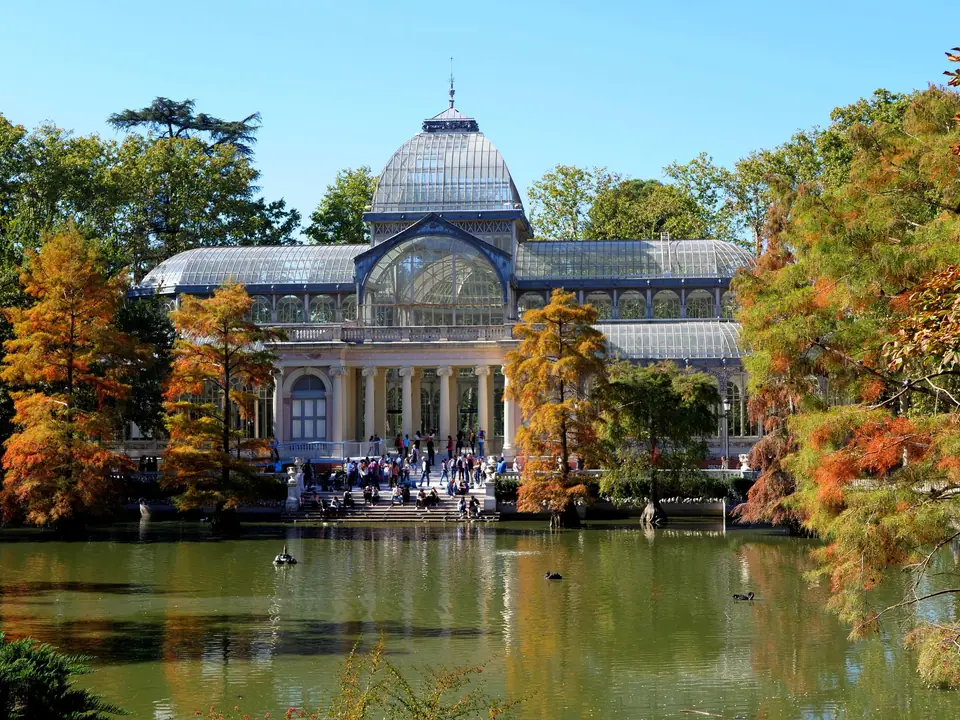
- Mid-September to Late October (Autumn Golden Light). After the fierce August heat breaks, September brings warm 26.8°C afternoons and 14.9°C nights, while October settles into crisp 21.5°C days and 10.9°C nights. Residents return from the coast and neighbourhood taverns reopen in full swing. Meanwhile, the plane trees and horse chestnuts in Retiro Park and the Royal Botanical Garden turn amber and gold. In late October and November, the Festival de Otoño brings international theatre, dance and music across the city.
- March and Early April (Semana Santa & Early Spring). March averages 16.0°C highs and 4.8°C lows across 9.0 rainy days. During Holy Week (Semana Santa), solemn candlelit brotherhood processions carry seventeenth-century wooden statues through the historic centre. The main routes leave the Basilica of Jesús de Medinaceli and San Isidro Collegiate Church to cross Plaza Mayor and Puerta del Sol, while bakeries sell honey-soaked torrijas.
High Summer (July & August): 34°C Afternoons, Veranos de la Villa and the August Exodus
July and August are bone-dry and intensely hot. Afternoon highs average 34.4°C in July and 33.4°C in August, while heatwaves regularly reach 38°C to 40°C. Low humidity (often under 30 percent) makes shade noticeably cooler than humid coastal cities. The entire capital shifts to a nocturnal timetable in summer. Sightseers should tour the Royal Palace or Retiro Park between 8:30 am and 11:30 am. Spend the fierce 1:00 pm to 5:00 pm window inside air-conditioned galleries or resting at the hotel. Then step back out after 8:00 pm when terraces hum until 2:00 am.
- Early July (MADO Madrid Orgullo / Pride). Centred on Plaza de Pedro Zerolo, Calle Pelayo and Paseo del Prado in Chueca, Madrid hosts one of Europe's largest Pride festivals in early July. Over a million participants gather for free outdoor concerts, street stages and the Saturday parade from Atocha to Plaza de Colón.
- July and August (Veranos de la Villa & August Verbenas). Throughout July and August, the municipal Veranos de la Villa festival stages open-air concerts, flamenco and cinema across historic courtyards and parks. Mid-August brings three consecutive traditional street parties (verbenas castizas) in the southern districts. San Cayetano starts around 7 August in Rastro and Embajadores, followed by San Lorenzo around 10 August in Lavapiés. The finale is La Virgen de la Paloma on 15 August in La Latina. During the ceremony, Madrid firemen lower the Baroque painting of the Virgin from her church wall. Be aware that in August many family-owned neighbourhood restaurants close for two to three weeks of annual holidays. Meanwhile, major museums stay open and four-star hotel prices drop by 25 to 35 percent.
Late Autumn and Winter (November to February): Crisp Blue Skies and Three Kings
Visitors who picture Spain as perpetually warm are often surprised by winter on the Meseta. In November, daytime highs average 14.5°C (lows 5.9°C) across 8.0 rainy days. From December to February, average highs sit between 10.3°C and 13.3°C while night-time lows drop to 1.2°C in January and 2.7°C in February. Icy north winds blow down from the snow-capped Sierra de Guadarrama. Yet winter brings brilliant blue skies, the shortest museum queues of the year, steaming three-course bowls of cocido madrileño, and festive traditions:
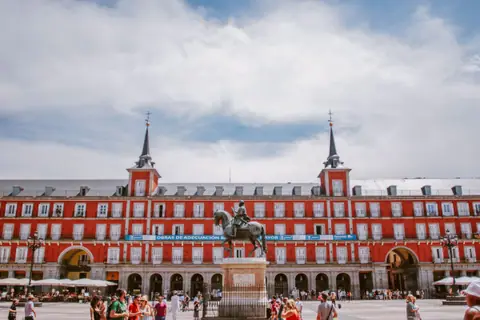
- Late November to 6 January (Plaza Mayor Christmas Market & New Year's Grapes). Over 100 red stalls fill the arcaded Plaza Mayor selling nativity figures (belenes) and festive decorations. Municipal light displays illuminate Calle de Alcalá and Gran Vía each night. On 30 December (for the rehearsal) and 31 December, thousands gather at Puerta del Sol. At midnight, revelers eat twelve lucky grapes (las doce uvas de la suerte), swallowing one on each chime of the Real Casa de Correos clock tower.
- Evening of 5 January (Cabalgata de Reyes / Three Kings Parade). More important for Spanish families than Christmas Day, illuminated floats carrying Melchior, Gaspar and Balthazar parade down Paseo de la Castellana to Plaza de Cibeles. Families celebrate on 6 January with slices of orange-blossom Roscón de Reyes cake. Pack for every season with our what to wear in Madrid guide and plan your museum days with our 3-day itinerary. You can also compare free evening entry slots in our Prado and Reina Sofía guide.
Weather by month
Madrid is warmest in July, with average highs around 34°C, and coldest in January, when nights drop to about 1°C. October is the wettest month by rainfall (66 mm), with rain on about 9 days. For mild weather with fewer rainy days, aim for May and September.
| Month | Low | Range | High | Rain | Rainy days |
|---|---|---|---|---|---|
| Jan | 1°C | 10°C | 38 mm | 7 d | |
| Feb | 3°C | 13°C | 25 mm | 5 d | |
| Mar | 5°C | 16°C | 58 mm | 9 d | |
| Apr | 7°C | 19°C | 59 mm | 9 d | |
| May | 12°C | 24°C | 31 mm | 6 d | |
| Jun | 16°C | 30°C | 21 mm | 5 d | |
| Jul | 20°C | 34°C | 7 mm | 1 d | |
| Aug | 20°C | 33°C | 12 mm | 2 d | |
| Sep | 15°C | 27°C | 52 mm | 5 d | |
| Oct | 11°C | 22°C | 66 mm | 9 d | |
| Nov | 6°C | 15°C | 49 mm | 8 d | |
| Dec | 3°C | 12°C | 42 mm | 7 d |
Averages of daily values from 2015 to 2024. Rainy days are days with at least 1 mm of rain. Source: Open-Meteo · Compare destinations by month.
Where it is
- 1Madrid
- Adolfo Suárez Madrid–Barajas Airport (MAD) · about 14 km from Madrid in a straight line
- Directions in Google Maps
Stations and taxi ranks: OpenStreetMap. Airports: OurAirports. Distances are in a straight line.
Traveller tips
Real advice from people who have been to Madrid. Every tip is read by our team before it goes live.
No tips yet. Been here? Yours could be the first.
Thank you! Your tip will appear here after a quick review.
More in Madrid
Continue exploring Madrid with related neighbourhood, food, and planning guides
Madrid Orientation: 657m Altitude, Austrias vs Bourbon Axis & Tips
Madrid, Spain
12 Best Things to Do in Madrid: Museums, Palaces, Parks & Tapas
Madrid, Spain
How to Get to Madrid: Barajas Airport, Atocha vs Chamartín & Metro
Madrid, Spain
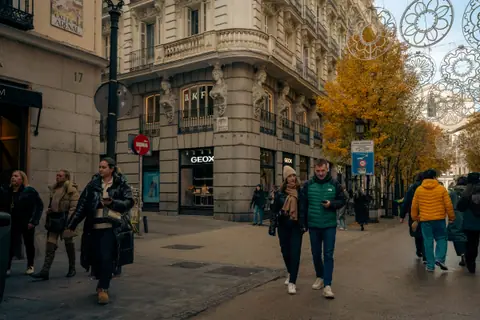
What to Wear in Madrid: Altitude Layering, Cobbles & Evening Style
Madrid, Spain
