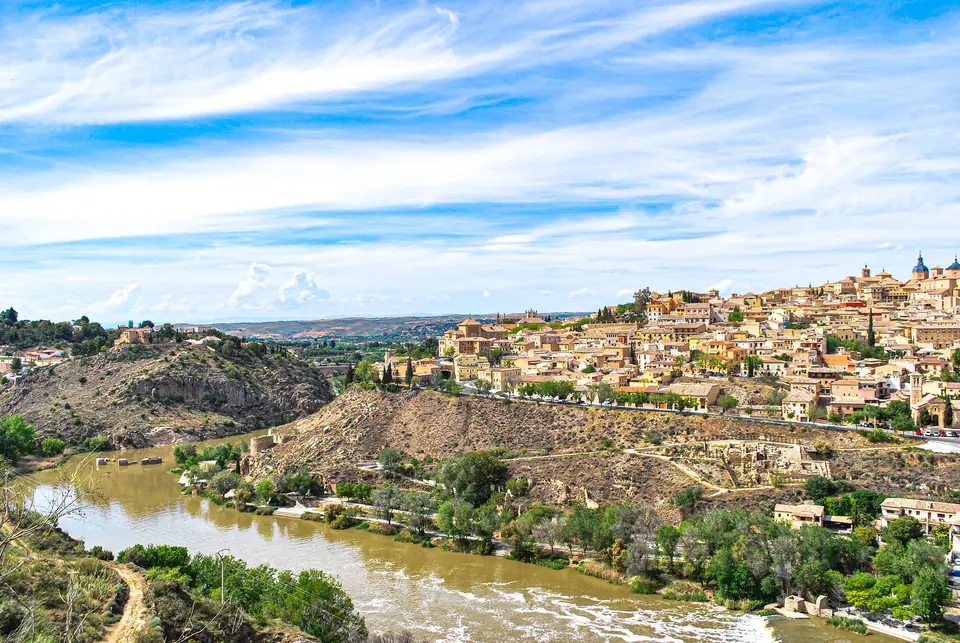
Best Day Trips from Madrid by Train: Toledo, Segovia & El Escorial
Toledo vs Segovia head-to-head in 30 minutes by fast train, plus El Escorial, Aranjuez, Alcalá de Henares and Ávila.
King Philip II placed Spain's capital at the geographical heart of the Iberian Peninsula in 1561. As a result, Madrid sits surrounded by a ring of UNESCO World Heritage cities and royal estates within a 30- to 75-minute rail ride. You do not need a rental car or a rigid coach tour for any of them. High-speed Renfe Avant shuttle trains and suburban Cercanías lines depart throughout the day from Madrid's two main rail hubs explained in our getting there guide. Book your outbound and return Avant train seats 3 to 7 days in advance, because popular 9:00 am and 10:00 am weekend departures regularly sell out.
If You Only Have One Day: Toledo vs Segovia Head-to-Head
- Choose Toledo (33 minutes from Puerta de Atocha) for Monumental History & El Greco. Deep gorges of the Tagus River (Río Tajo) encircle this former Visigothic and Imperial capital on three sides. Historians call Toledo the "City of Three Cultures" for the centuries when Christian, Jewish and Muslim scholars worked at the Toledo School of Translators. It is bigger, steeper, denser with masterpieces and requires a full 7 to 8 hours on your feet.
- Choose Segovia (27 minutes from Chamartín-Clara Campoamor) for Iconic Architecture & a Relaxed Lunch. Segovia is crowned by a 167-arch Roman aqueduct built without mortar and a cliff-edge royal castle with pointed slate spires. The old town follows a single readable ridge walk of 1.5 kilometres. It pairs effortless sightseeing with Spain's most famous roast suckling pig (cochinillo asado) lunch.
Toledo: Cathedral, Synagogues and El Greco (33 Minutes from Atocha)
Board a high-speed Renfe Avant train at Madrid-Puerta de Atocha for the 33-minute ride south to Toledo's 1919 Neo-Mudéjar railway station. The station sits outside the river loop at the foot of the hill. Walk 15 minutes across the medieval Alcántara Bridge to the free public Remonte Mecánico de Safont / Miradero outdoor escalators. They carry you straight up into the walled city, or you can hop on urban Bus L12 or L61 to Plaza de Zocodover.
Build your day around four core stops. Start at the thirteenth-century Primate Cathedral of Saint Mary of Toledo to see the Baroque skylight of El Transparente and the fifteen-metre gilded Gothic main altarpiece. Inside the Sacristía hangs El Greco's The Disrobing of Christ (El Expolio), surrounded by canvases by Caravaggio, Titian, Velázquez and Goya. Second, wind west into the medieval Jewish Quarter (Judería). Inside the Church of Santo Tomé hangs El Greco's 1586 masterpiece The Burial of the Count of Orgaz. Third, tour the white stucco horseshoe arches of the twelfth-century Synagogue of Santa María la Blanca and the Hebrew inscriptions of the 1357 Synagogue of El Tránsito. Before returning to the station in the late afternoon, take a short taxi ride or walk across the river to the Mirador del Valle. That viewpoint frames the entire fortified hilltop and Alcázar above the Tagus gorge.
Segovia: Roman Aqueduct, Alcázar and Roast Suckling Pig (27 Minutes from Chamartín)
High-speed Avant trains from Madrid-Chamartín tunnel beneath the Sierra de Guadarrama to reach Segovia-Guiomar station in just 27 minutes. Outside the station doors, municipal Bus 11 meets every train arrival and drops you in 15 minutes at Plaza del Azoguejo. Directly overhead towers the Roman Aqueduct of Segovia. Roman engineers built the structure in the late first or early second century CE under Emperors Domitian, Nerva and Trajan. It carried water 17 kilometres from the Frío River, and its central two-tiered arcade rises 28.5 metres above the square across 167 arches. All 20,400 rough-hewn granite blocks sit locked together by gravity without mortar or cement.
From the aqueduct, follow pedestrian Calle Real uphill past the shell-covered facade of the fifteenth-century Casa de los Picos. At the top of the square rises the late-Gothic Segovia Cathedral, built between 1525 and 1577 and known as the "Lady of Cathedrals". Continue to the western prow of the limestone crag above the confluence of the Eresma and Clamores rivers. Here stands the Alcázar of Segovia, where Isabella I was proclaimed Queen of Castile in 1474. Rebuilt with pointed slate-roofed towers after an 1862 fire, the fortress commands views over the Castilian plain. Visitors can also climb the 152 spiral steps of the Tower of John II. Book a 2:00 pm lunch table ahead at Mesón de Cándido (beside the aqueduct) or Restaurante José María. Order traditional wood-roasted cochinillo asado (suckling pig carved with the edge of a ceramic plate) and hearty judiones de la Granja giant white beans.
San Lorenzo de El Escorial: Philip II's Monastery-Palace (60 Minutes)
Forty-five kilometres northwest of Madrid at 1,028 metres elevation in the foothills of Mount Abantos stands the Royal Site of San Lorenzo de El Escorial. Architects Juan Bautista de Toledo and Juan de Herrera built the granite complex between 1563 and 1584 for King Philip II. It commemorates the 1557 Battle of Saint-Quentin and functions as a Hieronymite monastery, royal palace, basilica and dynastic pantheon. Take Cercanías Line C3a from Atocha, Sol or Chamartín (about 60 minutes) or suburban Bus 661 or 664 from the Moncloa bus terminal (50 minutes). Highlights include the barrel-vaulted frescoed Royal Library containing 40,000 sixteenth-century volumes, the basilica, and Philip II's sparse bedroom looking onto the high altar. Down below lies the octagonal marble-and-gilt-bronze Royal Pantheon of the Kings, where twenty-six Spanish monarchs from Emperor Charles V onward lie entombed.
Three More Easy Rail Day Trips: Alcalá de Henares, Aranjuez and Ávila
- Alcalá de Henares (40 minutes on Cercanías C2 or C7 from Atocha and Recoletos). Miguel de Cervantes was born here in 1547. Tour his birthplace museum, the 1553 Plateresque facade of the UNESCO University of Alcalá, the arcaded Calle Mayor, and the 1601 Corral de Comedias theatre.
- Aranjuez (45 minutes on Cercanías C3 from Sol and Atocha). This Tagus River valley town served as the spring residence of the Spanish crown. Its eighteenth-century Royal Palace (with a Chinese Porcelain Room) and shaded Jardín del Príncipe inspired Joaquín Rodrigo's Concierto de Aranjuez.
- Ávila (85 minutes by regional train from Príncipe Pío and Chamartín). Ávila is famous for Europe's best-preserved medieval town walls (Murallas de Ávila). The granite ramparts stretch 2,516 metres around the old town with 87 semicircular towers and 9 fortified gates, enclosing the convents of Saint Teresa. Pack grippy walking shoes using our what to wear guide.
Where it is
- 1Best Day Trips from Madrid by Train
- Adolfo Suárez Madrid–Barajas Airport (MAD) · about 81 km from here in a straight line
- Directions in Google Maps
Stations and taxi ranks: OpenStreetMap. Airports: OurAirports. Distances are in a straight line.
Traveller tips
Real advice from people who have been to Madrid. Every tip is read by our team before it goes live.
No tips yet. Been here? Yours could be the first.
Thank you! Your tip will appear here after a quick review.
More in Madrid
Continue exploring Madrid with related neighbourhood, food, and planning guides
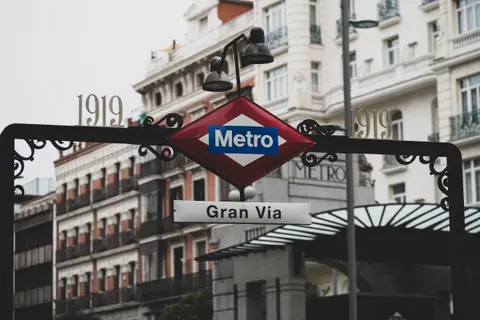
How to Get to Madrid: Barajas Airport, Atocha vs Chamartín & Metro
Madrid, Spain
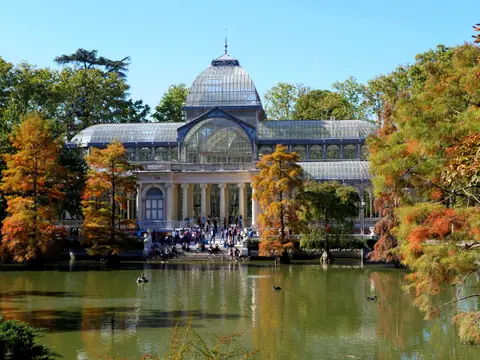
Best Time to Visit Madrid: 657m Plateau Weather, Crowds & Festivals
Madrid, Spain
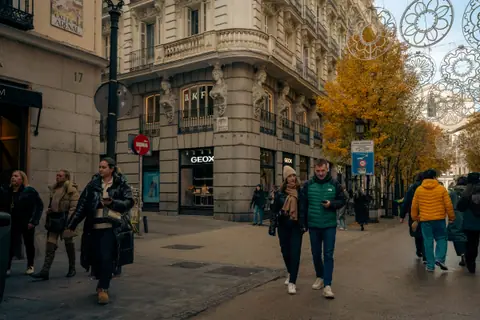
What to Wear in Madrid: Altitude Layering, Cobbles & Evening Style
Madrid, Spain
Madrid Museums Guide: Prado, Reina Sofía, Thyssen & Paseo del Arte
Madrid, Spain
