What to Wear in Madrid: Altitude Layering, Cobbles & Evening Style
How to dress for Madrid's 13°C day-to-night plateau temperature swings, steep cobbled streets and smart-casual evenings.
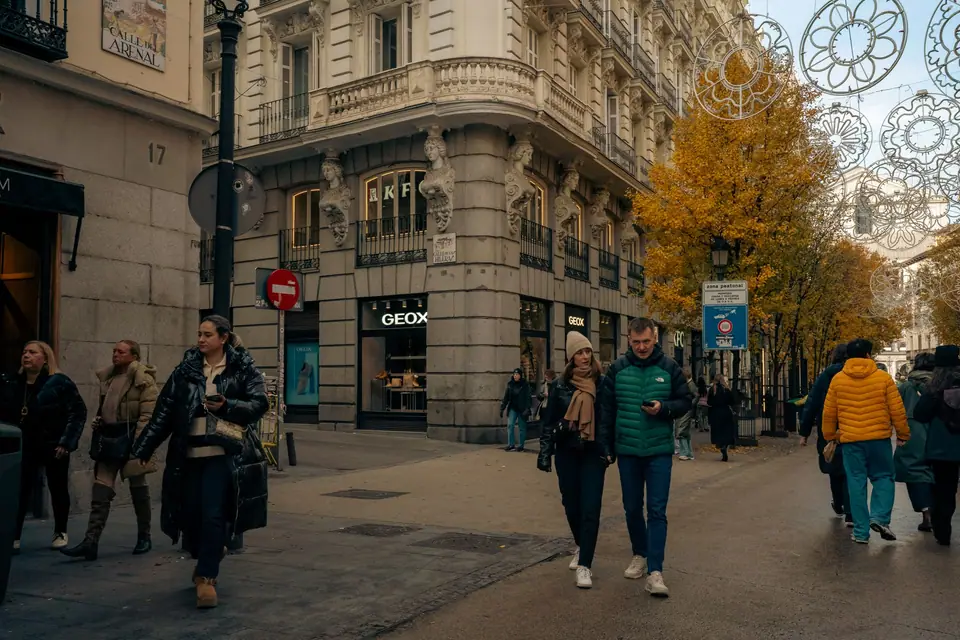
Packing for Madrid requires planning for two factors that catch many first-time visitors off guard. First is the 657-metre (2,155-foot) elevation of the central plateau, and second is the quiet polish of local street style. Because the air above the Castilian Meseta is dry and clear, daytime and night-time temperatures frequently swing by 11°C to 14°C within a single afternoon. A spring or autumn afternoon that feels like summer on a sunny Plaza de Santa Ana terrace drops swiftly after sunset. At the same time, Madrileños (mah-dree-LEN-yohs) dress with noticeably more structure than beach-resort Spain. You do not need formal evening attire. However, trading gym shorts, beach flip-flops and athletic jerseys for tailored trousers, breathable linen shirts, dark jeans and clean leather trainers helps you blend right in. You will feel comfortable everywhere from the Prado galleries to late-night bars in Salamanca and Chamberí (chahm-beh-REE).
Footwear First: Conquering Habsburg Cobbles and Steep Slopes
Before choosing outfits, start with your shoes. A typical sightseeing day following our 3-day itinerary covers 12 to 16 kilometres on foot across three demanding surfaces:
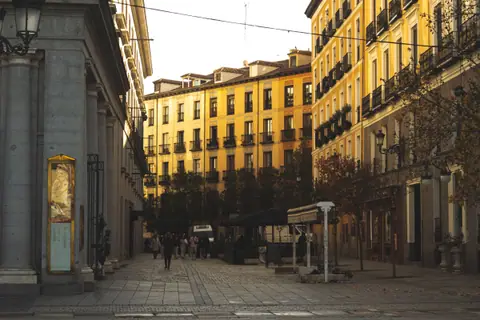
- Granite Cobblestones (Adoquines) and Steep Ramps. The Paseo del Prado is flat and paved, but the historic streets descending from Plaza Mayor through the Arco de Cuchilleros into La Latina are steep. The alleys of Lavapiés and the Sunday Rastro route along Ribera de Curtidores are also paved with uneven granite blocks.
- Polished Stone Museum Floors and Gravel Park Paths. Three morning hours inside the Prado or Reina Sofía and two hours in the Royal Palace mean standing on hard marble and parquet galleries. Afternoon walks then cross fine gravel avenues in Retiro Park and the Sabatini Gardens.
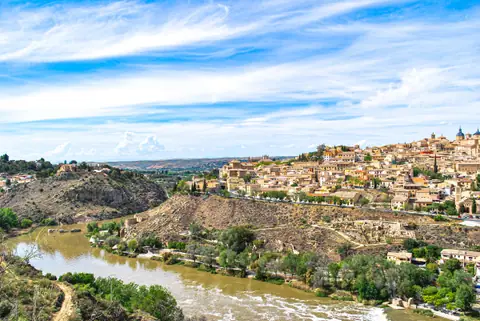
- Day-Trip Hills in Toledo and Segovia. Taking the high-speed train to Toledo or Segovia means climbing steep medieval stone lanes. Thin-soled sandals, stiletto heels or brand-new stiff shoes quickly cause blisters on those inclines. Pack broken-in cushioned leather trainers, supportive walking shoes or rubber-soled ankle boots in autumn and winter.
Season-by-Season Wardrobe Guide for the Meseta
- High Summer (June, July & August: Highs 29.5°C to 34.4°C, Lows 16.4°C to 20.2°C). Summer afternoons are fiercely sunny and dry, with UV levels amplified by the altitude. Rain is almost non-existent at just 1.0 to 1.8 wet days per month in July and August. Pack loose, breathable natural fabrics such as linen trousers, cotton midi dresses and lightweight collared shirts. Bring UV400 sunglasses, high-SPF sunscreen and a wide-brimmed hat for exposed walks across the Plaza de la Armería. Carry a refillable water bottle to top up from Madrid's safe tap water, plus a foldable hand fan (abanico) for sunny queues. Always keep a light cotton overshirt or scarf in your daypack to handle strong air conditioning inside the Reina Sofía and Metro carriages.
- Spring (April & May) and Autumn (September & October: Highs 19.1°C to 26.8°C, Lows 7.4°C to 14.9°C). As explained in our best time to visit guide, these are Madrid's finest walking months, but they demand three-layer dressing. Start the cool morning with a breathable cotton T-shirt or blouse and add a fine merino wool jumper or cardigan. Top it with a light trench coat, suede jacket, denim jacket or tailored blazer. You can slip the outer layers off during a 23°C midday lunch on a sunny square and put them back on for 10:00 pm tapas.
- Winter (November to March: Highs 10.3°C to 16.0°C, Lows 1.2°C to 5.9°C). Do not underestimate winter in Madrid. An icy north wind regularly blows down from the snow-covered Sierra de Guadarrama. A classic Castilian proverb warns about this deceptive mountain air: el aire de Madrid es tan sutil que mata a un hombre y no apaga un candil. In English, the breeze is so subtle that it will not blow out a candle, yet it can freeze a passer-by. Mornings near the Royal Palace feel bitingly cold, with January lows averaging 1.2°C. Bring a proper tailored wool coat or insulated down jacket, a warm scarf, gloves and thermal base layers for January mornings. Pack lip balm and hand moisturiser for the dry plateau air.
Churches, Nightlife Dress Codes and Anti-Pickpocket Bag Rules
Active places of worship expect visitors to cover bare shoulders and avoid beach shorts or very short skirts. This rule applies at Almudena Cathedral and the Real Basílica de San Francisco el Grande, which is crowned by a 33-metre-diameter dome. You will also need covered shoulders inside the Jerónimos Church beside the Prado, the Basilica of San Miguel, and Toledo Cathedral. Keeping a lightweight cotton scarf or overshirt in your daypack solves church entry in seconds without weighing you down.
At night, Madrid's dining and nightlife scene runs from 9:30 pm until well past 2:00 am. Traditional tapas taverns in La Latina and indie bars in Malasaña welcome neat casual dress such as dark jeans, knitwear and clean trainers. Cocktail lounges, rooftop terraces along Gran Vía and upscale restaurants in Salamanca, Las Salesas and Chueca favour smart casual. Men wear a collared shirt or polo with closed-toe shoes, while women opt for tailored trousers, a skirt, a dress or a jumpsuit. When visiting the Golden Triangle of Art, remember that museum security checks bag sizes at the door. Backpacks and bags larger than 40 by 40 centimetres must go into the free ground-floor cloakroom at the Prado, Reina Sofía and Thyssen. Finally, carry a small cross-body bag that zips completely shut for riding Metro Lines 1 and 3, crossing Puerta del Sol and browsing El Rastro. Never leave your smartphone resting on the edge of an outdoor café table. Pack a European two-pin Type C or Type F adapter for 230V charging, and see our getting there guide for airport luggage tips. Because the high-altitude air of the Castilian plateau stays dry in every season, carry a small lip balm, UV-400 sunglasses, and a refillable bottle for the city's cold public drinking fountains (fuentes de agua potable) across El Retiro and Madrid Río.
Weather by month
Madrid is warmest in July, with average highs around 34°C, and coldest in January, when nights drop to about 1°C. October is the wettest month by rainfall (66 mm), with rain on about 9 days. For mild weather with fewer rainy days, aim for May and September.
| Month | Low | Range | High | Rain | Rainy days |
|---|---|---|---|---|---|
| Jan | 1°C | 10°C | 38 mm | 7 d | |
| Feb | 3°C | 13°C | 25 mm | 5 d | |
| Mar | 5°C | 16°C | 58 mm | 9 d | |
| Apr | 7°C | 19°C | 59 mm | 9 d | |
| May | 12°C | 24°C | 31 mm | 6 d | |
| Jun | 16°C | 30°C | 21 mm | 5 d | |
| Jul | 20°C | 34°C | 7 mm | 1 d | |
| Aug | 20°C | 33°C | 12 mm | 2 d | |
| Sep | 15°C | 27°C | 52 mm | 5 d | |
| Oct | 11°C | 22°C | 66 mm | 9 d | |
| Nov | 6°C | 15°C | 49 mm | 8 d | |
| Dec | 3°C | 12°C | 42 mm | 7 d |
Averages of daily values from 2015 to 2024. Rainy days are days with at least 1 mm of rain. Source: Open-Meteo · Compare destinations by month.
Where it is
- 1Madrid
- Adolfo Suárez Madrid–Barajas Airport (MAD) · about 14 km from Madrid in a straight line
- Directions in Google Maps
Stations and taxi ranks: OpenStreetMap. Airports: OurAirports. Distances are in a straight line.
Traveller tips
Real advice from people who have been to Madrid. Every tip is read by our team before it goes live.
No tips yet. Been here? Yours could be the first.
Thank you! Your tip will appear here after a quick review.
More in Madrid
Continue exploring Madrid with related neighbourhood, food, and planning guides