Photo: ProtoplasmaKid · CC BY-SA 4.0
Roma Norte and Condesa Guide: Art Deco Parks, Porfirian Plazas and Café Streets
Roma Norte and Condesa present leafy residential boulevards, Art Deco facades, and tranquil public squares across central Mexico City.
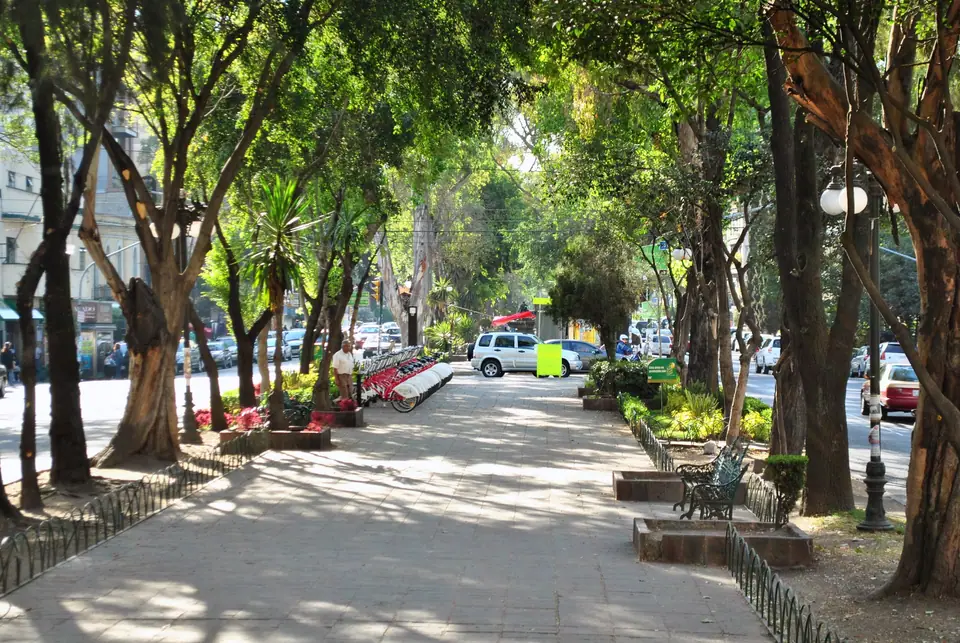
Roma Norte and Condesa stand side by side as two pleasant residential quarters across central Mexico City. Wide pavements, dense tree canopies, and distinct historical layouts give both areas a relaxed village atmosphere despite their central location. We find grand Porfirian townhouses standing next to mid-century apartment blocks along broad avenues. Pedestrian medians filled with bronze statues and stone benches encourage slow afternoon strolls under mature jacaranda branches. Independent bookshops, small bakeries, and contemporary art galleries fill ground-floor premises along quiet residential side streets.
The urban fabric of Roma Norte developed during the early twentieth century as an affluent suburb outside the historic core. Ornate stone facades display French neoclassical and art nouveau details that contrast sharply with monumental colonial architecture found elsewhere. Wide avenues such as Álvaro Obregón feature broad central walkways where local residents read, exercise dogs, and socialise beneath leafy foliage. These generous promenades create natural buffers against motor traffic. They allow effortless exploration on foot throughout the day.
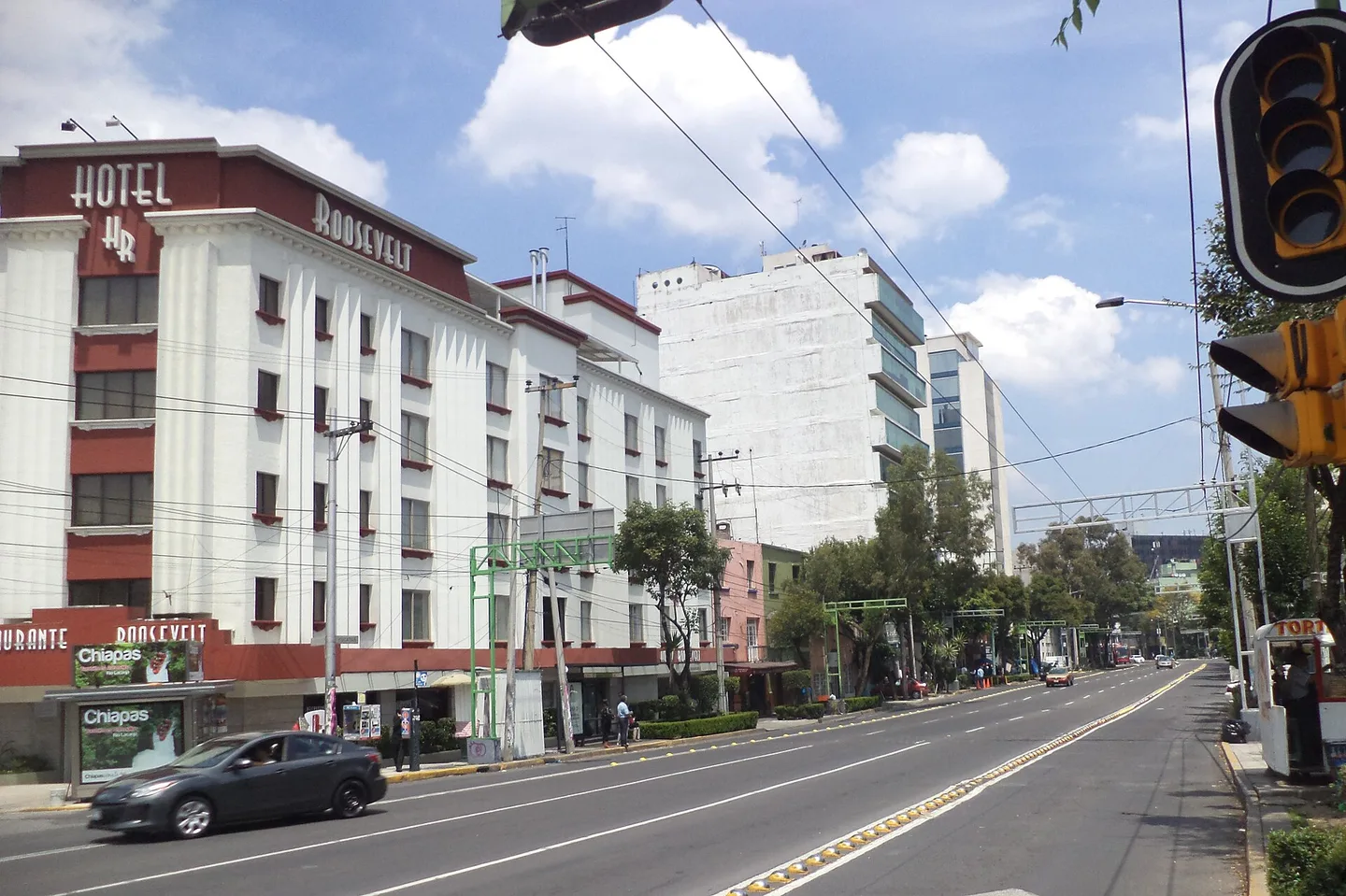
Architectural Character and Streetscapes Across Roma Norte
Walking through Roma Norte reveals an eclectic mixture of restored heritage buildings and creative spaces. Many former family mansions now house design studios, independent publishing houses, and quiet coffee shops. The district rewards curious walkers who turn off the main corridors into narrower residential lanes where carved doorways and stained-glass transoms remain intact. We admire ornamental iron balconies overlooking shaded pavements lined with flowering shrubs.
Plaza Río de Janeiro sits at the heart of the neighbourhood as a beloved community gathering spot. The square centres on a bronze replica fountain framed by mature trees. It attracts writers, families, and street artists throughout the afternoon. Nearby Plaza Luis Cabrera offers another green refuge with its reflective fountain basin and outdoor café seating. Exploring local parks links smoothly with cultural landmarks and historic squares across Mexico City.
- Álvaro Obregón: A central boulevard defined by its wide pedestrian median, bronze sculptures, and historic townhouses.
- Plaza Río de Janeiro: A tranquil residential square surrounded by eclectic architecture, canopy trees, and pavement tables.
- Plaza Luis Cabrera: An open public space featuring long water basins, shady benches, and adjacent neighbourhood bistros.
- Colima and Orizaba: Quiet side streets lined with independent boutiques, local coffee roasters, and gallery spaces.
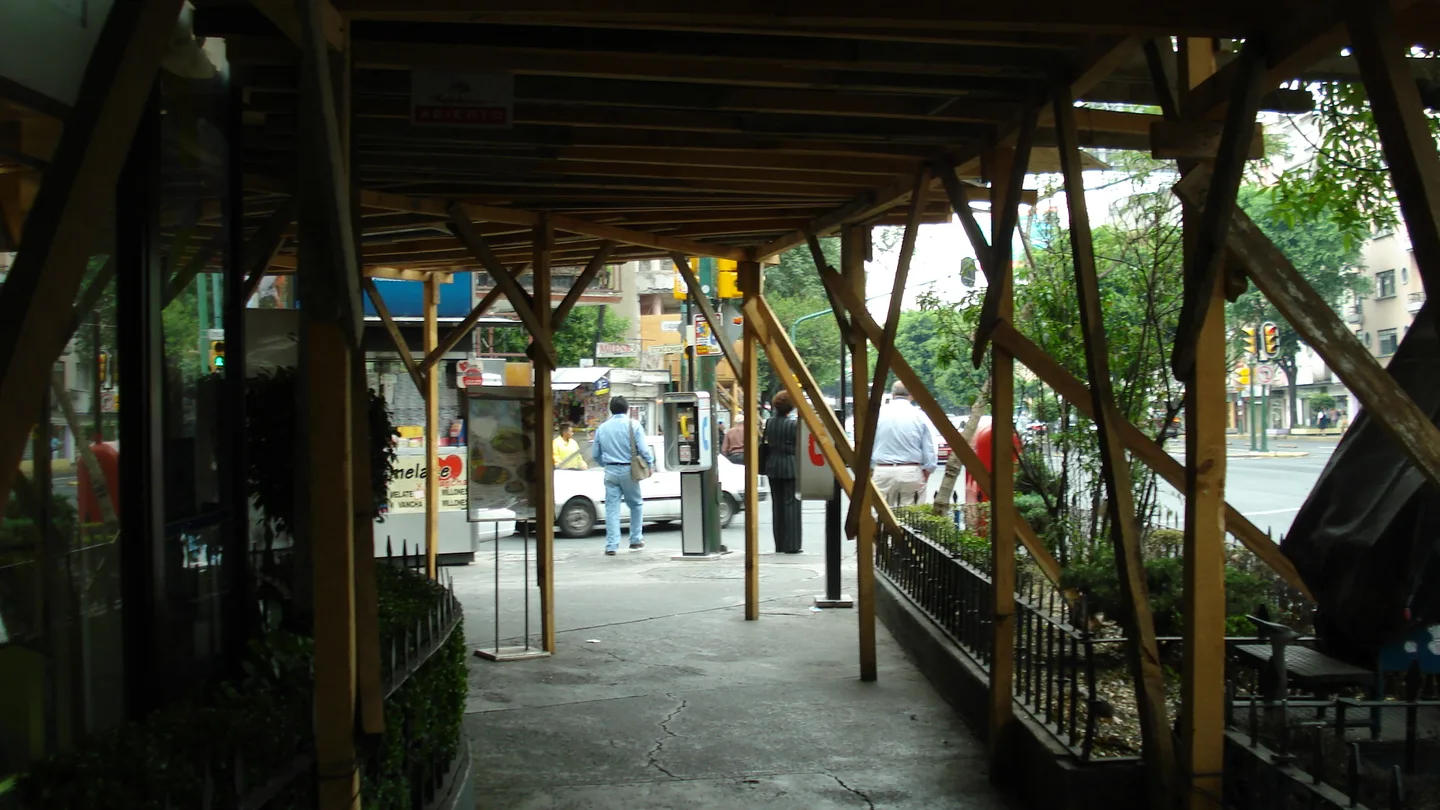
Condesa Green Spaces and Art Deco Enclaves
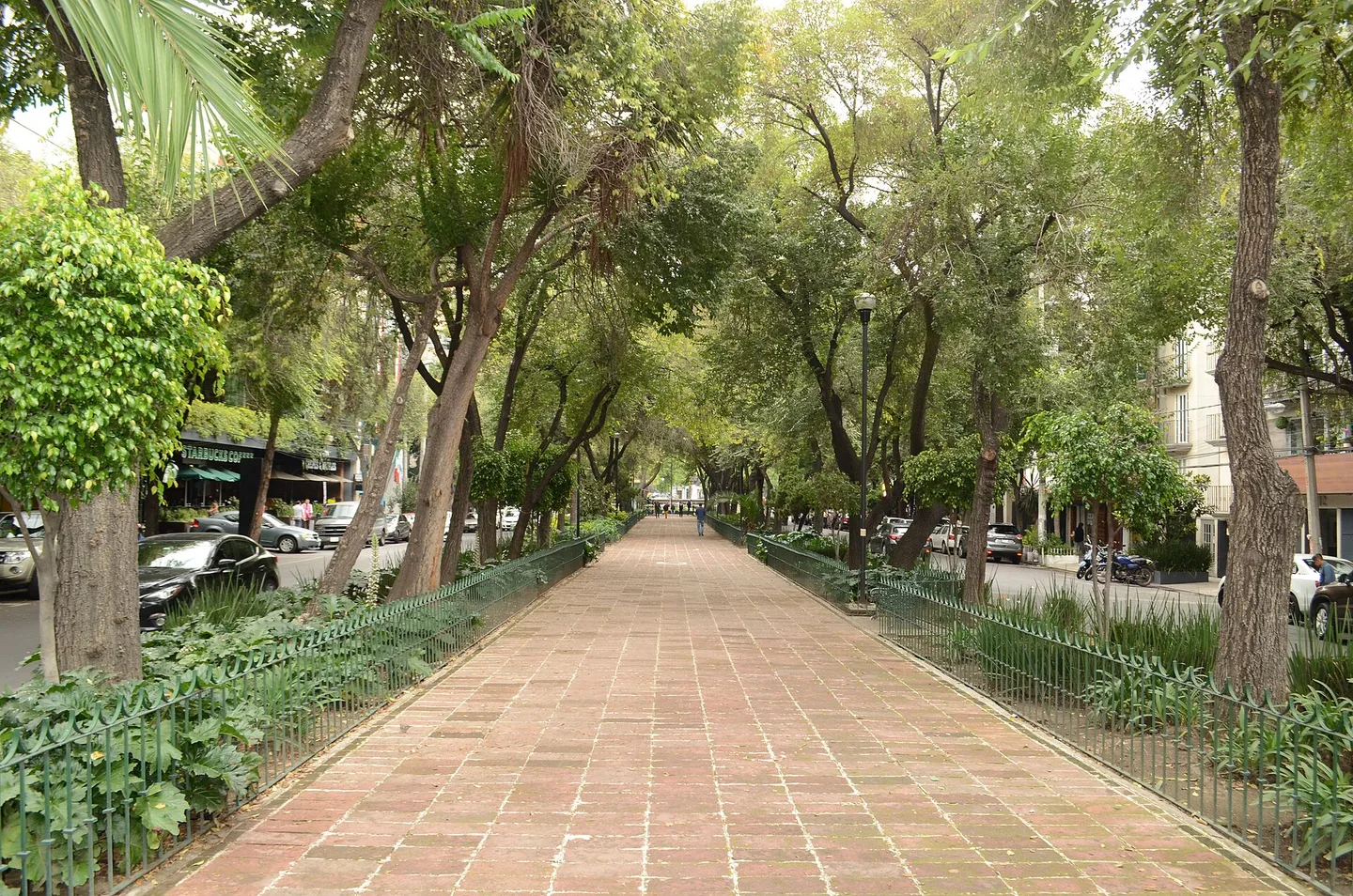
Immediately west across Insurgentes, Condesa shifts towards curved Art Deco terraces and lush subtropical gardens. Laid out over the contours of a former equestrian racecourse, the oval sweep of Avenida Ámsterdam wraps around Condesa's central green park beneath tall palm canopies and trailing vines. Stepping onto the cushioned dirt median lets pedestrians circle the district well away from street traffic.
The oval parklands anchor daily social life across Condesa, drawing neighbourhood runners, dog owners, and weekend musicians under ash trees. Inside the grounds stand an open-air Art Deco theatre, quiet duck ponds, and winding gravel footpaths framed by thick foliage. A short walk northward reaches Parque España, a slightly wilder wooded garden lined with secluded paths and timber footbridges. Together these adjoining parks form an airy sanctuary that cools surrounding residential blocks during warm sunny afternoons.
Neighbourhood Squares and Walking Corridors
Moving between Roma Norte and Condesa feels smooth on foot, thanks to quiet transitional streets and well-marked pedestrian crossings. The circular Plaza Villa de Madrid, commonly known as Plaza Cibeles, forms an important northern gateway with its replica Spanish fountain. Travellers can match primary transit routes into Mexico City with the metro and bus stops that ring these colonias. Walking south from Plaza Cibeles past Condesa parklands showcases dozens of Streamline Moderne apartment blocks.
| District Corridor | Primary Architecture | Key Natural Feature | Atmosphere |
|---|---|---|---|
| Roma Norte East | Porfirian and Neoclassical | Pocket gardens and fountains | Cultural and literary |
| Roma Norte West | Early twentieth-century townhouses | Broad shaded medians | Lively and social |
| Condesa Ámsterdam Loop | Art Deco and Streamline Moderne | Continuous tree tunnel | Pedestrian-centred |
| Condesa Parklands | Mid-century residential borders | Ponds and forest trails | Active and open |
Architectural observers will notice how residential builders during the nineteen twenties and thirties incorporated geometric plaster reliefs and rounded corner balconies into multi-storey dwellings. These design motifs give Condesa a cohesive visual rhythm rarely matched in older colonial sectors. Small plazas hide at irregular street intersections, offering shaded stone benches under blooming bougainvillea vines. We appreciate how both neighbourhoods maintain an approachable scale that welcomes spontaneous wandering without rigid timetables.
Café Culture and Neighbourhood Transit Navigation
Dining and café culture form an essential component of daily life across both Roma and Condesa. Sidewalk terraces spill onto tree-shaded corners, serving single-origin Mexican coffees, fresh pastries, and regional dishes from morning until late evening. The relaxed pace invites long breaks between sightseeing excursions, making these districts ideal bases for curious travellers. The comprehensive Mexico City destination guide covers transit links to connect these districts with adjacent boroughs.
Public transport connections around the perimeter remain straightforward, with multiple metro stations and bus lines running along Avenida Insurgentes and Avenida Chapultepec. Walking remains the finest method to appreciate the delicate ironwork, leafy street corners, and neighbourhood squares that give Roma Norte and Condesa their enduring appeal. We recommend setting aside a full unhurried day to wander through both quarters, pausing often at public benches and local pavement cafés.
Official prices and opening hours
- Museo Nacional de Antropología (Chapultepec)Official site ↗
- Museo Frida Kahlo (Casa Azul, Coyoacán)Official site ↗
Where it is
- 1Roma Norte and Condesa
- Mexico City Benito Juárez International Airport (MEX) · about 10 km from here in a straight line
- Directions in Google Maps
Stations and taxi ranks: OpenStreetMap. Airports: OurAirports. Distances are in a straight line.
Traveller tips
Real advice from people who have been to Mexico City. Every tip is read by our team before it goes live.
No tips yet. Been here? Yours could be the first.
Thank you! Your tip will appear here after a quick review.
More in Mexico City
Continue exploring Mexico City with related neighbourhood, food, and planning guides
Arriving in Mexico City: Airports, Metro Connections, and Long-Distance Bus Hubs
Mexico City, Mexico
When to Experience Mexico City: Highland Seasons, Jacaranda Canopy and Autumn Fiestas
Mexico City, Mexico
Where to Stay in Mexico City: Neighbourhood Guide
Mexico City, Mexico
3 Days in Mexico City: Centro, Chapultepec, Roma, Coyoacán and Xochimilco
Mexico City, Mexico
