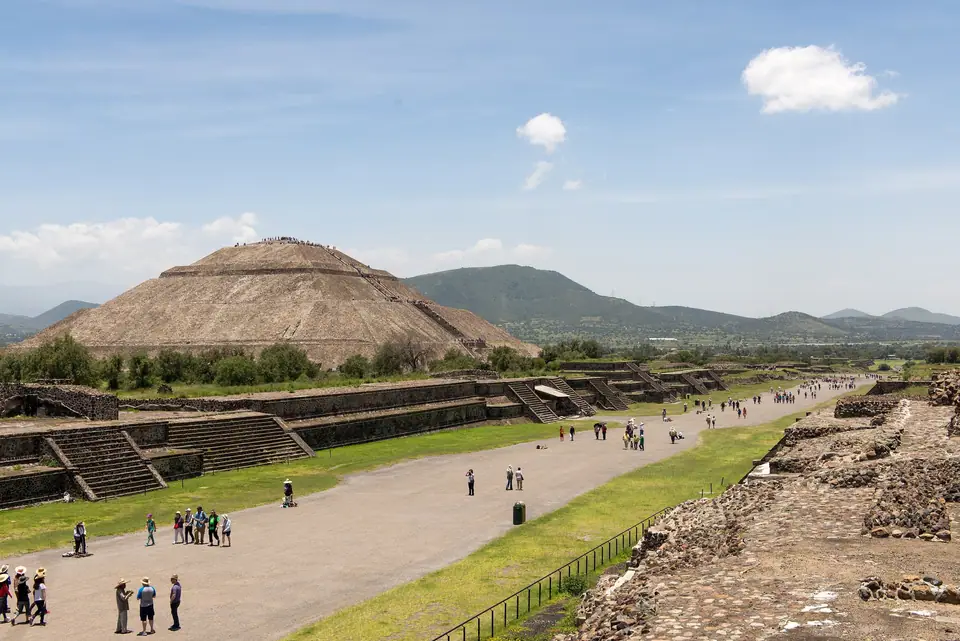
Photo: Ralf Roletschek · CC BY-SA 4.0
Teotihuacan Pyramids Day Trip: Sun, Moon and Avenue of the Dead
The Avenue of the Dead links massive ancient temples and sacred plazas outside Mexico City along a complete route.
Leaving the dense urban sprawl of the capital behind allows us to encounter one of the grandest archaeological landscapes in North America. Public coaches depart regularly from the northern transport terminals, carrying passengers directly to the entrance gates of the ancient complex. Before setting off on this excursion, checking our transit notes for Mexico City helps clarify regional bus connections and metro interchanges. Early morning departures remain essential, as the open highland valley offers minimal shade once the midday heat settles over the exposed stone platforms. Arriving as the gates open guarantees quieter pathways and softer lighting across the surrounding volcanic hills.
Navigating from Mexico City to the Sacred Valley
The journey northward traverses dry basin scenery, gradually revealing the distant silhouette of ancient stone monuments rising against the mountain ridges. Coaches stop outside the primary perimeter gates, allowing visitors to enter near the central administrative quarter. To help structure a full day excursion away from the capital, we can compare the main sectors across the archaeological zone:
| Sector Gate | Primary Landmark | Field Focus |
|---|---|---|
| Gate One | The Citadel Complex | Sunken ceremonial courtyard and serpent carvings |
| Gate Two | Pyramid of the Sun | Central ceremonial axis and eastern platforms |
| Gate Three | Pyramid of the Moon | Northern plaza, palace ruins, and mountain views |
Entering through the southern gate introduces the immense scale of the urban grid developed by an enigmatic highland civilisation. Bringing ample drinking water, a wide hat, and supportive walking shoes proves crucial for navigating the uneven pebble paths and steep stairways. Those organising broader cultural itineraries can also study our guide to historic landmarks across Mexico City for complementary museum visits.
Walking the Grand Avenue of the Dead
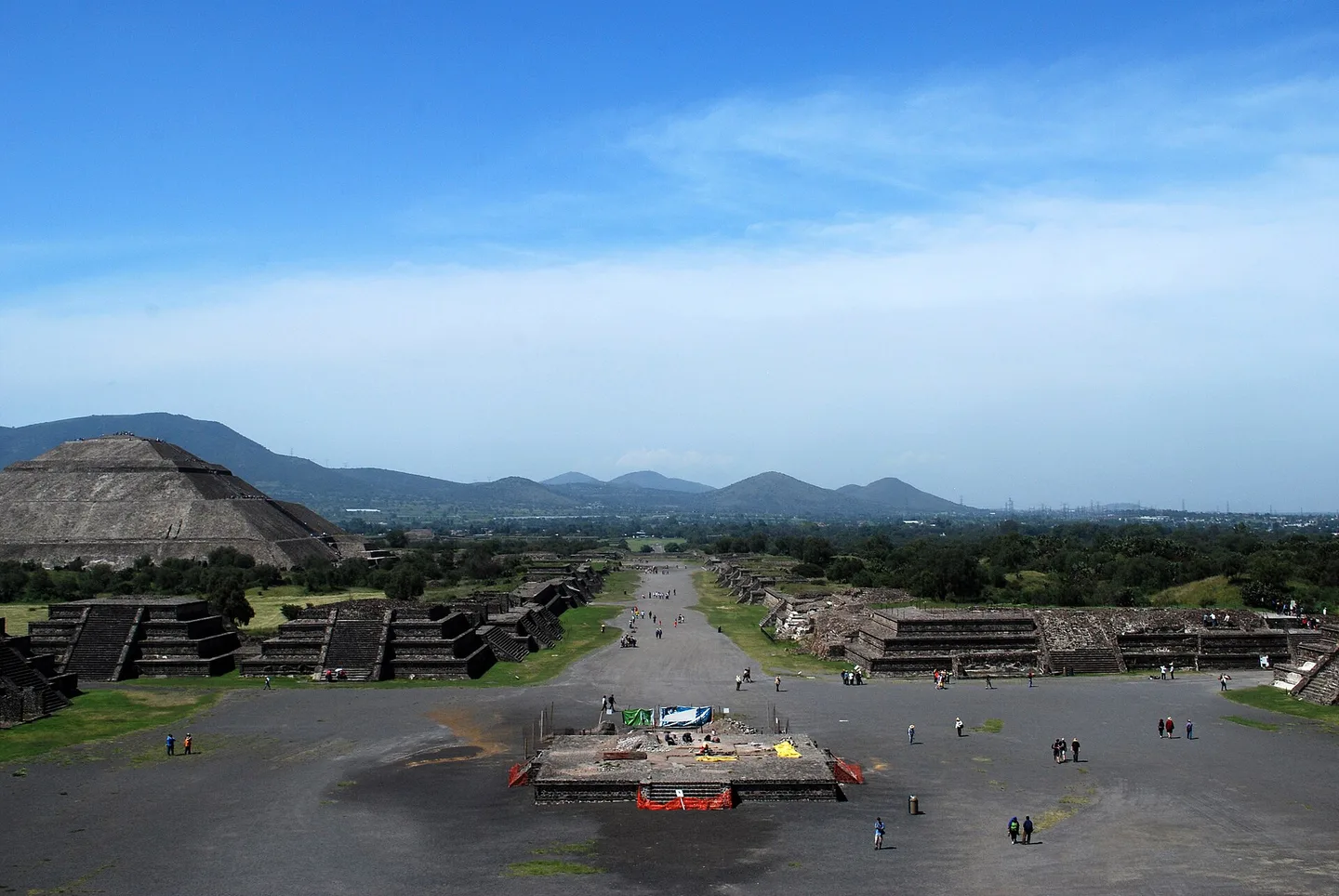
The central ceremonial highway, known historically as the Avenue of the Dead, forms the backbone of the entire ancient city. Walking this expansive corridor reveals sunken plazas, symmetrical residential ruins, and small temple mounds positioned rhythmically along the axis. The sheer width of the pathway reminds us that thousands of residents once gathered here during civic rituals. Stone drainage channels run beneath the surface, demonstrating sophisticated stormwater planning designed centuries before European contact.
As we advance northward, the perspective changes with every sunken court we descend and ascend. The Citadel enclosure houses intricate stone serpent heads emerging from weathered masonry, hinting at the ceremonial richness of the original settlement. Painted stucco fragments still cling to sheltered alcoves, revealing faded red mineral pigments that once coated the entire avenue. Wind sweeps across the open plain, carrying dust devils through the dry grass bordering the preserved stone foundations.
Ascending the Footprints of Sun and Moon
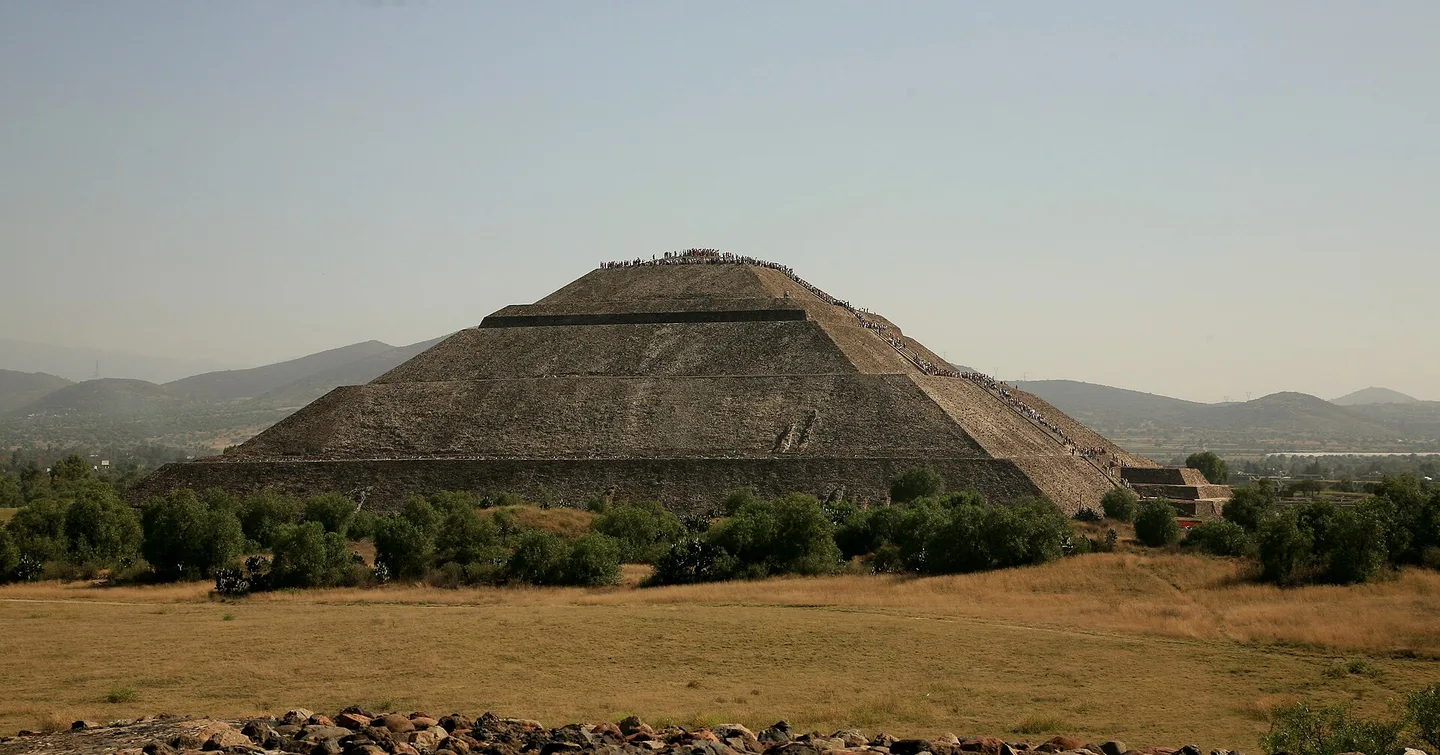
The Pyramid of the Sun dominates the eastern side of the thoroughfare, commanding attention through its massive terraced profile. Constructed from volcanic stone and clay mortar, the enormous monument represents an astonishing feat of pre-Columbian engineering. Although climbing to the upper summit is restricted to protect the fragile masonry, standing at the base conveys its staggering mass. Sunlight illuminates the stepped platforms, casting crisp triangular shadows across the surrounding ceremonial courtyards.
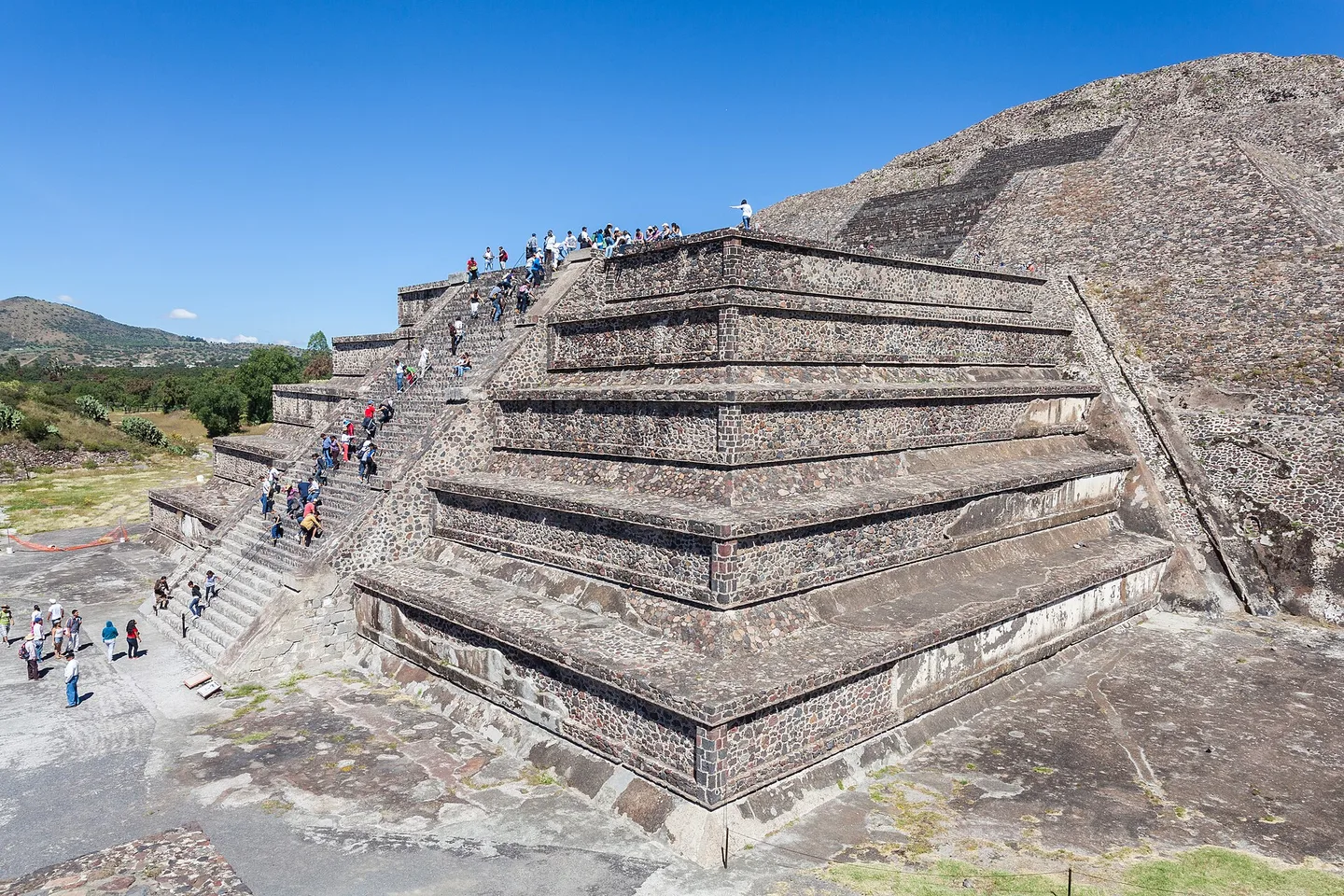
Continuing to the northern terminus brings us into the grand plaza fronting the Pyramid of the Moon. This plaza displays symmetrical altars that perfectly frame the sloping ridges of the sacred peak behind it. Climbing the lower permitted steps provides an unbroken panorama south along the full length of the ancient axis. From this elevated stone terrace, the disciplined urban geometry of the city appears absolute and harmonious. The view connects human architecture directly with the contours of the natural mountain basin.
Palace Courtyards, Murals and Return Transit
Near the northern plaza lies the Palace of Quetzalpapalotl, where sheltered interior courtyards preserve detailed stone carvings of mythical birds and obsidian inlays. Pillars flank narrow corridors, offering welcome shade and a rare glimpse into elite domestic quarters. Nearby chambers house preserved fresco fragments depicting jaguars blowing conch shells alongside botanical symbols of agricultural fertility. These delicate artistic details balance the monumental scale experienced along the open thoroughfare.
After completing the walking loop, local coaches collect passengers outside the designated perimeter gates for the return trip to the capital. Catching transport in the early afternoon allows travellers to avoid commuter congestion at the northern edge of the metropolis. On returning to urban districts, visitors can consult regional information displays for opening hours, admission prices, and ticketing rules covering major regional museums. Reviewing the city overview in our capital travel guide helps coordinate dining and transport for the evening ahead.
Official prices and opening hours
- Museo Nacional de Antropología (Chapultepec)Official site ↗
- Museo Frida Kahlo (Casa Azul, Coyoacán)Official site ↗
Where it is
- 1Teotihuacan Pyramids Day Trip
- Felipe Ángeles International Airport (NLU) · about 19 km from here in a straight line
- Directions in Google Maps
Stations and taxi ranks: OpenStreetMap. Airports: OurAirports. Distances are in a straight line.
Traveller tips
Real advice from people who have been to Mexico City. Every tip is read by our team before it goes live.
No tips yet. Been here? Yours could be the first.
Thank you! Your tip will appear here after a quick review.
More in Mexico City
Continue exploring Mexico City with related neighbourhood, food, and planning guides
What to Eat in Mexico City: Essential Dishes and Street Feasts
Mexico City, Mexico
Getting Around Mexico City by Metro, Metrobús, and Cablebús
Mexico City, Mexico
Zócalo and Centro Histórico: Aztec Foundations and Colonial Grandeur
Mexico City, Mexico
Chapultepec Park, Chapultepec Castle and the National Museum of Anthropology
Mexico City, Mexico
