Estadio Centenario, Parque Batlle and the Historic Prado District
Plan your visit to Estadio Centenario, the 1930 World Cup football museum in Parque Batlle, and the historic rose gardens of El Prado in Montevideo.
Two expansive civic parks provide green space inland from the coastal promenade: Parque Batlle in the geographical centre of the city and the nineteenth-century park district of El Prado along the Miguelete stream in the north. Both destinations offer a direct look into national heritage beyond the historic quarters of the port. You can easily integrate both stops into a broader 3-day Montevideo itinerary using local municipal buses or licensed taxis.
The 1930 World Cup Legacy at Estadio Centenario
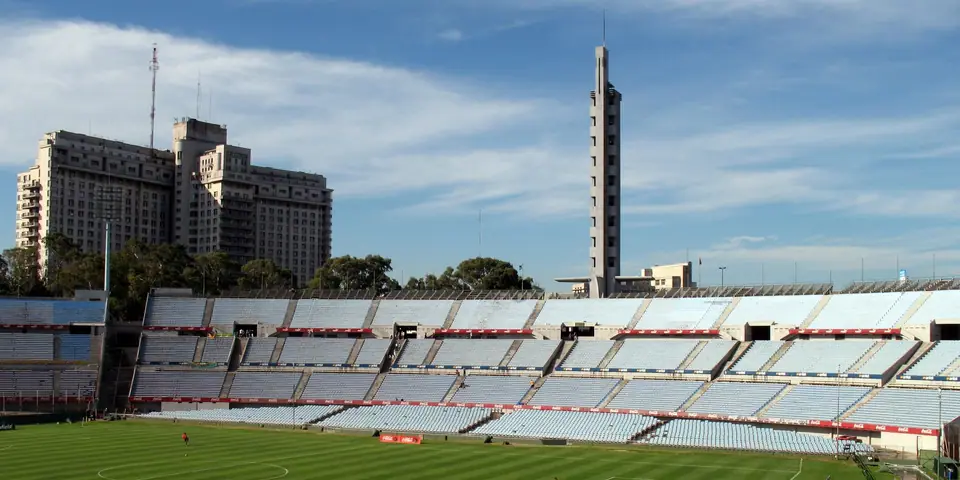
Following consecutive Olympic gold medals in Paris in 1924 and Amsterdam in 1928, Uruguay secured the right to host the inaugural 1930 FIFA World Cup. The tournament coincided with the centenary of the country's first constitution enacted in 1830. Modernist architect Juan Antonio Scasso designed the venue to hold immense crowds within Parque Batlle. Immigrant labourers completed the concrete colosseum in just nine months, working continuous shifts through wet winter conditions.
The stadium opened on 18 July 1930. Twelve days later, on 30 July 1930, Uruguay defeated Argentina 4 to 2 in the final match before 68,346 spectators to claim the maiden trophy. In 1983, FIFA officially designated Estadio Centenario as the only Historical Monument of World Football. Rising over the Olympic Tribune stands the 100-metre constructivist concrete Torre de los Homenajes. The tower features ribbed fins that recall a ship's prow and classic winged victories.
Museo del Futbol and the Grounds of Parque Batlle
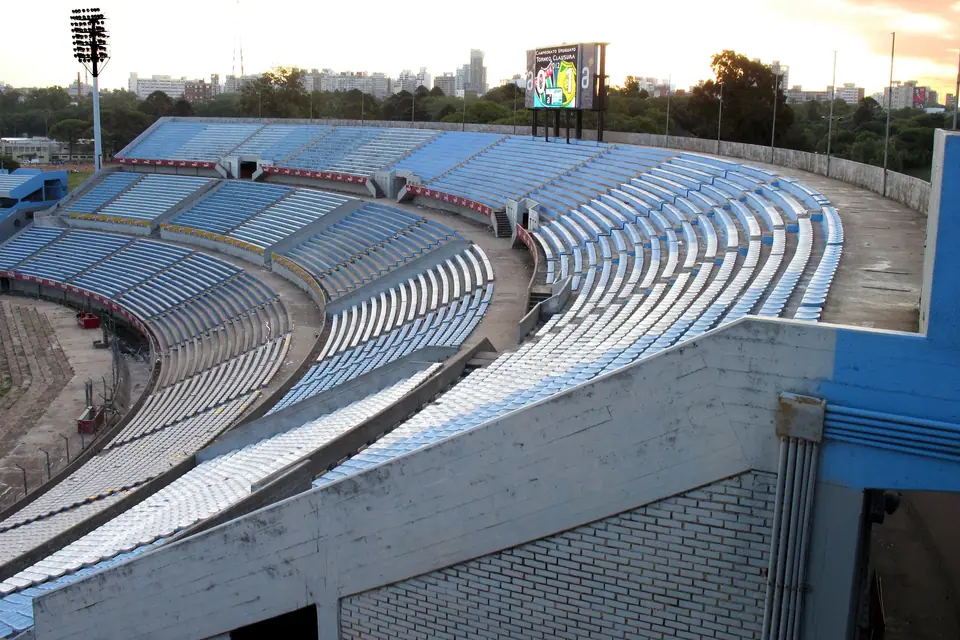
The Museo del Futbol operates beneath the concrete terraces of the Olympic Tribune. The collection displays original jerseys, boots, leather match balls, and archival photographs documenting the international victories of 1924, 1928, 1930, and 1950. Visitors can inspect official trophies from South American championships and early world tournaments before walking directly out into the lower seating tiers of the Tribuna Olimpica.
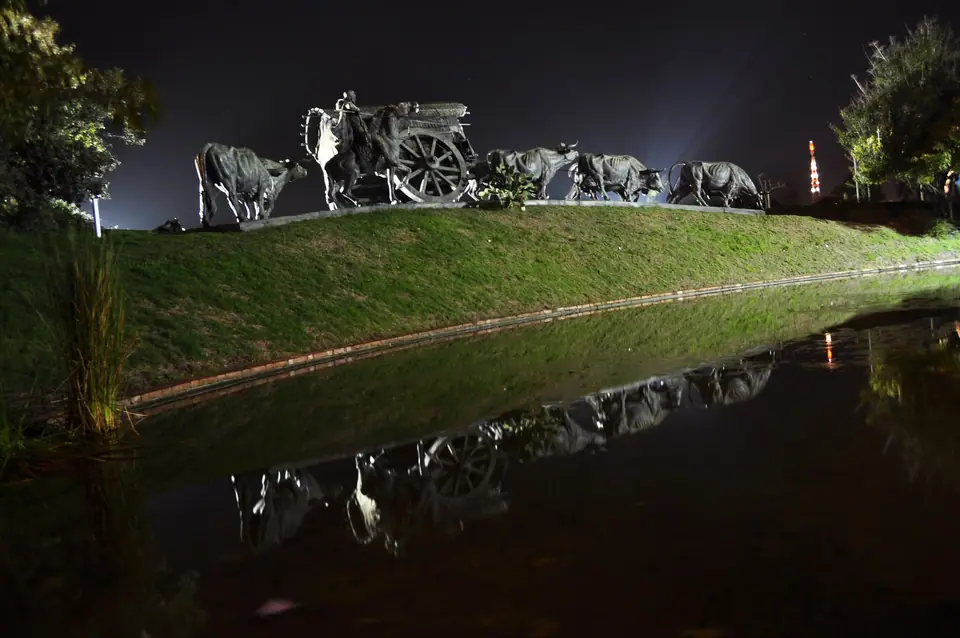
Parque Batlle surrounds the sporting complex with broad public lawns, exercise tracks, and mature eucalyptus trees. A short walk across the grass leads to Jose Belloni's famous 1934 bronze sculpture, La Carreta. This life-size public monument depicts three yoked pairs of oxen hauling a heavy pioneer wagon across rugged pasture, honouring the nineteenth-century rural freight drivers who crossed the interior plains. After touring the grounds, travellers often head west toward things to do in central Montevideo or continue across town toward the northern parks.
El Prado: The 1912 Rosedal and Cultural Grounds
Located in northern Montevideo along the Miguelete stream, El Prado served as an aristocratic country retreat throughout the nineteenth century. Wealthy merchant families constructed suburban estates and planted exotic trees along the gentle waterways. The district retains a peaceful residential atmosphere defined by classical residences and deep botanical gardens.
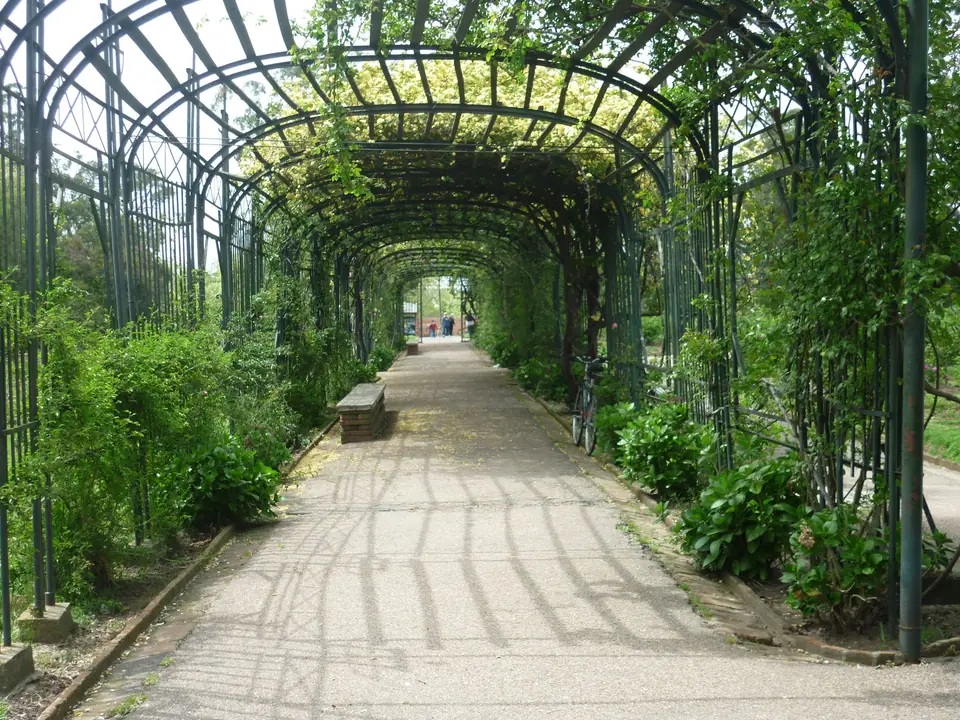
The horticultural centrepiece of the public grounds is the Rosedal, created in 1912. Designed by French landscape architect Charles Racine, the rose garden features extensive iron pergolas and circular Art Nouveau pavilions. More than 12,000 rose bushes grow within these geometrical borders, producing abundant flowers during spring and early summer. Adjoining parklands contain the Professor Atilio Lombardo Botanical Garden as well as the Museo Juan Manuel Blanes, which houses significant nineteenth-century Uruguayan paintings and a tranquil Japanese Garden.
Inland Cultural Landmarks Comparison
| Site | Primary Attraction | Historical Origin | Setting |
|---|---|---|---|
| Estadio Centenario | Inaugural 1930 World Cup pitch and Torre de los Homenajes | Designed in 1929 by Juan Antonio Scasso | Parque Batlle sports complex |
| Museo del Futbol | 1924, 1928, 1930, and 1950 championship trophies and kits | Inaugurated beneath Tribuna Olimpica | Base of the stadium tower |
| La Carreta Monument | Life-size bronze sculpture of oxen hauling a pioneer wagon | Cast in 1934 by Jose Belloni | Open lawns of Parque Batlle |
| El Rosedal | Pergola rose garden containing over 12,000 rose bushes | Designed in 1912 by Charles Racine | Prado parklands along Miguelete stream |
| Museo Juan Manuel Blanes | Classic national fine art collection and Japanese Garden | Former nineteenth-century suburban estate | Avenida Millan corridor in Prado |
Practical Transit and Regional Connections
Connecting Parque Batlle with El Prado is simple via road. Numerous urban bus lines travel along Avenida 8 de Octubre, Avenida Italia, and Bulevar Artigas. You can check municipal transport timetables or hail licensed radio taxis across either district. If you want to explore further westward across the bay, the 134-metre hill at Fortaleza del Cerro and Tannat wine bodegas provides defensive ramparts built between 1809 and 1839 with panoramic harbour views.
Open-Meteo climate records from 2015 to 2024 indicate pleasant conditions for outdoor park walking. Summer afternoons in January reach average highs of 27.8°C with 42 millimetres of rainfall across 6 wet days. February registers average highs of 27.0°C with 42 millimetres of precipitation. Spring months such as October record average highs of 20.7°C and lows of 12.4°C across 7 wet days, making it an ideal period to inspect the blooming rose borders in El Prado. Winter conditions in July drop to average daytime highs of 14.7°C and overnight lows of 7.3°C. Bring a windbreaker during cooler months when walking through open sporting grounds.
Museum Entry Regulations and Match-Day Advice
Ticketing rules and operating schedules for the Museo del Futbol and the public botanical gardens vary across the sporting calendar. Because match fixtures can close the interior stadium bowl to museum visitors on short notice, always check the official museum site for current opening times and admission fees before making your journey. Photography is permitted within public areas, but large backpacks may require bag checks at stadium gates. Combining the stadium visit with the peaceful walking paths of Prado delivers a complete picture of historic civic life in the capital.
Where it is
- 1Estadio Centenario, Parque Batlle and the Historic Prado District
- Carrasco General Cesáreo L. Berisso International Airport (MVD) · about 13 km from here in a straight line
- Directions in Google Maps
Stations and taxi ranks: OpenStreetMap. Airports: OurAirports. Distances are in a straight line.
Traveller tips
Real advice from people who have been to Montevideo. Every tip is read by our team before it goes live.
No tips yet. Been here? Yours could be the first.
Thank you! Your tip will appear here after a quick review.
More in Montevideo
Continue exploring Montevideo with related neighbourhood, food, and planning guides
Colonia del Sacramento and Punta del Este Day Trips from Montevideo
Montevideo, Uruguay
Montevideo: Waterfront Geography and Essential Logistics
Montevideo, Uruguay
Things to Do in Montevideo: Historic Quarters, Markets and the Rambla
Montevideo, Uruguay
How to Get to Montevideo: Carrasco Airport, River Ferries and Tres Cruces
Montevideo, Uruguay
