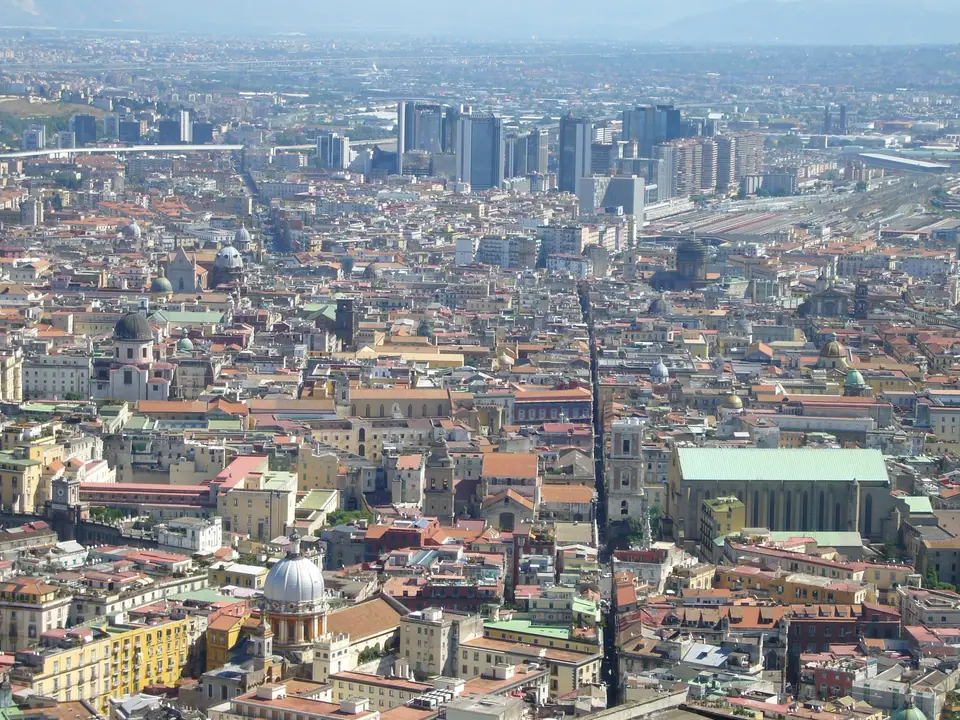
Photo: Lalupa · CC BY-SA 4.0
Spaccanapoli and the Centro Storico: Walking the Ancient Greco-Roman Grid
Walking Spaccanapoli takes you directly along the lower decumanus of ancient Neapolis, slicing through centuries of layered southern Italian urban life.
Seen from the high ramparts of the Vomero hill, a perfectly straight fissure slices cleanly through the dense terracotta roof tiles of Naples. This ancient street line is known locally as Spaccanapoli, literally meaning Naples splitter. It is not an official street name on modern city maps, but rather a continuous thoroughfare that changes its postal designations as it runs eastwards. Following this stone corridor places you directly onto the decumanus inferior, the lower east-west artery of the ancient Greco-Roman grid plan. The surrounding Centro Storico preserves this classical urban framework remarkably intact, maintaining a dense concentration of residences, workshops, and religious foundations.
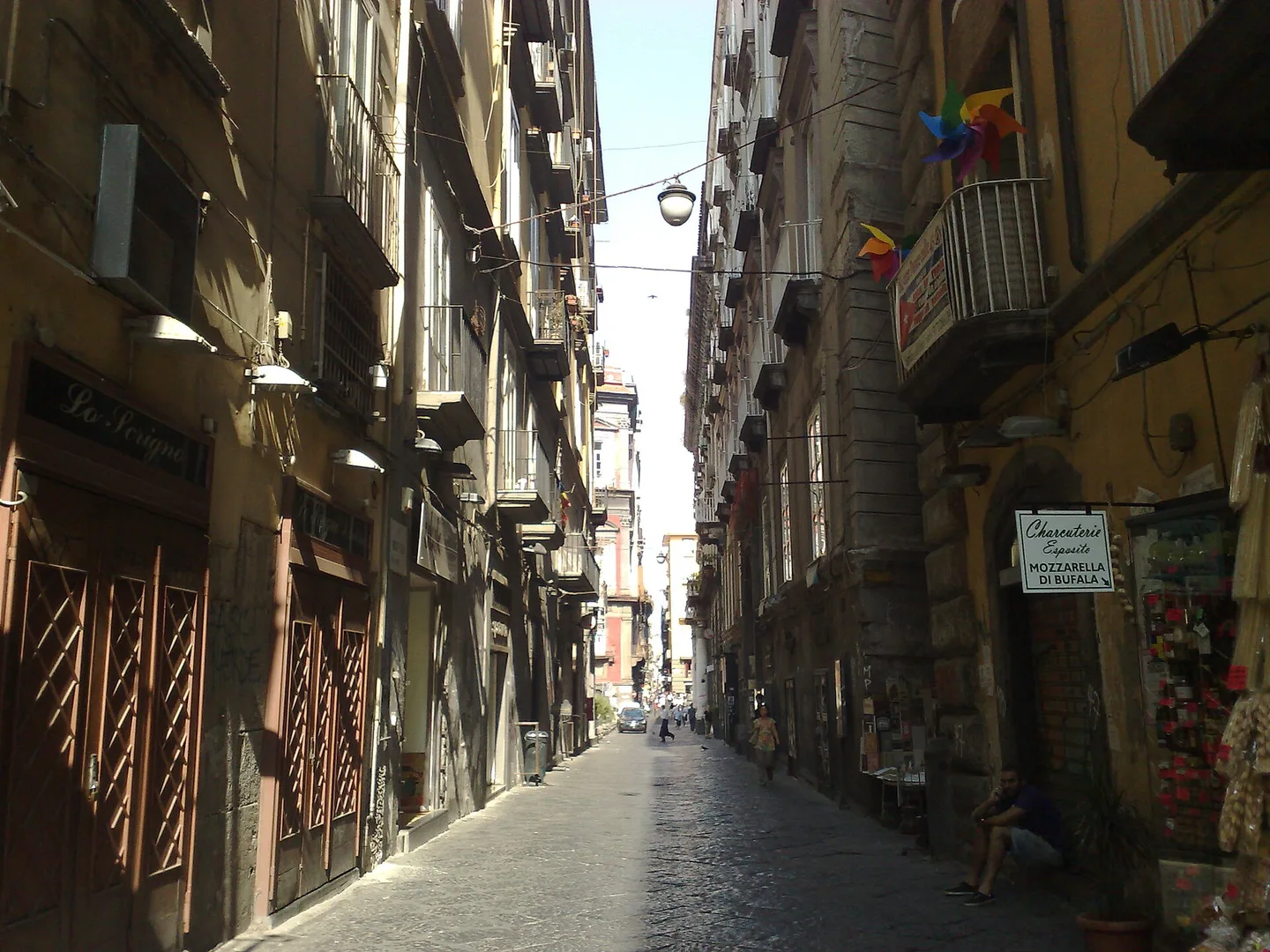
Walking along this stone channel reveals how continuous occupation has piled eras directly atop one another. Greek foundations support Roman brickwork, which in turn props up Renaissance palazzi and baroque façades. Washing lines hang suspended across narrow gaps between top-floor apartments, while motor scooters thread through pedestrian crowds on basalt paving slabs. Natural light filters into this deep urban trench, illuminating sculpted stone doorways and weathered stucco walls. The street functions as both a public thoroughfare and a shared living room for the neighbourhood.
Piazza del Gesù Nuovo and the Central Piazzas
Starting at the western edge, the route opens at Piazza del Gesù Nuovo, dominated by the diamond-pointed rustic ashlar façade of its central church. Here, the open space offers breathing room before the street narrows dramatically into the dense urban canyon. Stepping into the quiet interior of the complex reveals rich baroque fresco cycles that contrast with the stone exterior. Just across the cobbles stands the complex of Santa Chiara, known for its tranquil cloister decorated with painted maiolica tiles showing rural scenes and fruit garlands.
Continuing east along Via Benedetto Croce, the passage leads into Piazza San Domenico Maggiore, framed by an ornate plague spire and towering aristocratic palaces. This square has long served as an intellectual crossroads, where Dominican friars once debated philosophy within the adjoining convent walls. Today, people gather around the steps to drink espresso or share fresh pastries from historic pasticcerie. The contrast between quiet church interiors and the animated outdoor square captures the essence of the old quarter. Visitors who want to map out classic Neapolitan highlights can easily connect these squares to nearby landmarks.
San Gregorio Armeno and the Perpendicular Cardines
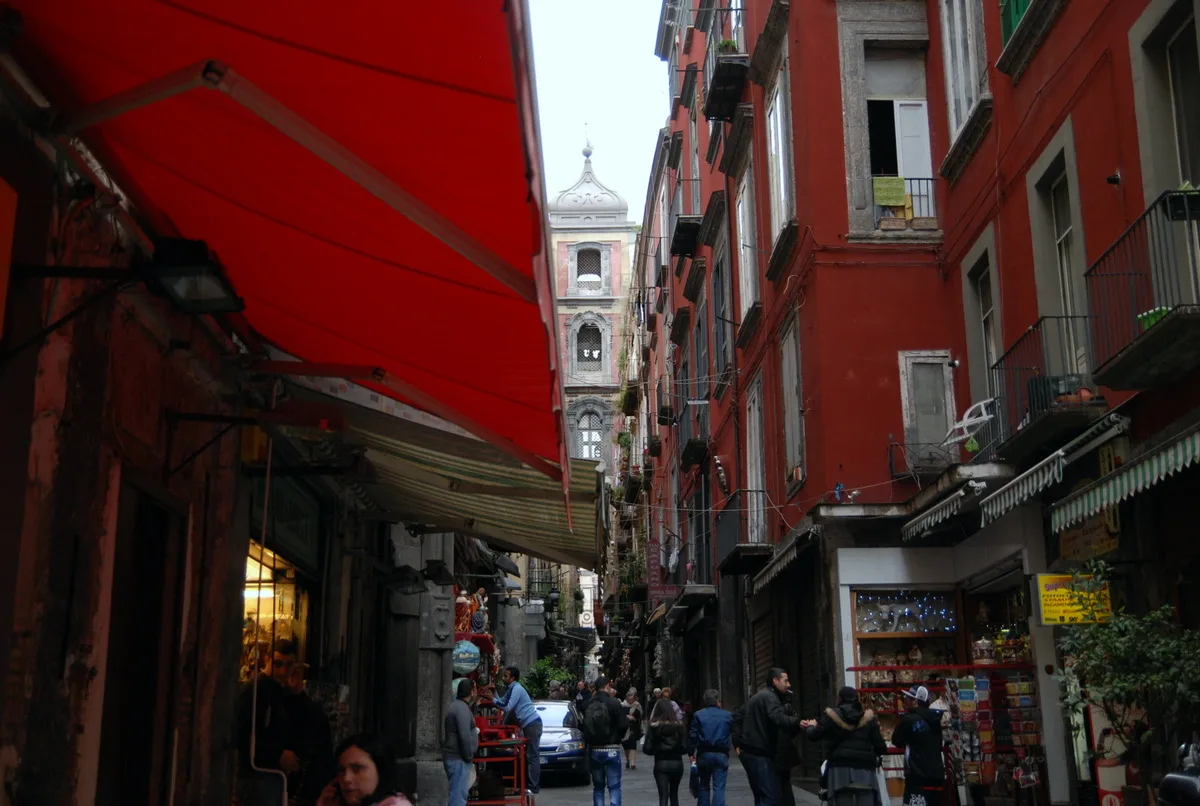
Intersecting the straight path of Spaccanapoli are the cardines, the narrower north-south lanes of the ancient street grid. The most renowned of these side alleys is Via San Gregorio Armeno, which links the lower decumanus to the central decumanus along Via dei Tribunali. This street is widely recognised for its traditional nativity workshops, where skilled artisans shape terracotta figurines throughout every season of the year. Displays spill out of small shops, presenting handcrafted angels, holy family statues, and caricatures of popular figures.
Climbing this slight incline brings you past the elevated cloister bell tower of the Church of San Gregorio Armeno, which bridges the alley overhead. Tucked into these side lanes are smaller chapels and discreet doorways leading to artistic treasures. Just steps away lies the Museo Cappella Sansevero, where master sculptors produced intricate marble allegories. The side alleys remain sheltered from the sun during warm summer afternoons, creating a cooler microclimate between tall residential walls. Those reviewing the climate patterns across Naples will find these shaded corridors pleasant in warmer months.

Route Segments and Walking Practicalities
Understanding the street divisions makes navigating this long urban corridor straightforward. Below is a structured breakdown of the primary sections along the walking route, highlighting their distinctive characteristics and notable waypoints along the way:
| Street Segment | Key Waypoints | Atmospheric Character |
|---|---|---|
| Via Pasquale Scura to Gesù Nuovo | Piazza del Gesù Nuovo, Santa Chiara | Gradual transition from hillside slope into wide, stone-paved gathering space |
| Via Benedetto Croce | Palazzo Filomarino, San Domenico Maggiore | Outdoor café tables, historic bookshops, and intellectual palazzi |
| Via San Biagio dei Librai | San Gregorio Armeno crossing, bronze statue of Pulcinella | Dense market stalls, antique print shops, and intense pedestrian flow |
| Via Vicaria Vecchia | Forcella entrance, street murals | Residential edge where the ancient quarter connects to modern residential life |
Walking the full length of the corridor requires alert awareness, as delivery mopeds frequently share the narrow stone pavement with visitors and shopping residents. Paving stones can turn slick during brief rain showers, making sturdy shoes with good rubber traction essential. Taking occasional breaks inside cool church vestibules allows you to escape the street noise and view the sacred art of the district. The straight street line remains one of the most compelling walking journeys in southern Italy.
Official prices and opening hours
- Parco Archeologico di PompeiOfficial site ↗
- Museo Cappella Sansevero (Veiled Christ)Official site ↗
Where it is
- 1Spaccanapoli and the Centro Storico
- Naples International Airport (NAP) · about 5 km from here in a straight line
- Directions in Google Maps
Stations and taxi ranks: OpenStreetMap. Airports: OurAirports. Distances are in a straight line.
Traveller tips
Real advice from people who have been to Naples. Every tip is read by our team before it goes live.
No tips yet. Been here? Yours could be the first.
Thank you! Your tip will appear here after a quick review.
More in Naples
Continue exploring Naples with related neighbourhood, food, and planning guides
Where to Stay in Naples: Centro Storico, Chiaia, Santa Lucia and Vomero
Naples, Italy

Three Days in Naples: Ancient Streets, Royal Monuments, and Pompeii
Naples, Italy
What to Eat in Naples: Pizza, Pastries, Ragù and Street Food
Naples, Italy

Getting Around Naples by Metro, Funicular and Regional Rail
Naples, Italy
