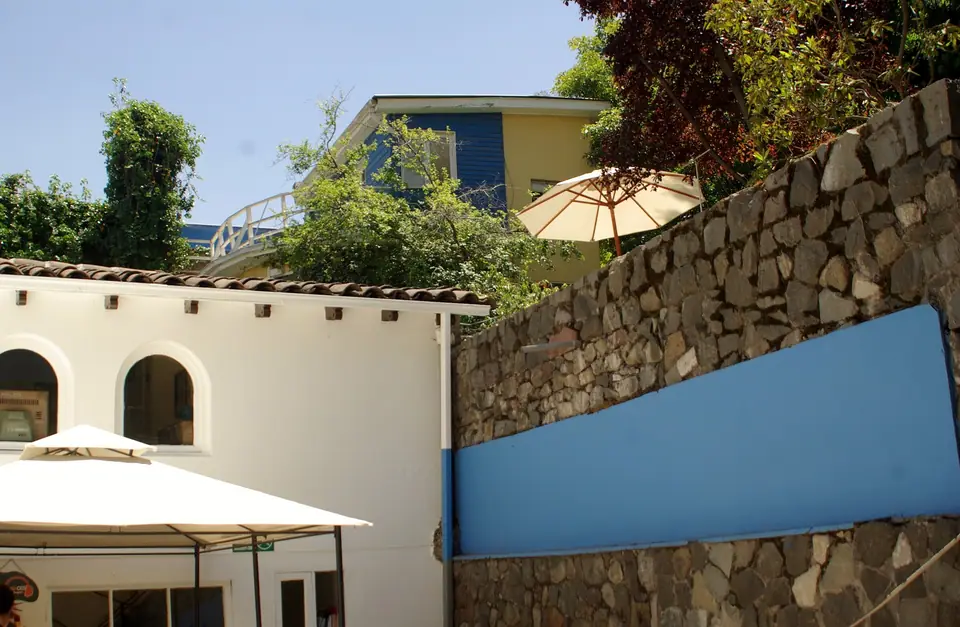
Photo: Rodrigo Fernández · CC BY-SA 4.0
Barrio Bellavista and Pablo Neruda's House-Museum La Chascona
Discover Pablo Neruda's hillside retreat La Chascona and plan your walk through the street murals, theatres, and artisan workshops of Santiago's Barrio Bellavista.
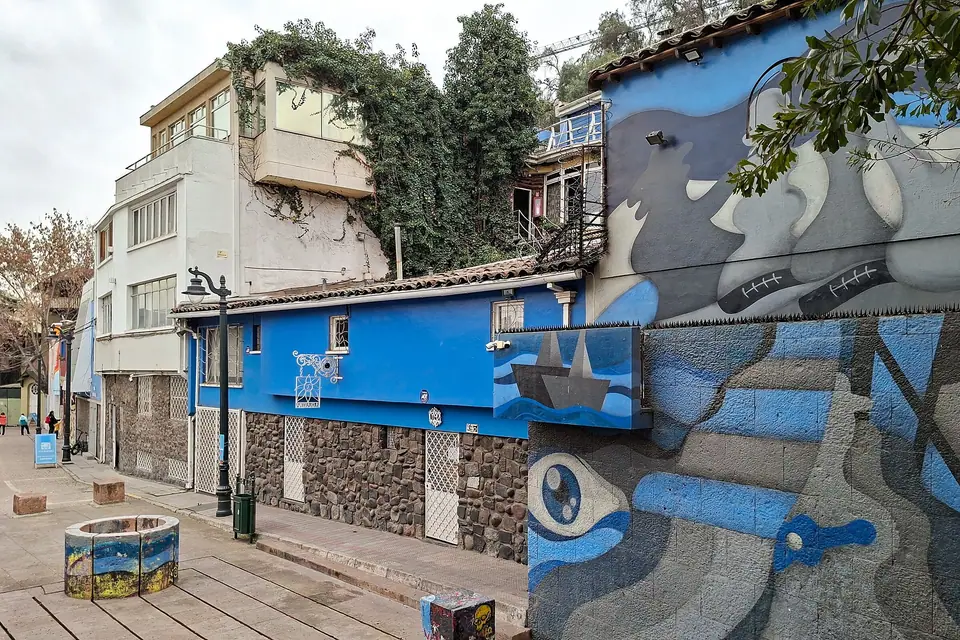
Positioned between the northern bank of the Mapocho River and the wooded southern base of Cerro San Cristóbal, Barrio Bellavista has served as Santiago's bohemian quarter since the early twentieth century. The neighbourhood is divided down the middle along Calle Pío Nono. The western half sits inside the commune of Recoleta, while the eastern portion belongs to Providencia. Travellers crossing between these two sectors encounter a striking architectural shift from residential courtyards and craft ateliers to political street murals and theatrical venues.
La Chascona: Pablo Neruda and Matilde Urrutia's Hillside Refuge
Tucked into the base of the hill at Fernando Márquez de la Plata 0192 stands La Chascona. The property is one of three Chilean residences designed by the 1971 Nobel Prize in Literature laureate Pablo Neruda. In 1953, Neruda bought the steep plot with its tumbling mountain stream to create a secret home for his lover and future third wife, Matilde Urrutia. He named the house using the Quechua term for tangled hair, an affectionate nod to Matilde's fiery red locks.
Neruda collaborated with exiled Catalan architect Germán Rodríguez Arias to adapt the difficult slope into a multi-tiered residence connected by outdoor stone staircases, footbridges, and terraces. Neruda moved into the property permanently in February 1955. On 23 September 1973, twelve days after the Chilean military coup, Neruda died. Soldiers had broken into the residence, smashing furniture and flooding the lower floor. Matilde Urrutia refused to be intimidated, conducting Neruda's wake among the flooded rubble before restoring the rooms. She lived on the site until 1985. The Chilean state declared the house a National Monument in 1990, and the Fundación Pablo Neruda manages the estate as a public museum.
The rooms feature a distinct nautical character that reflects Neruda's love of the sea. Highlights inside the residence include:
- The Captain's Dining Room and Bar: Paneled with curved maritime timber, the bar displays coloured French glassware, sea shells, ship figureheads, and whimsical tableware collected during foreign travels.
- Diego Rivera's Portrait of Matilde Urrutia: Painted in 1956, this celebrated canvas depicts Matilde with two faces, hiding the profile of Neruda within her unruly red hair.
- The Living Room and Library: Reached across exterior stone pathways, these rooms house personal manuscripts, framed sketches, and Neruda's carved wooden figureheads salvaged from ocean vessels.
The Fundación Pablo Neruda manages visits via audio-guided tours. Because ticket fees and daily opening schedules change across the seasons, travellers should verify current access times on the official foundation website before arriving.
Street Murals and Cultural Life in Recoleta's Bellavista
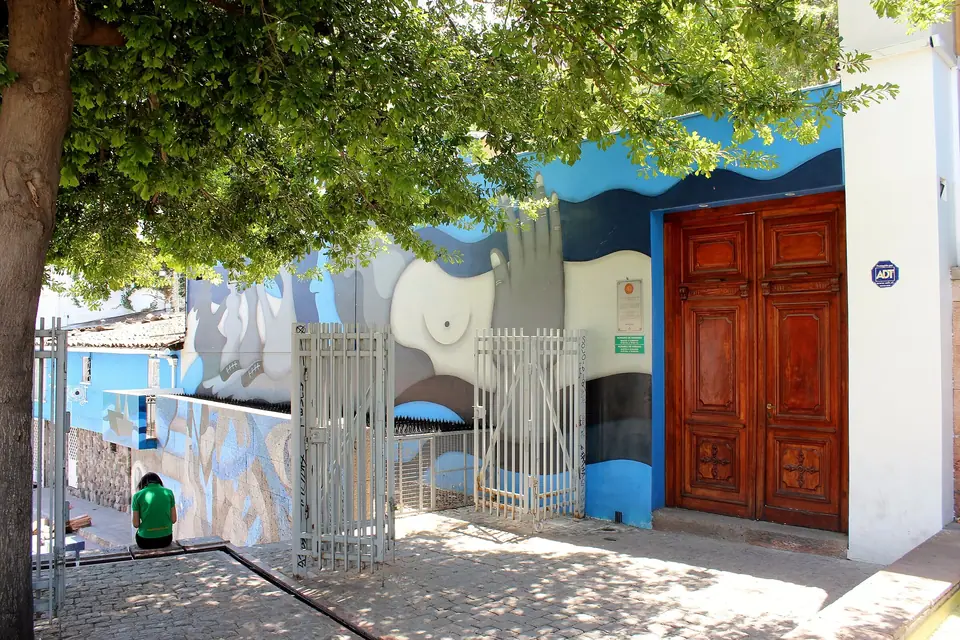
West of Calle Pío Nono, within the commune of Recoleta, the neighbourhood opens into an expressive canvas of public art. Streets such as Calle Dardignac, Calle Antonia López de Bello, and Calle Bombero Núñez feature expansive political and social murals painted by Chilean and international artists. These painted walls trace indigenous themes, social movements, and literary tributes to Neruda and Gabriela Mistral.
This sector is dynamic after nightfall, filled with student bars, independent dance spaces, and music clubs. Visitors combining a walking tour of the murals with market visits can cross southwest toward the central river food halls outlined in our Mercado Central, La Vega Central and the Mapocho River Markets guide. The lanes of Recoleta require standard city caution. Keep personal belongings discreet, avoid carrying open electronic devices down empty side alleys, and stick to lit thoroughfares after dark.
Providencia Bellavista: Patio Bellavista, Theatres, and Lapis Lazuli
East of Calle Pío Nono, Barrio Bellavista adopts a quieter, leafy profile along Calle Constitución and Calle Purísima. Here, travellers find boutique design shops, independent performing arts theatres, and specialised lapislázuli workshops. Chile is one of the few places worldwide with significant natural reserves of blue lapis lazuli stone, quarried high in the northern Andes. Ateliers along Calle Bellavista and Calle Constitución cut and polish this deep azure mineral into jewellery set in Chilean silver.
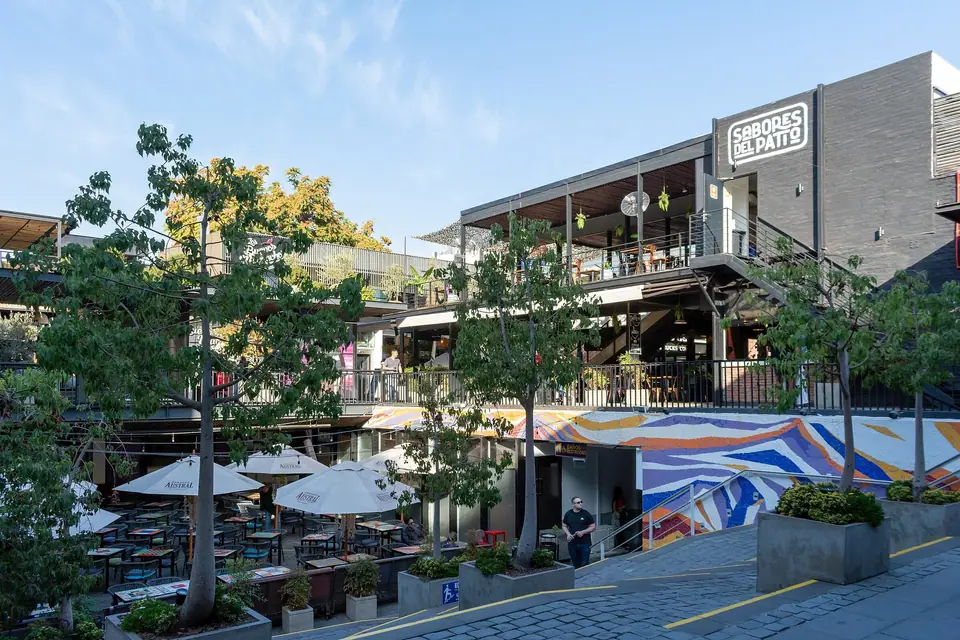
At the core of the Providencia sector sits Patio Bellavista, a pedestrian complex entered from Calle Constitución or Calle Pío Nono. This development brings together open-air dining terraces, coffee shops, and craft stores inside a guarded enclosure. Visitors exploring local cooking styles can consult our guide on what to eat in Santiago to identify classic ingredients like pastel de choclo or fresh seafood. Patio Bellavista offers a secure dining environment, particularly late in the evening when street traffic along Calle Pío Nono grows rowdy.
Barrio Bellavista Sector Comparison
| District Sector | Commune | Primary Focus | Key Streets |
|---|---|---|---|
| Western Bellavista | Recoleta | Urban murals, student bars, live music venues | Calle Dardignac, Calle Bombero Núñez |
| Eastern Bellavista | Providencia | Fine dining, artisan studios, theatre spaces | Calle Constitución, Calle Mallinkrodt |
| Patio Bellavista | Providencia | Enclosed restaurant complex, security patrols | Calle Constitución, Calle Pío Nono |
| San Cristóbal Foothills | Recoleta / Providencia | La Chascona, park entrances, funicular terminal | Fernando Márquez de la Plata |
Climate Realities and Seasonal Planning for Bellavista Walks
Walking the cobblestones and climbing the open stone staircases of La Chascona requires planning around the Santiago climate. Summer months are dry and hot. January averages afternoon highs of 30.4°C with negligible rainfall, while February records highs of 29.7°C. During this season, touring the terraced gardens of La Chascona or walking through the unshaded mural alleys of Recoleta is best completed during morning hours before the sun hits peak intensity.
Winter brings cooler temperatures and occasional rainfall. June averages daytime highs of 16°C with nighttime lows of 4.7°C and 35mm of rain over five wet days. July records the coldest nights, dropping to 3.8°C on average with 28mm of precipitation. Following winter rain showers, cloud cover lifts to reveal crisp views of the snow-capped Andes behind the quarter's tiled roofs, making winter afternoons ideal for photography along Calle Constitución.
Practical Navigation and Transit
Accessing Barrio Bellavista by public transport is straightforward. The nearest underground stop is Baquedano station, located across the Mapocho River where Metro Line 1 and Line 5 intersect. From Baquedano, walk north across the Pío Nono bridge over the river canal into the heart of the neighbourhood. Alternatively, Bellas Artes station on Line 5 allows travellers to stroll through Parque Forestal and cross the bridges into Bellavista. If you are combining this walk with adjacent hillside lookouts, head straight up Calle Pío Nono to reach the historic funicular base station at the foot of Cerro San Cristóbal.
Where it is
- 1Barrio Bellavista and Pablo Neruda's House-Museum La Chascona
- Comodoro Arturo Merino Benítez International Airport (SCL) · about 15 km from here in a straight line
- Directions in Google Maps
Stations and taxi ranks: OpenStreetMap. Airports: OurAirports. Distances are in a straight line.
Traveller tips
Real advice from people who have been to Santiago. Every tip is read by our team before it goes live.
No tips yet. Been here? Yours could be the first.
Thank you! Your tip will appear here after a quick review.
More in Santiago
Continue exploring Santiago with related neighbourhood, food, and planning guides
Where to Stay in Santiago: Best Areas and Communes Compared
Santiago, Chile
Santiago 3-Day Itinerary: Historic Plazas, Hilltop Parks and the Andes
Santiago, Chile
What to Eat in Santiago: Classic Dishes, Seafood and Counter Dining
Santiago, Chile
Plaza de Armas, Metropolitan Cathedral and the Pre-Columbian Art Museum
Santiago, Chile
