Photo: Branislav Marelic Rokov · CC BY-SA 3.0
Mercado Central, La Vega Central and Mapocho River Markets
Navigate Santiago's historic food corridors across the Mapocho River, exploring Scottish cast iron at Mercado Central, Estación Mapocho, and the sprawling produce aisles of La Vega.
Four blocks north of Plaza de Armas along Paseo Puente, the downtown street grid meets the canalised banks of the Mapocho River. Traders and local farmers have gathered along this natural boundary since the sixteenth century. A 1.2-kilometre walking circuit connects Victorian iron pavilions south of the water with wholesale agricultural storehouses in the northern district of Recoleta. This corridor links Chile's maritime catch with the agrarian harvests of the Central Valley.
Scottish Ironwork and Pacific Seafood at Mercado Central
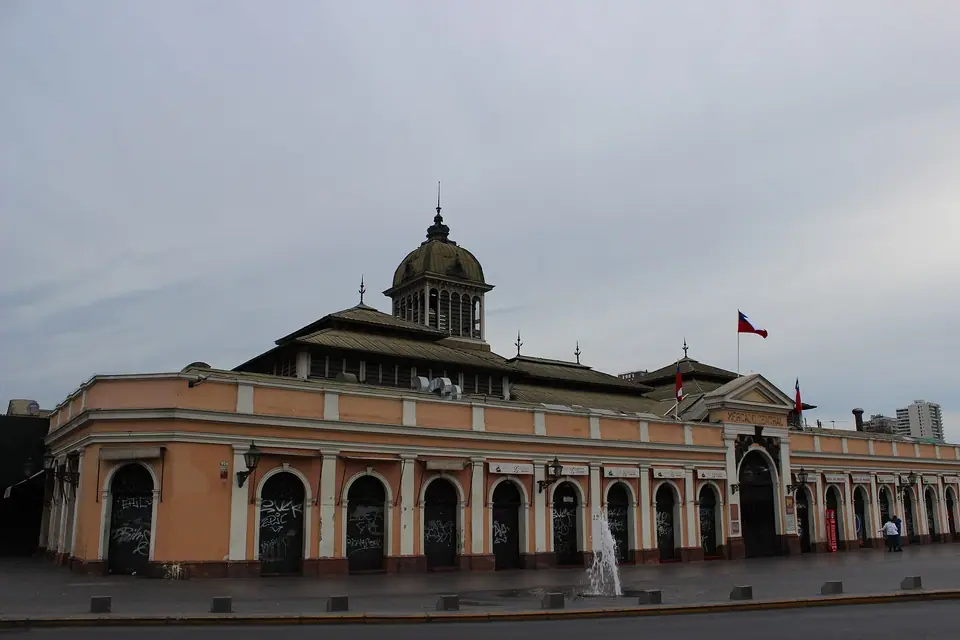
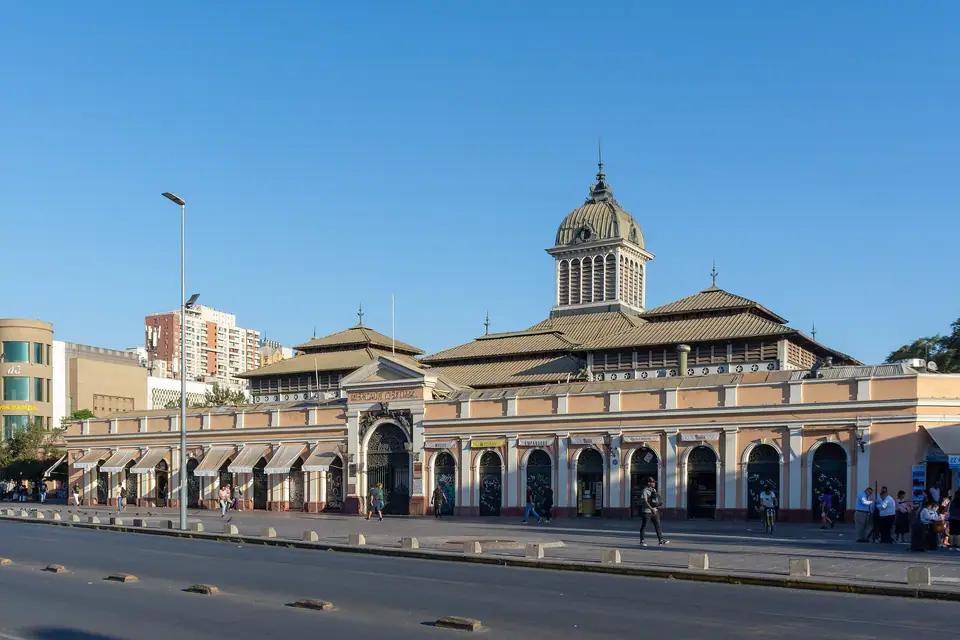
After an 1864 fire destroyed the old Plaza del Abasto, Chilean architect Fermín Vivaceta oversaw construction of the covered Mercado Central de Santiago. The hall was inaugurated in 1872 and earned Historic Monument status in 1984. British engineers Edward Woods and Charles Henry Driver designed the prefabricated wrought- and cast-iron frame. The metal components were cast between 1868 and 1872 in Glasgow, Scotland, by R. Laidlaw and Sons before sea transport to Valparaíso. Fluted iron columns with Corinthian capitals support filigree spandrels and a central two-tier pyramidal mansard dome ringed by eight skylights.
The central hall contains sit-down seafood restaurants with formal table settings. Active wet-fish counters occupy the outer stone perimeter. Fishmongers arrange Pacific species chilled by the cold Humboldt Current on sloping ice trays. Counters feature pink and black congrio (conger eel), reineta, southern king crab (centolla), razor clams (machas), sea urchins (erizos), and giant barnacles (picorocos). Consult our curated Santiago food guide to understand seasonal fish preparation and counter etiquette.
Beaux-Arts Design at Centro Cultural Estación Mapocho
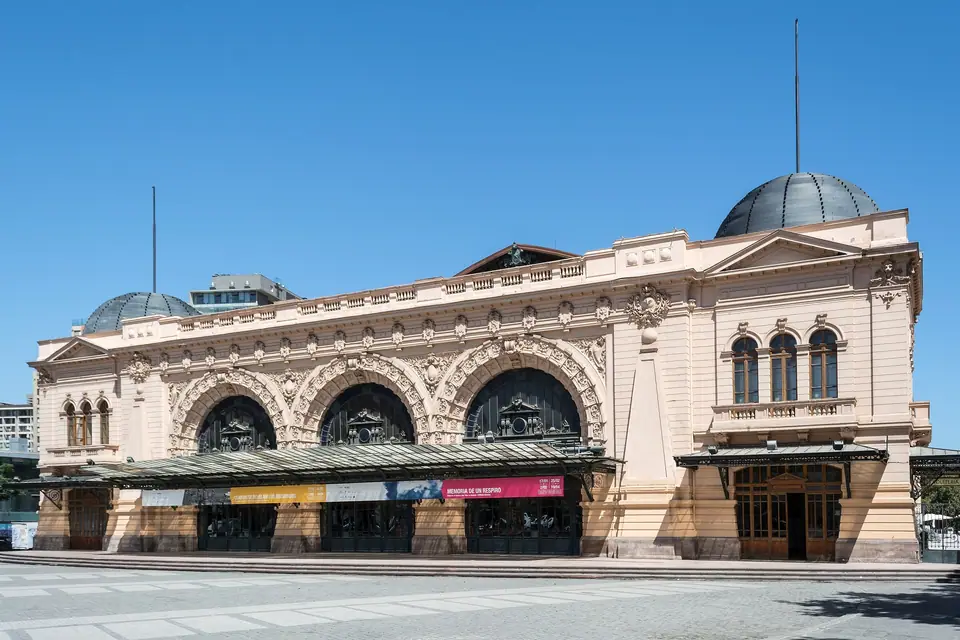
Two blocks west along the riverbank stands the monumental former Estación Mapocho railway terminal. Architect Émile Jéquier designed the terminal in Beaux-Arts style for Chile's 1910 Centenary celebrations, leading to its formal opening in 1912. The massive steel-and-glass vault originally sheltered passenger trains arriving from northern mining provinces and regional agricultural towns. Rail operations ceased in 1987, after which the building avoided demolition through conversion into Chile's largest cultural exhibition centre in 1994. The hall hosts international book fairs, modern art exhibitions, and musical performances beneath its preserved iron trusses.
Crossing the Mapocho to Tirso de Molina and San Francisco Flowers
Pedestrian bridges cross the stone embankments of the Mapocho River into the historic district of La Chimba within Recoleta commune. The northern bank immediately reveals the modern covered Mercado de Abasto Tirso de Molina. Ground-floor merchants sell dried legumes, teas, woven kitchen baskets, and clothing. The upper mezzanine level features sunlit food stalls where cooks prepare freshly pressed tropical fruit juices and affordable daily lunch plates from across South America.
East of Tirso de Molina along Avenida Santa María, the Pérgola de las Flores de San Francisco operates as Santiago's premier historic flower market. Independent florists arrange lilies, roses, chrysanthemums, and imported blooms under shaded pavement awnings. The flower market offers a fragrant buffer between the civic riverbanks and the wholesale food warehouses further north.
La Vega Central and Central Valley Wholesale Trading
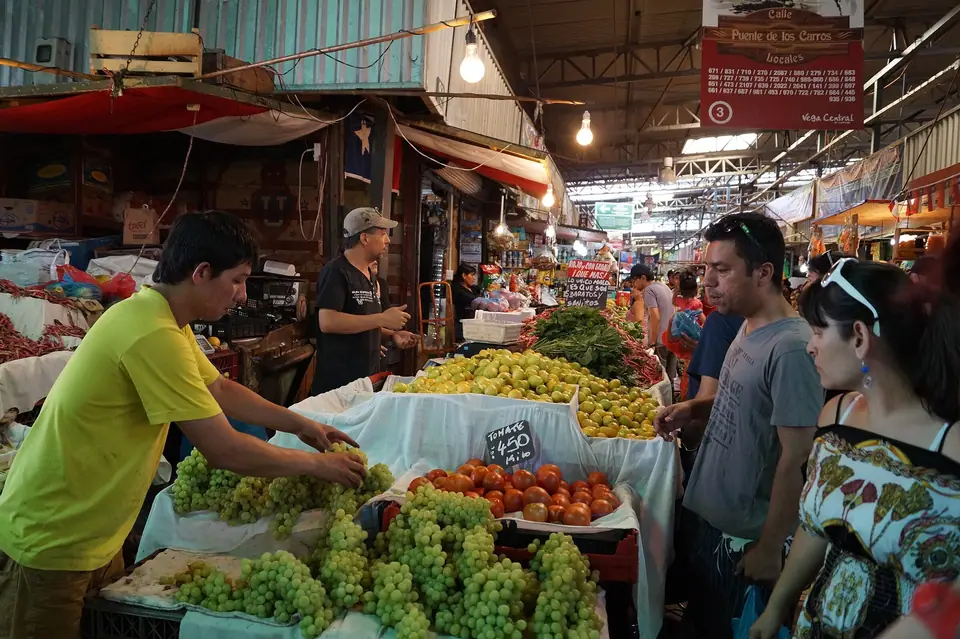
Continuing north to Calle Dávila Baeza brings you into La Vega Central, the core wholesale food distribution hub of metropolitan Santiago. Agustín Gómez García founded the commercial market in 1895. Substantial brick warehouses opened in 1916, spanning over 6,000 square metres of covered ground. Forklifts, wooden handcarts, and suppliers navigate broad internal corridors between mountainous displays of produce delivered daily from Central Valley farms.
Stalls feature seasonal Chilean staples, including giant choclo corn, creamy avocados, bundles of fresh coriander, and sacks of red rocoto chillies. Spice merchants weigh scoops of smoked merkén chilli powder mixed with toasted coriander seeds. Navigating La Vega offers direct insight into the raw ingredients supplying neighbourhood markets across Providencia and Barrio Lastarria. Visitors planning full walking routes can incorporate these stops into our comprehensive Santiago 3-day itinerary.
Market District Characteristics and Architecture
| Market Site | Primary Architect or Founder | Inauguration Year | Key Architectural Style | Core Speciality |
|---|---|---|---|---|
| Mercado Central | Fermín Vivaceta, Woods & Driver | 1872 | Prefabricated Glasgow cast iron | Pacific fish and seafood dining |
| Estación Mapocho | Émile Jéquier | 1912 | Beaux-Arts steel-and-glass vault | Cultural fairs and public exhibitions |
| Tirso de Molina | Municipal Reconstruction | 2011 | Modern covered market pavilion | Upper-floor juices and regional lunches |
| La Vega Central | Agustín Gómez García | 1916 | Solid industrial brick warehouses | Wholesale Central Valley fruit and produce |
Practical Movement and Climate Considerations
The Mapocho market district experiences seasonal variations typical of Santiago's Mediterranean climate. Summer months between December and February bring dry conditions with afternoon highs reaching 29.0°C to 30.4°C and zero rainy days. Produce stalls in La Vega overflow with stone fruit, watermelons, and fresh berries during these sunny months. Midwinter days in June and July cool to highs of 15.7°C to 16.0°C and night lows between 3.8°C and 4.7°C, accompanied by 28 to 35 millimetres of monthly rainfall. Cold weather shifts culinary demand at Mercado Central toward steaming bowls of caldillo de congrio.
Wear closed, slip-resistant shoes when navigating Mercado Central and La Vega Central, as melting crushed ice and rinsed greens keep stone floors wet throughout morning trading. Keep personal belongings secure in front pockets while moving through narrow, crowded warehouse aisles. Morning arrivals offer the freshest seafood counters and active wholesale negotiations before regional delivery trucks depart for outer residential communes.
Where it is
- 1Santiago
- Comodoro Arturo Merino Benítez International Airport (SCL) · about 13 km from Santiago in a straight line
- Directions in Google Maps
Stations and taxi ranks: OpenStreetMap. Airports: OurAirports. Distances are in a straight line.
Traveller tips
Real advice from people who have been to Santiago. Every tip is read by our team before it goes live.
No tips yet. Been here? Yours could be the first.
Thank you! Your tip will appear here after a quick review.
More in Santiago
Continue exploring Santiago with related neighbourhood, food, and planning guides
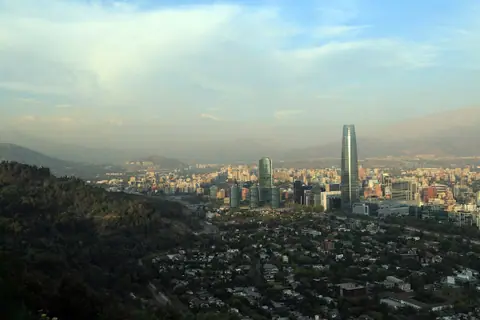
Sky Costanera, Providencia, Parque Bicentenario and Cajón del Maipo
Santiago, Chile
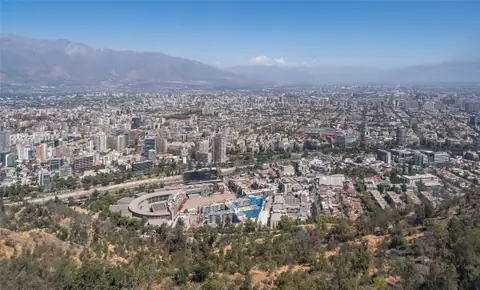
Santiago: Layout, Communes and Planning Essentials
Santiago, Chile
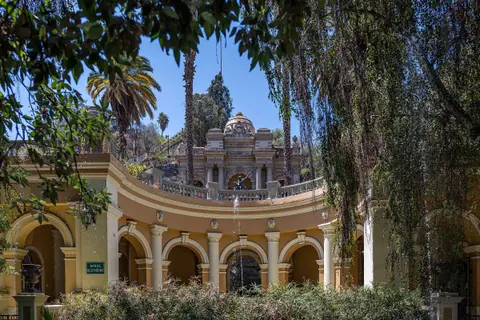
Best Things to Do in Santiago: Hilltop Parks, Cultural Palaces and Mountain Vistas
Santiago, Chile
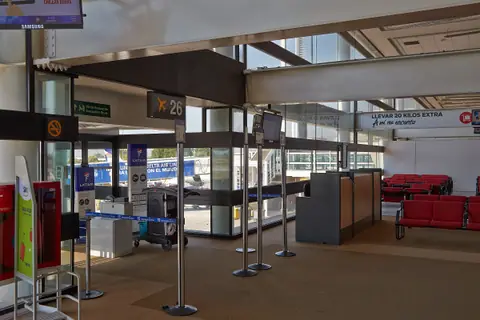
How to Get to Santiago: SCL Airport, Metro Lines and Bus Terminals
Santiago, Chile
