Photo: TomasVial · CC BY 4.0
Where to Stay in Santiago: Best Areas and Communes Compared
Compare the best neighbourhoods to stay in Santiago, Chile, from cultural Barrio Lastarria and Providencia to modern Las Condes and historic París-Londres.
Selecting where to base yourself in the Chilean capital is straightforward because the primary residential and cultural sectors follow an east-to-west axis. The central spine of the city runs parallel to the Mapocho River and connects directly to Metro Line 1, Line 5, and Line 6. Each district offers distinct street layouts, architectural periods, and evening atmospheres. First-time visitors usually prioritise pedestrian access to historic monuments and museums, whereas business travellers and returning visitors often prefer quiet tree-lined avenues further east toward the Andes.
Barrio Lastarria and Bellas Artes for Walkable Cultural Access
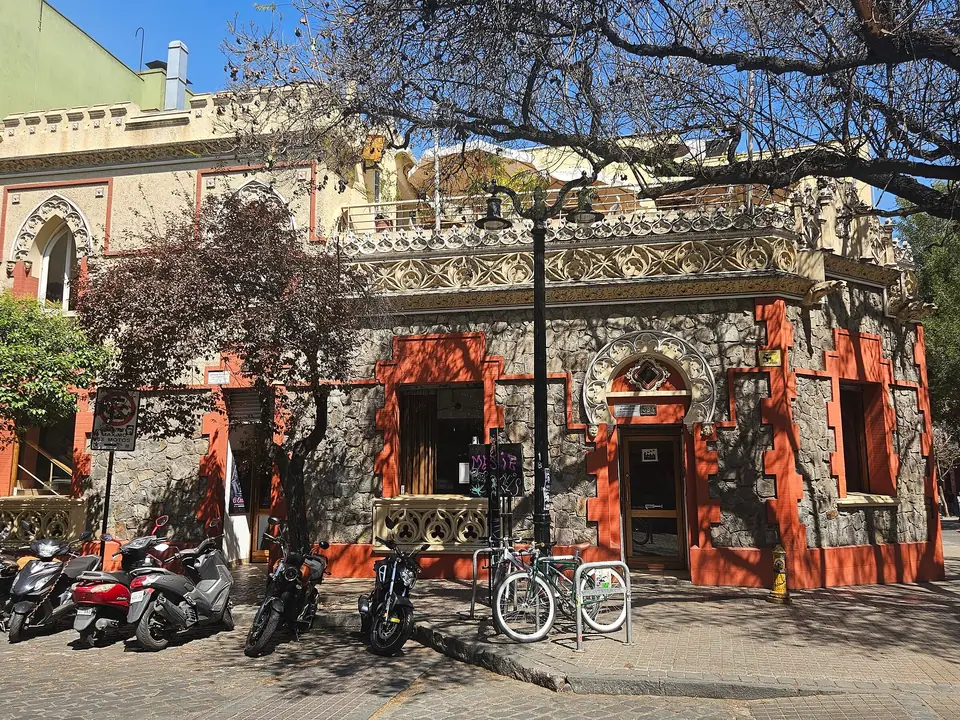
Barrio Lastarria and the adjacent Bellas Artes quarter form the premier cultural base in central Santiago. Positioned between the eastern slopes of Cerro Santa Lucía, the Alameda, and the plane trees of Parque Forestal, this zone was designated a protected Zona Típica in 1996. Narrow cobbled passages such as Calle Rosal and Calle José Victorino Lastarria feature boutique hotels converted from early twentieth-century townhouses, independent cinemas such as El Biógrafo, and open-air wine bars.
This area provides superb transport connectivity. Metro stations Universidad Católica on Line 1 and Bellas Artes on Line 5 sit within a short walk of most accommodation entrances. From these platforms, you can reach Plaza de Armas, the National Museum of Fine Arts, and the nightlife of Barrio Bellavista on foot in ten minutes. The pedestrian character makes walking pleasant during the afternoon, though street activity remains lively late into the evening.
Providencia and Barrio Italia for Balanced Local Living
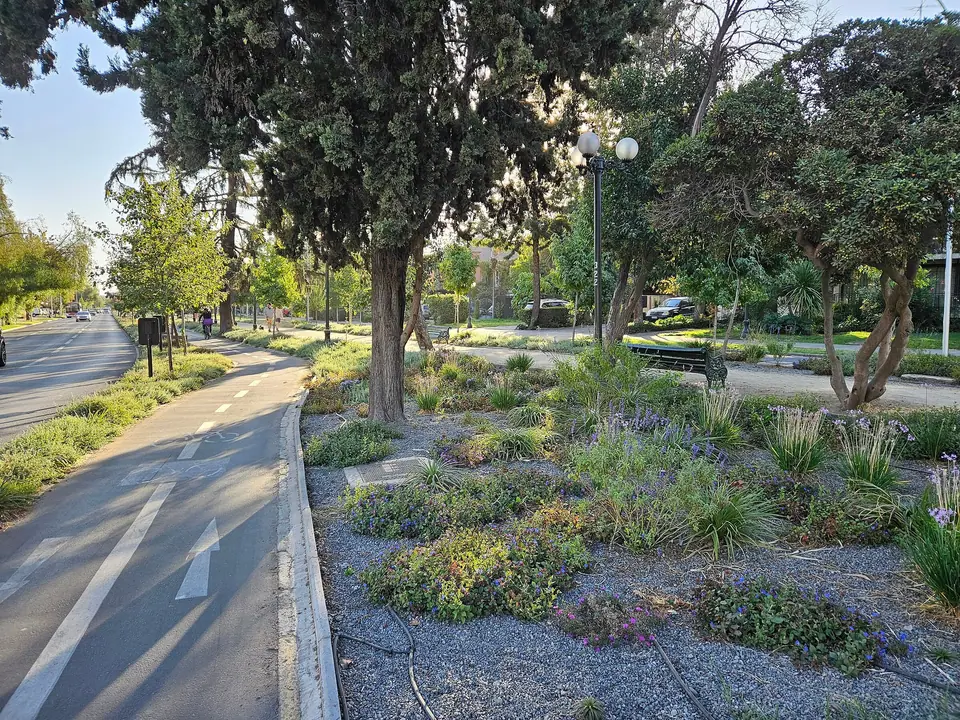
Extending east from Plaza Baquedano toward the financial towers, the commune of Providencia provides a leafy, comfortable residential setting. The neighbourhoods around metro stations Manuel Montt, Pedro de Valdivia, and Los Leones combine modern apartment hotels with traditional low-rise family houses. Shaded residential streets, including the Orrego Luco passage, offer quiet surroundings set back from the main commercial flow of Avenida Nueva Providencia.
South of Providencia lies Barrio Italia, an artisanal enclave known for antique restoration workshops, furniture design studios, and tranquil courtyard cafes. Travellers staying in Providencia benefit from dual metro connections via Line 1 and Line 6, granting rapid access to historic monuments to the west and modern shopping districts to the east. The district feels safe, clean, and well serviced by neighbourhood grocery stores and bakeries, making it our top recommendation for extended visits.
Las Condes and Vitacura for Modern High-Rise Comfort
Travellers seeking polished contemporary hotels and upscale dining should examine Las Condes, particularly the El Golf quarter often referred to locally as Sanhattan. Clustered around the Gran Torre Costanera, this sector features wide boulevards and corporate headquarters served by metro stations Tobalaba, El Golf, and Alcántara along Line 1. Accommodations here consist mainly of full-service international hotel brands and serviced corporate apartments with secure underground parking.
Directly north of Las Condes, the affluent commune of Vitacura extends along the manicured lawns of Parque Bicentenario. Vitacura lacks direct metro stations, so guests rely on city buses, taxis, or hired cars to travel westward. However, it delivers quiet nights, broad walking paths, and immediate proximity to high-end contemporary art galleries. If mountain visibility is your priority during clear winter days, high-rise suites in Las Condes and Vitacura capture spectacular panoramas of the snow-dusted Andean ridgeline.
Santiago Centro and Barrio París-Londres for Historic Character
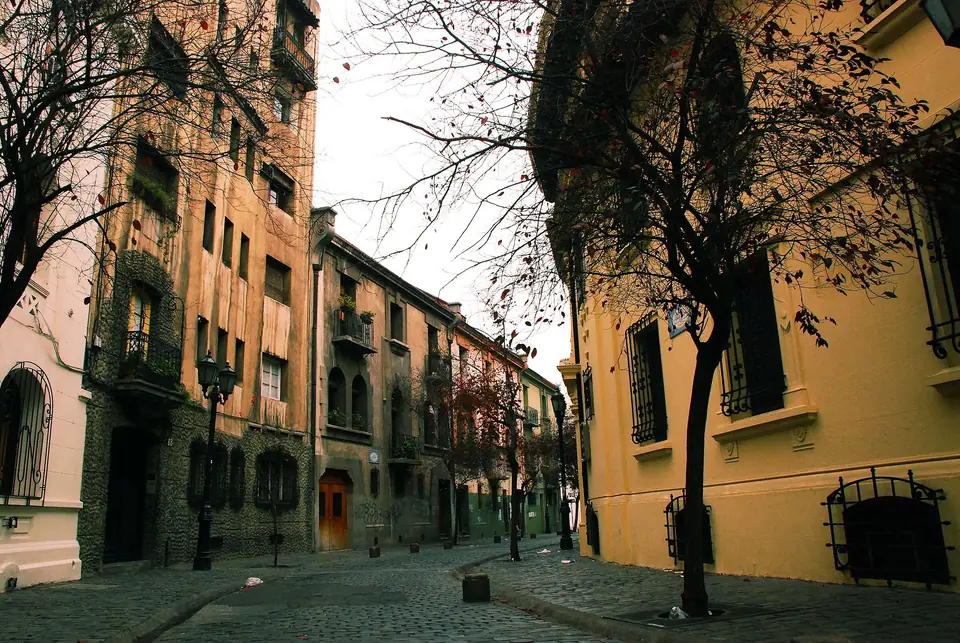
Barrio París-Londres offers a distinct architectural atmosphere tucked inside Santiago Centro, just south of the broad Avenida Libertador Bernardo O'Higgins. Built in the 1920s on former Franciscan monastic grounds, this compact enclave features winding stone-paved lanes, wrought-iron balconies, and European-inspired facades. Several heritage townhouses operate as small guesthouses and budget-friendly boutique hotels.
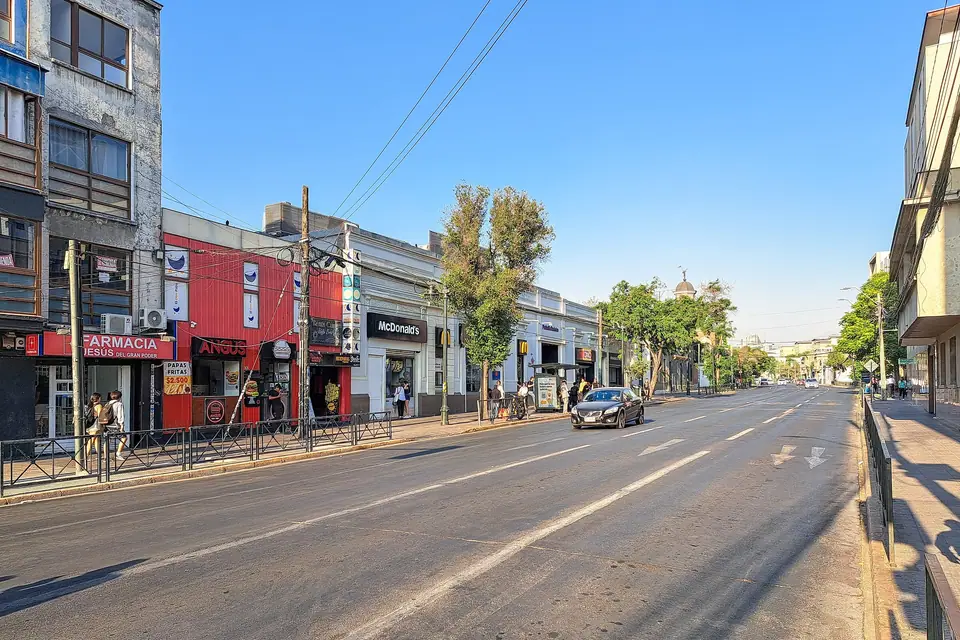
Staying here places you within walking distance of historical landmarks detailed in our Palacio de La Moneda guide and the civic offices of the central government. The area is exceptionally quiet on weekend mornings when government workers are away. While practical for sightseeing by day, visitors should exercise basic street awareness after dark when local foot traffic subsides around the Alameda.
Neighbourhood Comparison for Santiago Visitors
The following table outlines the practical characteristics of each primary accommodation base to help match your itinerary with the correct commune.
| Neighbourhood | Primary Metro Stations | Dominant Architecture | Best Suited For |
|---|---|---|---|
| Barrio Lastarria and Bellas Artes | Universidad Católica (Line 1), Bellas Artes (Line 5) | Early twentieth-century townhouses, neoclassical facades | First-time visitors wanting museums and nightlife on foot |
| Providencia and Pedro de Valdivia | Manuel Montt, Pedro de Valdivia, Los Leones (Line 1) | Leafy residential mid-rises, commercial towers | Families and longer stays seeking quiet streets and easy transit |
| Barrio Italia | Santa Isabel (Line 5), Inés de Suárez (Line 6) | Single-storey historic adobe homes, repurposed courtyards | Independent travellers focused on design studios and cafes |
| Las Condes (El Golf) | Tobalaba, El Golf, Alcántara (Line 1) | Contemporary glazed high-rises, corporate towers | Business travellers and guests seeking international luxury brands |
| Barrio París-Londres | Santa Lucía (Line 1), Universidad de Chile (Line 1, Line 3) | Curved 1920s cobbled lanes, European residential mansions | Budget and heritage seekers wanting proximity to government sites |
Seasonal Considerations for Selecting Your Accommodation
Santiago experiences a semi-arid Mediterranean climate with sharp seasonal swings that should inform your lodging choices. The summer months from December through February bring hot, dry weather, with January reaching an average daily high of 30.4°C and zero rainfall. If you visit during this period, confirm that your accommodation provides reliable room air conditioning, as historic buildings in Lastarria and París-Londres can retain substantial heat through thick masonry walls.
Winter conditions from June to August require a different approach. July brings daily low temperatures averaging 3.8°C beside 28 millimetres of rainfall spread over four wet days, while June records 35 millimetres over five days. Central heating is not standard across all heritage properties in Santiago Centro, so travellers visiting in winter should check that rooms feature adequate climate control. Autumn months such as April bring comfortable daytime highs of 23.3°C and cool lows of 8.8°C, making it pleasant to walk between districts without extreme heat or rain.
Where it is
- 1Santiago
- Comodoro Arturo Merino Benítez International Airport (SCL) · about 14 km from Santiago in a straight line
- Directions in Google Maps
Stations and taxi ranks: OpenStreetMap. Airports: OurAirports. Distances are in a straight line.
Traveller tips
Real advice from people who have been to Santiago. Every tip is read by our team before it goes live.
No tips yet. Been here? Yours could be the first.
Thank you! Your tip will appear here after a quick review.
More in Santiago
Continue exploring Santiago with related neighbourhood, food, and planning guides
Best Time to Visit Santiago: Climate, Andes Visibility and Grape Harvest
Santiago, Chile
Santiago 3-Day Itinerary: Historic Plazas, Hilltop Parks and the Andes
Santiago, Chile

What to Eat in Santiago: Classic Dishes, Seafood and Counter Dining
Santiago, Chile
Plaza de Armas, Metropolitan Cathedral and the Pre-Columbian Art Museum
Santiago, Chile
