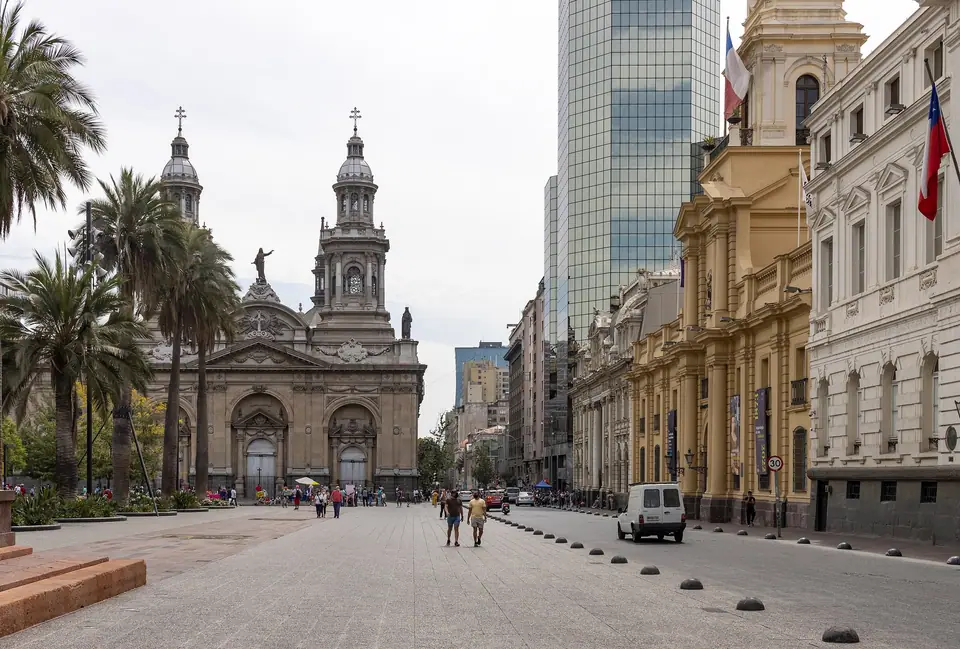
Photo: Rjcastillo · CC BY-SA 4.0
Plaza de Armas, Metropolitan Cathedral and the Pre-Columbian Art Museum
Discover Santiago's founding heart at Plaza de Armas, from the neoclassical Metropolitan Cathedral and colonial palaces to the world-class Pre-Columbian Art Museum.
Laid out in February 1541 by master builder Pedro de Gamboa under conquistador Pedro de Valdivia, Plaza de Armas has anchored Santiago's street grid for nearly five centuries. Archaeological excavations led by Rubén Stehberg and Gonzalo Sotomayor confirmed that Spanish builders superimposed their checkerboard grid directly over an existing Inca administrative centre. This settlement formed part of the Tawantinsuyu network linked to the Qhapaq Ñan road. Declared a National Monument as a Zona Típica on 3 December 1986, the palm-shaded square marks Kilometre Zero of Chile and remains the political and symbolic heart of the capital. Travellers mapping out a broader urban route often pair this historic core with itineraries outlined in our Santiago 3-Day Itinerary or connect through nearby civic institutions detailed in the Palacio de La Moneda and Barrio Cívico Guide.
Metropolitan Cathedral and Religious Architecture
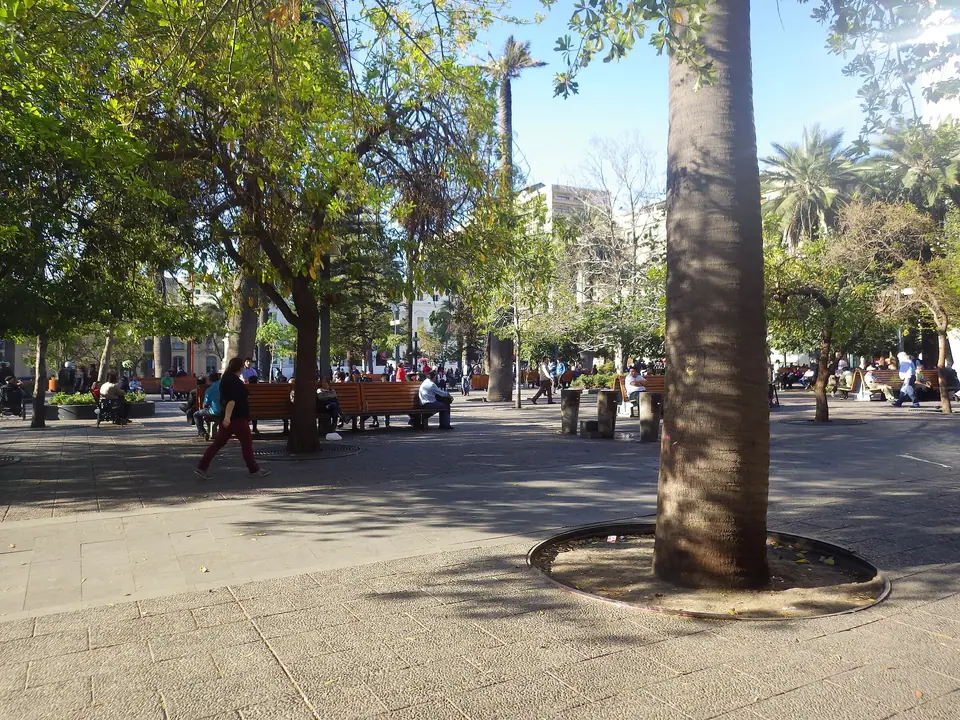
Occupying the northwest corner of Plaza de Armas, the Catedral Metropolitana de Santiago is the fifth church constructed on this ground. Preceding structures succumbed to severe colonial earthquakes in 1647, 1657, and 1730. Construction on the current stone building began in 1748 using plans prepared by Bavarian Jesuit architects Pedro Vogl and Juan Hagen. In 1780, Italian architect Joaquín Toesca took direction of the project, introducing neoclassical stone facades to the main church and designing the adjoining Parroquia del Sagrario and the Palacio Arzobispal. At the close of the nineteenth century, Italian architect Ignacio Cremonesi directed a comprehensive remodelling under Archbishop Mariano Casanova, adding twin Italianate bell towers and painting gilded ornamentation across the central nave vaults.
Inside the cathedral, visitors walk down three long naves separated by massive fluted pillars. The Chapel of the Blessed Sacrament contains a historic baroque silver tabernacle crafted by Jesuit silversmiths. Near the main entrance, marble funerary monuments honour founding national figures, including Diego Portales. The adjoining Parroquia del Sagrario houses the revered image of the Virgen del Carmen, the patron protector of the Chilean Armed Forces. Because religious services occur throughout the week, visitors must maintain quiet decorum and verify access protocols at the entrance before touring the side chapels.
Northern Civic Facades and Public Monuments
The northern frontage of Plaza de Armas presents three contiguous civic monuments that demonstrate the architectural transition from late Spanish rule into modern republican governance:
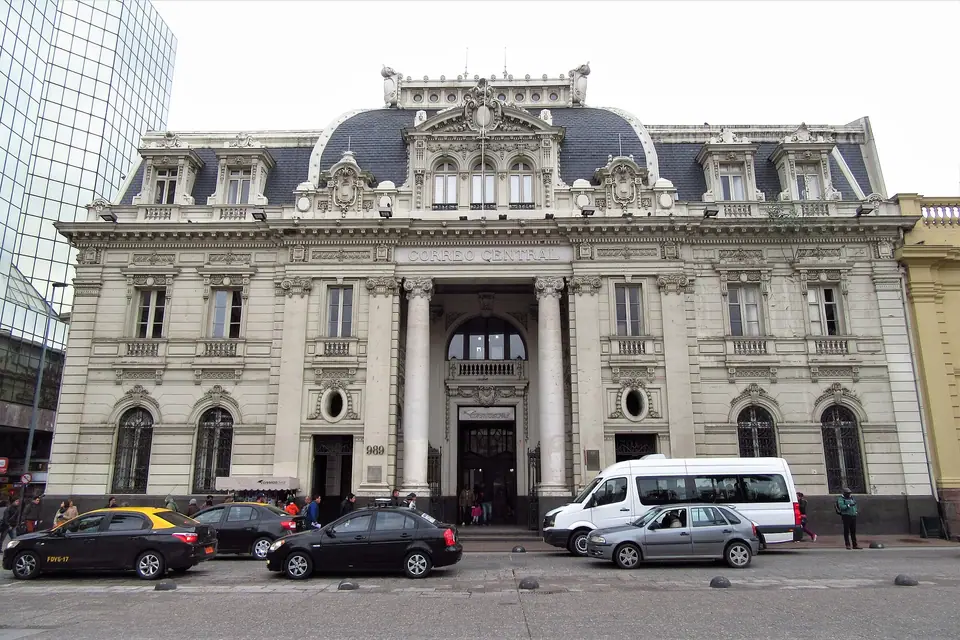
- Correo Central: Standing on the parcel originally claimed by Pedro de Valdivia as his residence, this building served colonial governors until 1846. It was reconstructed in neoclassical style in 1881 and received its ornate French Mansard third floor and central dome in 1903.
- Museo Histórico Nacional: Occupying the Palacio de la Real Audiencia, built between 1804 and 1807 by Toesca's Chilean pupil Juan José de Goycolea. It housed the royal high court and served as the meeting place of the First National Government Junta in 1810. Its central clock tower provides commanding views over the square.
- Ilustre Municipalidad de Santiago: Reconstructed in robust neoclassical style on the historic site of the colonial Cabildo, serving as the continuous administrative seat of the central commune.
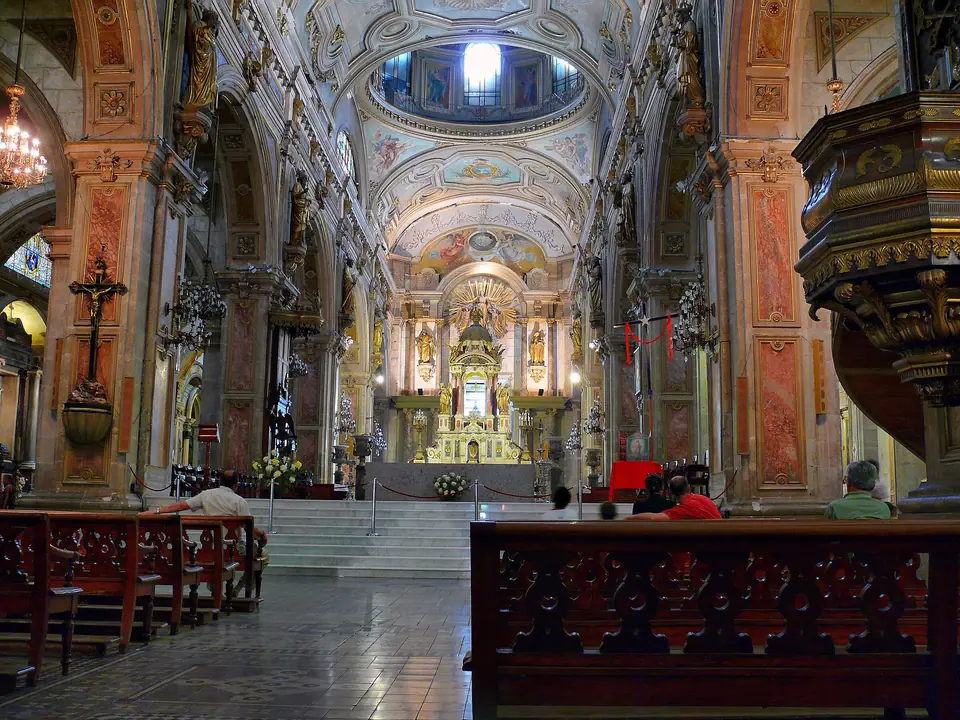
Several major public sculptures dot the square itself. Near the eastern corner stands the bronze equestrian statue of Pedro de Valdivia. Across the central promenade, the Carrara marble Freedom of Latin America monument by Italian sculptor Francesco Orselino marks republican independence. A contemporary indigenous monument shaped as a carved wooden Kultrún honours the Mapuche people and the original pre-Hispanic inhabitants of the Mapocho basin.
Museo Chileno de Arte Precolombino
Located one block southwest of the square at Bandera 361, the Museo Chileno de Arte Precolombino occupies the historic Palacio de la Real Aduana, built in 1805. Architect Sergio Larraín García-Moreno founded the museum in 1981 to display his private collection under modern curatorial standards. In 2014, Chilean architect Smiljan Radic completed an underground expansion that added the permanent gallery entitled Chile antes de Chile. This subterranean space houses Chinchorro mummies, Tiwanaku stone carvings, Andean textiles, and carved Mapuche wooden Chemamüll statues. The institution offers clear bilingual didactic panels explaining the cultural contexts of Mesoamerican, Intermediate, and Andean regional groups. It ranks consistently among the premier heritage institutions featured in our review of Best Things to Do in Santiago.
Historic Centre Architecture and Collections
| Monument | Primary Architecture | Key Designers | Principal Significance |
|---|---|---|---|
| Catedral Metropolitana | Neoclassical with gilded baroque interior | Pedro Vogl, Juan Hagen, Joaquín Toesca, Ignacio Cremonesi | Seat of the Archdiocese and fifth religious structure built on this corner |
| Palacio de la Real Audiencia | Colonial Neoclassical | Juan José de Goycolea | Houses the Museo Histórico Nacional and marks the site of the 1810 Junta |
| Correo Central | French Neoclassical and Beaux-Arts | Ricardo Brown (1881 remodel), Ramón Fehrman (1903 dome) | Built over the residential plot occupied by founder Pedro de Valdivia |
| Palacio de la Real Aduana | Late Colonial Neoclassical with modern subterranean wing | José María Atero (1805 building), Smiljan Radic (2014 wing) | Premises of the Museo Chileno de Arte Precolombino |
Urban Navigation and Seasonal Conditions
Plaza de Armas is directly served by Metro Line 3 and Line 5 at the underground Plaza de Armas station, offering seamless access without navigating surface vehicle traffic. Pedestrian streets Ahumada, Paseo Estado, and Paseo Puente connect the plaza to retail districts and the northern riverbank markets. Visitors should remain alert to personal belongings, as dense pedestrian gatherings and street performances on the square create opportunities for pickpockets. Travellers carrying cameras or backpacks should keep them secured across their front torso when walking through crowded arcades.
Seasonal planning should account for Santiago's Mediterranean climate. Summer conditions across December, January, and February are dry and hot, with January averaging daily highs of 30.4°C and zero wet days. During these months, touring the shaded stone interior of the cathedral or the subterranean gallery of the Pre-Columbian Museum provides welcome shelter from afternoon heat. Winter brings cooler conditions, with July recording average daytime highs of 15.7°C, night lows of 3.8°C, and 28 millimetres of rainfall across four wet days. Winter rain clears atmospheric dust quickly, offering sharp views of the snow-capped Andes from surrounding viewpoints. Admission fees and exhibition schedules for both museums vary seasonally, so travellers should check official museum websites before visiting.
Where it is
- 1Plaza de Armas, Metropolitan Cathedral and the Pre-Columbian Art Museum
- Comodoro Arturo Merino Benítez International Airport (SCL) · about 14 km from here in a straight line
- Directions in Google Maps
Stations and taxi ranks: OpenStreetMap. Airports: OurAirports. Distances are in a straight line.
Traveller tips
Real advice from people who have been to Santiago. Every tip is read by our team before it goes live.
No tips yet. Been here? Yours could be the first.
Thank you! Your tip will appear here after a quick review.
More in Santiago
Continue exploring Santiago with related neighbourhood, food, and planning guides
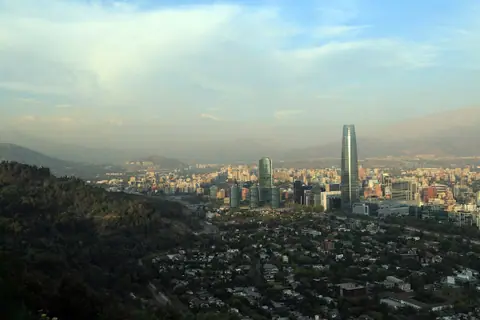
Sky Costanera, Providencia, Parque Bicentenario and Cajón del Maipo
Santiago, Chile
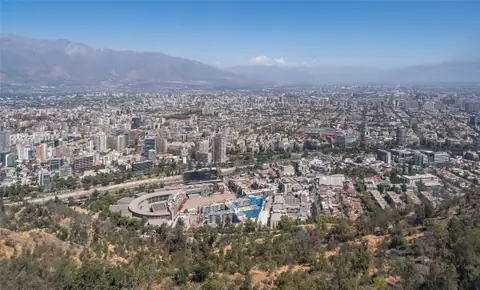
Santiago: Layout, Communes and Planning Essentials
Santiago, Chile
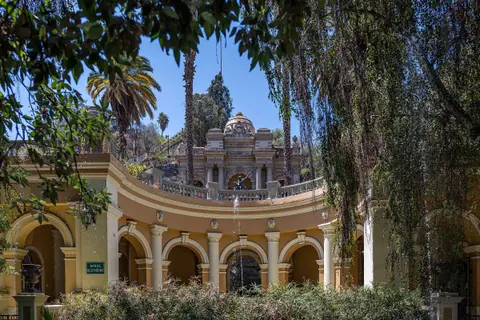
Best Things to Do in Santiago: Hilltop Parks, Cultural Palaces and Mountain Vistas
Santiago, Chile
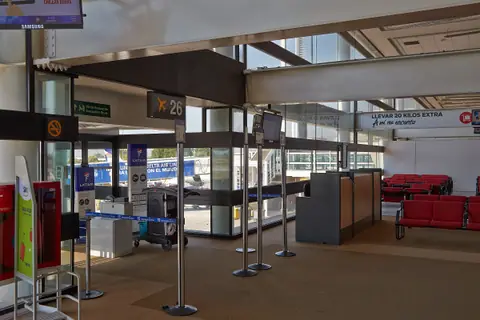
How to Get to Santiago: SCL Airport, Metro Lines and Bus Terminals
Santiago, Chile
