Photo: Rjcastillo · CC BY-SA 4.0
Best Things to Do in Santiago: Hilltop Parks, Cultural Palaces and Mountain Vistas
Plan your time in Santiago with our guide to summit viewpoints, neoclassical palaces, pre-Columbian antiquities, and historic central neighbourhoods.
Santiago presents a captivating contrast between compact nineteenth-century quarters and the immense wall of the Andes. Within a single day, travellers can examine ancient Chinchorro mummies inside an austere colonial customs house, walk through the historic seat of national government, and ascend a dramatic volcanic hill to view the sprawling capital basin from above.
The city spreads across an alluvial plain bounded by the Cordillera de la Costa to the west and the high cordillera to the east. Navigating this vast urban area becomes straightforward once you understand how key sights cluster around prominent green knolls and the central transit spine of the Alameda. Planning your itinerary around geographic zones helps minimise transit times while revealing the cultural variety of the Chilean capital.
Ascend Cerro Santa Lucía and Cerro San Cristóbal
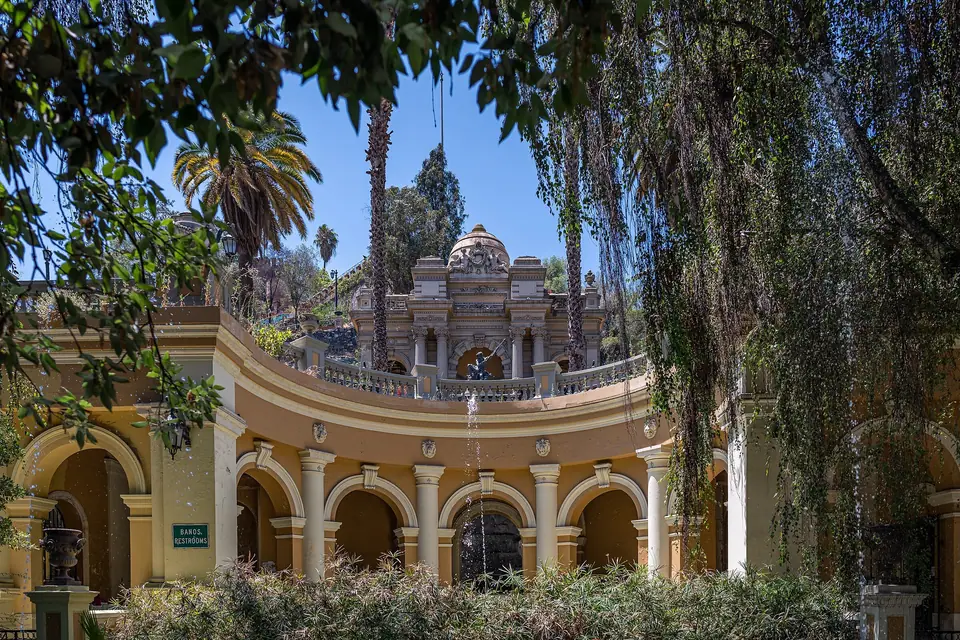
Two distinct volcanic remnants puncture the urban grid, providing panoramic vantage points over the city roofline. Rising directly above the Alameda, Cerro Santa Lucía, originally known as Huelén to the indigenous Picunche people, reaches an elevation of 629 metres. The rocky outcrop stands 68 metres above the surrounding avenues across a compact area of 65,300 square metres.
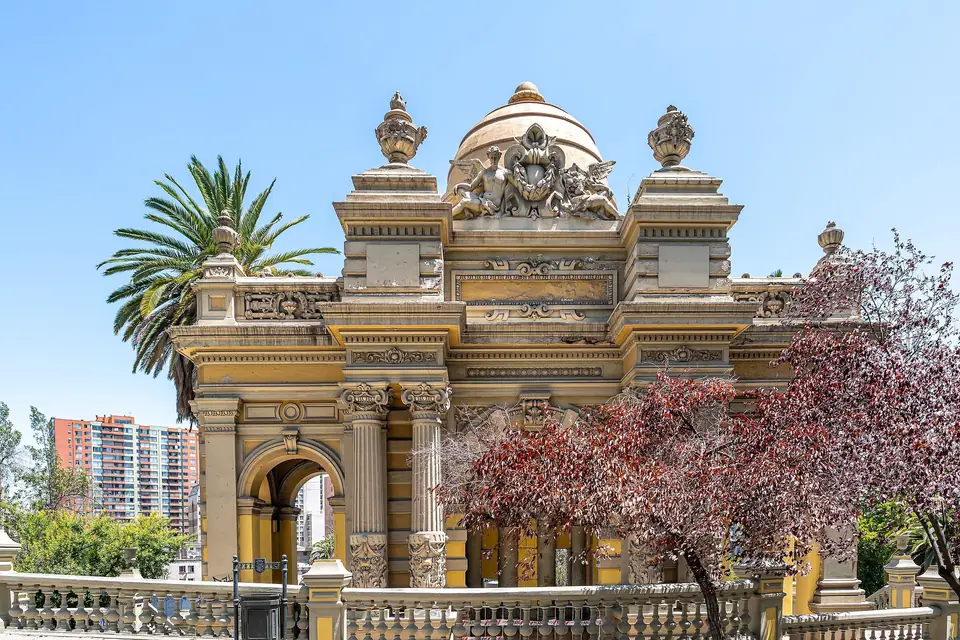
In 1872, Intendente Benjamín Vicuña Mackenna transformed this wild bastion into an ornate public park. The landscaped slopes feature winding stone paths, the monumental Terraza Neptuno fountain, the historic Castillo Hidalgo, and the narrow Torre Mirador. The summit offers an immediate, close-up perspective of the historic downtown streetscape.
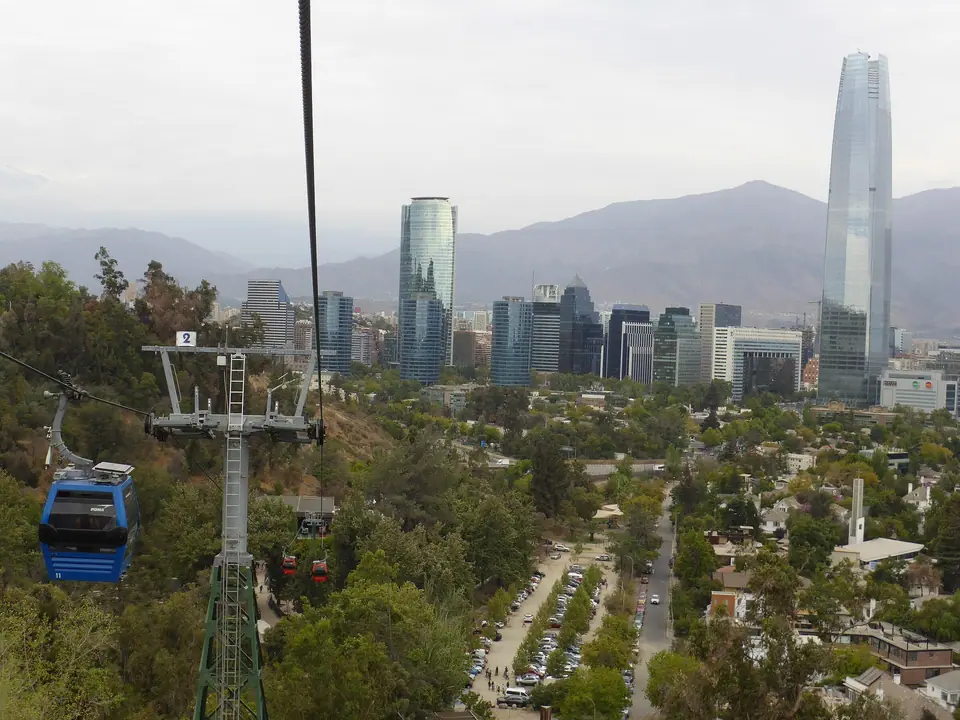
North of the Mapocho River, Cerro San Cristóbal commands a grander scale inside the 722-hectare Parque Metropolitano. The summit rises to 880 metres, boasting a prominence of 280 metres over the valley floor. Visitors reach the crest by riding the historic funicular railway opened in 1925 from Barrio Bellavista, or by boarding the modern Teleférico cable car system from Oasis station in Providencia.
At the top stands the Sanctuary of the Immaculate Conception, crowned by a landmark 1908 statue of the Virgin Mary. The broad terraces below the monument look eastward toward the snowfields of the high cordillera. On clear winter afternoons following rainfall, this ridge offers the finest mountain vistas in central Chile.
Examine Antiquities at the Chilean Museum of Pre-Columbian Art
Located on Calle Bandera, one block southwest of Plaza de Armas, the Museo Chileno de Arte Precolombino ranks among the premier cultural institutions in Latin America. Architect Sergio Larraín García-Moreno established the museum on 10 December 1981 to safeguard his extensive private collection of indigenous art and material culture.
The collection occupies the Palacio de la Real Aduana, a stately neoclassical building completed in 1805. In 2014, contemporary Chilean architect Smiljan Radic expanded the facility by excavating an expansive subterranean gallery directly beneath the historic courtyards. This wing houses the permanent exhibition titled Chile antes de Chile.
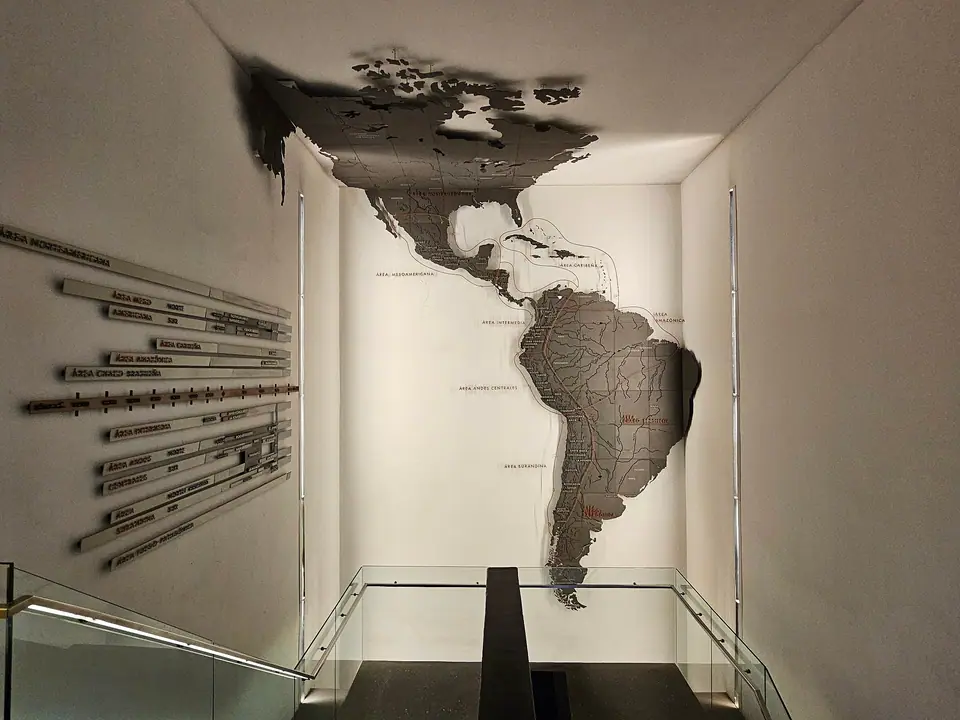
Inside the climate-controlled vaults, visitors encounter extraordinary items spanning thousands of years of human craftsmanship. Highlights include 3,000-year-old woven Andean textiles, monumental Mapuche timber funerary figures known as chemamüll, and ancient Chinchorro mummies from the northern coastal desert. Because exhibitions and visiting schedules vary seasonally, verify current ticketing details on the museum website before arrival.
Tour the Civic Core and Palacio de La Moneda
A short walk south along the pedestrian promenades leads to the Palacio de La Moneda, the official seat of the President of Chile. Italian neoclassical architect Joaquín Toesca designed the monumental structure in 1784 to serve as the royal mint. The building began functioning as the presidential residence and administrative centre in 1846.
The facade commands the Plaza de la Constitución, where formal state ceremonies take place against the backdrop of imposing ministerial offices. Beneath the expansive Plaza de la Ciudadanía on the southern side lies the subterranean Centro Cultural La Moneda. This underground cultural venue hosts rotating international art exhibitions, film retrospectives, and galleries dedicated to traditional Chilean crafts.
Survey Modern Santiago from Sky Costanera
Heading east into the commercial district of Providencia brings you to the foot of the Gran Torre Costanera. Designed by the renowned architect César Pelli and inaugurated between 2014 and 2015, the 62-storey skyscraper rises to 300 metres, making it the tallest skyscraper in South America.
High-speed lifts transport visitors up to the Sky Costanera observation deck, which spans floors 61 and 62. The glazed viewing decks provide an unobstructed 360-degree panorama over the entire Santiago basin. From this height, you can trace the flow of the Mapocho River, observe the green expanse of Parque Bicentenario, and study the jagged wall of the Andes rising directly behind the eastern suburbs. To ensure entry at desired times, purchase tickets through the official operator platform.
Santiago Landmark Attributes and Access Points
| Landmark | Commune | Primary Feature | Transit Access |
|---|---|---|---|
| Cerro San Cristóbal | Recoleta and Providencia | 880-metre summit with 1908 sanctuary | Metro Baquedano or Pedro de Valdivia |
| Cerro Santa Lucía | Santiago Centro | Terraza Neptuno and Torre Mirador | Metro Santa Lucía |
| Museo de Arte Precolombino | Santiago Centro | Chinchorro mummies and Andean textiles | Metro Plaza de Armas |
| Palacio de La Moneda | Santiago Centro | 1784 neoclassical civic palace | Metro La Moneda |
| Sky Costanera | Providencia | 300-metre tower observation deck | Metro Tobalaba |
Explore Historic Quarters and Local Markets
Beyond the primary monuments, the everyday rhythm of Santiago reveals itself across distinctive civic neighbourhoods. West of the civic district lies Quinta Normal Park, an expansive nineteenth-century public green space framed by substantial cultural venues. Directly opposite the park gates stands the Museo de la Memoria y los Derechos Humanos, which provides a profound, factual record of Chile during the 1973 to 1990 military dictatorship.
For fresh regional flavours and traditional counter dining, head to the busy commercial corridors along the riverbank. Visiting Mercado Central and La Vega Central allows travellers to sample local produce and coastal seafood within historic cast-iron market halls. Pairing morning visits to these historic central markets with afternoon museum tours provides a balanced and rewarding overview of the capital.
Where it is
- 1Santiago
- Comodoro Arturo Merino Benítez International Airport (SCL) · about 14 km from Santiago in a straight line
- Directions in Google Maps
Stations and taxi ranks: OpenStreetMap. Airports: OurAirports. Distances are in a straight line.
Traveller tips
Real advice from people who have been to Santiago. Every tip is read by our team before it goes live.
No tips yet. Been here? Yours could be the first.
Thank you! Your tip will appear here after a quick review.
More in Santiago
Continue exploring Santiago with related neighbourhood, food, and planning guides
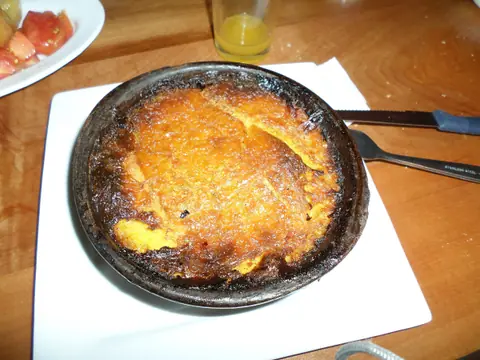
What to Eat in Santiago: Classic Dishes, Seafood and Counter Dining
Santiago, Chile
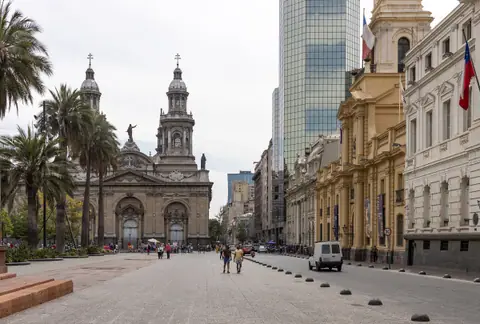
Plaza de Armas, Metropolitan Cathedral and the Pre-Columbian Art Museum
Santiago, Chile
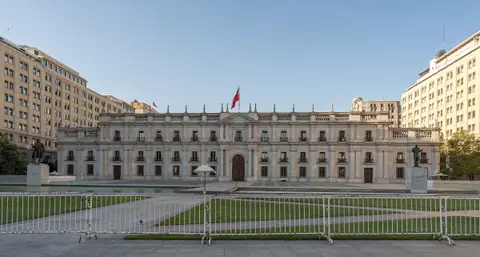
Palacio de La Moneda, Barrio Cívico and Barrio París-Londres Guide
Santiago, Chile
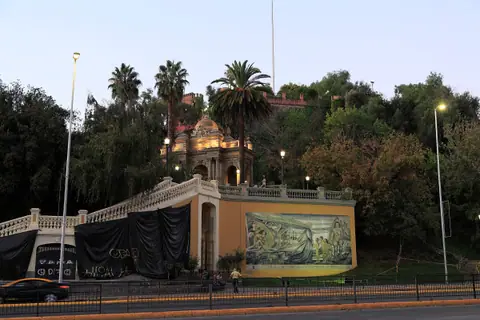
Cerro Santa Lucía, Barrio Lastarria and Parque Forestal Guide
Santiago, Chile
