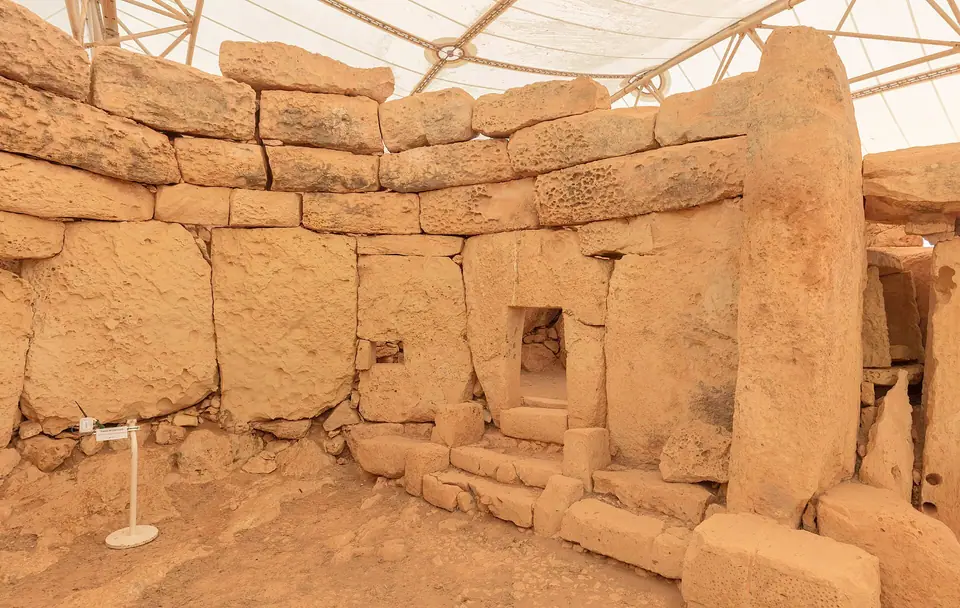
Photo: Diego Delso · CC BY-SA 4.0
Ħal Saflieni Hypogeum, Tarxien, Ħaġar Qim & Mnajdra Temples Guide
How to explore Malta's prehistoric megalithic sites from Valletta, including the subterranean Ħal Saflieni Hypogeum and the Ħal Tarxien Prehistoric Complex.
Long before classical civilisations emerged across the Mediterranean basin, ancient builders on the Maltese archipelago quarried, carved, and raised immense limestone structures. In the settlement of Paola, south of the Grand Harbour, prehistoric stonemasons created a subterranean sanctuary directly within the living rock: the Ħal Saflieni Hypogeum. This subterranean necropolis remains one of the most remarkable prehistoric survivals anywhere in southern Europe. Travellers can effortlessly coordinate excursions out to Paola. The southern megalithic sanctuaries in combination with our 3-day Valletta itinerary and our practical Valletta travel guide.
Malta retains an extraordinary density of prehistoric architecture and cultural landmarks. Today, Heritage Malta manages more than 90 museums, landmarks, national monuments, and underwater sites across the islands. The national agency traces its formal origins back to 1903, overseeing the conservation and presentation of these historic properties. Seven UNESCO World Heritage locations across the islands fall under Heritage Malta care. This step ensures that delicate subterranean chambers over ancient freestanding megaliths receive rigorous scientific protection.
| Prehistoric Site | Location | Ticketing | Access Notes |
|---|---|---|---|
| Ħal Saflieni Hypogeum | Paola, south of Valletta | Check official site for prices | Strict limits on visitor numbers; book advance tickets early; closed-toe footwear advised. |
| Ħal Tarxien Prehistoric Complex | Tarxien / Paola | Check official site for prices | Managed by Heritage Malta; easily reached on foot from central Paola. |
| Ħaġar Qim and Mnajdra Temples | Southern coast of Malta | Check official site for prices | Dramatic sea-cliff setting overlooking the open waters of the Mediterranean. |
| National Museum of Archaeology | Republic Street, Valletta | Check official site for prices | Exhibits delicate stone figurines, prehistoric pottery, and carved architectural reliefs. |
The Ħal Saflieni Hypogeum: An Underground Sanctuary
Stonemasons cutting domestic cisterns for residential housing in Paola originally discovered this subterranean complex by chance after breaking through an underground rock ceiling. Today, the Ħal Saflieni Hypogeum is celebrated internationally as an intricate prehistoric burial and ritual complex carved straight into subterranean strata. Builders hollowed out interconnected halls across superimposed underground levels descending through the bedrock. Archaeological excavations across the chambers revealed human remains together with ornamental beads, polished stone amulets, and clay figurines such as the celebrated terracotta Sleeping Lady.
During a carefully controlled audio-guided visit, travellers step across suspended metal walkways through the carved levels:
- The Upper Level. Natural rock cavities expanded into burial alcoves and access vaults near the surface.
- The Middle Level: Here the builders replicated above-ground megalithic architecture in negative relief. shaping curved ceilings, doorways, and the Oracle Room, whose ceiling bears red ochre pigment designs. A carved wall cavity produces noticeable acoustic depth when voices speak directly into the stone aperture.
- The Lower Level. Reached via a carved stone stairway descending into the lower rock-cut chambers, presenting the monumental facade of the inner sanctum.
How to Book Hypogeum Tickets and Plan Your Entry
To prevent microclimatic shifts, carbon dioxide accumulation, and ambient humidity from deteriorating the painted ceiling spirals, authorities strictly limit visitor numbers throughout every operational day:
- Standard Advance Tickets. Reserve your entry online through Heritage Malta as soon as your travel itinerary is decided. Entry slots frequently sell out weeks ahead during busy travel months.
- Last-Minute Enquiries. Consult the official Heritage Malta website or enquire directly at major heritage ticket counters across Malta to determine whether standby entries remain open.
- Mandatory Rules at the Door: Arrive well ahead of your allocated entry time with appropriate photographic identification. Wear sturdy closed-toe shoes, heed supervisory instructions from the custodial staff, and place all loose items, mobile devices, and camera bags into lockers, where photography inside the monument is prohibited.
Planning your journey between sites is exceptionally straightforward thanks to the national bus network. Malta Public Transport operates across 149 bus routes with 550 buses, linking rural villages, prehistoric monuments, and coastal harbours. Key bus terminals across Malta and Gozo include Valletta, Buġibba, Ċirkewwa, and Victoria Gozo. Every bus offers free Wi-Fi, allowing passengers to confirm opening schedules and review heritage resources on the move. Local residents holding a personalised tallinja card travel free on all Day, Night, and Special Services bus routes across Malta and Gozo.
Combining the Hypogeum with Tarxien Temples and Southern Megaliths
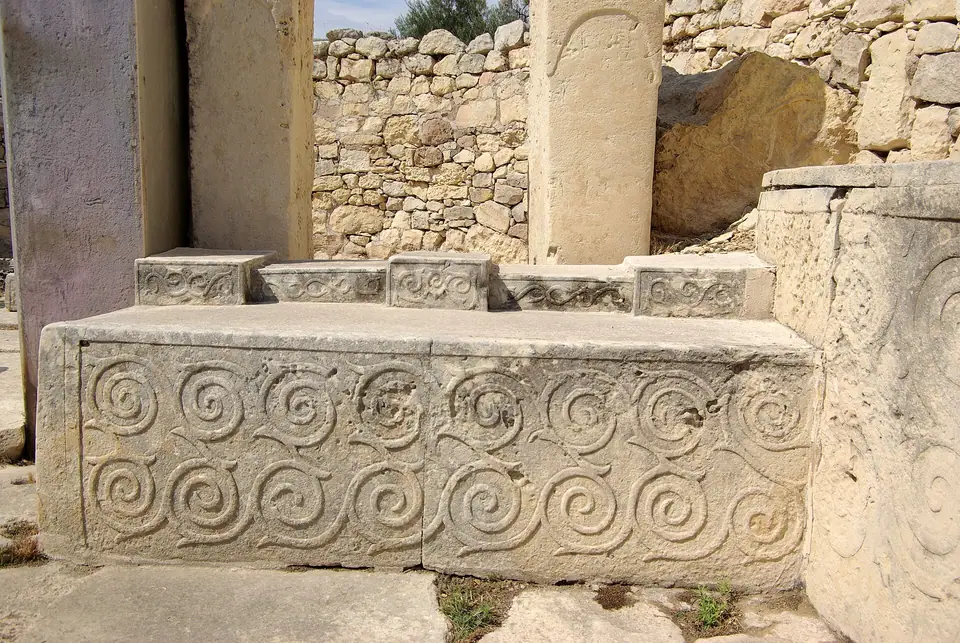
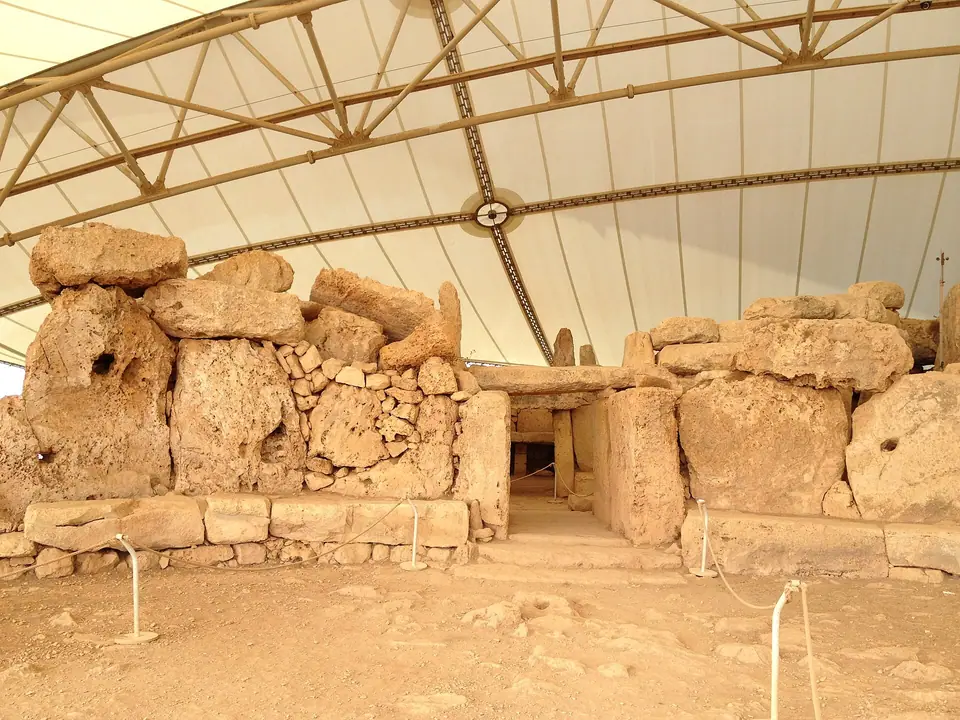
After completing your tour of the Hypogeum in Paola, take a short walk east along neighbourhood streets to the Ħal Tarxien Prehistoric Complex. As one of the prominent prehistoric sites managed by Heritage Malta, Tarxien features an elaborate layout of interconnected megalithic apses. Within its outdoor corridors, you can examine intricate spiral reliefs. Stone animal carvings, and ceremonial altar blocks that illustrate the technical artistry of Neolithic island communities.
To experience megalithic monuments in an open coastal setting, catch a southbound public bus from the main terminal outside Valletta towards Qrendi. Perched upon windswept limestone plateaus, the temples of Ħaġar Qim and Mnajdra look out across coastal cliffs toward the Mediterranean Sea. Walking along these exposed clifftops gives visitors an unforgettable perspective on the scale and ambition of prehistoric Maltese builders.
Pairing Ancient Temples with Local Culinary Culture
Exploring ancient ruins across southern Malta requires hearty sustenance. Taking a break between temple visits presents an ideal moment to sample genuine Maltese culinary traditions. The word ftira originates from the Arabic word fatir, which means unleavened bread. Unlike other Maltese breads, ftira must be shaped by hand by skilled bakers. Crisp on the outside with an airy interior crumb. A freshly baked ftira filled with local ingredients provides the perfect midday meal before returning to the capital.
Long before knights or classical mariners reached the archipelago, Neolithic builders carved monumental sanctuaries from the island limestone. Visiting both an underground burial complex and an open-air megalithic temple site reveals the sophistication of these early communities. Careful conservation controls inside the subterranean chambers protect the carved red-ochre spirals and trilithon doorways from humidity changes. Audio guides lead small groups through the dimly lit levels while explaining how ancient artisans worked with stone and bone tools.
Above ground at nearby temple enclosures, massive curved stone blocks form apses, altars, and threshold slabs decorated with relief spirals. Elevated walkways allow visitors to look down into the interconnected ritual courts without stepping on fragile ancient paving. Pairing these sites with the archaeological museum galleries in town connects the Architecture in situ with the carved figures found inside.
Visiting the island's prehistoric sanctuaries requires a shift in perspective to appreciate structures raised millennia before classical antiquity. Inside the subterranean burial complex, curved chambers carved directly from the living globigerina rock echo the forms of surface megalithic architecture. Strict visitor caps and climate monitoring preserve the delicate red pigment spirals painted across the stone ceilings. Listening to the audio guide as you descend through the levels clarifies how ancient communities used these spaces for ancestral rites.
A short walk through the surrounding neighbourhood leads to the open-air temple complex, where massive dressed blocks form semicircular apses and carved altars. Raised viewing walkways let you trace the alignment of the entrances, hearth stones, and relief carvings of domestic animals. Finishing your prehistoric route at the archaeology museum back in the capital connects the temple ruins with the sculpted figures and pottery recovered during excavations.
Connecting the underground burial sanctuary with the surface megalithic enclosures highlights the enduring stoneworking traditions of the early islanders. Every carved threshold, spiral relief, and corbelled chamber reflects careful planning using carved stone, bone, and antler implements. Regular public buses between the capital terminus and the southern parish streets make visiting both prehistoric sites in a single morning simple and efficient.
Where it is
- 1Ħal Saflieni Hypogeum, Tarxien, Ħaġar Qim & Mnajdra Temples
- Malta International Airport (MLA) · about 3 km from here in a straight line
- Directions in Google Maps
Stations and taxi ranks: OpenStreetMap. Airports: OurAirports. Distances are in a straight line.
Traveller tips
Real advice from people who have been to Valletta. Every tip is read by our team before it goes live.
No tips yet. Been here? Yours could be the first.
Thank you! Your tip will appear here after a quick review.
More in Valletta
Continue exploring Valletta with related neighbourhood, food, and planning guides
Best Time to Visit Valletta: Sunny Days, Festas, Baroque Festival & Weather
Valletta, Malta
What to Wear in Valletta: Church Dress Rules & Limestone Steps
Valletta, Malta
Where to Stay in Valletta: Flat Ridge Palazzos vs Stepped Harbour Streets
Valletta, Malta
Valletta Itinerary: Baroque Palaces, Three Cities & Mdina
Valletta, Malta
