Photo: Simon Burchell · CC BY-SA 4.0
Best Things to Do in Valletta: Baroque Sights, Harbours & Forts
Discover essential experiences in Valletta, from Caravaggio's paintings and the Saluting Battery to crossing the Grand Harbour towards Birgu.
Behind the austere military bastions built by the Knights Hospitaller lies a city of astonishing theatrical wealth. The aristocratic Langues of the Order of St John competed fiercely to outshine one another in architecture and art. As a result, a short walk in Valletta takes you from Caravaggio canvases to historic armouries, underground wartime command headquarters, and a striking fortified harbour. Pair this essential itinerary with our Valletta travel guide and our comprehensive 3-day Valletta itinerary.
Around 3,000 hours of annual sunshine brighten the Maltese islands, making the outdoor bastions pleasant to discover in any season. There are 359 churches situated across Malta, giving religious architecture a central place in national culture. In addition, the archipelago offers over 120 dive sites located around Malta for travellers seeking coastal adventures. The cinematic streets have also served as sets for major productions such as Game of Thrones, Gladiator, and Troy.
Stand before Caravaggio's masterpiece inside St John's Co-Cathedral
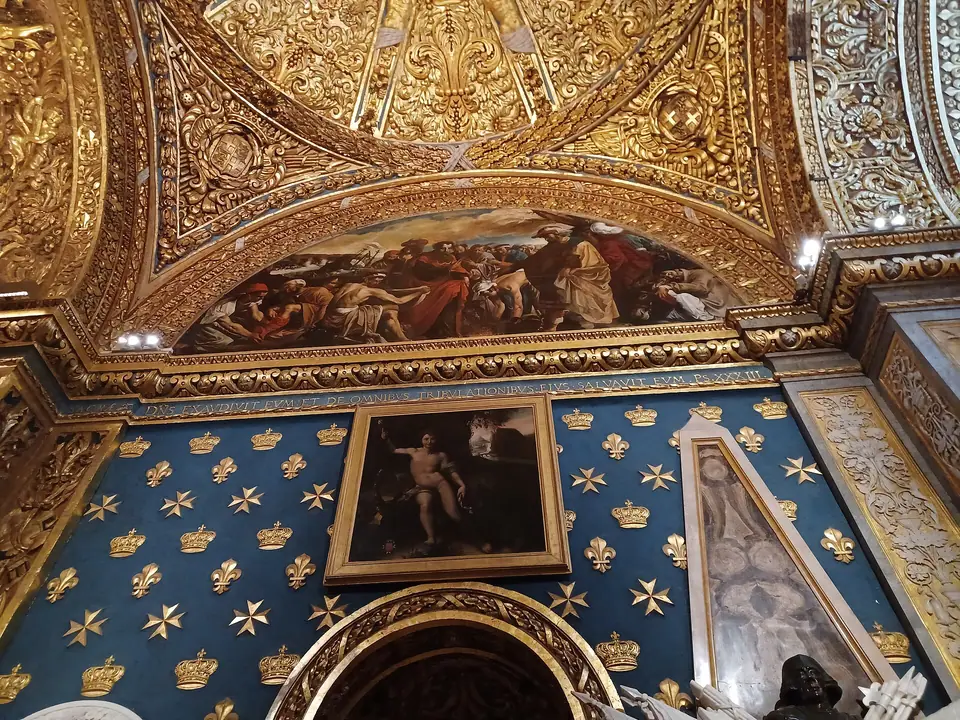
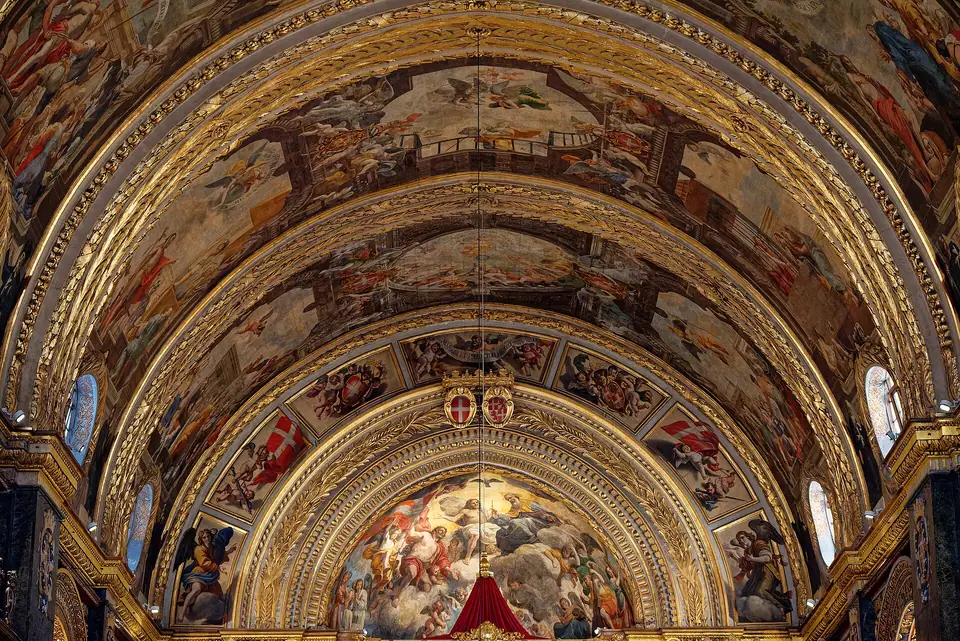
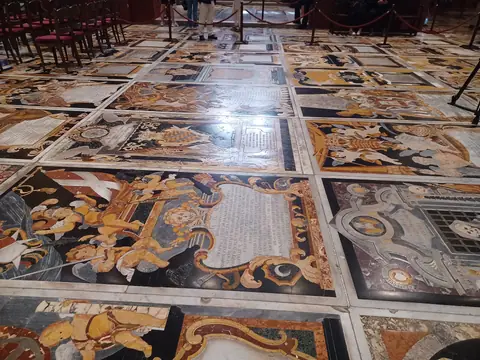
Designed by Maltese military architect Girolamo Cassar, the exterior of St John's Co-Cathedral looks deliberately like a plain limestone fort. Stepping across the threshold reveals a dazzling High Baroque interior, sculpted and gilded over decades by Mattia Preti. The entire floor is paved with polychrome inlaid marble tombstones covering the aristocratic Knights of the Order, decorated with skeletons, coats of arms, and naval galleys.
Inside the adjacent Oratory hangs celebrated art: Michelangelo Merisi da Caravaggio's The Beheading of Saint John the Baptist. Painted during Caravaggio's striking stay in Malta after fleeing Rome, this monumental canvas remains renowned for bearing the artist's signature traced in paint. Visitors should consult the official cathedral website in advance to confirm admission details and opening times.
Watch the historic artillery from Upper Barrakka Gardens
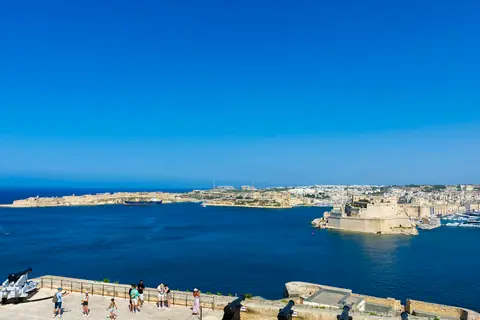
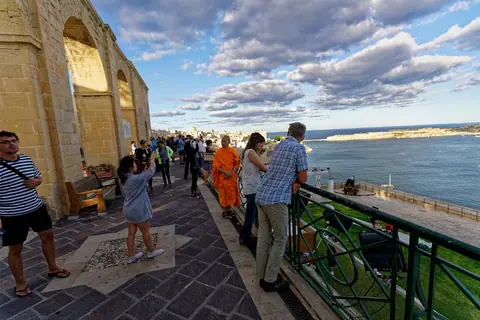
Perched atop the St Peter and Paul Bastion at the southern corner of the city, the Upper Barrakka Gardens offer grand views. Today the terrace commands a sweeping panoramic view across the blue expanse of the Grand Harbour toward Fort St Angelo and the Three Cities. Down on the Saluting Battery on Battery Street, artillery salutes echo across the waters. Note that on-site ticket sales at the Saluting Battery are card-only because it operates cash-free. The Saluting Battery welcomes visitors Monday to Saturday except on Christmas Eve, Christmas Day, New Year's Eve, New Year's Day, Good Friday, and Easter.
Cross the Grand Harbour in a wooden boat to the Three Cities
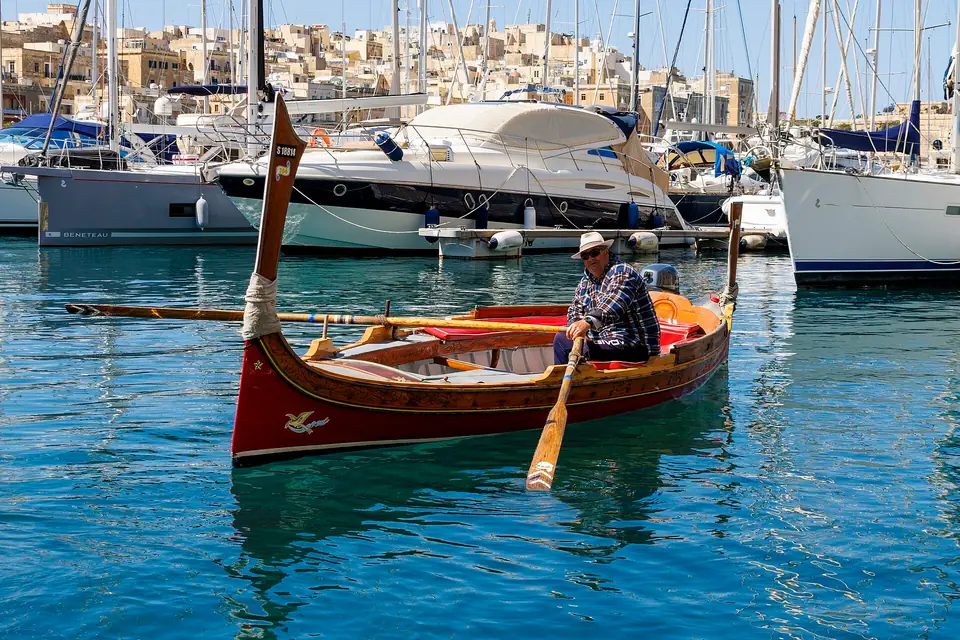
Ride the Upper Barrakka Lift down to Lascaris Wharf and walk past the modern ferry terminal to the low stone steps. Here traditional painted wooden Maltese water taxis, called dgħajsa tal-pass, bob in the water. Passenger ferries link the Valletta waterfront with Sliema and with the Three Cities. Passengers can cross the Grand Harbour by water taxi or ferry towards the fortifications of Birgu. Fort St Angelo is located in Birgu, forming an ancient defence system described in our Three Cities guide.
Tour Grand Master's Palace, Casa Rocca Piccola, and Fort St Elmo
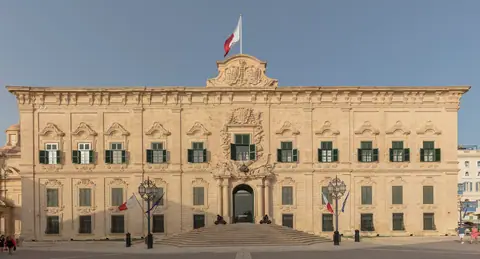
In the centre of St George's Square stands the Grand Master's Palace, home to state chambers and tapestries. The complex also features the Palace Armoury, housing steel breastplates, shields, and ornate ceremonial parade armour. Nearby along Republic Street, visitors can discover private historic residences such as Casa Rocca Piccola, containing ancestral portraits, a walled citrus garden, and rock-cut shelters.
At the wind-swept tip of the peninsula stands star-shaped Fort St Elmo and the National War Museum, where exhibitions trace centuries of island defence. Modern galleries display wartime aircraft and historic military decorations awarded to the island. Over 90 historic sites, museums, monuments, and underwater heritage zones operate under Heritage Malta across the country, tracing its formal roots back to 1903. The agency is also responsible for managing seven World Heritage Sites.
Descend into the underground wartime bunkers
Below the Saluting Battery lies an extensive defensive network. Excavated in 1940, the subterranean Combined War Headquarters sheltered wartime staff from air raids. The War H.Q. complex housed the Fighter Sector Operations Room during the wartime siege Battle for Malta. Guided walks into the War H.Q. tunnels start at the Saluting Battery terrace in Valletta. Until 1977, naval teams inside the War H.Q. tunnels tracked Soviet submarines across the Mediterranean.
Nearby, the Lascaris War Rooms are situated in Lascaris Ditch in Valletta. Ticket desks at the Lascaris War Rooms accept payment cards exclusively. Visitors under 16 join guided tours of the Lascaris War Rooms without an entry fee. Lascaris War Rooms tours pause on Christmas Eve, Christmas Day, New Year's Eve, New Year's Day, Good Friday, and Easter.
Walk the Lower Barrakka, Siege Bell Memorial, and Strait Street at dusk
In the late afternoon, follow the eastern bastion rim from Fort St Elmo up to the Doric neoclassical temple of the Lower Barrakka Gardens. The adjacent Siege Bell War Memorial. Its monumental bronze bell stands in tribute to those who fell defending the Grand Harbour during twentieth-century conflicts. After sunset, stroll down the narrow limestone canyon of Strait Street (Triq id-Dejqa), known to generations of Royal Navy sailors as "The Gut". Today the lane is revived with intimate wine bars, jazz doorways, and cocktail lounges beneath vintage painted pub signs.
Look Inside the National Museum of Archaeology and taste ftira
The National Museum of Archaeology is located in Valletta on Republic Street, managed by Heritage Malta. Inside the historic building, exhibitions display prehistoric artefacts and delicate stone carvings excavated from local ancient sites. The collection features rare figures such as the renowned terracotta Sleeping Lady and carved limestone statues.
While exploring the capital, sample traditional bread at local bakeries. UNESCO recognized the traditional baking of Maltese ftira sourdough bread on its intangible heritage list in 2020. Linguistically, the Maltese term ftira traces back to the Arabic word fatir. Crusty Maltese ftira loaves display an airy sourdough crumb with irregular pockets. Artisan bakers shape every traditional ftira loaf by hand rather than by machine.
Transport across the island remains straightforward from the capital. Island bus interchanges operate at Valletta, Buġibba, and Ċirkewwa as well as Victoria on Gozo. Across 149 island routes, Malta Public Transport runs an active fleet of 550 buses. Complimentary wireless internet is provided onboard Malta Public Transport buses. Personalised tallinja smartcards grant fare-free rides on Day, Night, and Special Services bus routes. When day-trippers depart the peninsula in the evening, the stepped lanes of St Ursula Street, Strait Street, and St Barbara Bastion turn wonderfully calm under warm amber streetlamps.
Combining major indoor Baroque interiors with open-air bastion walks keeps each sightseeing day balanced and unhurried. Morning hours suit popular central landmarks along Republic Street before cruise passengers gather in the main squares. Midday shade inside the stone palace courtyards and archaeological galleries offers welcome relief from the bright Mediterranean sun. Late afternoon light turns the harbour ramparts warm gold and draws photographers to the eastern terraces.
Crossing the water by harbour boat adds a maritime perspective on the towering curtain walls and corner cavaliers. Waterfront promenades on the opposite shore invite relaxed strolls past historic dockyards, parish domes, and wooden boats. Check the official site of each museum before setting out so your daily route matches current exhibition schedules.
Evening strolls along the illuminated bastion walls reveal quiet piazzas and floodlit church cupolas across the harbour. Local theatres, chamber music recitals, and courtyard galleries add a lively cultural programme throughout the year.
Where it is
- 1Valletta
- Malta International Airport (MLA) · about 6 km from Valletta in a straight line
- Directions in Google Maps
Stations and taxi ranks: OpenStreetMap. Airports: OurAirports. Distances are in a straight line.
Traveller tips
Real advice from people who have been to Valletta. Every tip is read by our team before it goes live.
No tips yet. Been here? Yours could be the first.
Thank you! Your tip will appear here after a quick review.
More in Valletta
Continue exploring Valletta with related neighbourhood, food, and planning guides
Valletta Itinerary: Baroque Palaces, Three Cities & Mdina
Valletta, Malta
St John's Co-Cathedral Guide: Caravaggio's Beheading, Marble Tombs & Tips
Valletta, Malta
Upper & Lower Barrakka Gardens, Saluting Battery Noon Gun & Lift Guide
Valletta, Malta
Grand Master's Palace, Armoury, Casa Rocca Piccola & Knights' Auberges Guide
Valletta, Malta
